The Sermon on the Mount

A teacher who sits down before he speaks
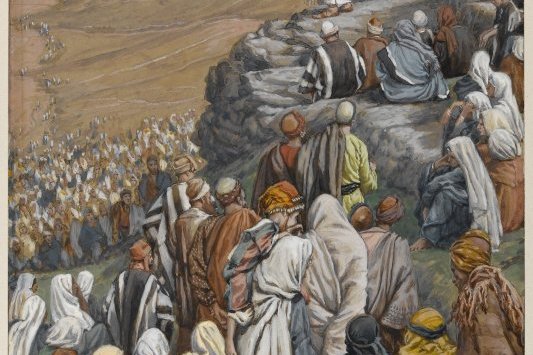
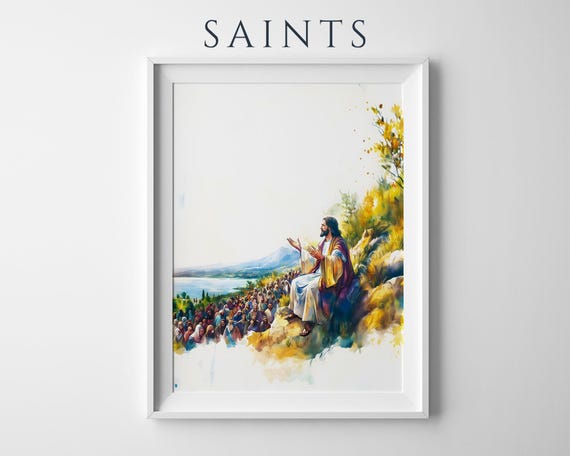
Matthew introduces the scene with almost no ceremony: "When he saw the crowds, he went up the mountain, and after he had sat down, his disciples came to him. He began to teach them, saying: The Beatitudes" (Matthew 5:1-2, RSV-CE). Sitting down was the recognized posture of a teacher in that culture, not a casual choice — and Matthew is careful to note that while a crowd is present, Jesus addresses his disciples specifically. What follows is framed less as a public announcement than as instruction for those who had already chosen to follow him.
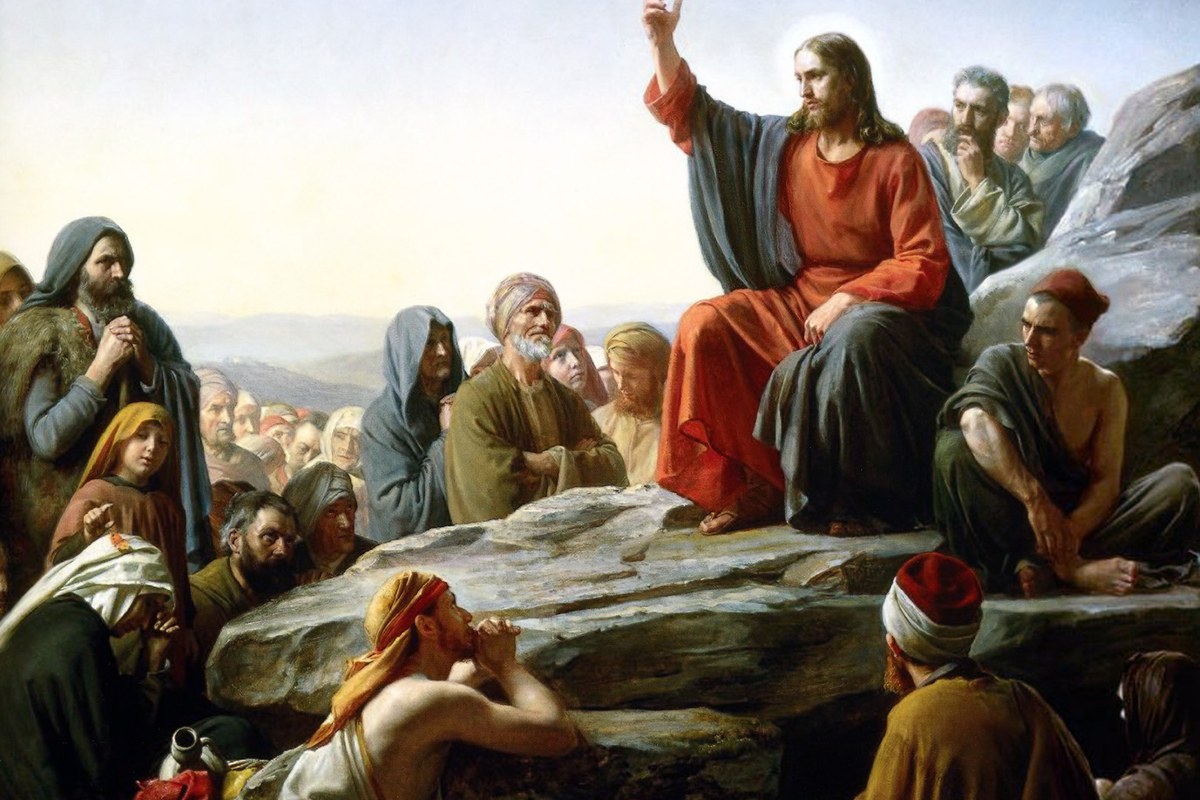
Carl Bloch, "The Sermon on the Mount," 1877 — public domain.
Blessing before demand
Rather than opening with rules, Jesus opens with the Beatitudes — a sequence of blessings that reverses ordinary expectations of who should be considered fortunate: "Blessed are the poor in spirit, for theirs is the kingdom of heaven. Blessed are they who mourn, for they will be comforted. Blessed are the meek, for they will inherit the land. Blessed are they who hunger and thirst for righteousness, for they will be satisfied. Blessed are the merciful, for they will be shown mercy. Blessed are the clean of heart, for they will see God. Blessed are the peacemakers, for they will be called children of God. Blessed are they who are persecuted for the sake of righteousness, for theirs is the kingdom of heaven." (Matthew 5:3-10, RSV-CE). Each line names a condition that would ordinarily be read as a disadvantage — grief, meekness, hunger, persecution — and pairs it with a promise. Nothing is asked of the listener yet. The blessing comes first.
Salt, light, and a law taken further, not thrown out
Right after the Beatitudes, Jesus turns to the crowd and tells them plainly what they're for: "You are the salt of the earth... You are the light of the world. A city set on a mountain cannot be hidden" (Matthew 5:13-14, NABRE). It's an odd compliment on the surface — salt and a hilltop city aren't obviously flattering images — but both point at the same thing: usefulness and visibility aren't optional extras for the people listening, they're the whole point of what he's calling them to.
From there the sermon moves into what scholars often call the "antitheses" — six sayings, each following the same pattern: "You have heard that it was said... But I say to you..." Jesus takes commandments the crowd already knew (don't murder, don't commit adultery, don't break an oath) and pushes past the outward act to the inward disposition that leads to it — anger before murder, lust before adultery, evasive half-truths before broken oaths. This is the passage, too, that contains the hard sayings about turning the other cheek and loving one's enemies: "But I say to you, love your enemies, and pray for those who persecute you" (Matthew 5:44, NABRE), a line early Christian writers already recognized as one of the most demanding in the whole sermon.
Prayer, fasting, and a line the Church still prays daily
The sermon's middle section turns to religious practice — almsgiving, prayer, and fasting — and criticizes doing any of them for an audience rather than for God. It's here that Jesus gives his disciples the words that would become the most repeated prayer in Christian history, opening simply: "This is how you are to pray: Our Father in heaven, hallowed be your name" (Matthew 6:9, NABRE). The Lord's Prayer, as it's known, is short enough to memorize in a sitting and has been prayed, largely unchanged, at every Catholic Mass and in nearly every Christian tradition for close to two thousand years — a rare case of a single passage from this sermon becoming daily, spoken practice rather than just read text.
The sermon continues through warnings against anxiety over material needs ("do not worry about your life"), a caution against judging others, and the well-known instruction often called the Golden Rule, along with teaching on the narrow gate and the difference between true and false prophets, "known by their fruits." It closes with the parable of the wise and foolish builders — one who builds his house on rock, one on sand — a final, concrete image that ties the whole sermon back to its real demand: not just hearing these words, but acting on them.
Why the crowd's reaction mattered
Matthew closes the sermon with a detail that's easy to skip past: "When Jesus finished these words, the crowds were astonished at his teaching, for he taught them as one having authority, and not as their scribes." (Matthew 7:28-29, RSV-CE). The comparison to the religious teachers of the day wasn't incidental — it marked a real and noticeable difference in how Jesus taught, citing no higher authority to back up his claims because he spoke as though he already carried one. That contrast, as much as any single line within the sermon, is why Matthew records the crowd's reaction as astonishment rather than simple approval.
Trivia
Where and to whom was the Sermon on the Mount delivered?
What are the Beatitudes?
How did the crowd react to the sermon?
Is the Sermon on the Mount one continuous speech?
Related Reading