The Eight Beatitudes of the Sermon on the Mount

A sermon that begins upside down
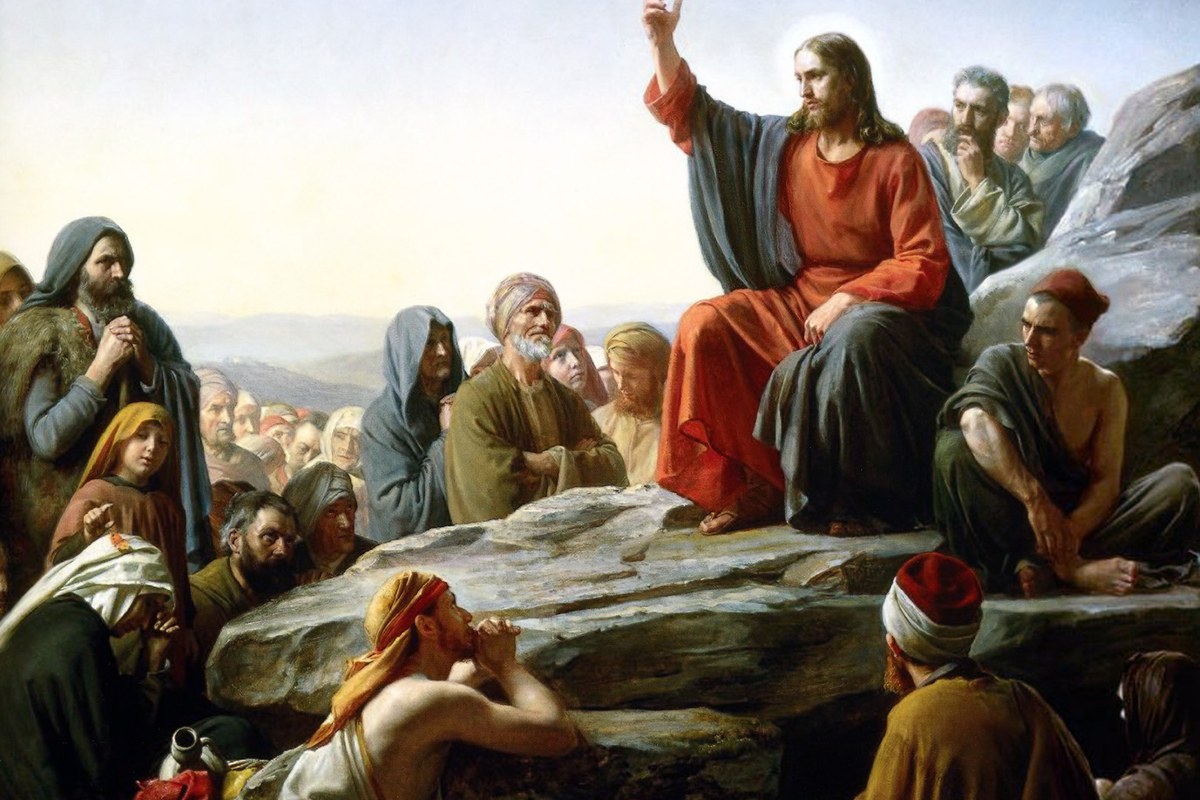
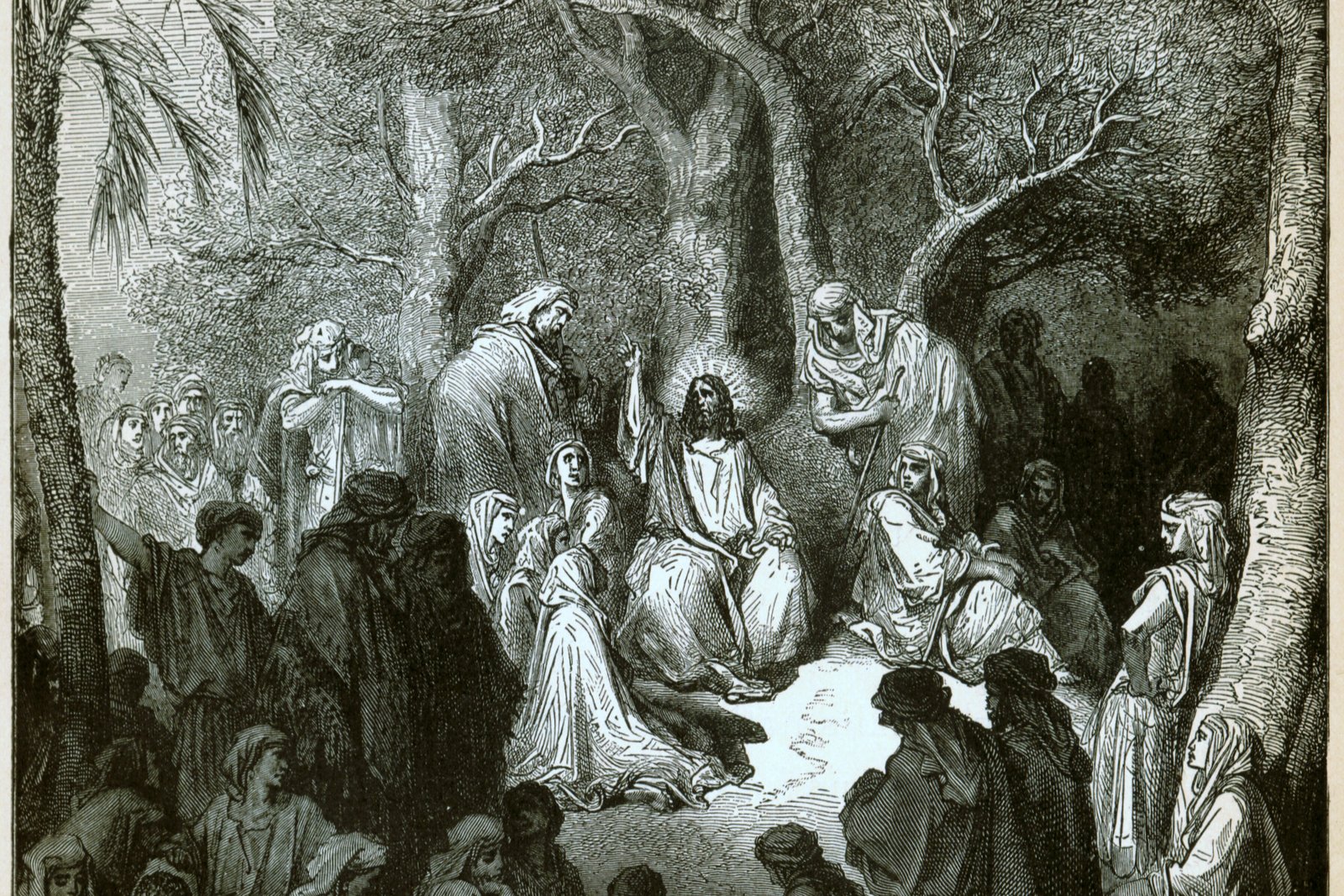
Crowds have been following Jesus all over Galilee, watching him heal the sick, and by the time he climbs a hillside to teach, Matthew says his disciples come close and "he began to teach them" (NABRE, Matthew 5:2). What comes out of his mouth first isn't a list of rules. It's a string of blessings pronounced over exactly the people Galilean society — and most societies before or since — would never have called fortunate: the poor, the grieving, the persecuted. This is the Sermon on the Mount, and its opening lines are known as the Beatitudes, from the Latin beatus, "blessed."
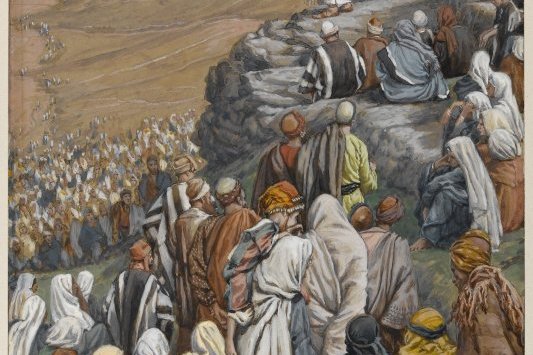
James Tissot, The Sermon of the Beatitudes, c. 1886–1894 (public domain)
Luke's Gospel preserves a shorter, starker version of the same teaching, delivered "on a stretch of level ground" rather than a mountainside (NABRE, Luke 6:17). Luke gives only four blessings rather than eight, and pairs each one with a matching woe: "blessed are you who are poor" is answered later by "woe to you who are rich" (NABRE, Luke 6:20, 24). Scholars have long debated whether Matthew and Luke record two separate occasions or two different renderings of one teaching event, but either way, the core pattern — blessing pronounced over exactly the people a comfortable society overlooks — holds steady across both Gospels.
The eight blessings
"Blessed are the poor in spirit, for theirs is the kingdom of heaven" (NABRE, Matthew 5:3). Not simply material poverty, but a spirit of dependence on God rather than self-sufficiency — the opposite of the pride that says it needs nothing from anyone.
"Blessed are they who mourn, for they will be comforted" (NABRE, Matthew 5:4). Grief isn't glamorized here; it's acknowledged as real, and paired with a promise that it will not be the last word.
"Blessed are the meek, for they will inherit the land" (NABRE, Matthew 5:5). Meekness means strength held in restraint, not weakness — the same word used elsewhere in Scripture to describe Moses.
"Blessed are they who hunger and thirst for righteousness, for they will be satisfied" (NABRE, Matthew 5:6). An appetite for what is right, as urgent as physical hunger.
"Blessed are the merciful, for they will be shown mercy" (NABRE, Matthew 5:7). A reciprocity runs through this one: the measure given is the measure received.
"Blessed are the clean of heart, for they will see God" (NABRE, Matthew 5:8). Purity of intention and desire, undivided by competing loyalties.
"Blessed are the peacemakers, for they will be called children of God" (NABRE, Matthew 5:9). Not passive peacekeepers but active reconcilers, doing work that reflects God's own character.
"Blessed are they who are persecuted for the sake of righteousness, for theirs is the kingdom of heaven" (NABRE, Matthew 5:10). The list closes where it might seem least expected — with suffering for doing right treated as its own kind of blessing, and Jesus adds one more line just after, telling his listeners directly to "rejoice and be glad" when insulted and persecuted "because of me" (NABRE, Matthew 5:11-12).
Notice the structure repeated eight times over: a condition the world would rarely envy, paired with a promise that answers it directly. The poor in spirit receive a kingdom; those who mourn receive comfort; the hungry receive satisfaction. It isn't a vague assurance that things will eventually work out — each blessing responds specifically to the particular lack or suffering named just before it, as though Jesus is deliberately closing the exact gap he's describing rather than offering generic encouragement.
A pattern, not a checklist
Read straight through, the Beatitudes trace a kind of spiritual arc — from acknowledging need (poverty of spirit, grief) to inner transformation (meekness, hunger for righteousness, mercy, purity) to outward mission (peacemaking, enduring persecution). The Catechism describes them as depicting "the countenance of Jesus Christ" and portraying the charity he lived out himself (CCC 1717) — less a checklist to complete than a portrait to grow into.
They also reframe, rather than cancel, the Ten Commandments given centuries earlier at Sinai. Where the Commandments largely tell Israel what not to do, the Beatitudes describe the positive dispositions of a heart already turned toward God — Jesus "fulfilling" the law, as he says a few lines later in the same sermon, by deepening it rather than discarding it.
The Catechism draws a further connection worth knowing: it treats the Beatitudes as answering humanity's natural desire for happiness, a desire the Catechism says "is of divine origin" and placed in the human heart "to draw man to the One who alone can fulfill it" (CCC 1718). Read that way, the Beatitudes aren't a demand imposed from outside so much as a description of where genuine, lasting happiness is actually found — a claim that runs directly against instinct, since none of the eight conditions named sound like happiness at first hearing.
Blessed, not merely happy
The word behind "blessed" — makarios in the Greek text — carries more weight than a synonym for "happy." It names a condition of being right with God that holds even in circumstances the world would call miserable: poverty, mourning, persecution. That's the paradox the Beatitudes ask a reader to sit with, and it's why, two thousand years after they were first spoken on a Galilean hillside, they remain one of the most quoted — and most quietly unsettling — passages in the Gospels.
That unsettling quality is part of why the Beatitudes have shaped Christian moral imagination so persistently across the centuries — quoted at funerals, invoked by reformers and peacemakers, and cited constantly in Catholic teaching on poverty, mercy, and justice. They function less like a rulebook and more like a lens: a way of looking at ordinary life and asking who, in any given moment, is being overlooked as unfortunate but is in fact standing closest to God. Readers interested in how that vision translates into concrete action may also want to read about the Corporal Works of Mercy, the practical charitable acts Jesus describes later in Matthew's Gospel as the measure by which he'll judge the nations.
Trivia
How many Beatitudes are there?
What does 'blessed' mean in the Beatitudes?
Where were the Beatitudes given?
What is the difference between the Beatitudes and the Ten Commandments?
Are the Beatitudes the same as the Corporal Works of Mercy?
You May Also Like

Related Reading