Angels in the Book of Revelation

A vision built from angelic messengers
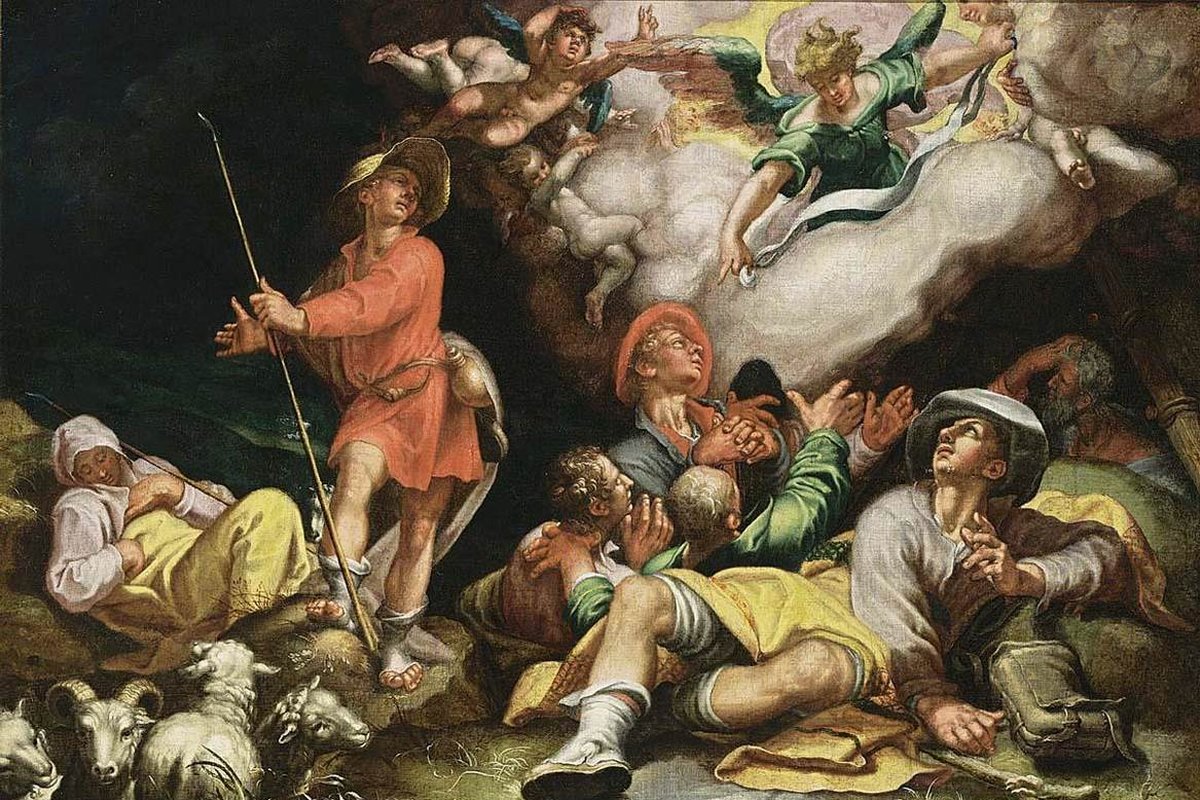
Revelation isn't the first place Scripture shows angels speaking and acting with God's own authority — the Old Testament's recurring angel of the Lord does much the same centuries earlier. But Revelation opens by identifying itself as a chain of angelic transmission: God gives the message to Jesus Christ, who sends "He made it known by sending his angel to his servant John," (Revelation 1:1, NABRE). Everything that follows — the letters to the churches, the visions of judgment, the final vision of a new heaven and earth — arrives through an unbroken sequence of angelic messengers. It's worth noting that framing before diving into the book's specific angelic figures, because it sets the tone for everything that follows: in Revelation, angels aren't occasional visitors to the story. They are, in large part, how the story gets told at all.
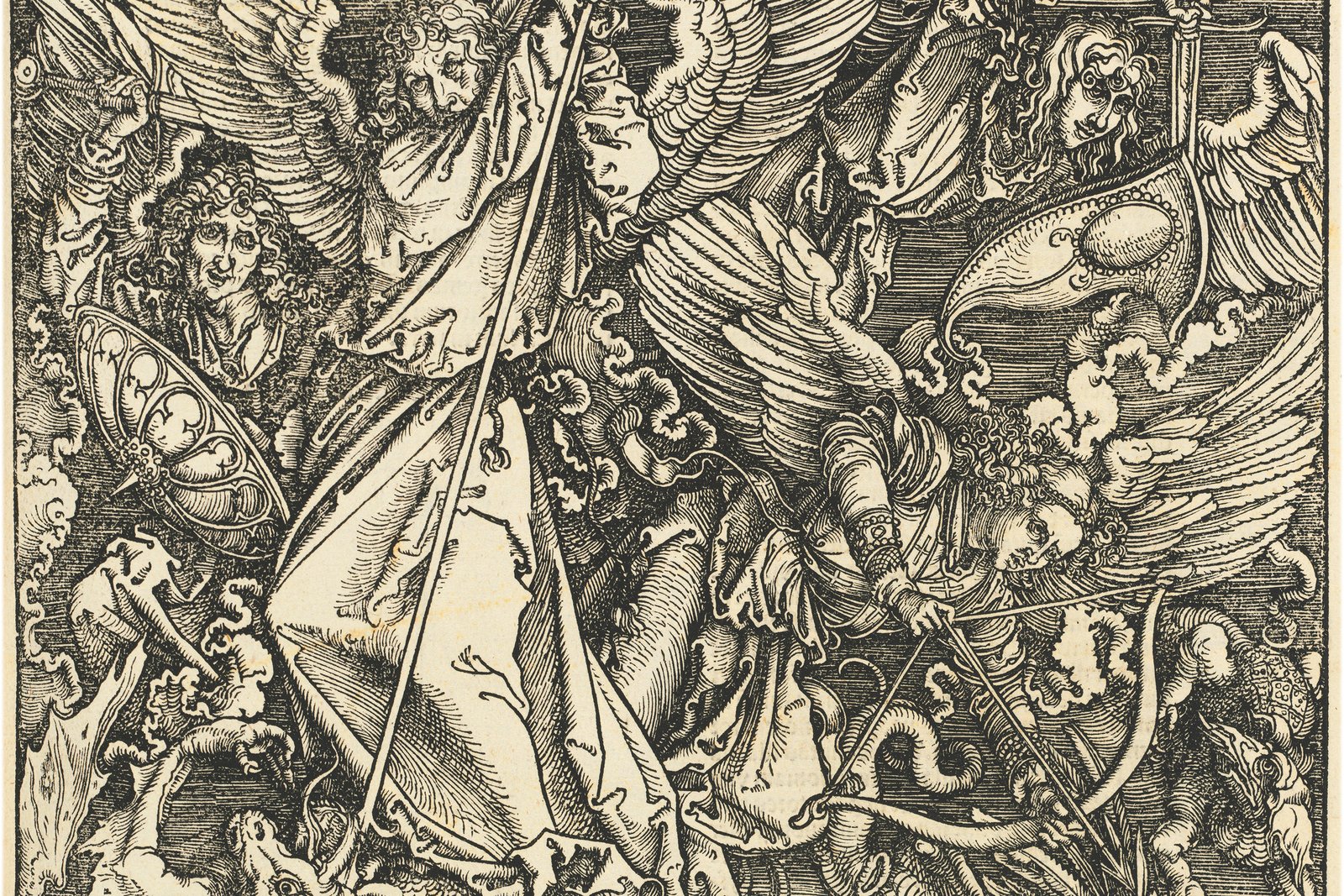
Albrecht Dürer, Saint Michael Fighting the Dragon, from The Apocalypse, c. 1496-1498 — public domain.
The angels of the seven churches
The very first angels named specifically in Revelation appear in John's opening vision of the risen Christ, who stands among seven golden lampstands holding seven stars in his right hand. John is told directly what they represent: "the seven stars are the angels of the seven churches, and the seven lampstands are the seven churches" (Revelation 1:20, NABRE). Each of the seven letters that follow in chapters 2 and 3 — to Ephesus, Smyrna, Pergamum, Thyatira, Sardis, Philadelphia, and Laodicea — opens with the same formula: "To the angel of the church in [city], write..."
Scripture doesn't spell out exactly what kind of figure is meant here, and this is genuinely a case where Christian interpreters have read the text differently rather than one where the Church has settled on a single answer. Some read "angel" quite literally, as a guardian spirit assigned to each individual congregation. Others read it as a way of addressing the church's bishop or leading representative, using angelic language for a human office. Both readings have circulated for centuries; what's clear from the text itself is that each church, in John's vision, has a spiritual identity distinct enough to be addressed as a single figure receiving a single message.
The angel with the golden censer
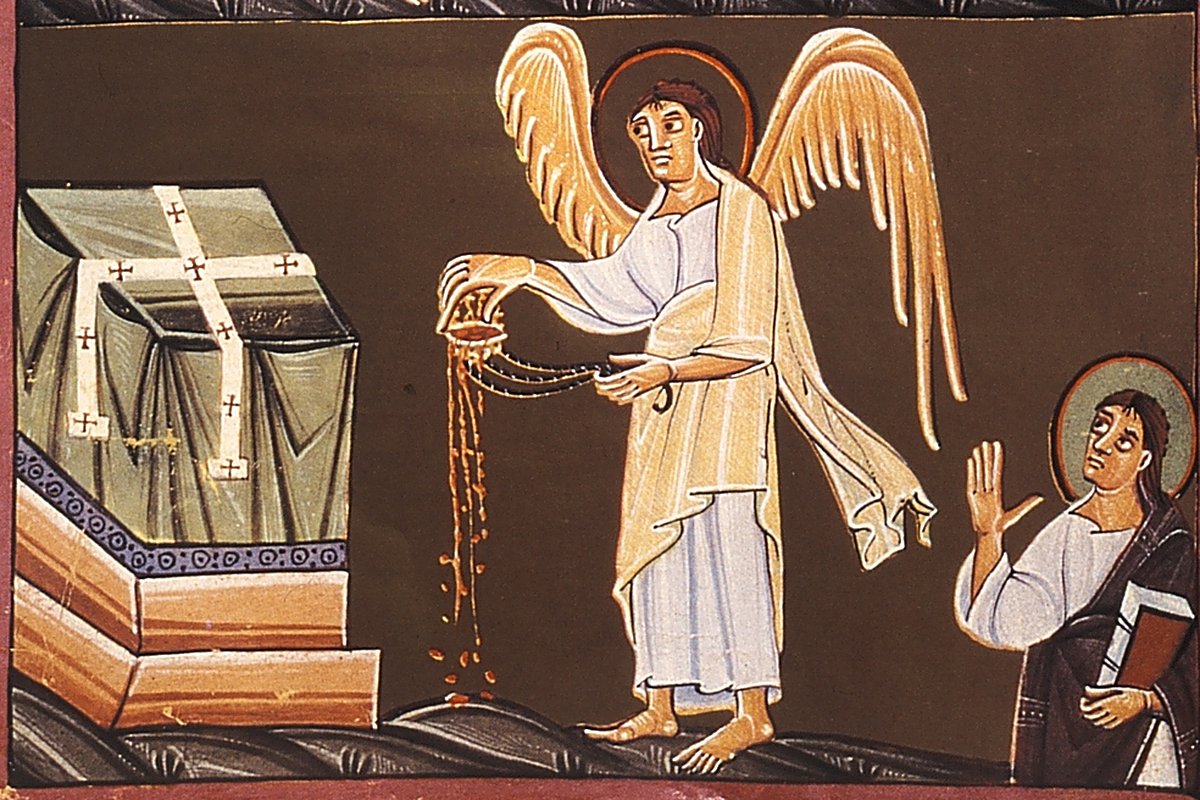
Before the vision turns toward a long sequence of disasters, it pauses on a quieter scene: an angel standing at the golden altar before God's throne, mingling incense with "the prayers of all the holy ones," so that "the smoke of the incense along with the prayers of the holy ones went up before God from the hand of the angel" (Revelation 8:3-4, NABRE). The full details of that scene — and what happens when the same angel fills his censer with fire and hurls it back to earth — are covered at length in The Angel with the Golden Censer. For this overview, what matters is the role that angel plays in Revelation's structure: a hinge point, positioned between the prayers of the faithful and the judgments about to unfold.
Seven angels, seven trumpets
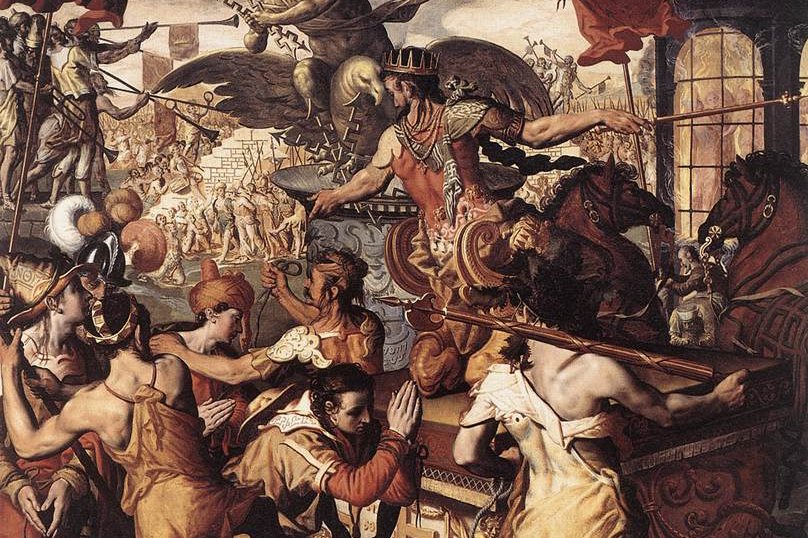
Immediately after that pause, Revelation's action escalates. "I saw that the seven angels who stood before God were given seven trumpets" (Revelation 8:2, NABRE), and once "the seven angels who were holding the seven trumpets prepared to blow them" (Revelation 8:6, NABRE), each blast triggers a fresh catastrophe — fire and hail mixed with blood, a mountain of fire cast into the sea, a star named Wormwood poisoning a third of the earth's rivers, and more, escalating chapter by chapter. Later in the book, a parallel sequence of "seven angels with the seven last plagues" pour out bowls of God's fury on the earth (Revelation 15:1, NABRE) — a second wave of angelic judgment that mirrors and intensifies the trumpet sequence that came before it. Structurally, these repeating sets of seven angels are part of what gives Revelation its distinctive, escalating rhythm: each cycle of angelic action pushes the vision further toward its climax.
The four living creatures around the throne
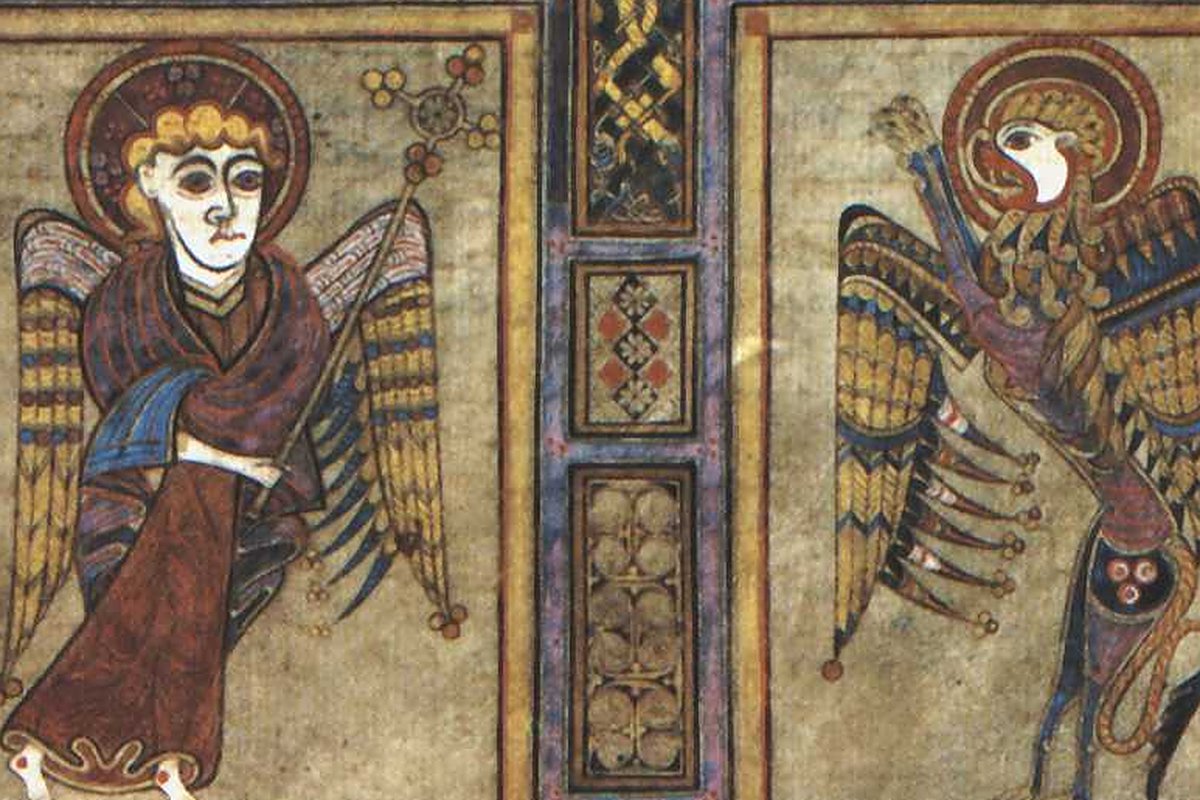
Standing apart from the ranks of angels delivering trumpets and plagues are four unusual figures who surround God's throne continuously, described with the faces of a lion, an ox, a man, and an eagle, each covered with eyes and never ceasing to sing "Holy, holy, holy" (Revelation 4:6-8, NABRE). These figures draw on imagery from the prophet Ezekiel's much earlier vision, and Christian tradition eventually linked each of the four faces to one of the four Gospel writers — a long-standing symbolic reading still visible in church art today. Their full story, including how that four-Gospel interpretation developed, is covered separately in The Four Living Creatures.
War in heaven, and Michael's victory
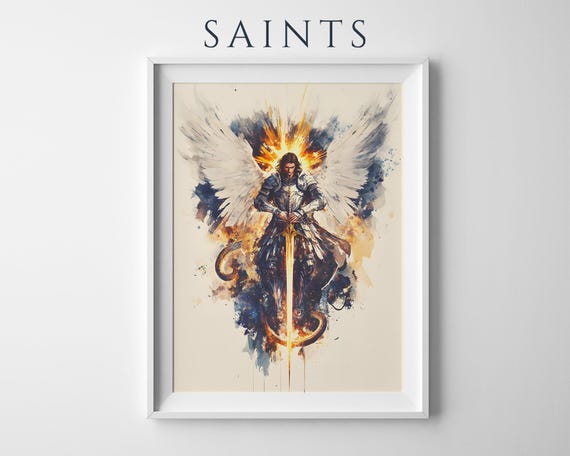
Revelation's single most dramatic angelic scene comes in chapter 12, where a massive red dragon — introduced as having "seven heads and ten horns" (Revelation 12:3, NABRE) — threatens to devour a woman's newborn child. What follows is described in the starkest possible terms: "Then war broke out in heaven; Michael and his angels battled against the dragon. The dragon and its angels fought back, but they did not prevail and there was no longer any place for them in heaven" (Revelation 12:7-8, NABRE). The identity of the dragon is spelled out immediately afterward, without any ambiguity left for the reader: "The huge dragon, the ancient serpent, who is called the Devil and Satan, who deceived the whole world, was thrown down to earth, and its angels were thrown down with it" (Revelation 12:9, NABRE).
It's the only place in Scripture where Michael is shown directly leading armed conflict against Satan himself, and it's a major reason Catholic tradition has long venerated him specifically as a protector against evil and a leader of the heavenly host — a role reflected in how he's depicted across centuries of Christian art, almost always armed and triumphant over a defeated dragon or serpent underfoot. A voice in heaven immediately follows the dragon's fall with a declaration of victory: "Now have salvation and power come, and the kingdom of our God... for the accuser of our brothers is cast out" (Revelation 12:10, NABRE) — framing Michael's battle not as an isolated skirmish, but as the decisive turning point that strips Satan of his former access to accuse humanity before God.
Angels of the final vision
Even in Revelation's closing chapters, describing the new Jerusalem, angels remain part of the architecture of the vision itself — quite literally, in one case, since an angel is the one who measures the heavenly city's walls and gates for John (Revelation 21:15-17, NABRE), and twelve angels are described standing at its twelve gates (Revelation 21:12, NABRE). Even at the very end of the book, it's an angel who speaks the vision's closing instructions to John, testifying, "I, Jesus, sent my angel to give you this testimony for the churches" (Revelation 22:16, NABRE) — closing the loop on the same angelic chain of transmission the book opened with.
Why Revelation leans so heavily on angels
Taken as a whole, Revelation's angels aren't a decorative flourish on top of the book's real content — they largely are its content, carrying messages, sounding warnings, executing judgments, and, in Michael's case, fighting outright battles on behalf of God's people. For a book written to persecuted early Christian communities, facing real and immediate danger under Roman rule, that dense population of angels does real theological work: it presents a universe where the forces arrayed against the faithful, however overwhelming they might look from the ground, are already outmatched by the armies of heaven — armies Revelation takes care to show in the act of winning.
Trivia
What are the angels of the seven churches in Revelation?
What does Michael do in the Book of Revelation?
How many angels sound trumpets in Revelation?
What is the angel with the golden censer, and is that the same as one of the seven trumpet angels?
Are the four living creatures in Revelation angels?
Related Reading