The Betrayal of Judas

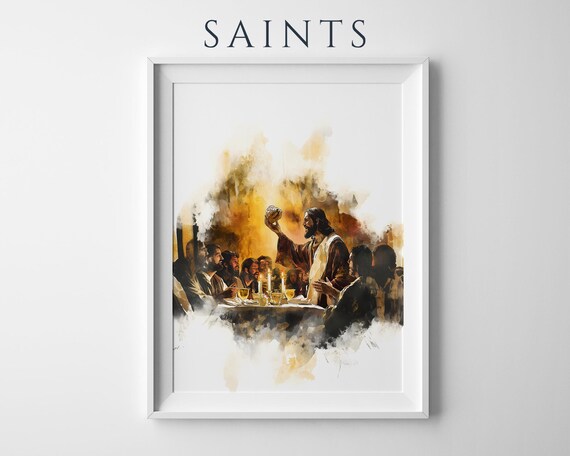
A deal struck before the meal
The betrayal doesn't begin in the garden — it begins earlier, at a meeting the Gospels place shortly before the Last Supper, one early link in the chain of events traced fully in The Passion of Christ — A Complete Walkthrough. Matthew records it plainly: "Then one of the Twelve, who was called Judas Iscariot, went to the chief priests and said, “What are you willing to give me if I hand him over to you?” They paid him thirty pieces of silver," (Matthew 26:14-15, RSV-CE). Luke and John both add a detail that reaches beyond ordinary greed as an explanation: "Then Satan entered into Judas, the one surnamed Iscariot, who was counted among the Twelve," (Luke 22:3, RSV-CE). The two threads — a very human financial motive and a spiritual one — run alongside each other in the Gospel accounts without either fully explaining the other away.
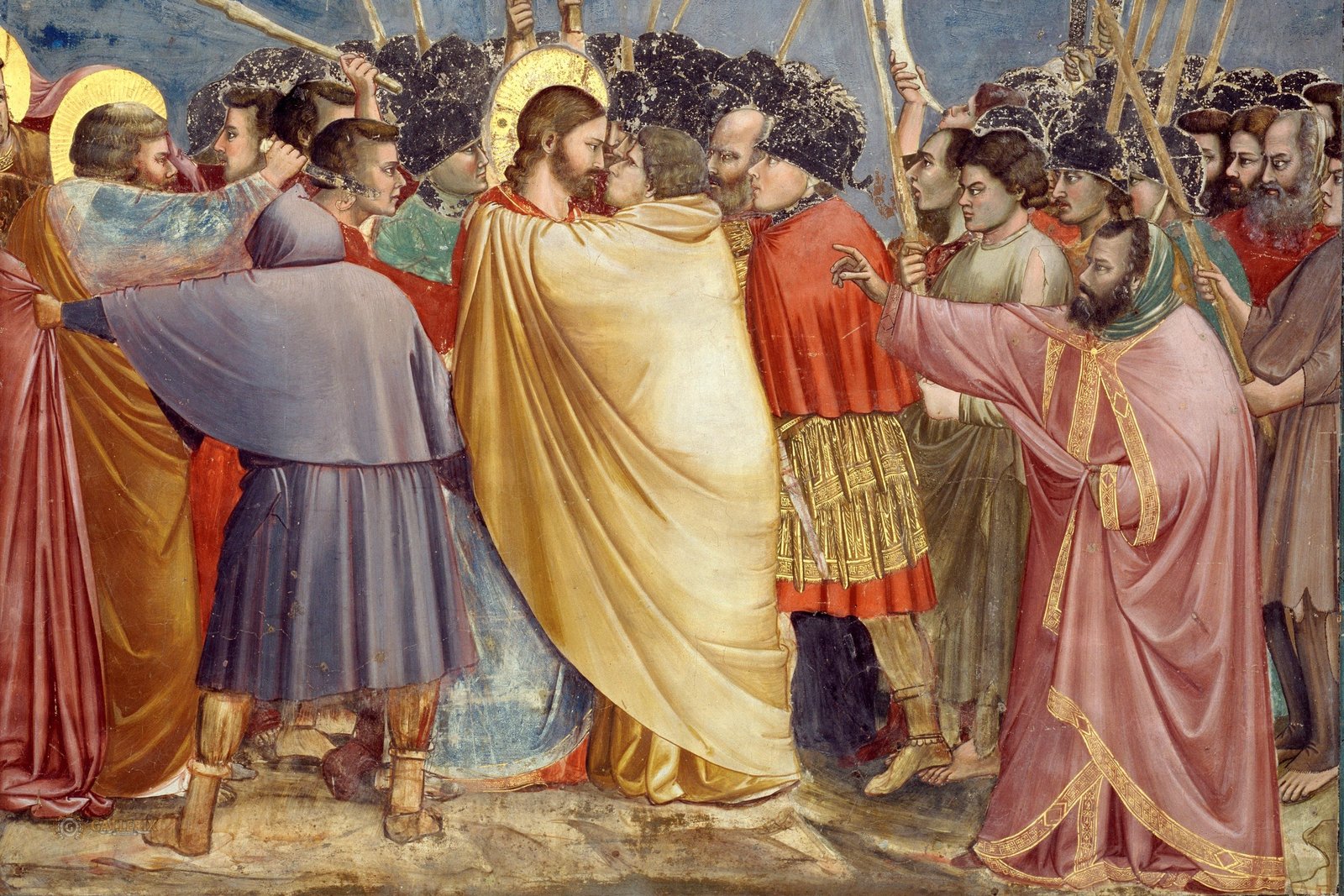
Giotto di Bondone, "The Kiss of Judas," 1304–06, Scrovegni Chapel, Padua — public domain.
A warning at the table
At the meal itself, John records Jesus announcing the betrayal to the Twelve directly: "Amen, amen, I say to you, one of you will betray me." (John 13:21, RSV-CE), sending the disciples into confused questioning about which of them he meant. When the beloved disciple asks quietly who it is, Jesus answers with a gesture rather than a name: "It is he to whom I shall give this morsel when I have dipped it," and hands the bread to Judas (John 13:26, RSV-CE). John adds a chilling narrative aside immediately after: "After he took the morsel, Satan entered him. So Jesus said to him, “What you are going to do, do quickly." (John 13:27, RSV-CE) — and Judas leaves the table into the night, unremarked upon by the other disciples, who John says assumed he'd been sent on some errand related to the feast or to give something to the poor (John 13:28-29).
A prearranged signal
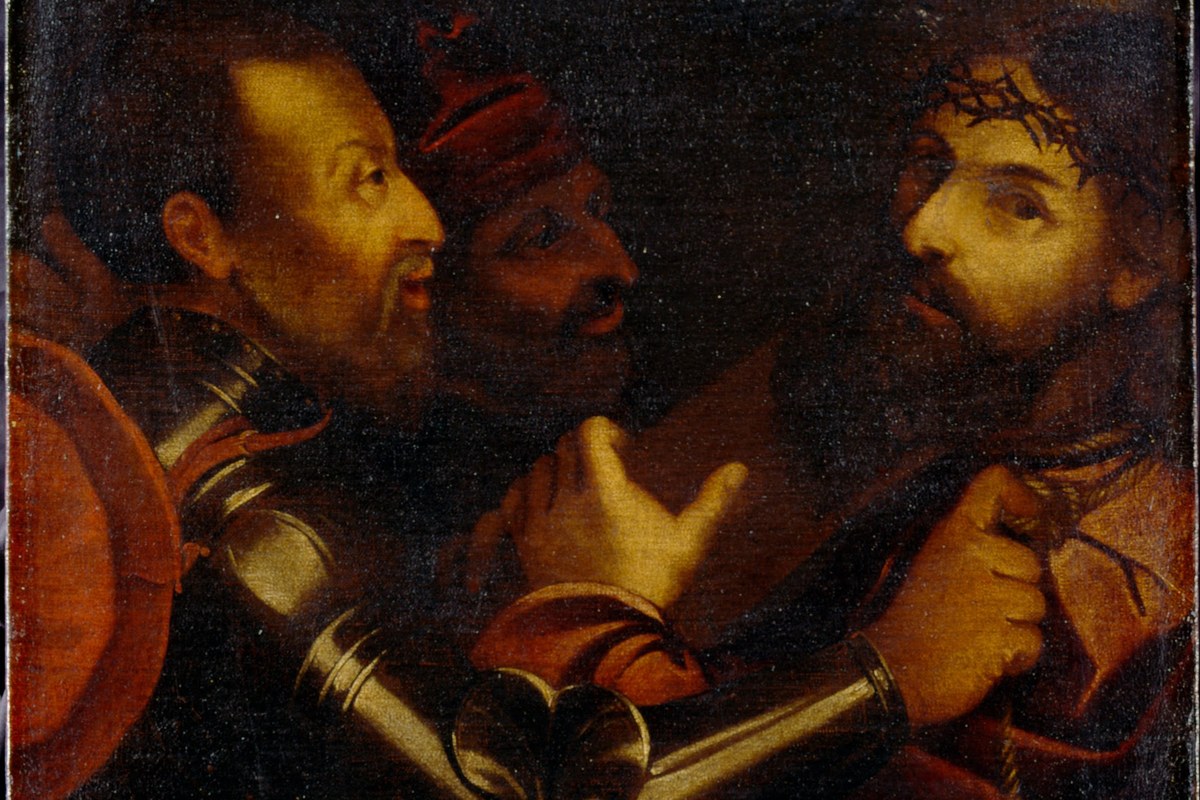
By the time Judas returns, he is no longer alone. Matthew describes him arriving at Gethsemane "While he was still speaking, Judas, one of the Twelve, arrived, accompanied by a large crowd, with swords and clubs, who had come from the chief priests and the elders of the people." (Matthew 26:47, RSV-CE) — and he has already told them exactly how to pick Jesus out from among his disciples in the dark: "His betrayer had arranged a sign with them, saying, “The man I shall kiss is the one; arrest him.” Immediately he went over to Jesus and said, “Hail, Rabbi!” and he kissed him." (Matthew 26:48-49, RSV-CE). A kiss on the cheek or hand was an entirely ordinary greeting between a disciple and a respected teacher in that culture — which is exactly what makes the scene so unsettling. Judas doesn't betray Jesus through violence or accusation; he does it through the most familiar gesture of affection available to him. Luke records Jesus's own response to the gesture, quiet and direct: "Judas, are you betraying the Son of Man with a kiss?" (Luke 22:48, RSV-CE).
Remorse, and a field bought with blood money
Matthew alone among the Gospel writers follows Judas past the arrest itself, describing what happened once Jesus had been condemned: "Judas, his betrayer, seeing that Jesus had been condemned, deeply regretted what he had done. He returned the thirty pieces of silver to the chief priests and elders, saying, 'I have sinned in betraying innocent blood.' They said, 'What is that to us? Look to it yourself.' Flinging the money into the temple, he departed and went off and hanged himself" (Matthew 27:3-5, NABRE). The chief priests, unwilling to return the silver to the temple treasury because it was, in their own words, "blood money," used it instead to purchase a field for burying foreigners — a field Matthew says came to be known as "Field of Blood" (Matthew 27:6-8). The Acts of the Apostles gives a somewhat different account of Judas's death and the field's origin (Acts 1:18-19), a divergence long noted by biblical scholars and typically read as two early traditions about the same tragic end rather than a contradiction requiring resolution.
A name that became a byword
Few names in the New Testament carry the weight that "Judas" does in later usage — the name itself, centuries on, functions almost as shorthand for betrayal generally, independent of the man himself. It's worth remembering, though, that Judas Iscariot was not an outsider or a late addition to Jesus's circle; he was one of the Twelve from the beginning, entrusted, according to John, with keeping the disciples' common purse (John 12:6, 13:29). His story sits uncomfortably close to Simon Peter's own failure that same night — both men fail Jesus within hours of each other, one through betrayal and one through denial. Christian tradition has long drawn a distinction between the two outcomes not based on the severity of the act itself, but on what followed it: Peter's story continues into repentance, restoration, and a central role in the early Church, while Matthew's Gospel leaves Judas's story ending in despair rather than any recorded return.
What the Church says, and doesn't say
The Catholic Church has never formally taught that Judas is in Hell — a common misconception. What Scripture and Catholic tradition affirm clearly is the gravity of the act itself and the tragedy of a rejected chance at repentance; Jesus's own words at the Last Supper, calling the betrayer's fate "woe" (Matthew 26:24, RSV-CE), underline how seriously the Gospels treat the act. Beyond that, the eternal fate of Judas specifically remains something the Church has left to God's judgment rather than dogmatic pronouncement — a distinction worth holding onto amid centuries of popular tradition that has often gone further than the Gospels themselves do.
Trivia
How much did Judas receive for betraying Jesus?
How did Judas identify Jesus to the arresting soldiers?
What happened to Judas after the betrayal?
Why did Judas betray Jesus?
What became of the thirty pieces of silver?
Related Reading