Jesus Walking on Water


Sent ahead, alone
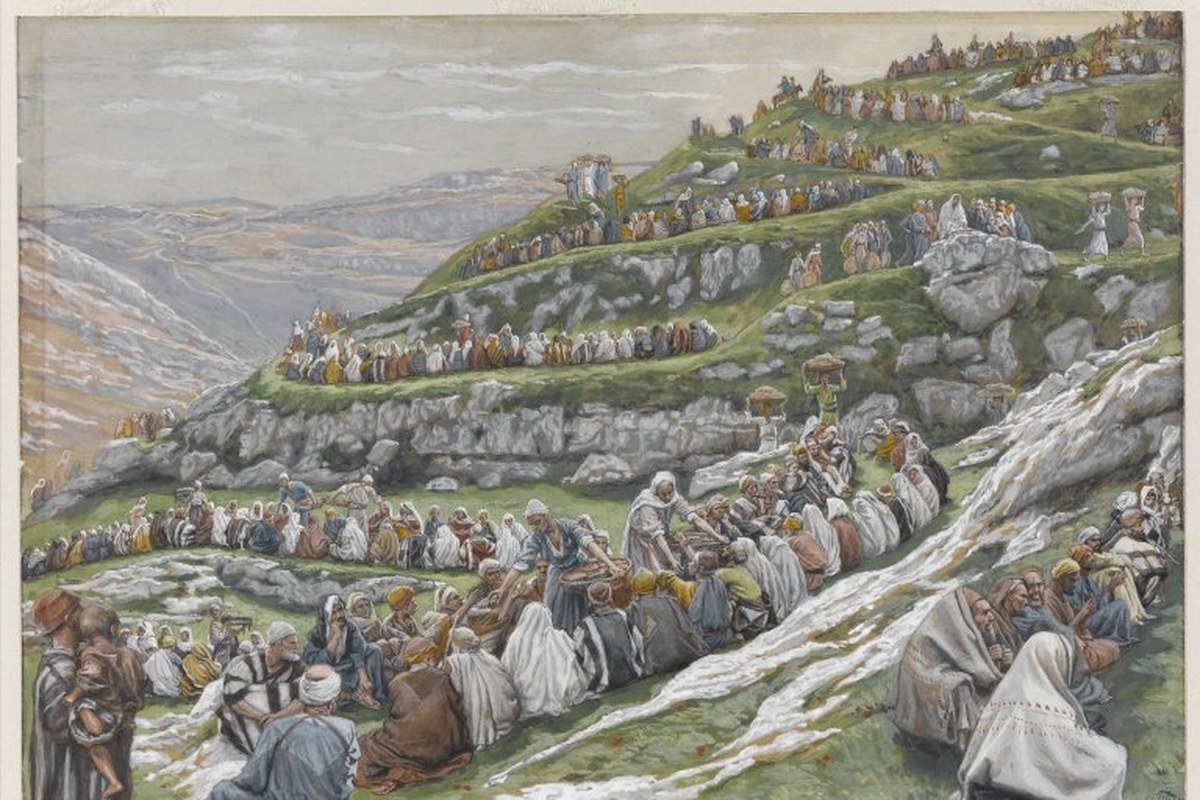
The scene follows directly on the heels of the feeding of the five thousand, one of the best-attested miracles in the Gospels, appearing in all four. Immediately afterward, Matthew records, Jesus "made the disciples get into the boat and precede him to the other side, while he dismissed the crowds," and then "he went up on the mountain by himself to pray" (Matthew 14:22-23, NABRE). It's a small but notable detail: Jesus deliberately sends his closest followers out onto the water without him, and stays behind alone into the evening. Whatever happens next, it happens because Jesus chose to be apart from the boat when the storm hit.
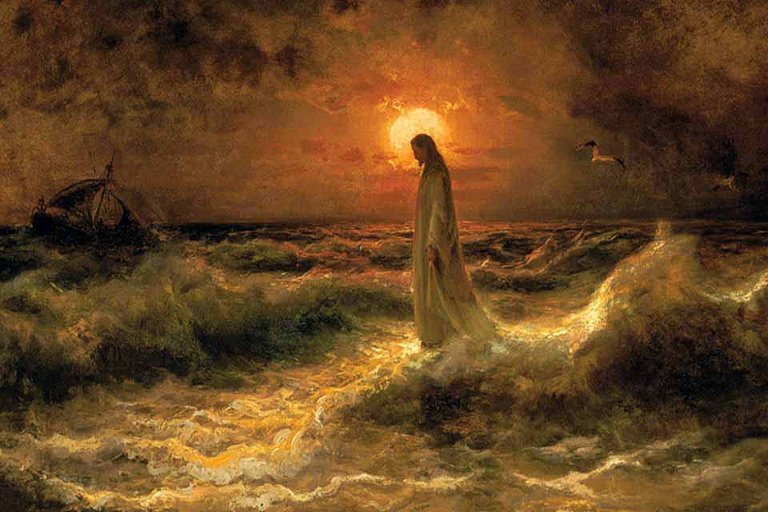
Julius von Klever, "Christ Walking on the Waters," c. 1880 — public domain.
A boat straining against the wind
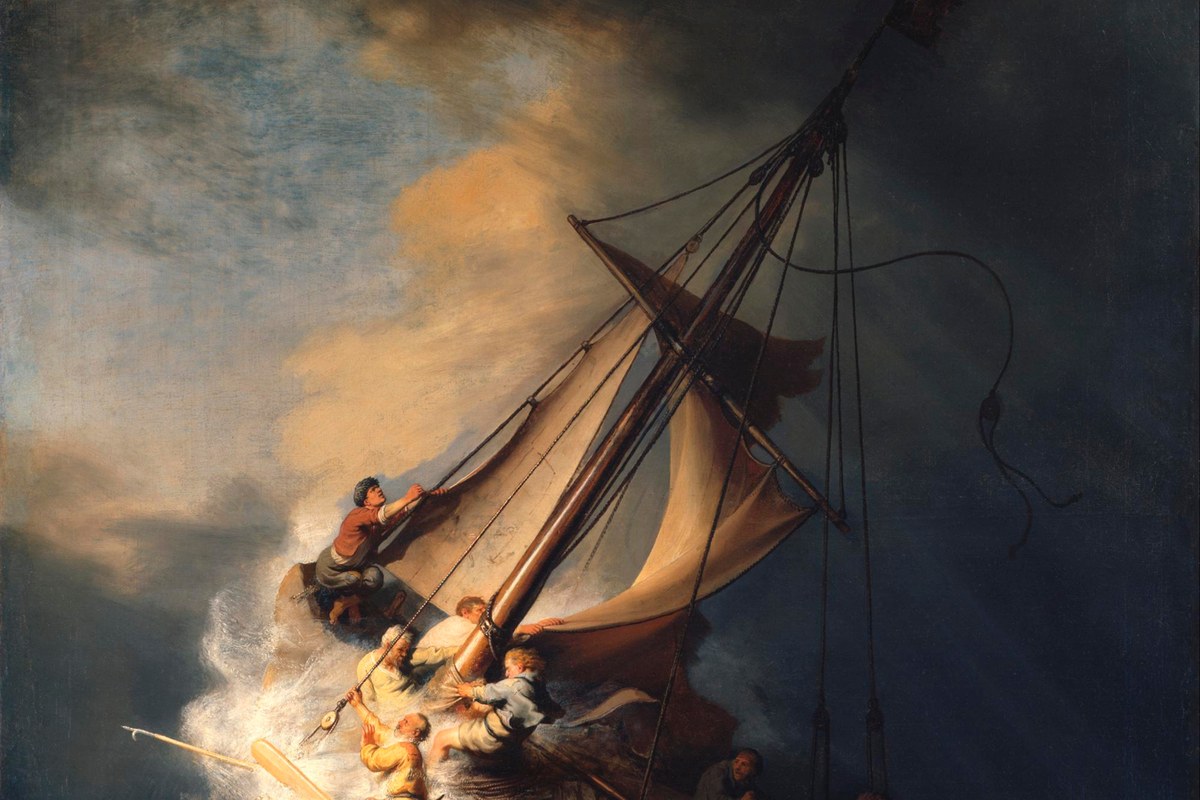
By the time Jesus comes looking for them, hours have passed. Mark's account adds a detail Matthew doesn't include: Jesus "saw that they were tossed about while rowing, for the wind was against them" (Mark 6:48, NABRE) — the disciples, many of them experienced fishermen who knew the Sea of Galilee's sudden, violent storms well, were rowing hard and getting almost nowhere. Matthew places the timing precisely: it was "the fourth watch of the night," roughly between three and six in the morning, when Jesus finally came toward them, "walking on the sea" (Matthew 14:25, RSV-CE). This wasn't the first time this same group of disciples had faced a storm on this lake with Jesus nearby — an earlier crossing, recounted separately in the Gospels, had ended with Jesus calming a storm from inside the boat itself rather than approaching it from outside.
"It is I; have no fear"
The disciples' first reaction to the sight isn't hope. It's dread. "When the disciples saw him walking on the sea they were terrified. “It is a ghost,” they said, and they cried out in fear." (Matthew 14:26, RSV-CE). Given the hour, the exhaustion, and the storm still battering the boat, a figure walking calmly across the water toward them was apparently far more alarming than reassuring. Jesus's response is immediate: "At once [Jesus] spoke to them, “Take courage, it is I; do not be afraid." (Matthew 14:27, RSV-CE). The Greek phrase behind "it is I" — ego eimi — carries an echo, noted by many biblical scholars, of God's own self-identification to Moses at the burning bush ("I AM WHO I AM," Exodus 3:14), though the phrase is also simply the ordinary way of saying "it's me" in Greek and shouldn't be read as a claim heavier than the immediate narrative context supports on its own.
Peter steps out of the boat
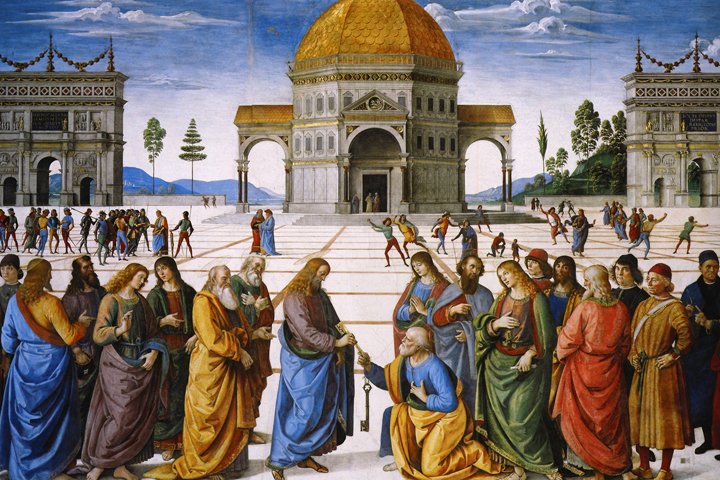
Matthew alone among the Gospel writers includes what happens next: Peter, apparently testing whether the figure really is Jesus, calls out, "Lord, if it is you, bid me come to you on the water." Jesus answers with a single word — "Come" (Matthew 14:28-29, RSV-CE) — and Peter climbs out of the boat and, for a few steps at least, actually walks on the water toward him. It doesn't last. "But when he saw how [strong] the wind was he became frightened; and, beginning to sink, he cried out, “Lord, save me!” Immediately Jesus stretched out his hand and caught him, and said to him, “O you of little faith, why did you doubt?" (Matthew 14:30-31, RSV-CE). It's a scene that captures something distinctly characteristic of Peter across the Gospels — bold enough to step out of the boat when none of the other eleven disciples even asked, and human enough to falter once the wind actually caught his attention. The same mixture of courage and faltering shows up again later that same week, in Peter's three denials of Jesus during the Passion — a man capable of remarkable boldness and, in the next moment, of real fear.
"Truly you are the Son of God"
Once Jesus and Peter climb back into the boat, Matthew records that "Those who were in the boat did him homage, saying, “Truly, you are the Son of God." (Matthew 14:32-33, RSV-CE) — a confession that stands out for arriving from the disciples themselves, mid-storm, rather than after a resurrection appearance or another later, more obviously climactic moment. Mark's account, by contrast, ends on a notably more subdued note: rather than a confession of faith, Mark says the disciples "They were [completely] astounded. They had not understood the incident of the loaves. On the contrary, their hearts were hardened." (Mark 6:51-52, RSV-CE) — a puzzling comment connecting this scene back to the miracle of the loaves that preceded it, and one that has occupied biblical commentators for centuries without full resolution.
A miracle read as a sign of authority
Catholic teaching has long placed this event, alongside the calming of the storm, within a category sometimes called Jesus's "nature miracles" — acts demonstrating power not over illness or evil spirits, but over creation itself, the wind and the water. Read against the Old Testament background familiar to Jesus's first-century Jewish audience, where the sea often symbolized chaos and danger held back only by God's own power (echoed, for instance, in passages like Job 38:8-11 and several Psalms), Jesus walking calmly across the same waters carried theological weight well beyond the physical feat itself. It isn't presented in the Gospels as a magic trick meant to impress, but as another sign — alongside the multiplication of the loaves that preceded it that same day — pointing toward exactly the claim the disciples make once they're safely back in the boat: that the man in front of them was more than a teacher.
Trivia
What Gospel passages describe Jesus walking on water?
Why were the disciples in a boat at night?
What did Jesus say to reassure the disciples?
What happened when Peter tried to walk on the water?
Is Jesus walking on water considered a miracle of nature?
Related Reading