The Holy Guardian Angels

A single verse with a long afterlife
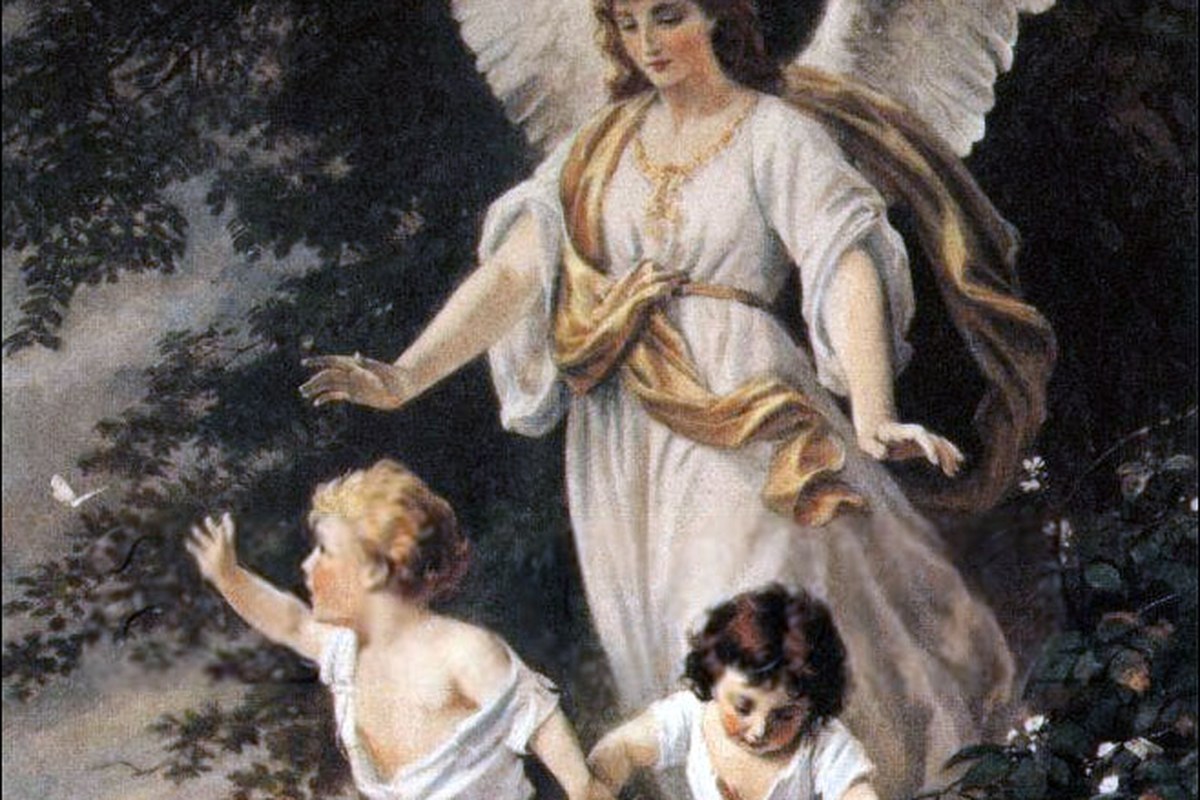
The clearest scriptural anchor for Catholic belief in guardian angels appears almost as an aside within a longer teaching. In Matthew's Gospel, Jesus warns his disciples in the sternest terms against ever causing one of "these little ones" to stumble in their faith, and then, as part of the reasoning behind that warning, adds that in heaven their angels continually behold the face of the Father. According to the Revised Standard Version, Jesus says: "See that you do not despise one of these little ones, for I say to you that their angels in heaven always look upon the face of my heavenly Father." (Matthew 18:10). The verse does not develop a systematic doctrine of guardian angels in any detail, but its assumption, that individual people, and children in particular, have angels specifically associated with them in some ongoing way before God, gave later Christian theology a firm scriptural foothold from which to build a much fuller teaching.
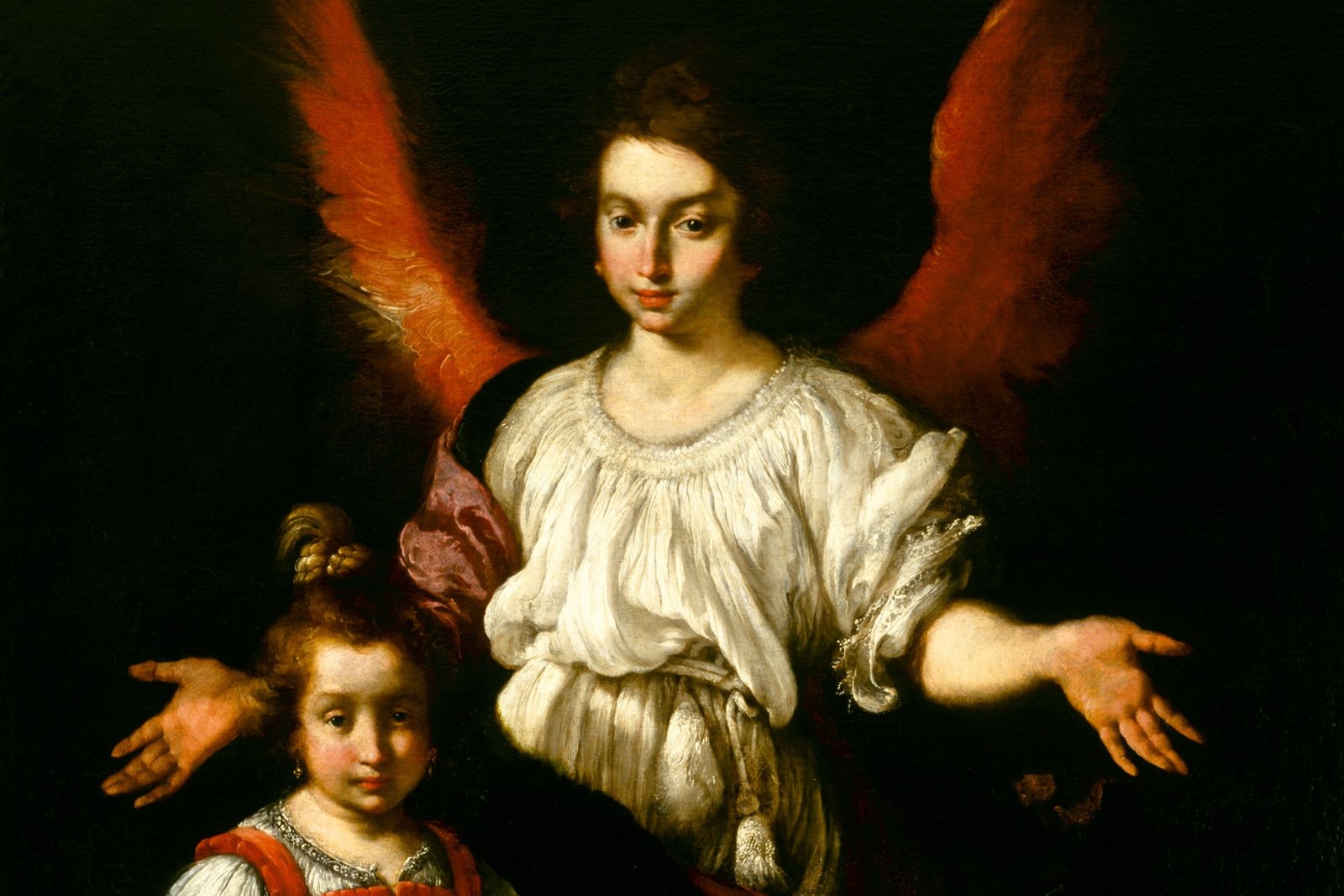
Bernardo Strozzi, The Guardian Angel — public domain.
Other biblical texts reinforced and extended that foundation over the centuries of Christian reflection that followed. Psalm 91 speaks of God commanding his angels to guard the faithful in all their ways, lifting them up so they do not strike their foot against a stone, a passage frequently cited in later Christian devotional writing on angelic protection. Perhaps most vividly, the Old Testament Book of Tobit narrates an extended story in which the angel Raphael, appearing in human disguise, guides, protects, and ultimately heals the young Tobias throughout a long and dangerous journey, a narrative that, whatever questions of literary genre surround the book itself, gave Christian tradition one of its most detailed and beloved pictures of what personal angelic guardianship might actually look like in practice.
From early Christian belief to formal teaching
Belief in angels generally, and in some notion of angelic guardianship over individuals specifically, appears widely across early Christian writing well before the Church developed any fully systematic theology of the subject. Origen, one of the most significant theologians of the third century, wrote explicitly of individual guardian angels assigned to each person, and similar ideas appear in the writings of other early Church Fathers across both the Greek East and Latin West, suggesting the belief was already a broadly shared assumption within Christian communities rather than a later theological innovation imposed from above.
The doctrine received its fullest and most influential medieval theological treatment from Saint Thomas Aquinas in the thirteenth century, whose Summa Theologiae devotes considerable systematic attention to angelology generally and to the specific question of guardian angels within it. Aquinas argued, drawing on both Scripture and the philosophical framework he inherited from Aristotelian thought, that every human being, not merely the baptized or the especially devout, receives an individual guardian angel from the moment of conception or birth, understanding this universal angelic care as an expression of God's providence extended to the whole of humanity rather than a special reward reserved only for believers. This position, that guardianship is universal rather than limited to Christians, became the broadly accepted view within later Catholic theology.
A feast established relatively late
Despite the antiquity of the underlying belief, a specific universal liturgical feast dedicated to the guardian angels developed relatively late in the Church's history. Local devotional observances honoring guardian angels are documented in various regions of Europe by the late medieval and early modern period, but it was Pope Paul V who, in 1608, extended a feast of the Guardian Angels to the wider Church, responding to the growing and evidently widespread popular devotion to the theme that had developed across preceding centuries.
The feast's date was later fixed more permanently under Pope Clement X in 1670, settling on October 2, a placement that positions it deliberately close to the feast of Saints Michael, Gabriel, and Raphael, the three archangels named in Scripture, celebrated a few days earlier on September 29, grouping the Church's major angelic feasts together within the same short stretch of the autumn liturgical calendar.
What the Catechism affirms, and what it leaves open
The Catechism of the Catholic Church, published in its definitive form in 1992, addresses guardian angels within its broader treatment of angels as a settled matter of Catholic teaching, affirming that "from infancy to death human life is surrounded by their watchful care and intercession," and citing the Church's ancient practice of entrusting individual believers to angelic protection through prayer as part of the Church's own consistent teaching and liturgical practice across the centuries.
At the same time, Catholic teaching has generally been careful to distinguish between the core affirmation, that angels exist and that God provides for individual protection and guidance through them, which is treated as a genuine matter of Christian faith rooted in Scripture and consistent tradition, and the many more specific questions surrounding exactly how guardian angels operate, communicate, or intervene in daily life, questions the Church has largely left within the domain of theological opinion, private devotion, and pious tradition rather than binding, precisely defined dogma. That distinction has allowed the devotion to remain both doctrinally grounded and, in its lived, everyday expression among ordinary believers, a matter of considerable personal and pastoral flexibility, from the simple childhood prayers taught to Catholic children for centuries to the more developed theological reflection found in writers from Origen through Aquinas and into the modern catechetical tradition.
Trivia
What does the Catholic Church teach about guardian angels?
What biblical passages support belief in guardian angels?
When did the feast of the Guardian Angels become part of the Church calendar?
Is belief in a personal guardian angel a matter of required Catholic doctrine?
Does every person have a guardian angel, according to Catholic teaching, including non-believers?
Related Reading