Saint Corona, the Martyr Whose Name Means Crown

A name older than the headlines
For most of the last thousand years, the name Corona meant one specific thing to Catholics across Central Europe: a teenage martyr, venerated alongside a soldier named Victor, whose relics rested in one of the great cathedrals of the Holy Roman Empire. That association only became complicated in 2020, when a virus that had been named decades earlier — for the crown-like protein spikes visible under an electron microscope — became a household word overnight, and a long-venerated saint's name suddenly needed context it had never required before. It's worth saying plainly and without dwelling on it further: the names share a Latin root, "corona," meaning crown, and nothing else. The virus was named in the 1960s by researchers describing its appearance; the saint had already been honored for roughly 1,700 years by then.

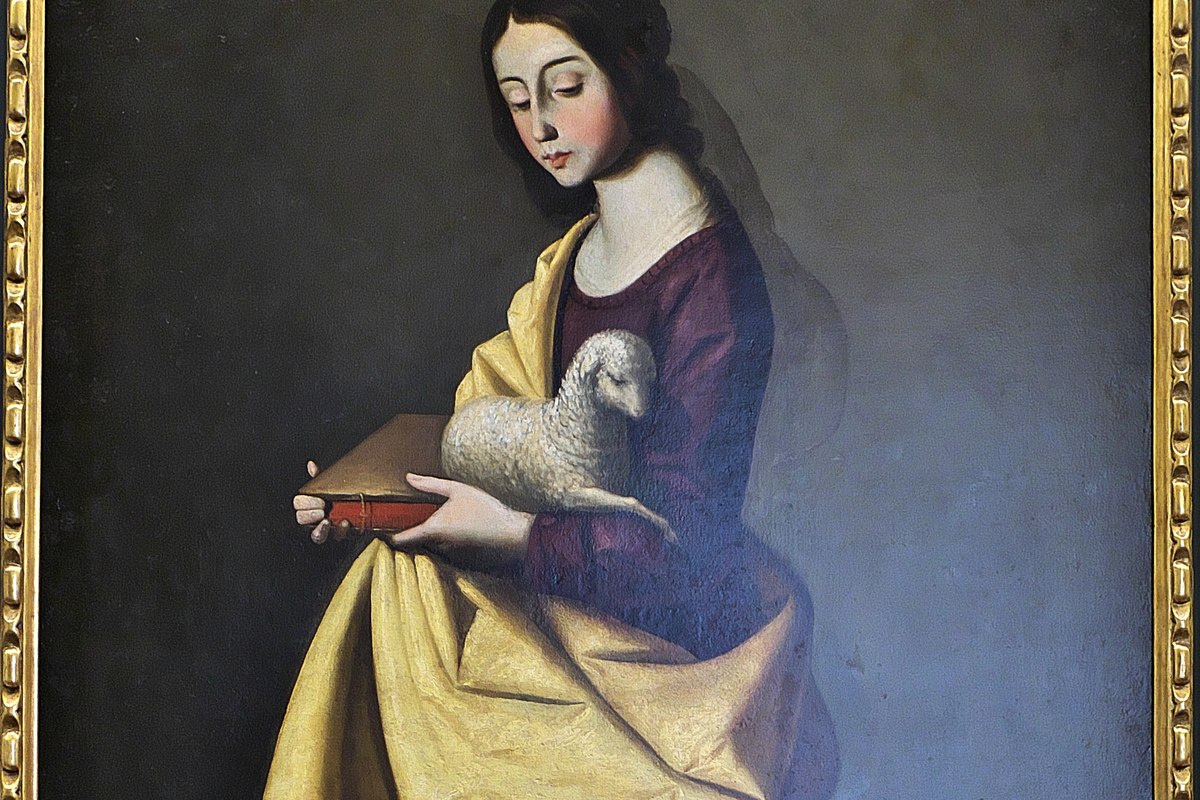
Anonymous French artist, "Saints Victor and Corona," illuminated manuscript miniature, c. 1480 — public domain (Wikimedia Commons).
A martyrdom set during Roman persecution
Corona's story, as it comes down through tradition, is set during a period of Roman persecution of Christians — accounts vary on whether this was under Emperor Marcus Aurelius in the second century or later, under Diocletian in the early fourth, a discrepancy typical of martyrs whose stories were preserved primarily through oral tradition and later hagiographical compilation rather than contemporary documentation. The setting is usually placed in Roman Syria or Egypt.
The tradition holds that a Roman soldier named Victor was arrested and tortured for refusing to renounce his Christian faith. Corona — described in most versions as a young girl of about sixteen, and in some traditions specifically as Victor's wife — was present during his torture and stepped forward to comfort him, encouraging him to remain steadfast. In doing so, she openly declared her own Christian faith to the authorities present, which under Roman law of the period was itself sufficient grounds for arrest and execution. She was condemned alongside Victor.
A death remembered through a specific, brutal image
Hagiographical tradition describes Corona's execution in vivid and specific terms: she was reportedly tied by her limbs to two young palm trees that had been bent down to the ground, which were then released, tearing her body apart as they sprang back upright. This is a dramatic and specific detail, and it's worth noting plainly that this kind of execution narrative appears, with variations, in the legends of several early martyrs — a recognizable hagiographic motif meant to communicate the totality and violence of a martyr's sacrifice, rather than a claim modern historians treat as a verified historical event down to the method. What is treated as more securely established is the core outline: a young Christian woman executed for her faith during a period of Roman persecution, remembered and venerated from a very early date.
From Syria to Aachen: how her cult reached Central Europe
Corona's veneration might easily have remained a purely local Eastern Mediterranean devotion, as happened with many early martyrs whose cults never spread far from the place of their death. What changed her story's geography was a specific, documented historical event: around 997 AD, the Holy Roman Emperor Otto III arranged for the relics of Saints Victor and Corona to be translated — moved with ceremony — to Aachen Cathedral, in what is now western Germany, a city that served as Otto's imperial seat and the traditional coronation site of Holy Roman Emperors.
That single act of imperial patronage anchored a lasting cult of both saints across German-speaking Central Europe. Their relics remain in Aachen Cathedral's treasury to this day, and devotion to Corona took particularly firm root in Austria and Bavaria, where her feast — May 14 — has been marked in local parish calendars for centuries. This pattern, where a saint's veneration follows the movement of relics rather than the geography of their actual life, is a common feature of early medieval devotion more broadly, and it's a large part of why saints who died in Roman Syria ended up as recognizable, locally beloved figures in towns they never saw.
Patron of coins, crowns, and unlikely causes
Corona's name — Latin for "crown" — generated its own layer of folk association over the centuries, largely independent of the details of her actual martyrdom. Because Roman and later European coins frequently bore images of crowns, and because the word "corona" appeared on coinage in various forms across different periods and countries, a folk tradition developed connecting Saint Corona to money, treasure, and financial fortune. This is why she is still invoked in some regions as a patroness of treasure hunters and of financial matters generally — a patronage built more on wordplay and symbolic association than on any episode from her actual life, and worth naming honestly as exactly that kind of tradition rather than presenting it as though it traces to a documented historical connection.
Other, more regionally specific patronages — of woodcutters in parts of Central Europe, for instance — likely developed from purely local devotional customs that are difficult to trace to a single clear origin at this historical distance. This layered, somewhat scattered pattern of patronage is itself fairly typical of very early martyrs venerated primarily through popular tradition rather than through a centrally coordinated Church process.
A saint worth knowing on her own terms
Saint Corona's renewed visibility in recent years came from an entirely unrelated coincidence of language, and it would be a shame if that coincidence became the only thing anyone remembered about her. Her actual story — a teenage girl who stepped forward to comfort a condemned man and, in doing so, accepted the same sentence he faced — sits comfortably alongside the accounts of countless other early Christian martyrs whose courage is remembered specifically because it was offered on someone else's behalf, not their own. That she has been venerated in Aachen's great cathedral for over a thousand years, largely without controversy or confusion, says more about her actual place in Christian tradition than any headline from the last several years ever could.
Trivia
Who was Saint Corona?
What does the name Corona mean, and does it have anything to do with the coronavirus?
Why is Saint Corona especially venerated in Austria and Germany?
How is Corona traditionally said to have been martyred?
What is Saint Corona the patron saint of?
You May Also Like

Related Reading