How to Choose a Confirmation Saint

Why Confirmation involves choosing a saint at all
The custom of taking a saint's name at Confirmation isn't found spelled out, verse by verse, in the Catechism the way the sacrament's effects are — it's a widespread pastoral practice rather than a universal canon-law requirement, and dioceses handle its exact rules somewhat differently. But the logic behind it runs straight through Catholic teaching on the sacrament itself. The Catechism describes Confirmation as completing the grace of baptism and rooting the confirmand more deeply in "filial relationship with God" and the life of the Church (CCC 1303). Choosing a patron at this exact moment gives that abstract idea a concrete face: a real person who lived the Christian life in a particular time, place, and set of circumstances, and who can be asked, by name, for prayer and example going forward.
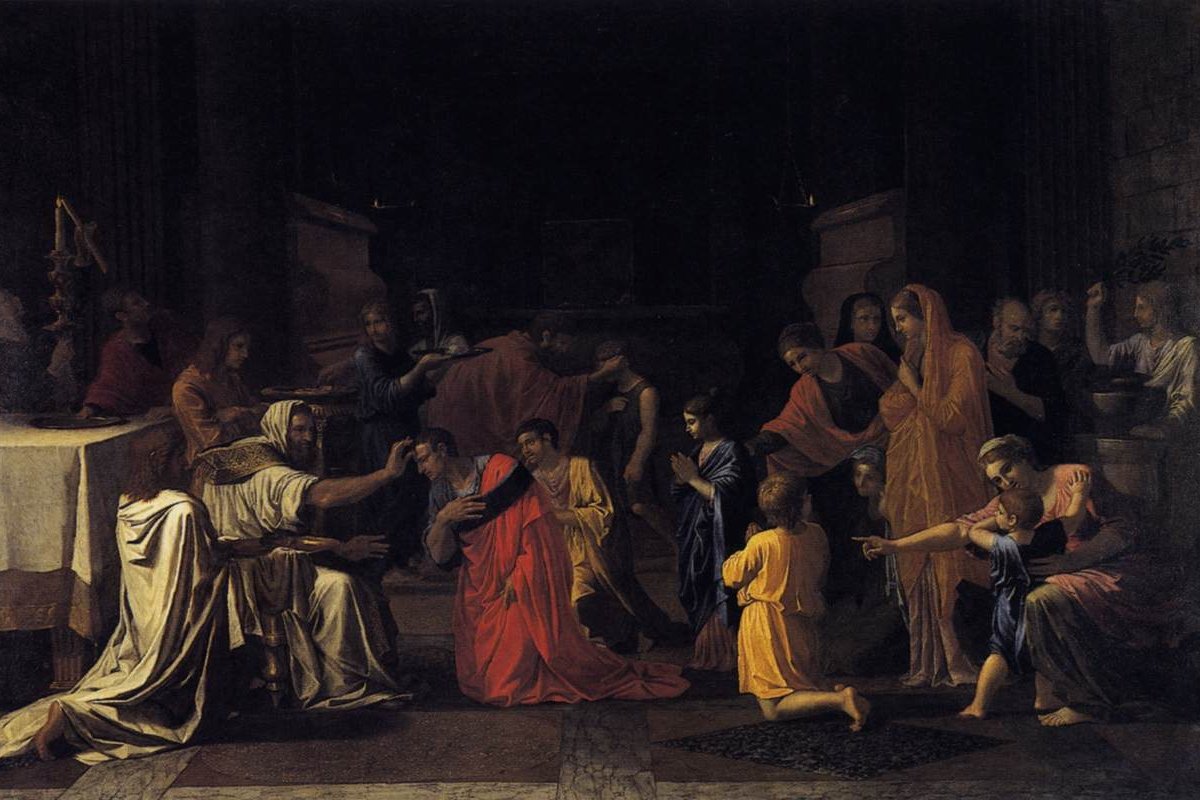
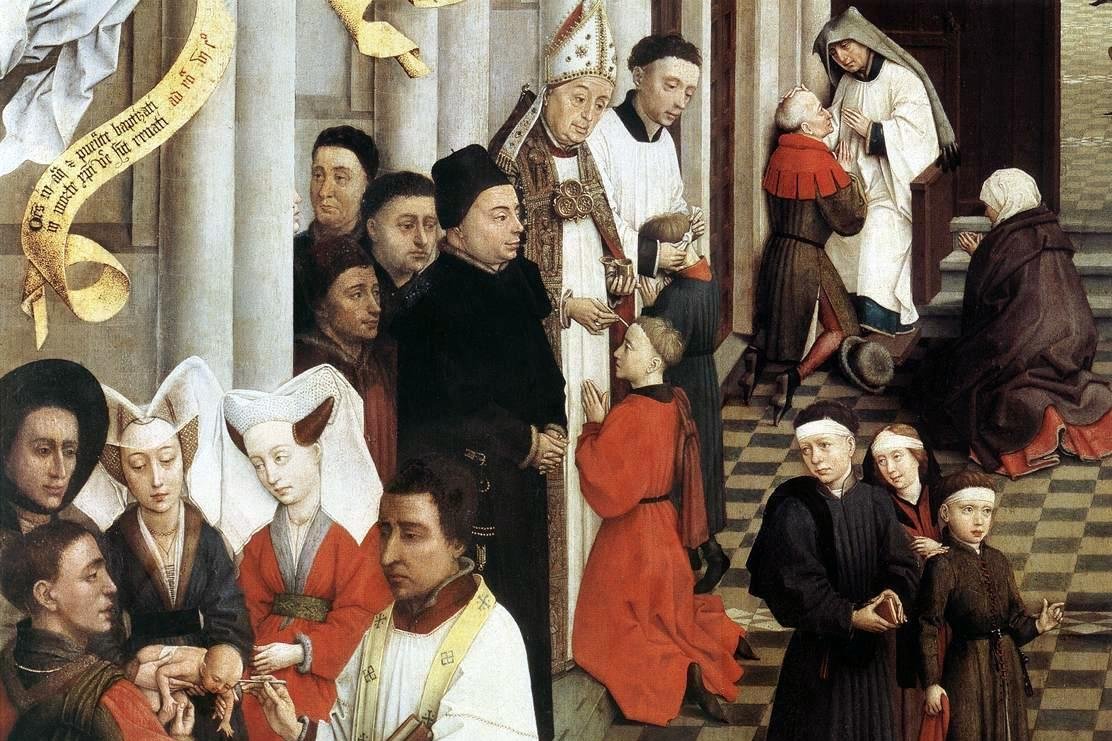
Nicolas Poussin, Confirmation, second series of the Seven Sacraments, 1645, private collection (Duke of Sutherland loan, National Gallery of Scotland) - public domain.
That's also what separates a confirmation saint from a baptismal name. Baptism usually happens in infancy, and the name is chosen by parents — often for family reasons that have nothing to do with the saint attached to it. Confirmation candidates, by contrast, are old enough to research, reflect, and choose deliberately. It's frequently the first real exercise many young Catholics get in independently studying the lives of the saints and asking which one's story actually resonates with their own.
Where to start looking
The single biggest mistake confirmands make is starting from the entire canon of canonized saints — a list running into the thousands — instead of narrowing by something concrete. A few practical starting points work better:
Start with your own name. If your legal or baptismal first name already has an obvious patron — a Catherine, a Francis, an Anthony — that saint is worth a first look even if you end up choosing someone else. It's the path of least resistance and often turns into a genuine attachment once you actually read the person's story.
Start with an interest or a struggle. The Church has centuries of saints matched to almost every walk of life and every kind of hardship. Patron saints of healing and illness speaks to confirmands navigating a health issue in their own family; patron saints for travelers and pilgrims fits a candidate who loves being on the move. The patron saints directory is built to make this kind of matching easier, organized by profession, life situation, and cause.
Start with a virtue you want more of. Some confirmands work backward from a quality — courage, humility, joy — and look for the saint whose life embodies it most vividly, rather than starting from a name or a category at all.
A few saints confirmands return to again and again
No list can cover the full range of Catholic sanctity, but a handful of saints turn up constantly in confirmation classes for good reason — their stories are vivid, well documented, and speak directly to the challenges of growing into an adult faith.
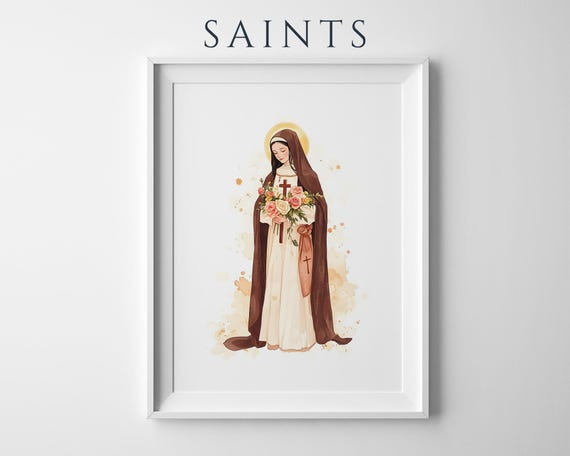
Saint Thérèse of Lisieux is one of the most frequently chosen patrons for teenage confirmands, and it's not hard to see why: she entered the convent at fifteen and built her entire spirituality around what she called her "Little Way" — finding holiness in small, ordinary acts of love rather than in dramatic gestures. For a confirmand who feels too young or too ordinary for sainthood to seem realistic, her example argues the opposite directly.
Saint Joan of Arc draws confirmands who want a patron defined by courage under real pressure — a teenager who led armies and stood firm under interrogation by a hostile tribunal, holding to what she believed she'd been shown in prayer even when it cost her everything.
Saint Francis of Assisi appeals to candidates drawn to simplicity, care for creation, and a decisive break from wealth and comfort — a wealthy merchant's son who gave up everything and built an entire spiritual family around living the Gospel with radical directness.
Saint Michael the Archangel, while not technically canonized in the way human saints are (angels aren't canonized, since canonization confirms a human soul's presence in heaven), is nonetheless a hugely popular confirmation choice for candidates drawn to his role as protector and defender — proof that "patron" in the broad, popular sense of the word extends beyond canonized saints to the archangels named in Scripture as well.
Questions worth asking before you commit
A confirmation name shouldn't be chosen the way you'd pick a username — quickly, and mostly on how it sounds. A few honest questions help narrow a shortlist into a real decision: Does this saint's specific struggle mirror something in your own life right now? Would you actually want to read more about how they lived, not just their feast day and one famous quote? Is there a virtue of theirs you genuinely want to grow into over the next several years, not just admire from a distance?
It's also worth talking to whoever is preparing you for Confirmation — a catechist, sponsor, or parish priest — both because dioceses vary slightly in their formal rules (some, for instance, are stricter than others about whether a Blessed who hasn't yet been canonized can be chosen) and because a good confirmation sponsor often has real insight into which saint's story actually fits the candidate in front of them.
A choice meant to outlast the ceremony
However the decision gets made, the point of choosing a confirmation saint isn't the name printed in the parish record afterward — it's the ongoing relationship the Church hopes will follow. Most Catholics don't think much about their confirmation saint in the weeks right after the ceremony, but the name tends to resurface later: in a hard season of life, in a prayer said almost automatically, in a small act modeled, half-consciously, on someone chosen years earlier for reasons that made sense to a much younger version of themselves. That's really the whole design of the custom — not a one-time decision, but the start of a specific, named companionship meant to accompany a Catholic for the rest of their life.
Trivia
Do I have to pick a saint I'm already named after for Confirmation?
Can I choose a saint who isn't officially canonized yet, like a Blessed?
Does my confirmation saint have to be the same gender as me?
What if I can't decide between two or three saints I like?
Does choosing a confirmation saint mean I'm stuck with them forever?
Related Reading