The Cleansing of the Temple

A house of prayer turned marketplace
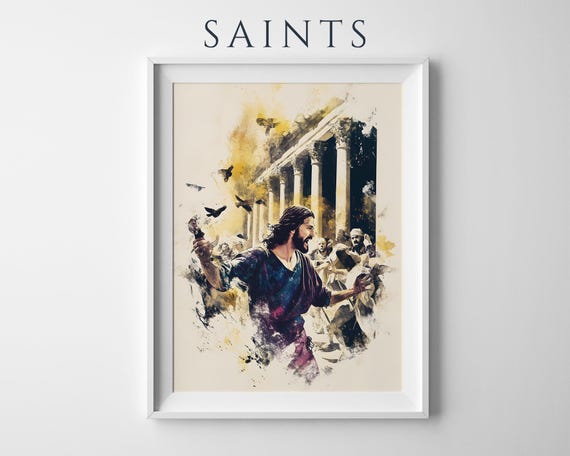
By the time Jesus arrives at the Temple, its outer courts have become a functioning marketplace: merchants selling animals for sacrifice, money changers converting currency for the Temple tax, an entire commercial operation running inside a space meant for worship. Matthew records Jesus's response without any softening: he "Jesus entered the temple area and drove out all those engaged in selling and buying there. He overturned the tables of the money changers and the seats of those who were selling doves." (Matthew 21:12, RSV-CE) — a direct, physical disruption of business already underway.
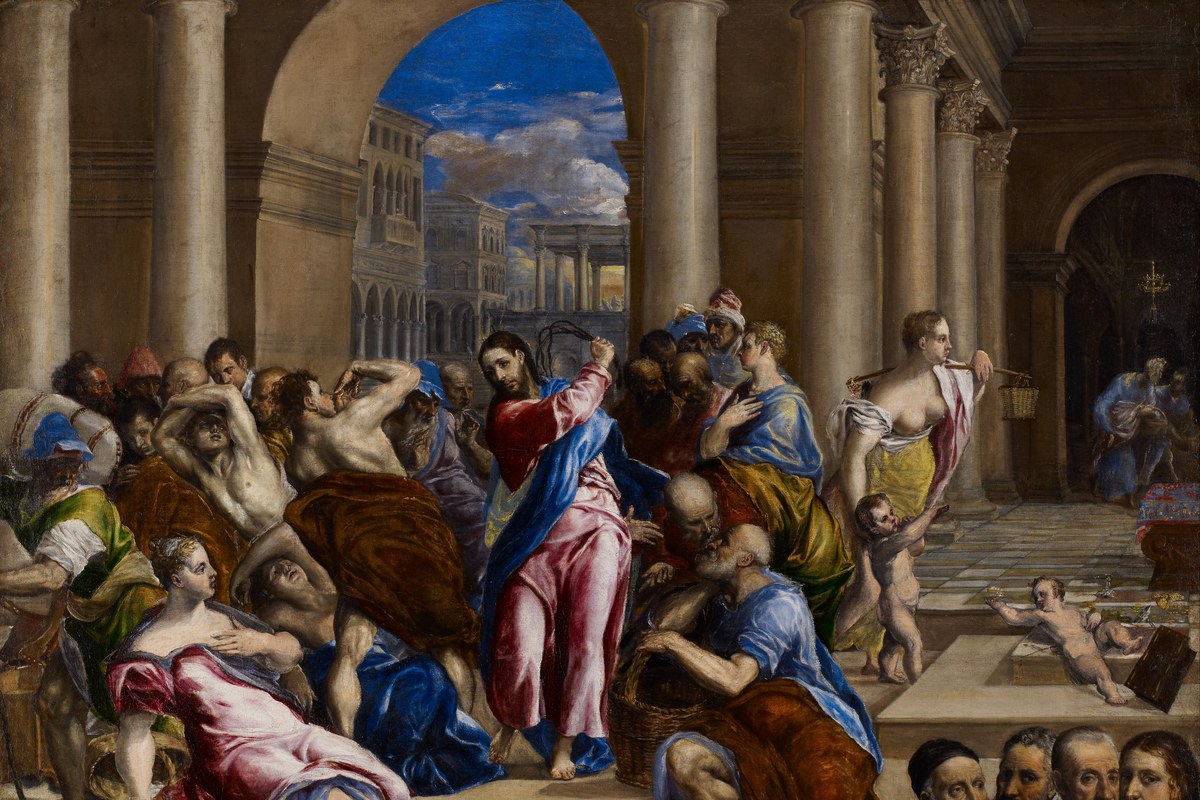
El Greco, "Christ Driving the Money Changers from the Temple," c. 1570 — public domain.
The commerce itself had a practical origin that made it more than simple greed. Worshippers traveling to Jerusalem from distant regions couldn't easily bring a sacrificial animal with them on a long journey, so merchants sold approved animals on-site instead. Roman coins, meanwhile, carried images of the emperor and were considered unsuitable for the Temple tax, so money changers converted them into the acceptable Tyrian silver — a service that, in principle, met a genuine religious need. The problem, as the Gospels present it, wasn't the existence of these services but where they had been allowed to operate: specifically, in the Court of the Gentiles, the outer courtyard that was the one part of the Temple complex where non-Jews were permitted to come and pray. By filling that particular space with livestock, noise, and commerce, the arrangement had effectively crowded out the one area set aside for Gentile worship — a detail the Gospel of Mark makes explicit when it records Jesus quoting Isaiah's promise that the Temple should be called "a house of prayer for all peoples" (Mark 11:17, NABRE).
Scripture as an accusation
What Jesus says while doing this is as pointed as the action itself: "It is written: ‘My house shall be a house of prayer,’ but you are making it a den of thieves." (Matthew 21:13, RSV-CE). He is quoting, almost word for word, lines from the prophets Isaiah and Jeremiah — using Scripture the Temple authorities themselves would have known by heart to condemn what they had allowed to happen inside its walls. It isn't improvised outrage. It's a precisely aimed accusation, built from the same texts his audience considered sacred.
The second half of that quotation carries particular weight. Jeremiah's original "den of robbers" passage (Jeremiah 7:11) wasn't primarily a complaint about financial dishonesty in the marketplace sense — it was part of a much larger prophetic warning that the people of Judah were treating the Temple as a kind of safe house, a place where they could commit injustice and then return to worship as though nothing were wrong, assuming the building itself guaranteed God's protection regardless of how they actually lived. By invoking that specific passage, Jesus wasn't only objecting to commerce in a sacred space; he was accusing the Temple leadership of a much older, more serious failure — treating outward religious observance as a substitute for genuine faithfulness, exactly the accusation Jeremiah had leveled at their ancestors centuries earlier.
The one moment that looks like this
Across the Gospels, Jesus is consistently associated with patience, parables, and compassion even toward hostile questioners. The Cleansing of the Temple stands apart as the clearest instance of forceful, physical confrontation attributed to him — table-turning rather than table manners. That contrast is exactly why the scene has held such a firm place in the Christian imagination: not as evidence of a hidden temper, but as proof that his patience elsewhere was a choice, not an absence of conviction.
The Gospel of John records a version of this same episode, though placed at the very start of Jesus's public ministry rather than during Holy Week, leading many scholars to debate whether John is describing an earlier, separate cleansing of the Temple or simply relocating the same event for theological reasons specific to his Gospel's structure. John's account adds a detail the Synoptic Gospels don't mention: Jesus making "a whip out of cords" (John 2:15, NABRE) before driving out the animals — the detail behind this article's own hero image — and, when questioned by the authorities about his right to act this way, responding cryptically that if they destroyed "this temple," he would raise it up in three days. John explains directly that Jesus meant his own body, linking the Temple cleansing to the future resurrection in a way none of the other Gospel writers make explicit at this point in the story.
Placed at the opening of Holy Week
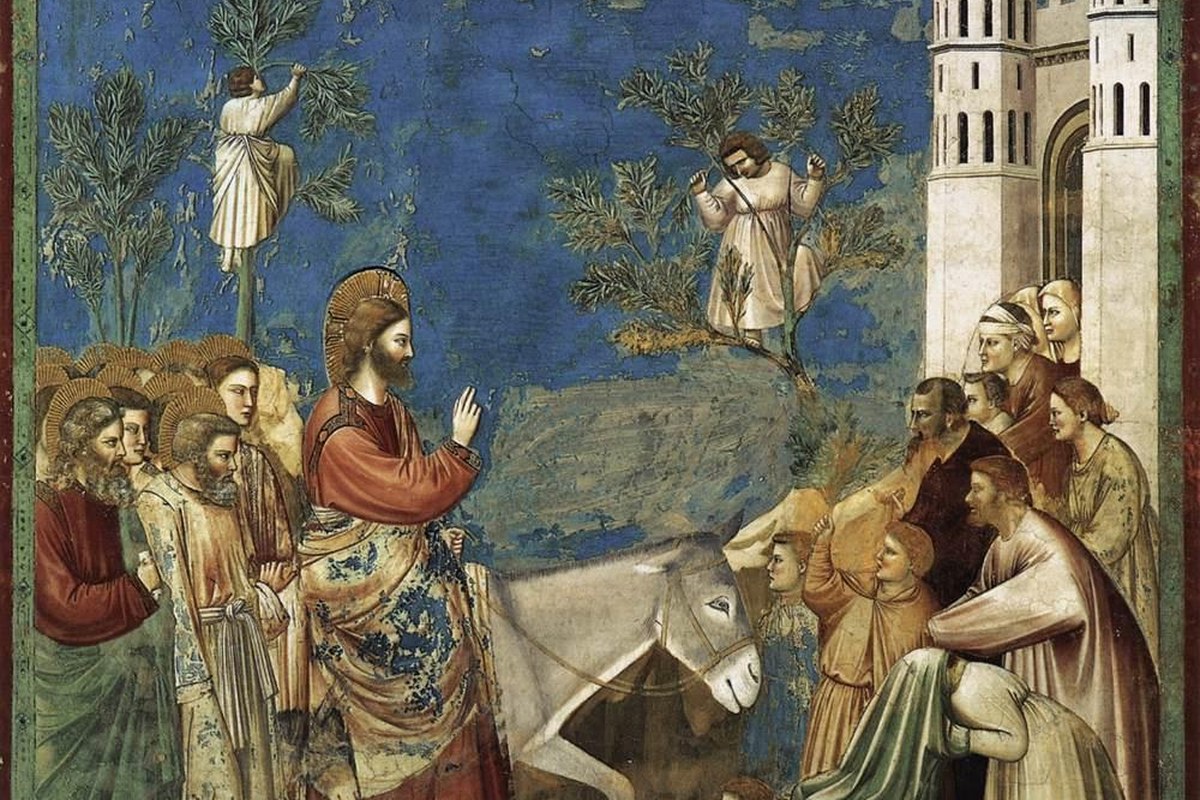
In Matthew's account, this confrontation follows immediately after the triumphant Entry into Jerusalem — meaning the same week that opens with crowds shouting "Hosanna" closes with Jesus's arrest and crucifixion, and this scene sits near the very beginning of that week, inside the Temple itself. It's a deliberate, public act carried out in the most sacred space available to him, days before his own body would become, in Christian theology, the new temple — a claim the Gospel of John links directly back to this same event.
Placed where it is, right at the start of Holy Week, the Cleansing of the Temple also functions as a turning point in the Gospel narrative more broadly: it's shortly after this episode that the chief priests and scribes, according to Mark and Luke, begin actively seeking a way to destroy Jesus, having watched him publicly and forcefully challenge the commercial arrangements they themselves presided over and likely profited from. In that light, the scene reads as more than righteous anger at a specific abuse — it's also the moment Jesus's growing conflict with the religious establishment becomes undeniably public, setting in motion the sequence of events that would lead, within days, to his arrest and crucifixion.
Trivia
What was actually happening in the Temple that provoked this reaction?
What did Jesus say while doing this?
Is this the only time Jesus acts this forcefully in the Gospels?
Where did this event happen in relation to Holy Week?
Related Reading