The Liturgical Seasons of the Church Year

A calendar built around a story, not a grid
The Church's liturgical year isn't a neutral container for holding feast days the way a January-to-December grid holds appointments. It's structured to walk the whole congregation, together, through the major movements of Christ's life and the early Church's founding — birth, ministry, death, resurrection, and the giving of the Spirit — once every twelve months. That's why it doesn't start on January 1st at all: it begins with Advent, the season of waiting, because waiting for Christ's coming is where the story itself logically begins.
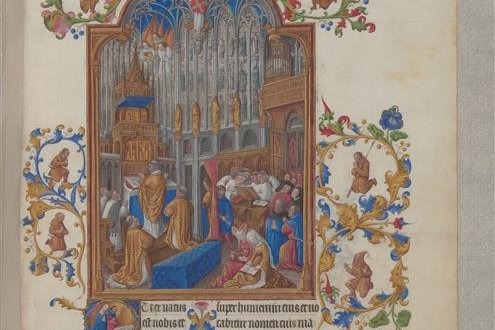
Jean Colombe (completing the Limbourg brothers unfinished work), Messe de Noel, Les Tres Riches Heures du duc de Berry, circa 1485-1486, Musee Conde, Chantilly - public domain.
The Catholic liturgical calendar guide covers the full mechanics of how this calendar is tracked day by day, including the rotating cycle of Sunday and daily Scripture readings. This article focuses on the larger shape: the seasons themselves, what each one asks of the Church, and how they fit together into a single yearly rhythm.
Advent: the season of waiting
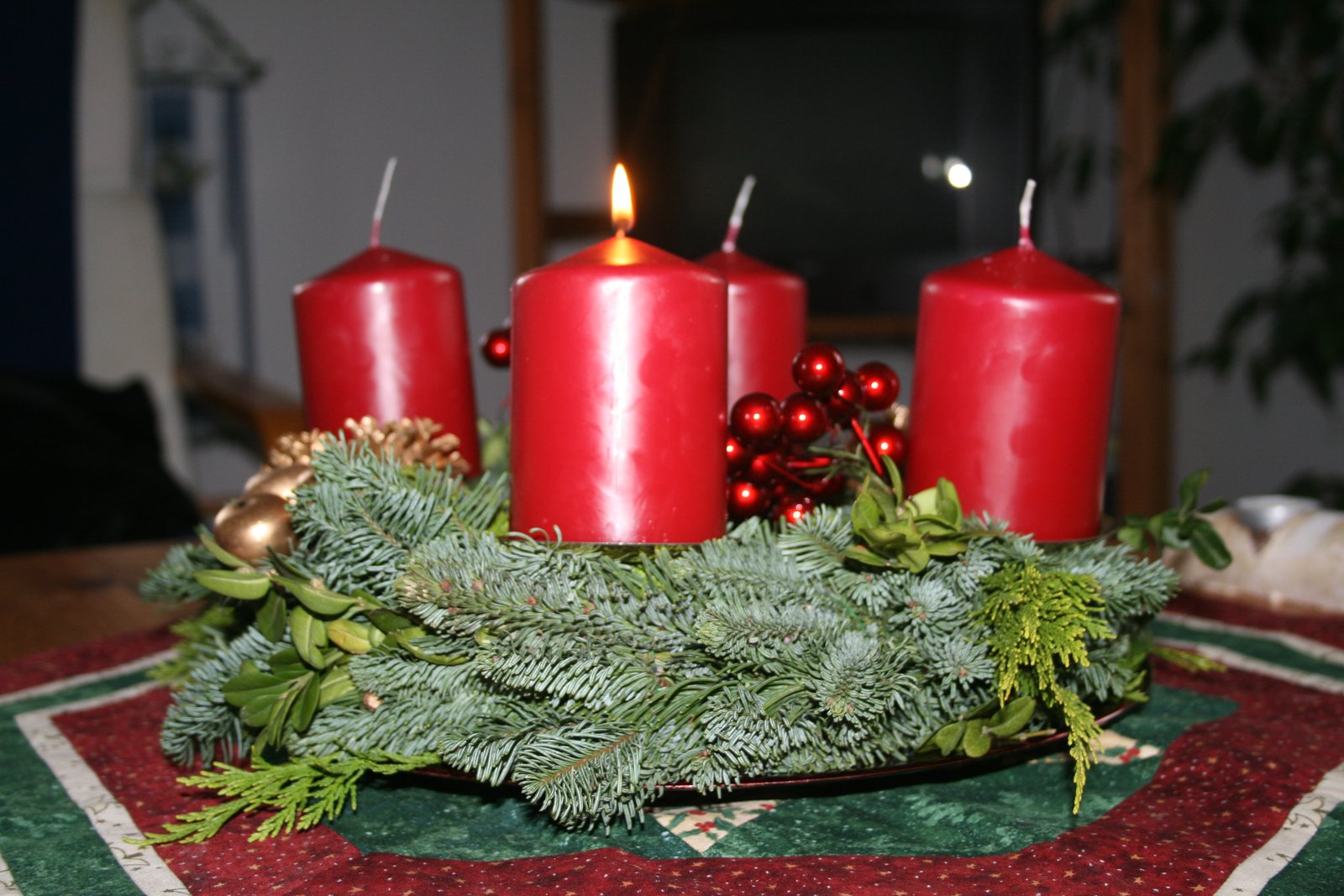
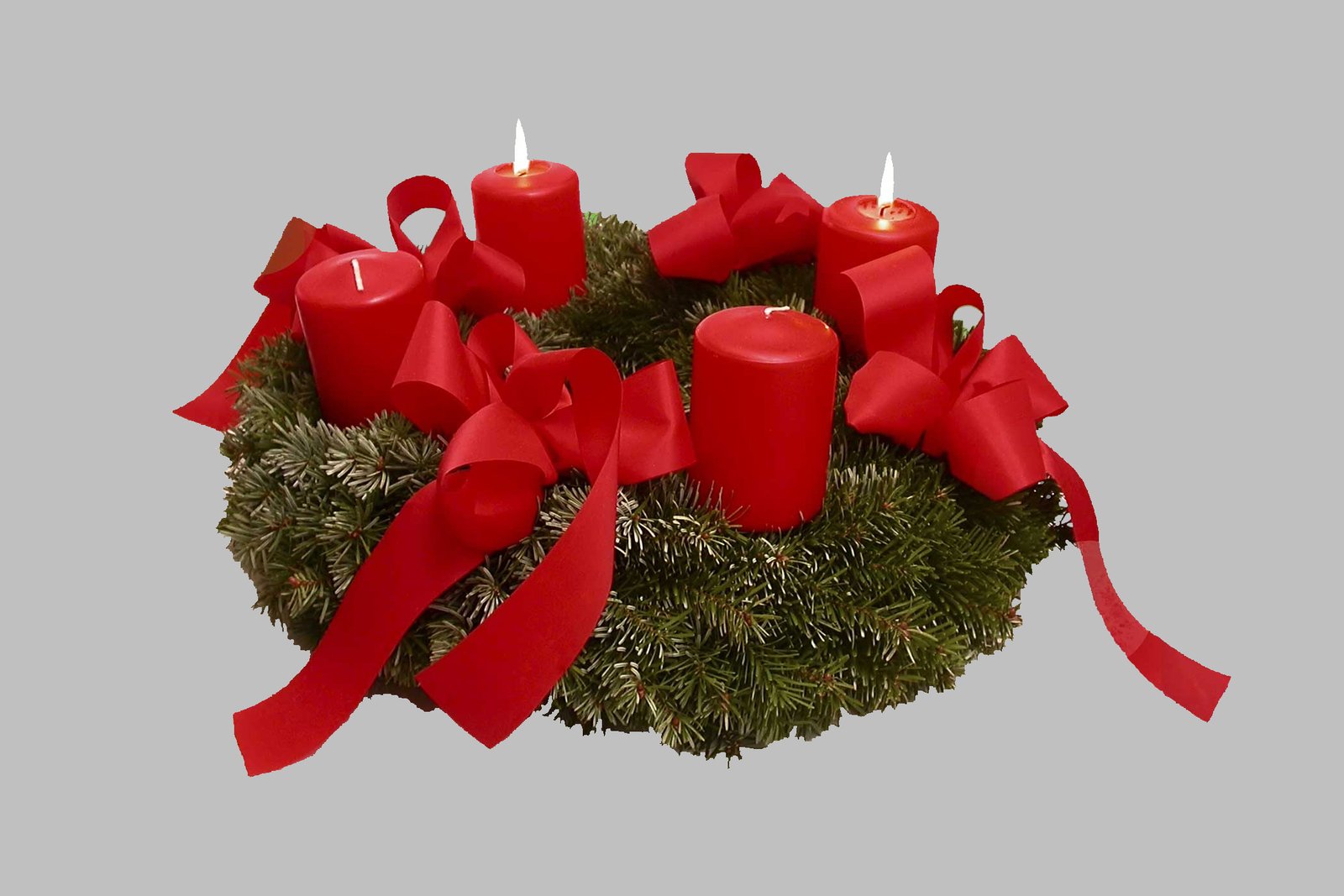
Advent opens the liturgical year, running for four Sundays before Christmas. Its focus is deliberately double: it looks backward, preparing to celebrate the historical birth of Christ at Bethlehem, and forward, anticipating his promised return at the end of time. That combination is why Advent readings mix familiar Christmas-adjacent Gospel passages with more unsettling ones about final judgment and readiness. The season is penitential in tone but gentler than Lent — marked by violet vestments, with a single rose-colored Sunday, Gaudete Sunday, offering a deliberate note of joy partway through the waiting. Advent explained covers the season's traditions, including the Advent wreath, in full.
Christmas: twelve days, not one
Christmas is a full liturgical season in its own right, not a single day — running from Christmas Eve through the Baptism of the Lord (traditionally the Sunday after Epiphany, which itself falls twelve days after Christmas, giving rise to the popular "twelve days of Christmas"). The Church treats the Incarnation — God becoming human — as a mystery substantial enough to require sustained, weeks-long celebration rather than a single feast day, with white and gold vestments marking the season's joy throughout. Christmas through Catholic eyes traces the liturgy beneath the holiday, including the real history behind the Christmas crib.
Ordinary Time: the long, numbered weeks
Ordinary Time makes up the largest share of the calendar — roughly thirty-three or thirty-four weeks total, split into two blocks: a shorter stretch between Christmas and Lent, and a much longer one running from Pentecost until Advent begins again. Its name is one of the most commonly misunderstood terms in the whole calendar: "ordinary" here doesn't mean plain or unimportant, but comes from the Latin ordinalis ("numbered"), because these are the Sundays that are literally counted — the Fourth Sunday in Ordinary Time, the Twentieth, and so on — rather than named for a specific mystery of Christ's life the way Advent or Easter are. Green vestments mark the season throughout, symbolizing the ongoing growth of the Church's life outside the two great feast cycles.
Lent: forty days of preparation
Lent begins on Ash Wednesday and runs for forty days (not counting Sundays, which are treated as small weekly celebrations of the Resurrection even within a penitential season), deliberately recalling the forty days Christ spent fasting in the desert. It is the Church's great season of penance, traditionally structured around prayer, fasting, and almsgiving, and building toward the most solemn days of the entire liturgical year. Violet vestments mark the season, with one rose Sunday of its own, Laetare Sunday, echoing Advent's Gaudete Sunday as a brief, deliberate note of encouragement partway through.
The Sacred Triduum: the hinge of the year
The Triduum — Latin for "three days" — runs from the evening Mass of the Lord's Supper on Holy Thursday through Easter Sunday, and functions as the theological center of gravity for the entire liturgical year rather than simply Lent's final stretch. It includes Holy Thursday's commemoration of the Last Supper and the institution of the priesthood, Good Friday's commemoration of the Crucifixion (the one day of the year on which the Catholic Church does not celebrate Mass), and the Easter Vigil on Holy Saturday night, traditionally considered the "mother of all vigils" — the liturgy in which the first Easter proclamation is made and the Church's newest members are often received through baptism.
Easter: fifty days, not one Sunday
Easter and the Resurrection marks the Church's greatest feast, and like Christmas, it isn't confined to a single day. The Easter season runs a full fifty days, from Easter Sunday through Pentecost — deliberately mirroring, and outlasting, Lent's forty days of preparation. Saint Paul made the stakes of this season explicit: "If Christ has not been raised, then our preaching is in vain and your faith is in vain" (1 Corinthians 15:14, RSV-CE) — a claim the whole fifty-day season is built to proclaim without interruption. White and gold vestments continue throughout, marking one uninterrupted arc of joy.
Pentecost: the season's close, and a new beginning
The Easter season concludes with Pentecost, recalling the moment, fifty days after the Resurrection, when the Holy Spirit descended on the apostles in Jerusalem — "a sound like the rush of a mighty wind" filling the house where they were gathered, followed by what looked like "tongues as of fire" resting on each of them (Acts 2:2-3, RSV-CE). Red vestments mark the day, symbolizing both fire and the blood of martyrdom that would follow for many of the apostles in the years after. Pentecost is often called the Church's "birthday," since it marks the moment the apostles began preaching publicly and drawing in the first converts — the origin point of everything that would become the visible, worldwide Catholic Church.
Why the cycle repeats
After Pentecost, the calendar returns to the second, longer block of Ordinary Time, which runs until Advent begins again and the whole cycle restarts. That repetition is deliberate, not incidental: the Church doesn't treat the liturgical year as a one-time historical reenactment, but as a living rhythm meant to be walked through again and again, every year, so that each mystery of Christ's life — his birth, his suffering, his rising, his sending of the Spirit — gets relived, prayed through, and more deeply absorbed by each new generation of believers moving through it. Understood this way, the "boring" stretches of green-vestment Ordinary Time aren't a lull between the interesting parts. They're the quiet, steady soil the whole cycle is planted in, season after season, year after year.
Trivia
What are the main seasons of the Catholic liturgical year, in order?
Why does the liturgical year start with Advent instead of January 1st?
What do the different liturgical colors mean?
What is Ordinary Time, and why is it called that?
What is the Sacred Triduum, and is it its own season?
Related Reading