The Baptism of Jesus

An objection John can't quite get past
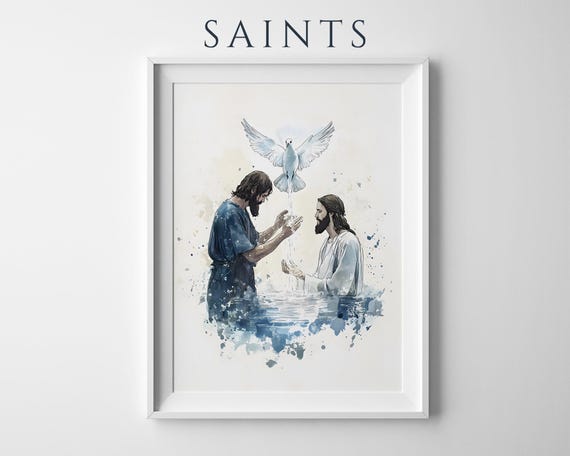
By the time Jesus arrives at the Jordan, John has been baptizing crowds for some time, calling them to repentance ahead of the Messiah's coming. When Jesus asks to be baptized alongside them, John balks: "I need to be baptized by you, and yet you are coming to me?" (Matthew 3:14, RSV-CE). It's a reasonable objection — John's baptism exists precisely because people need to repent, and by every account in the Gospels, Jesus does not. The request runs directly against the logic of what John has spent his whole ministry doing.
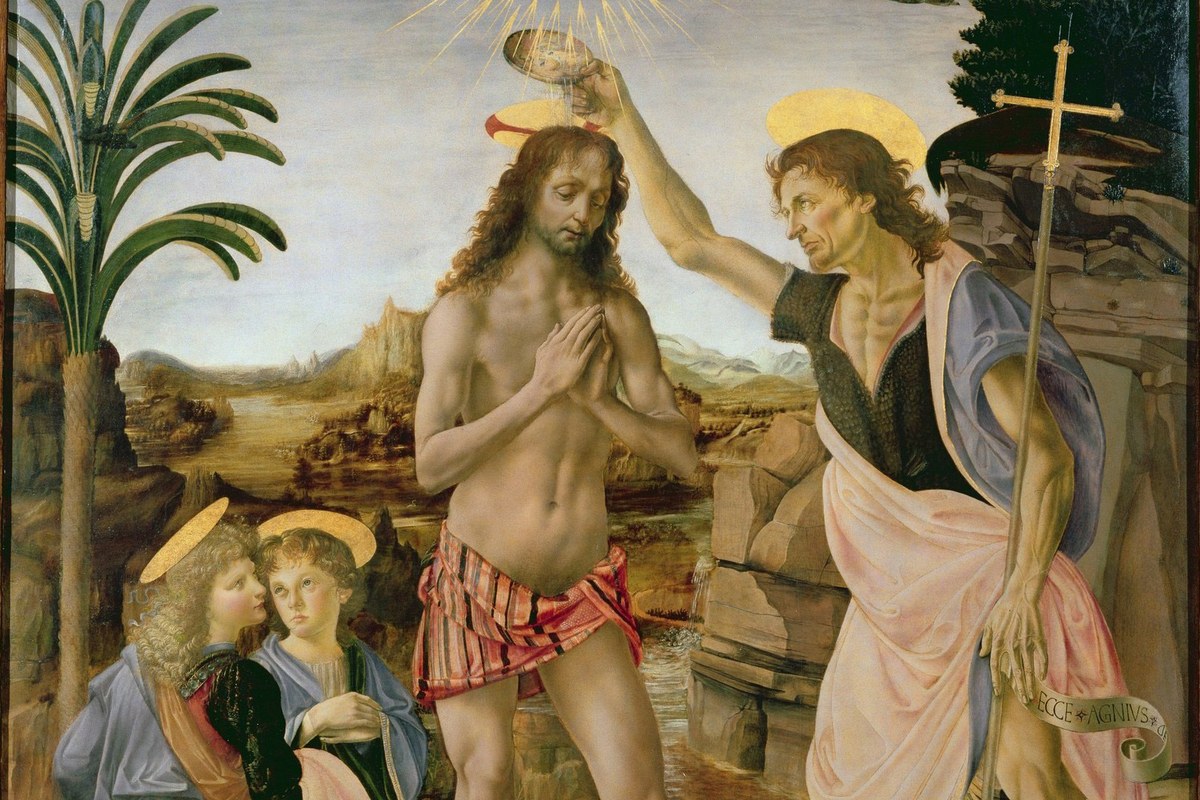
Andrea del Verrocchio and Leonardo da Vinci, "The Baptism of Christ," c. 1475 — public domain.
John's baptism itself was already a striking departure from ordinary Jewish ritual practice. Ceremonial washing was common, but it was typically self-administered, repeated, and tied to specific ritual impurities rather than to a single, public act of repentance performed by one recognized figure at the edge of the Jordan River. Crowds from Jerusalem and across the Judean countryside had been coming out to confess their sins and be washed by John specifically, which is part of what made his ministry so unusual, and part of why his objection to baptizing Jesus carries real weight — John understood, better than almost anyone else present, exactly what he was being asked to do.
"To fulfill all righteousness"
Jesus's answer doesn't argue that John is wrong. It reframes the entire purpose of the act: "Allow it now, for thus it is fitting for us to fulfill all righteousness." (Matthew 3:15, RSV-CE). Rather than treating baptism as a personal need, Jesus presents it as something he undertakes alongside the people he came to identify with — a deliberate act of solidarity rather than a confession of sin he doesn't have. John, the text notes simply, "consented" (Matthew 3:15, RSV-CE), and the baptism proceeds.
That single word — "consented" — is easy to skip past, but it marks a real turning point in John's own story. Everything about his ministry up to this point had positioned him as the one calling others to change; here, briefly, he's the one being asked to set aside his own sense of what was fitting and simply comply with someone else's request. It's a small moment of submission tucked inside a much larger one, and it fits the pattern John describes elsewhere in the Gospels: "He must increase; I must decrease." (John 3:30, RSV-CE) — a principle he appears to be living out here before he ever puts it into words.
Heaven opens, and all three appear at once
What happens next is one of the most theologically dense moments in the Gospels, compressed into two short verses: "And a voice came from the heavens, saying, “This is my beloved Son, with whom I am well pleased." (Matthew 3:16-17, RSV-CE). In a single scene, the Son stands in the water, the Spirit descends visibly as a dove, and the Father's voice speaks from an opened heaven — three persons, present and active together, in a moment Christian tradition has returned to again and again as one of its clearest pictures of the Trinity.
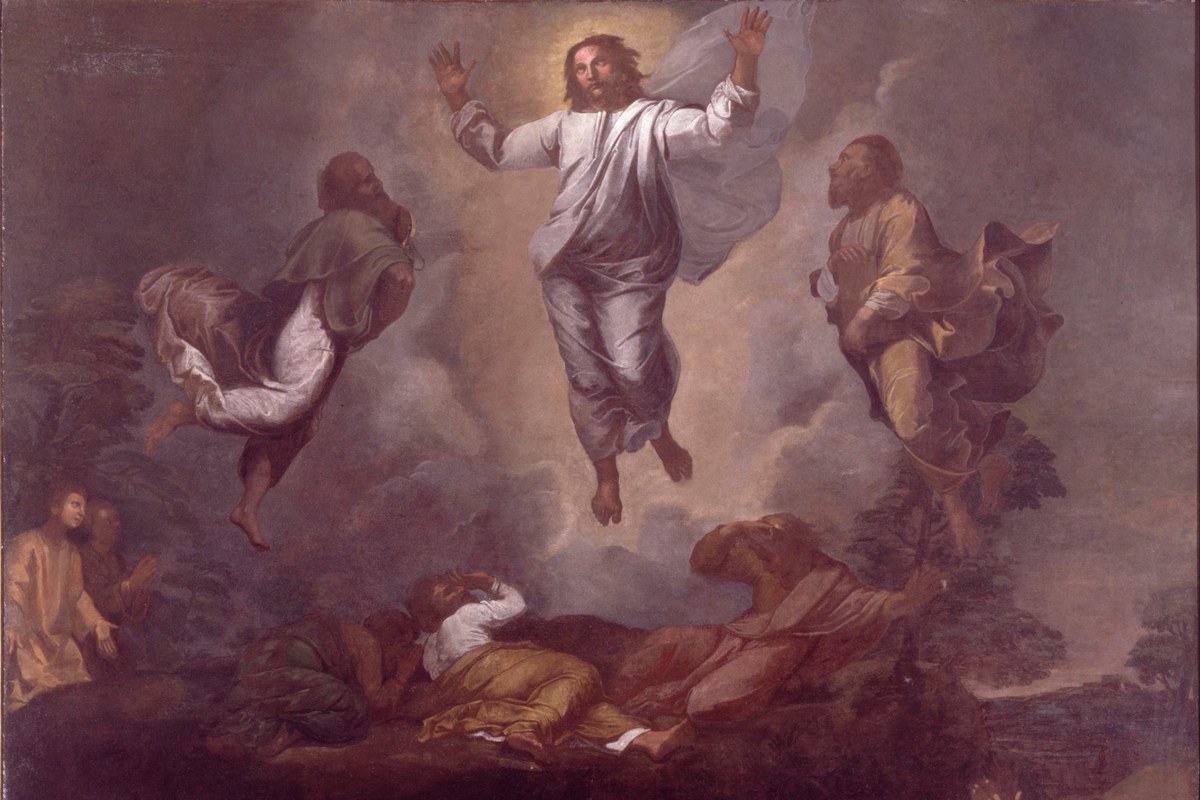
The voice from heaven also does something quietly significant: it echoes and combines language from two separate Old Testament passages familiar to any Jewish listener — royal language associated with God's anointed king, and language associated with a chosen servant sent to suffer on behalf of others. Woven together in a single sentence, the voice effectively identifies Jesus with both roles at once, king and suffering servant, well before either identity had been demonstrated by anything he'd done. The same voice and language reappear, almost word for word, later in the Gospels at the Transfiguration on Mount Tabor, as if this opening declaration needed to be repeated partway through his ministry for the benefit of the disciples who would need to hold onto it through what came next.
Why the river scene still matters
Unlike many of the miracles that follow in Jesus's ministry, the Baptism isn't primarily about power or healing — it's about identity and beginning. It marks the formal opening of his public ministry, immediately followed in Matthew's account by his forty days in the wilderness. Painters from Verrocchio and Leonardo onward have returned to the same essential composition: Jesus standing quietly in the river, hands folded, while something enormous happens in the sky above him — a moment of profound significance staged with almost no outward drama at all.
The Church has kept this scene close to the center of its own sacramental life ever since. The Feast of the Baptism of the Lord closes the Christmas season each year in the Roman calendar, deliberately linking the child born at the Nativity of Jesus to the grown man who steps into the Jordan roughly thirty years later. Catholic teaching also treats this moment as the model and foundation for the Church's own sacrament of baptism — not because Jesus needed cleansing himself, but because in stepping into the water he sanctified it, giving the ordinary water used at every baptismal font since a connection back to this one specific afternoon at the river's edge.
Trivia
Why did John the Baptist try to refuse baptizing Jesus?
Why did Jesus insist on being baptized anyway?
What happened immediately after Jesus was baptized?
Why is this scene considered theologically significant?
Related Reading