Peter's Denial of Jesus


A prediction Peter refused to believe
The story of Peter's denial actually starts earlier the same evening, at the Last Supper — one stage in the sequence covered in full in The Passion of Christ — A Complete Walkthrough — when Jesus tells his disciples plainly that they will all fall away that night. Peter's reaction is immediate and absolute: "Even though they all fall away, I will not... If I must die with you, I will not deny you" (Mark 14:29, 31, RSV-CE). Jesus's response cuts straight through the confidence: "Amen, I say to you, this very night before the cock crows, you will deny me three times." (Matthew 26:34, RSV-CE). It's worth noting how specific and confident this prediction is set against how specific and total Peter's protest was — the Gospels don't soften either side of the exchange to make what follows easier to read.
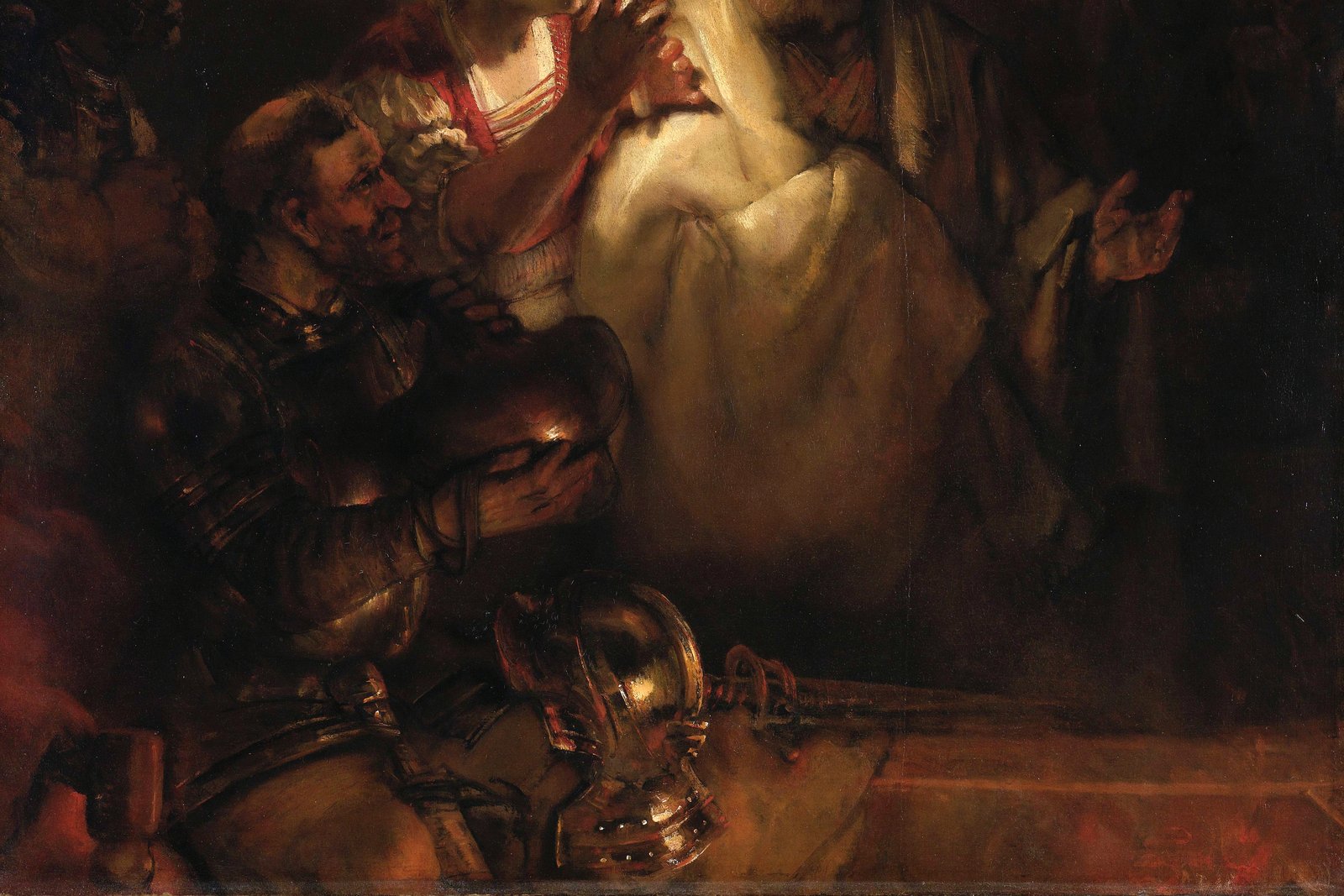
Rembrandt van Rijn, "The Denial of Saint Peter," 1660, Rijksmuseum, Amsterdam — public domain.
Following at a distance
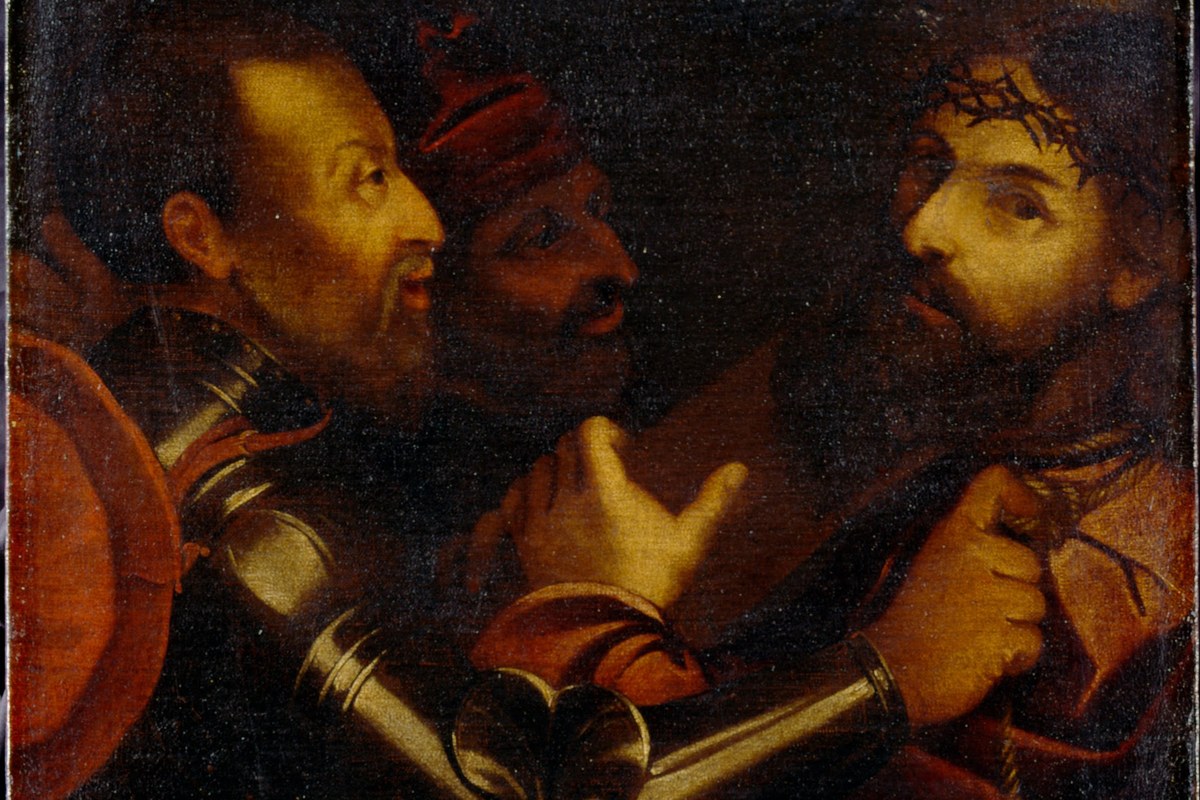
After Jesus is arrested in Gethsemane — betrayed, as all four Gospels record, by Judas — most of the disciples scatter. Peter doesn't run entirely, but Luke notes "Peter was following at a distance" (Luke 22:54, NABRE) as Jesus was taken to the high priest's house for questioning. That detail matters: Peter's failure isn't a failure of nerve alone, since he was brave enough to stay near the scene at all when the other disciples had already fled. It's specifically a failure under direct, personal pressure to admit the connection out loud.
Three denials, growing sharper each time
John's Gospel places the first denial almost as soon as Peter arrives at the courtyard gate, prompted by a servant girl: "Are not you also one of this man's disciples?" He said, "I am not" (John 18:17, RSV-CE). The second and third denials follow as Peter warms himself by a fire in the courtyard while Jesus's trial proceeds nearby. Matthew's account shows the accusations mounting in specificity — first a servant girl says, "You too were with Jesus the Galilean." (Matthew 26:69), then another identifies him again, and finally bystanders press him directly: "Surely you too are one of them; even your speech gives you away." (Matthew 26:73, RSV-CE) — Peter's Galilean speech marking him out even to strangers. By the third denial, Peter isn't just declining to answer; he is actively swearing to it: "At that he began to curse and to swear, “I do not know the man.” And immediately a cock crowed." (Matthew 26:74, RSV-CE).
A rooster, and a look
What happens next is recorded across the Gospels with small but telling differences. Matthew and Mark note simply that the cock crowed and Peter remembered Jesus's words. Luke adds a detail no other Gospel includes: "Just as he was saying this, the cock crowed, and the Lord turned and looked at Peter; and Peter remembered the word of the Lord." He then "went out and began to weep bitterly" (Luke 22:60-62, NABRE). In Luke's telling, Jesus is close enough, even under guard and having just endured hours of questioning, to turn and meet Peter's eyes at the exact moment of the third denial — a detail with no explanation offered, left for the reader to sit with. Peter's response is not self-justification or explanation. It is simply grief, described in the plainest possible terms.
The distance between Peter and Judas
It's worth pausing on how differently the Gospels — and later Christian tradition — treat Peter's failure compared to Judas's betrayal that same night. Both men fail Jesus within hours of each other. Judas's story, as Matthew records it, ends in despair. Peter's does not. The difference the Gospels emphasize isn't that one failure was worse than the other in some measurable sense, but what came after: Peter wept, stayed among the other disciples, and was present three days later at the empty tomb. His story continues rather than ending in the courtyard.
Restored by the same number
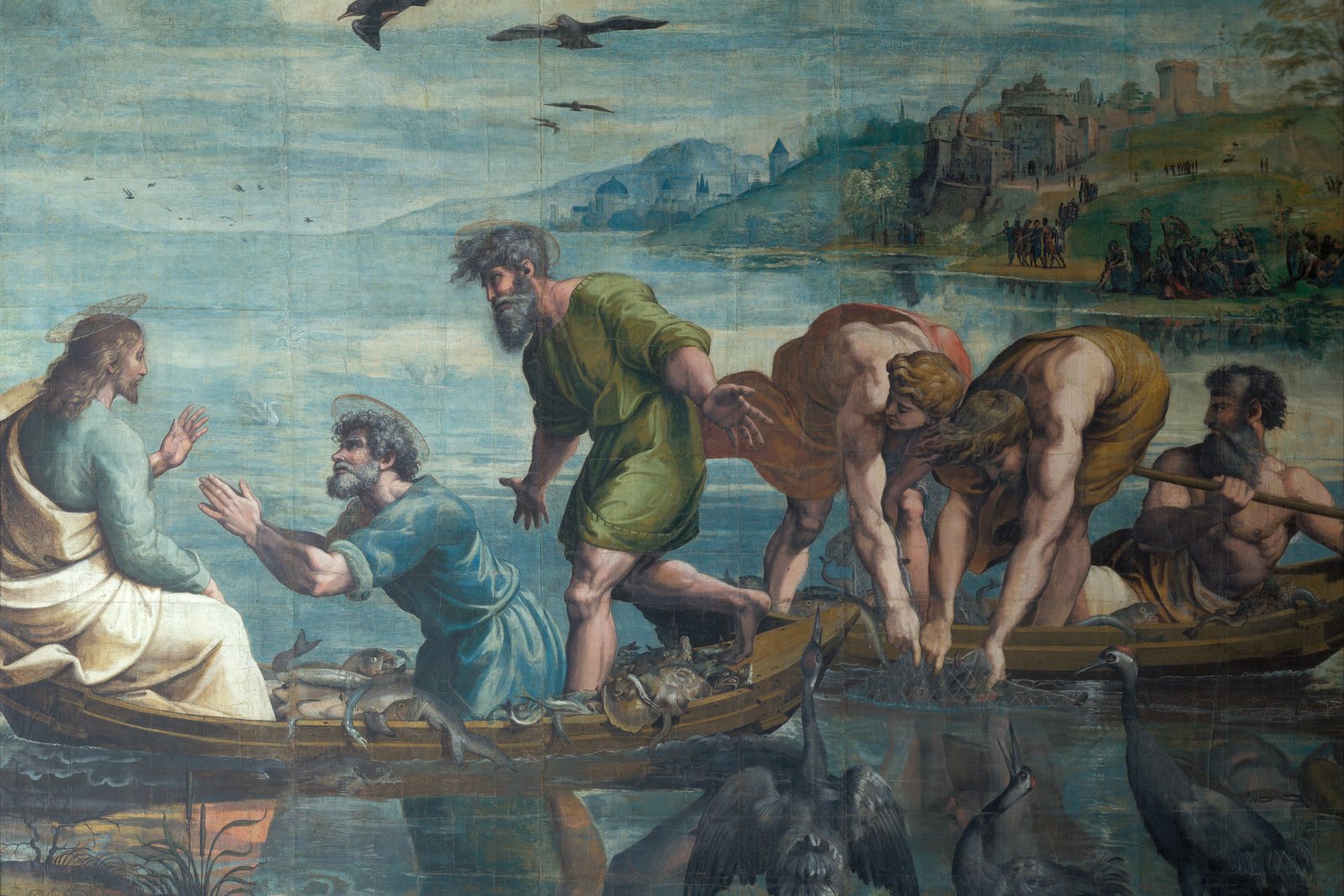
John's Gospel closes the loop on Peter's denial in a resurrection appearance by the Sea of Galilee, in a scene many readers have long recognized as a deliberate echo of the courtyard scene. Three times, the risen Jesus asks Peter, "Simon, son of John, do you love me?" and three times, after Peter answers yes, Jesus responds with a commission: "Feed my lambs"... "Tend my sheep"... "Feed my sheep" (John 21:15-17, RSV-CE). John notes that Peter was "grieved" at being asked a third time, an echo the text seems to intend of the three denials themselves (John 21:17). Rather than a private absolution, the scene ends with public responsibility handed back to Peter in full — the same man who broke down weeping in a courtyard becomes, in the account of Acts, the one who stands up to preach to a crowd of thousands at Pentecost. Catholic tradition holds Peter as the first pope precisely because of this restored, unbroken leadership role among the apostles — a position rooted not in Peter's having never failed, but in what Jesus did with him after he did.
Trivia
How many times did Peter deny knowing Jesus?
What did Peter say when he denied Jesus?
What happened immediately after Peter's third denial?
Where did Peter's denials take place?
Did Jesus forgive Peter for denying him?
Related Reading