The Angel of the Lord in the Old Testament

A messenger who speaks like God
Across the Old Testament, a figure called "the angel of the Lord" — in Hebrew, mal'akh YHWH, literally "messenger of the Lord" — keeps showing up at some of the most pivotal moments in Israel's story. What sets this figure apart from other angels in Scripture isn't just how often he appears, but how the text talks about him once he does. In several key passages, the "angel" who is speaking is, within the same conversation, addressed as though he were God directly — not relaying a message on someone else's behalf, but speaking with the full authority of the first person: "I will," "I have," "I am." Readers have wrestled with exactly what to make of that overlap for millennia, and Scripture itself never stops to explain it.
Carlo Saraceni, An Angel Appearing to the Wife of Manoah, c. 1610 (Wikimedia Commons, public domain)
Rescuing Hagar in the wilderness
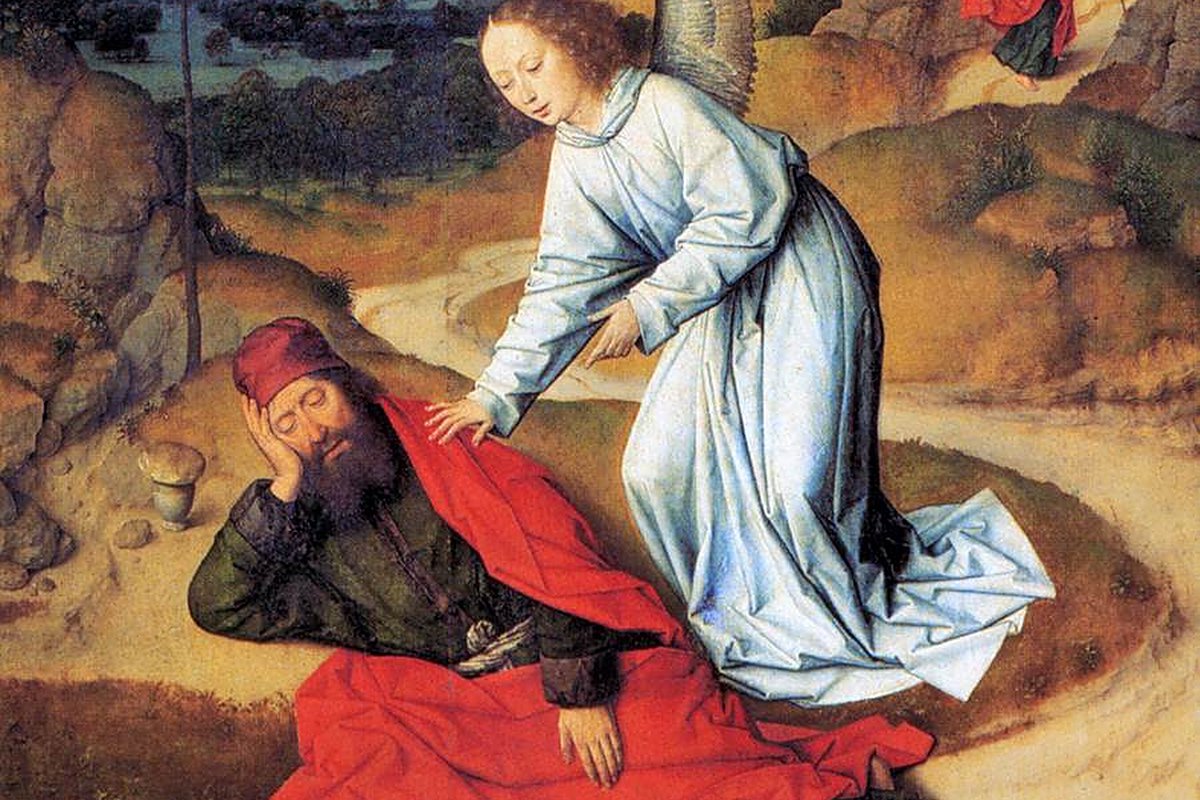
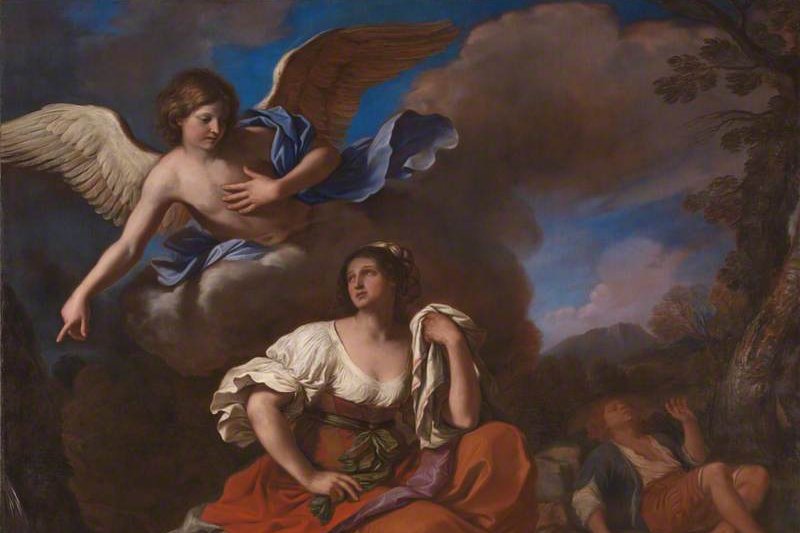
One of the earliest appearances comes in Genesis, after Sarai mistreats her maidservant Hagar so severely that Hagar flees into the desert. "The Lord's angel found her by a spring in the wilderness, the spring on the road to Shur" (Genesis 16:7, NABRE), and asks her where she has come from and where she is going. The angel instructs her to return and submit to Sarai, then promises her that her son Ishmael will father a line "too many to count" (Genesis 16:10, NABRE). What Hagar does immediately afterward is the striking part: "To the Lord who spoke to her she gave a name, saying, 'You are God who sees me'; she meant, 'Have I really seen God and remained alive after he saw me?'" (Genesis 16:13, NABRE). She doesn't describe the encounter as meeting a messenger. She describes it as having seen God and survived — the highest possible stakes in the ancient world's understanding of divine encounters.
Stopping Abraham's hand on Mount Moriah
The same pattern appears at the climax of the binding of Isaac: as Abraham raises the knife over his bound son, "the angel of the Lord called to him from heaven, 'Abraham, Abraham!'" and tells him, "Do not lay your hand on the boy" (Genesis 22:11-12, NABRE). What follows is a promise spoken in God's own voice: "and said: “I swear by my very self—oracle of the Lord—that because you acted as you did in not withholding from me your son, your only one, I will bless you and make your descendants as countless as the stars of the sky and the sands of the seashore; your descendants will take possession of the gates of their enemies," (Genesis 22:16-17, NABRE). An oath sworn "by my very self" is not something a created messenger has any authority to make on someone else's behalf — it's language Scripture reserves for God alone, spoken here by the same figure the text calls an angel.
Fire that would not consume the bush
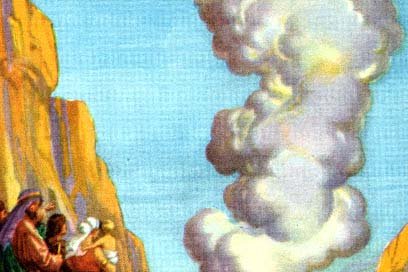
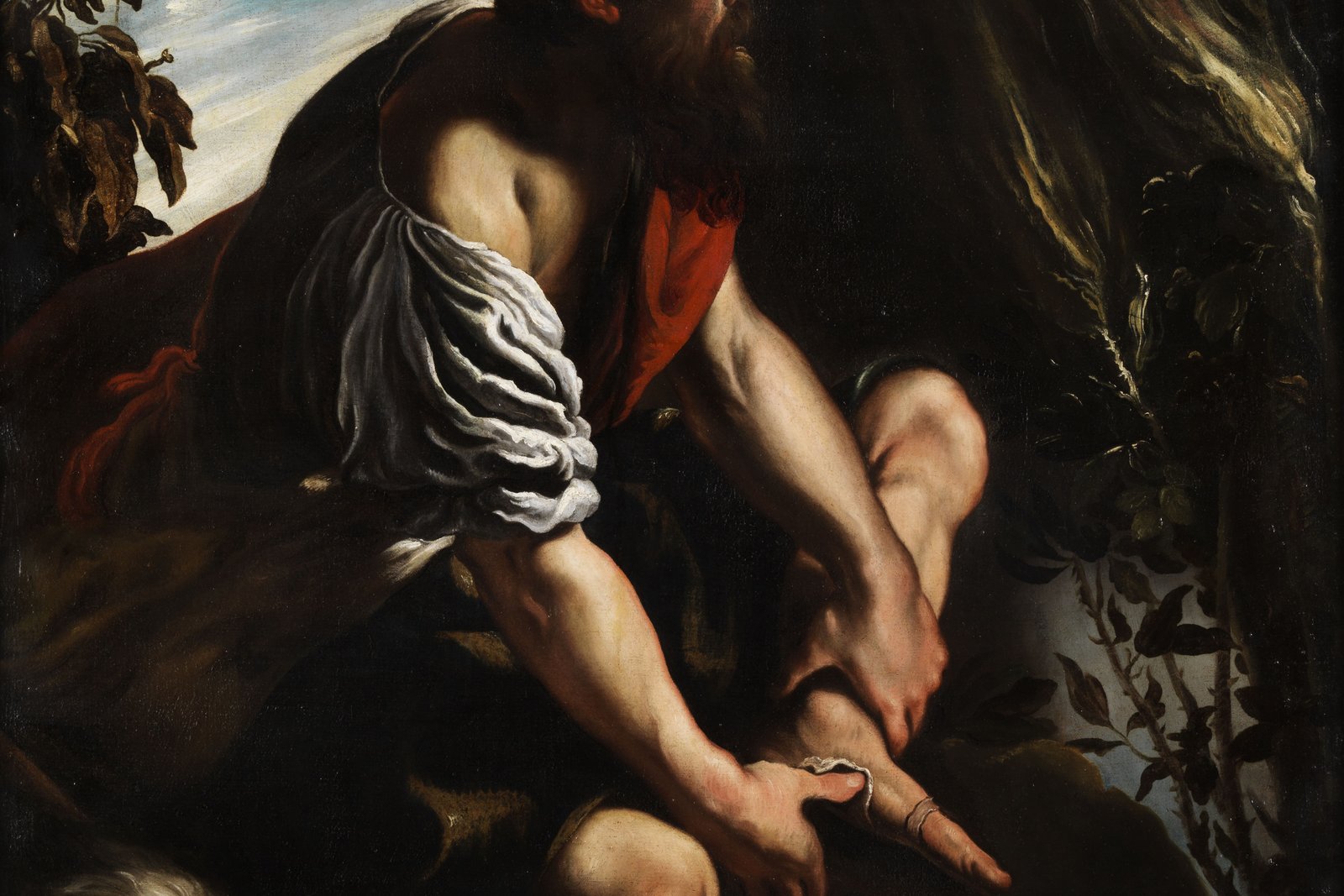
Perhaps the most famous instance comes on Mount Horeb, where Moses, tending his father-in-law's flock, notices something impossible: "the angel of the Lord appeared to him as fire flaming out of a bush. When he looked, although the bush was on fire, it was not being consumed" (Exodus 3:2, NABRE). Moses turns aside to look more closely — and the narration shifts seamlessly from angel to God without any transition marking the change: "When the Lord saw that he had turned aside to look, God called out to him from the bush: Moses! Moses!" (Exodus 3:4, NABRE). God tells Moses to remove his sandals because he is standing on holy ground, identifies himself as "the God of Abraham, the God of Isaac, and the God of Jacob," and Moses hides his face, "for he was afraid to look at God" (Exodus 3:5-6, NABRE). The angel who appeared as fire and the God who then speaks are, in the space of four verses, treated as one and the same encounter.
An angel with a sword, and a talking donkey
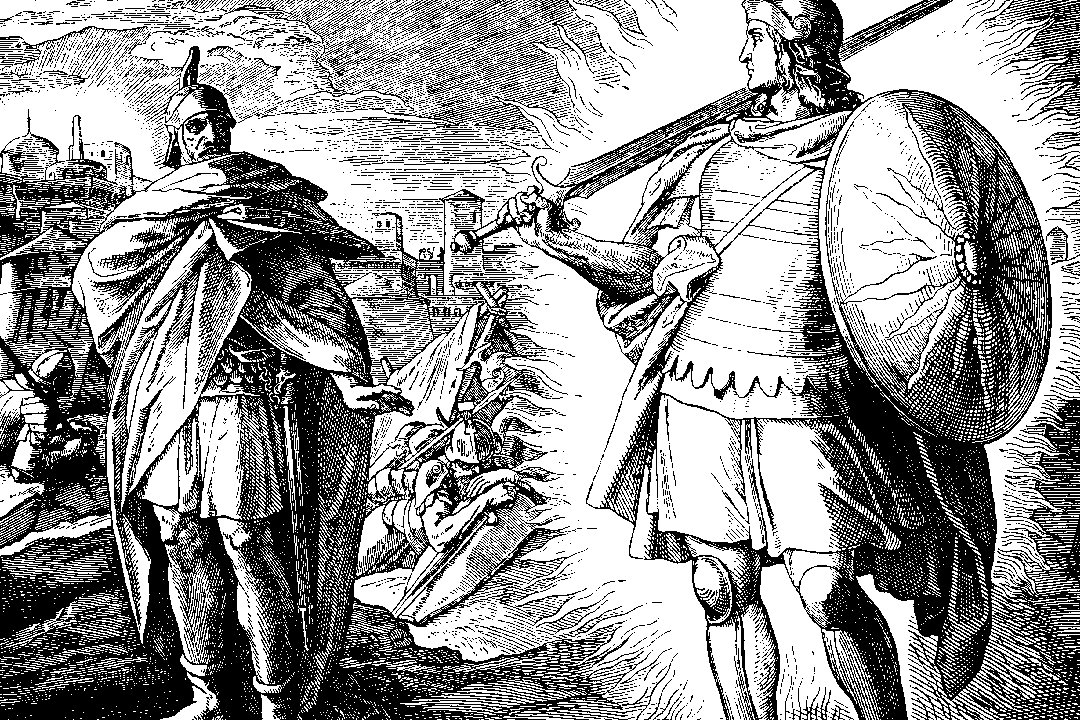
Not every appearance of the angel of the Lord is gentle. In Numbers 22, the foreign prophet Balaam sets out on a journey God has warned him against, and "the angel of the Lord took up a position on the road as his adversary" (Numbers 22:22, NABRE), invisible to Balaam but plainly visible to his donkey, who repeatedly balks and is beaten for it. When God finally opens Balaam's own eyes, "he saw the angel of the Lord standing on the road with sword drawn," and Balaam immediately falls to the ground (Numbers 22:31, NABRE). Here the angel functions much more like the armed, formidable figures found elsewhere in Scripture — closer to the image of angels as guardians and warriors than to a gentle messenger — a reminder that the "angel of the Lord" in these stories is never merely decorative.
A warrior's call to Gideon
The pattern repeats once more in Judges, when Israel is being crushed under Midianite oppression. "The messenger of the Lord came and sat under the terebinth in Ophrah," finding Gideon threshing wheat in secret to hide it from raiders, and greets him: "The Lord is with you, you mighty warrior!" (Judges 6:11-12, NABRE). Gideon, doubtful and unconvinced, asks for a sign; the angel touches a rock with his staff, fire consumes the offering Gideon has laid out, and "the messenger of the Lord disappeared from sight" (Judges 6:21, NABRE). Only then does Gideon realize who had been sitting across from him, crying out in fear at having "seen the messenger of the Lord face to face" (Judges 6:22, NABRE) — the same instinctive terror Hagar and Moses expressed, that seeing this figure meant seeing something no human should safely survive seeing.
How Catholic tradition has read these appearances
The Catechism of the Catholic Church teaches plainly that angels are "spiritual, non-corporeal beings" who serve God as messengers and protectors (CCC 328-330) — real created beings distinct from God, not symbolic figures. But the angel of the Lord passages sit in a slightly different category, because of how directly some of them identify the figure with God's own voice and authority. A long-standing thread within Christian tradition, present among several early Church Fathers, reads these Old Testament appearances as glimpses of the Son of God appearing before his human birth — moments where the eternal Word, who would later become incarnate as Jesus Christ, made himself known to figures like Abraham, Hagar, and Moses in a form Scripture describes using the language available to it at the time.
It's important to be precise about what this is and isn't: it's a theological interpretation with deep roots in Christian reading of Scripture, not a matter the Church has settled with a formal, binding definition covering every appearance of "the angel of the Lord" throughout the Old Testament. Other interpreters, ancient and modern, have read some or all of these appearances more simply, as an angel who speaks with such complete fidelity to God's message that Scripture's own language treats speaking for God and speaking as God as functionally identical in these specific, dramatic moments. Both readings take the mystery of the text seriously rather than explaining it away, which may be exactly why these episodes have remained objects of reflection for as long as they have been read at all.
This kind of angel — armed, formidable, speaking with divine authority — reappears centuries later in very different apocalyptic imagery, most vividly in Michael leading the armies of heaven in the Book of Revelation.
A thread running through Israel's story
What ties Hagar's spring, Abraham's mountain, Moses's bush, Balaam's road, and Gideon's threshing floor together isn't a single unbroken narrative — these are separated by centuries and involve completely different people in completely different circumstances. What repeats is the shape of the encounter itself: an ordinary, often desperate moment, interrupted by a figure who speaks with unmistakable divine authority, and who leaves behind someone changed, frightened, and certain they have brushed up against something enormous. Across a book with hundreds of angelic messengers named and unnamed, this particular figure — recurring, unexplained, described in language that blurs the line between servant and sovereign — remains one of the Old Testament's most quietly startling mysteries.
Trivia
Who is the angel of the Lord in the Old Testament?
Is the angel of the Lord the same being every time he appears?
Did the angel of the Lord appear to Hagar?
What happened when the angel of the Lord appeared to Moses?
Has the Catholic Church made an official teaching about who the angel of the Lord is?
You May Also Like

Related Reading