The Temptation in the Desert


Tempted at the point of real need
Matthew is specific about the timing: Jesus has just spent forty days and nights fasting in the wilderness, and "He fasted for forty days and forty nights, and afterwards he was hungry." (Matthew 4:2, RSV-CE) — an understatement that sets up exactly why the first temptation lands where it does. "The tempter approached and said to him, “If you are the Son of God, command that these stones become loaves of bread." (Matthew 4:3, RSV-CE). This isn't an abstract test. It's aimed directly at genuine, physical hunger, framed as a simple, private solution that would harm no one.
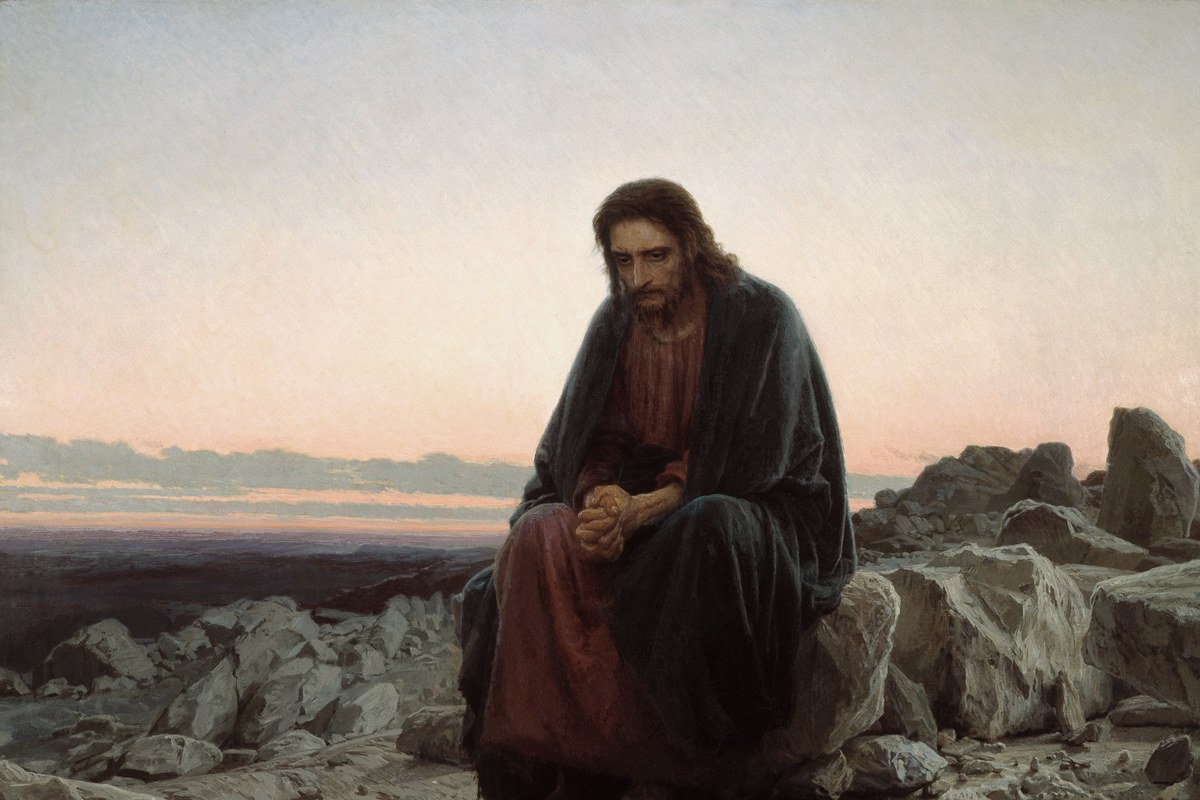
Ivan Kramskoy, "Christ in the Wilderness," 1872 — public domain.
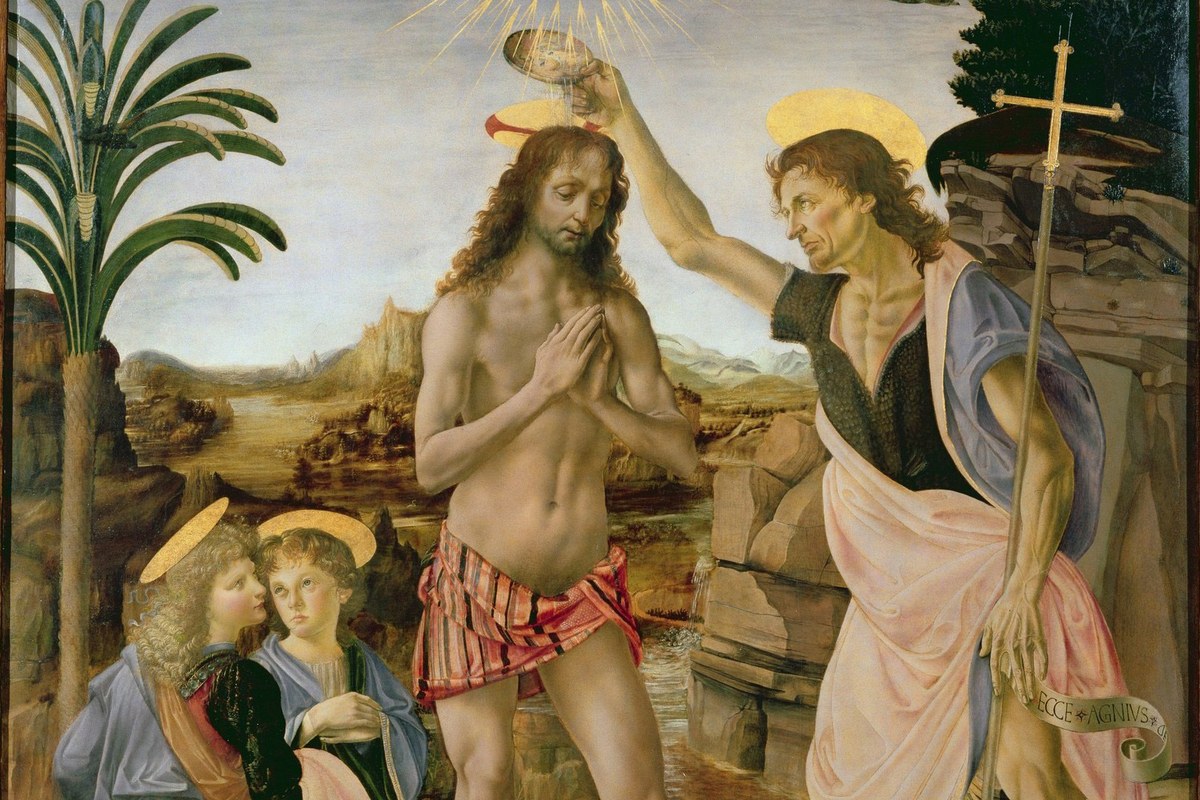
The setting matters as much as the timing. Matthew records that Jesus was "Then Jesus was led by the Spirit into the desert to be tempted by the devil." (Matthew 4:1, RSV-CE) immediately after the baptism of Jesus, where a voice from heaven had just declared him God's beloved Son. The devil's first words in the wilderness — "If you are the Son of God" — pick up that exact declaration and turn it into a question, inviting Jesus to prove what had just been publicly affirmed. Forty days also echoes Israel's own forty years wandering in the wilderness after the Exodus, and Moses's own forty-day fast on Sinai — a deliberate parallel that casts Jesus as revisiting, and succeeding where Israel had once failed, the same testing ground in the desert.
Scripture used as a weapon, and as a shield
The second temptation escalates the strategy: the devil takes Jesus to the highest point of the Temple and dares him to throw himself down, quoting Psalm 91 to argue that angels would catch him (Matthew 4:5-6, RSV-CE) — turning Scripture itself into the instrument of temptation. Jesus's reply doesn't reject the verse; it adds another one: "Again it is written, ‘You shall not put the Lord, your God, to the test.’" (Matthew 4:7, RSV-CE). Each temptation in this scene is met the same way — not with Jesus's own reasoning, but with a direct line from Deuteronomy, met and answered on its own terms.
All three of Jesus's replies, notably, come from the same short section of Deuteronomy — chapters six and eight, part of Moses's instructions to Israel before entering the Promised Land, warning the people not to forget God once their hunger was satisfied and their power secured. Jesus doesn't reach for scattered proof-texts; he answers every offer out of a single, focused passage about remembering God in exactly the moments — hunger, safety, prosperity — when it becomes easiest to stop. That consistency suggests something deliberate: this wasn't a man searching for the right verse under pressure, but someone who had already made these words part of how he thought.
An offer with no hidden angle
The third temptation drops any pretense of subtlety: "Then the devil took him up to a very high mountain, and showed him all the kingdoms of the world in their magnificence, and he said to him, “All these I shall give to you, if you will prostrate yourself and worship me." (Matthew 4:8-9, RSV-CE). It is the most direct trade offered in the whole account — total power, in exchange for worship diverted away from God. Jesus's answer is his sharpest: "Get away, Satan! It is written: ‘The Lord, your God, shall you worship and him alone shall you serve.’" (Matthew 4:10, RSV-CE).
What happens once the testing ends
The scene closes almost gently: "Then the devil left him, and behold, angels came and ministered to him" (Matthew 4:11, RSV-CE) — a quiet aftermath following three escalating confrontations. Christian tradition, particularly during Lent, has long read this passage less as a story about resisting obvious evil and more as a pattern for real temptation generally: offers that target authentic need, arguments that borrow the language of faith itself, and a response that relies on something already given rather than an answer invented on the spot.
Luke's version of the same episode changes one detail worth noting: he places the Temple test second and the mountain of kingdoms last, ending the sequence at Jerusalem rather than in open wilderness — a structural choice that fits Luke's broader interest in Jerusalem as the city where Jesus's story will ultimately be resolved, in his death and resurrection. Luke also adds a small, unsettling note absent from Matthew: having exhausted his temptations, the devil "departed from him for a time" (Luke 4:13, NABRE), signaling that this desert confrontation wasn't a single closed chapter but the opening round of a struggle that would resurface again before the end.
Why this scene anchors the season of Lent
The Church has long drawn a direct line between these forty days in the wilderness and the forty days of Lent, the penitential season of fasting and prayer observed each year before Easter. The connection isn't incidental — Lent is structured, quite deliberately, as an invitation to walk through the same desert Jesus walked through, facing the same categories of temptation in smaller, everyday forms: the pull of physical comfort, the desire for a dramatic sign instead of quiet trust, and the lure of shortcuts to security or status. Read this way, the temptation in the desert isn't simply a story about what happened to Jesus once, in one place. It's held up each year as a pattern for facing the ordinary temptations that return, in one form or another, to everyone.
Trivia
What was the first temptation, and why did it matter?
What was the second temptation?
What was the third temptation?
How did Jesus respond to each one?
Related Reading