Saint Eligius, Patron of Goldsmiths

From apprentice to master of the mint
Eligius — Éloi, in French — was born around 588 near Limoges, in what's now central France, into a family with an existing trade connection: his father apparently recognized talent early and apprenticed him to a local goldsmith. From there Eligius moved on to train under Abbo, master of the mint at the Merovingian royal treasury, a position that put him directly in contact with the highest level of Frankish craftsmanship and, in time, with the royal court itself. Goldsmithing in this period wasn't a minor decorative trade; a master goldsmith working for a king produced coinage, ceremonial weapons, reliquaries for the Church, and the kind of ornamented regalia that visibly communicated a ruler's wealth and legitimacy to allies and rivals alike. It was a trade that mattered.
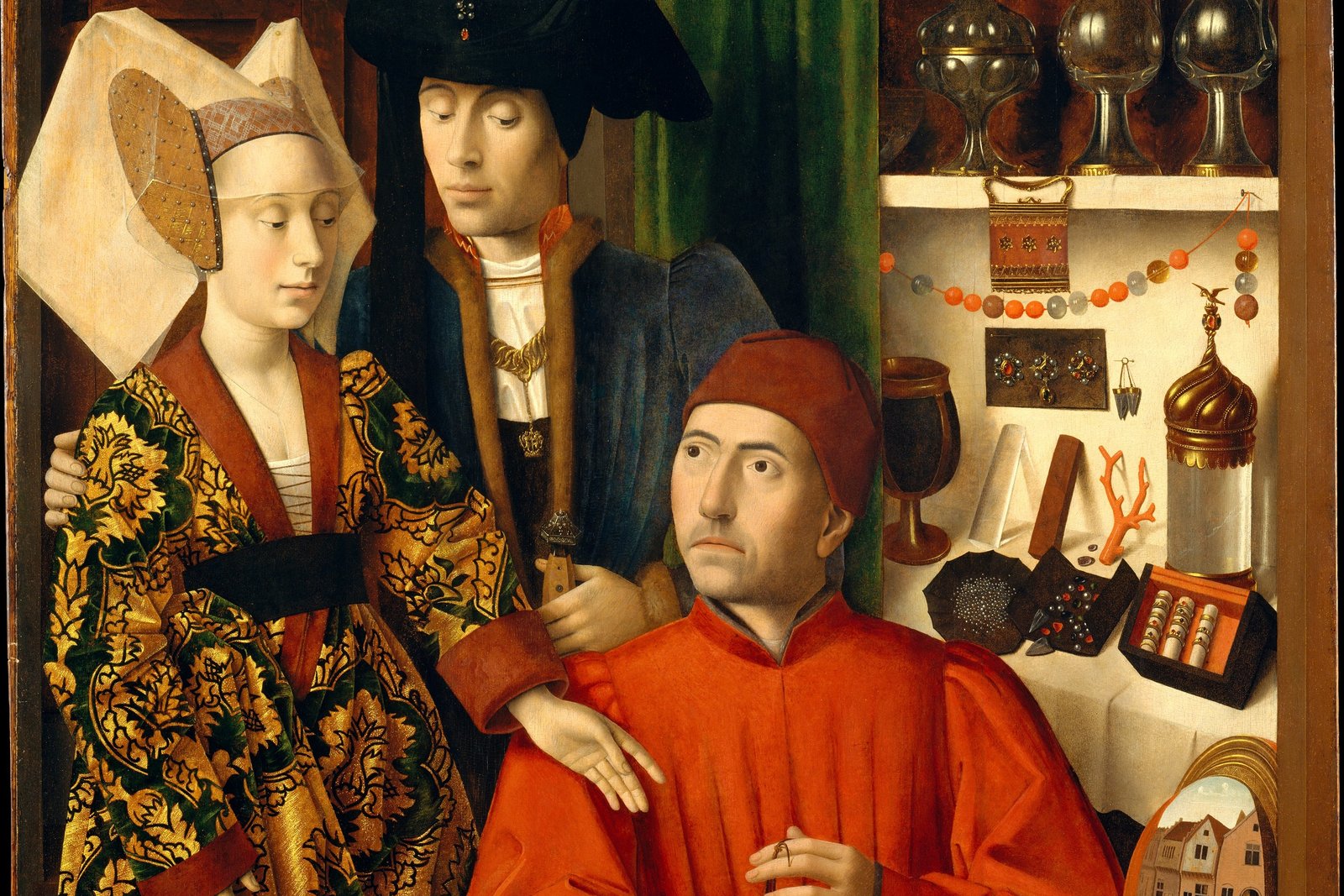
Petrus Christus, A Goldsmith in his Shop (traditionally associated with Saint Eligius), 1449, Metropolitan Museum of Art, New York — public domain (CC0).
The episode that made Eligius's reputation, and which biographers return to again and again, involves King Clothar II. The king gave Eligius a quantity of gold and precious stones with instructions to fashion a single ornamented throne — a substantial, valuable commission, and one where a less scrupulous craftsman might quietly have set aside a portion of the material for himself, a practice that was apparently not unheard of among royal goldsmiths of the era. Eligius instead worked the material with such careful, honest precision that he produced not one throne but two from the same allotment, and presented both, along with the leftover gold, to the astonished king. Clothar didn't punish him for the surplus or suspect trickery — he made Eligius a trusted advisor on the spot, a position Eligius would go on to hold, in one form or another, under both Clothar II and his son Dagobert I.
Royal counselor, mint master, and a reputation for honesty
Under Dagobert I, Eligius's influence only grew. He became master of the royal mint at a time when coinage bore an individual moneyer's mark, and a number of Merovingian coins bearing Eligius's name have survived into the modern era — physical, dateable evidence of his actual professional work that few early medieval saints can claim. He was entrusted with diplomatic missions as well, including negotiations connected to Frankish relations with neighboring Christian and pagan territories, evidence that his value to the court went well beyond his skill with a hammer and crucible.
Throughout this period at court, sources consistently describe Eligius as living a life increasingly out of step with typical courtly excess — generous to the poor, careful with his own wealth, drawn toward prayer and the company of clergy even while still fully occupied with his secular duties. It's a familiar pattern in early medieval hagiography (writing about the lives of saints, often mixing documented fact with devotional legend) — the successful layman whose external prosperity increasingly sits alongside an inward pull toward religious life — but in Eligius's case the biographical detail is unusually specific and workmanlike, tied to actual coinage, actual commissions, actual court appointments, rather than vague spiritual claims alone.
From goldsmith to bishop
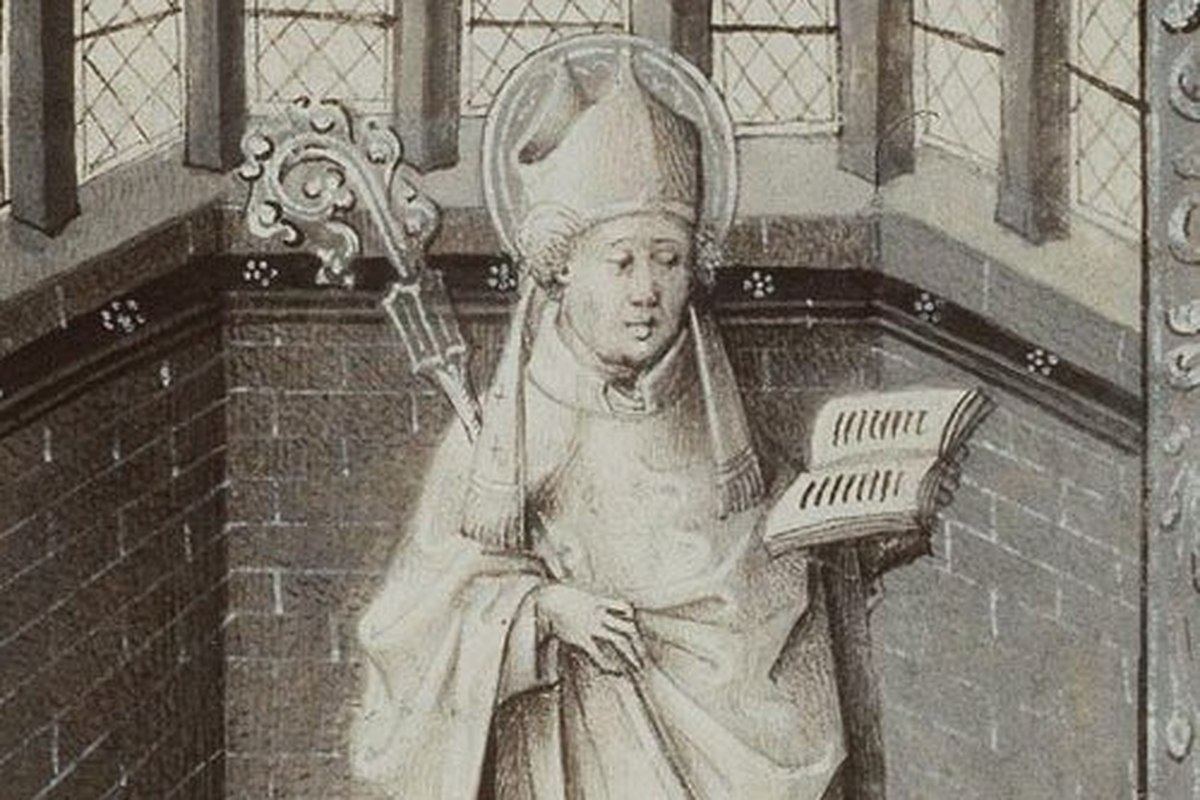
Around 632, Eligius used his own resources to found a monastery at Solignac, near Limoges, and he was involved in establishing a convent in Paris as well — early signs of where his priorities were shifting even while he remained active at court. The full transition came later: around 641, following the death of the previous bishop, Eligius was ordained and consecrated Bishop of Noyon-Tournai, a see covering territory in what's now northern France and Belgium. It was, on the surface, an unusual leap — a master craftsman and royal official stepping directly into a bishopric — but it fit a broader pattern of the Merovingian era, when the line between capable royal servant and capable Church leader was considerably more permeable than it would later become.
As bishop, Eligius threw himself into active missionary preaching among rural populations in his diocese where pre-Christian religious practices persisted alongside, or underneath, formal Christian observance — a common situation across much of Merovingian Gaul at the time, where conversion was often centuries deep in the aristocracy but far more recent and uneven among ordinary rural people. Eligius reportedly preached forcefully against surviving pagan customs, a role that put him in the same broad category as other 7th-century missionary bishops working to consolidate Christian practice across the Frankish kingdoms.
Ransoming the enslaved
One of the most consistently repeated details across sources describing Eligius's episcopate is his practice of using his own wealth — considerable, given his earlier career — to purchase the freedom of enslaved people, a form of charitable ransom that shows up in early medieval saints' lives with some regularity but is documented for Eligius with more specificity than for many contemporaries. Slavery persisted throughout Merovingian Gaul in this period, and a bishop with genuine personal fortune and standing at court was in an unusually good position to act directly rather than only preach against the practice in the abstract. It's a detail that connects cleanly to the rest of his biography: a man whose defining early trait was scrupulous honesty with material wealth that wasn't his own went on, as bishop, to spend his own material wealth freeing people who had none.
Patron of goldsmiths — and, in places, of horses
Eligius's formal patronage of goldsmiths and metalworkers follows directly and uncontroversially from his documented trade — this isn't a legend-derived patronage the way many medieval craft-patronages are, but a straightforward recognition of what the man actually did for a living before he was ordained. Guilds of goldsmiths and blacksmiths across medieval France and the Low Countries adopted him as their patron, and his feast, December 1, was historically marked by craft guild observances in a number of European cities.
A secondary, regional patronage — of horses, farriers, and veterinarians — developed alongside this, especially in French and Belgian folk tradition, drawing on legendary stories of his skill with metalwork extending to horseshoeing and animal care. This strand of his cultus (the tradition and devotional practice surrounding a saint) rests more on popular legend than on documented biography, and it's worth being clear about that distinction: the goldsmith patronage is grounded in verifiable trade and career; the horse patronage grew up alongside it through folk association rather than an equivalent documentary record. Eligius died at Noyon on December 1, 660, and his feast is still kept on that date.
Trivia
Who was Saint Eligius?
Why is Saint Eligius the patron saint of goldsmiths?
What is the story about Eligius and two thrones?
Is Saint Eligius also a patron of horses and veterinarians?
What did Eligius do as Bishop of Noyon?
You May Also Like
Related Reading