Pope John Paul II

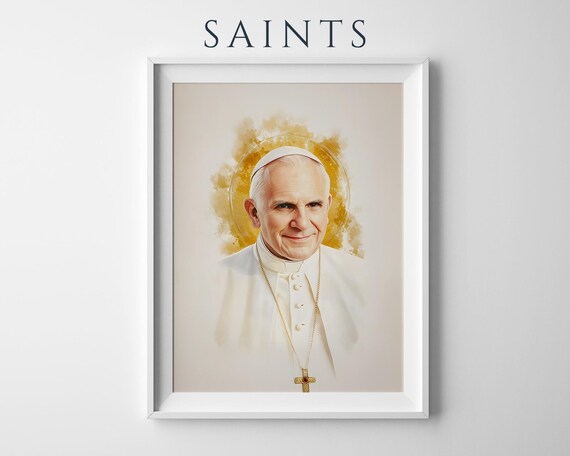
The first Slavic pope in centuries
John Paul II, born Karol Wojtyła in Wadowice, Poland, in 1920, became the first non-Italian pope in 455 years and the first ever from a Slavic country when he was elected in 1978. His pontificate would go on to last more than 26 years, the third longest in the history of the papacy — a tenure long enough to place him at the center of some of the late 20th century's most consequential political and personal events.
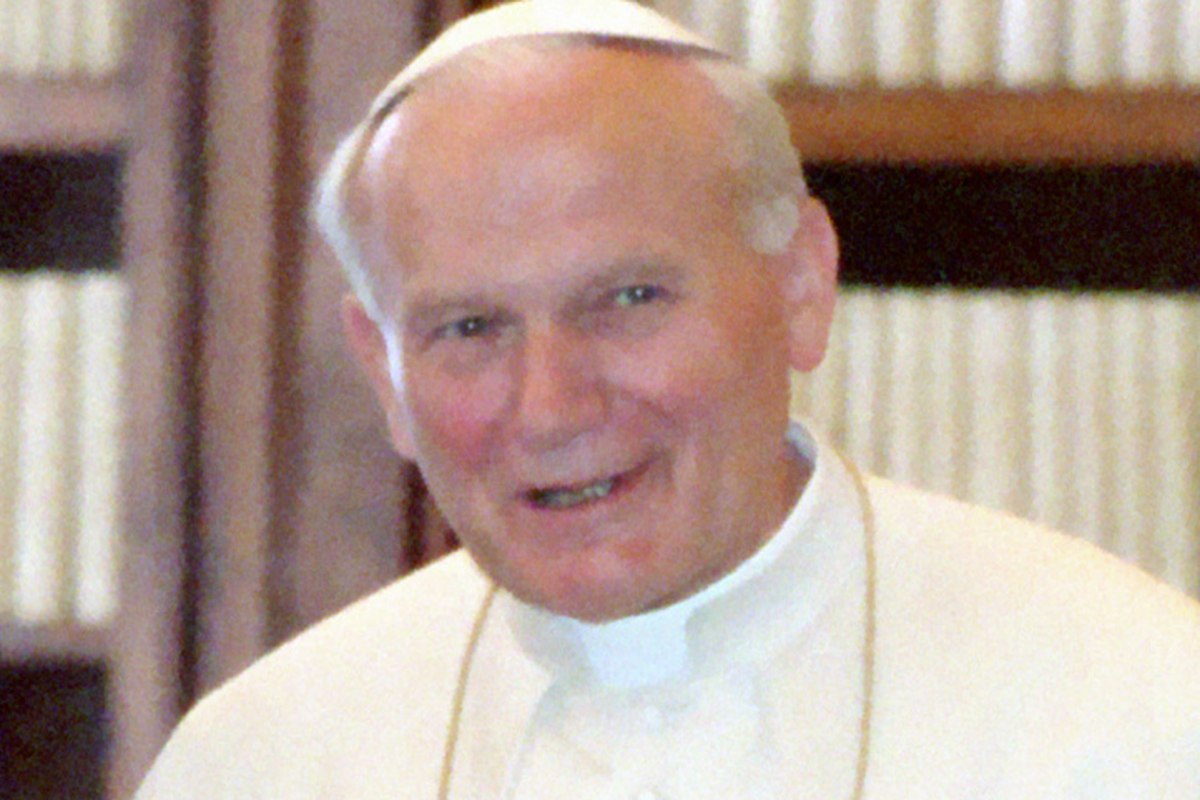
Photograph of Pope John Paul II, 1987, White House Photographic Collection — public domain.
Before he became pope, Karol Wojtyła had already lived through Nazi occupation and Soviet-imposed communist rule in his native Poland, working for a time in a stone quarry and a chemical factory under German occupation to avoid deportation for forced labor, while secretly studying for the priesthood in an underground seminary. That direct, personal experience of two totalitarian regimes shaped him profoundly — he understood the machinery of oppression not as an abstract political concept but as something he had lived inside, which is part of why his later confrontations with Soviet-backed authority carried the weight they did.
Shot in broad daylight, in front of thousands
On May 13, 1981, while entering St. Peter's Square to greet crowds gathered there, John Paul II was shot and seriously wounded by Mehmet Ali Ağca. Struck twice, he suffered severe blood loss and required emergency surgery to survive. The attack, carried out in one of the most public settings imaginable, left the world uncertain for a time whether the pope would recover at all.
Forgiveness delivered in person, inside a prison cell
What followed became one of the defining images of his papacy. On December 27, 1983 — two years after the shooting — John Paul II visited Ağca directly in his cell at Rome's Rebibbia prison and forgave him face to face, a private meeting between the pope and the man who had tried to kill him. It wasn't a public statement of forgiveness issued from a distance. It was a deliberate, personal visit to the man responsible, carried out inside the very facility holding him.
John Paul II never disclosed publicly what exactly was said in that cell, describing it only as a conversation between two men who now shared something in common. He later credited Our Lady of Fátima with having saved his life, noting that the shooting took place on May 13 — the anniversary of the first reported apparition at Our Lady of Fátima in 1917. He had one of the bullets removed from his body set into the crown of the statue of Mary at the Fátima shrine, a physical gesture linking the attempt on his life directly to his own devotion.
A quiet influence on the collapse of Soviet power
Beyond the assassination attempt, John Paul II's papacy coincided with and helped shape one of the century's largest political transformations. A fervent anti-communist, he lent visible support to Poland's Solidarity trade union and held private conversations with both Polish and Soviet leaders that historians credit with contributing meaningfully to the peaceful end of communist rule across Eastern Europe — a process that, within roughly a decade of his first papal visit to Poland, culminated in the fall of the Berlin Wall.
His June 1979 pilgrimage to Poland, less than a year into his papacy, is often singled out by historians as a turning point in itself. Millions of Poles turned out to see him, discovering in the process just how many of their fellow citizens shared their faith and their hope for change — a realization that helped fuel the rise of the Solidarity movement the following year. Soviet and Polish communist officials were reportedly alarmed by the visit's scale and its effect on public morale, recognizing, correctly as it turned out, that a pope who refused to stay silent on the dignity and freedom of his own people represented a threat their usual tools of control couldn't easily counter.
Canonized on the strength of two inexplicable healings
John Paul II died in 2005, was beatified in 2011, and was canonized on April 27, 2014, based on two healings that medical experts declared scientifically inexplicable: a French nun's recovery from Parkinson's disease and a Costa Rican woman's recovery from a brain aneurysm, both attributed to prayers for his intercession after his death — closing out a life that had already survived one of the most dramatic assassination attempts of the modern papacy.
Beyond the assassination attempt and his role in Eastern Europe, John Paul II's papacy was defined by relentless travel — he visited well over a hundred countries, more than any of his predecessors combined, and made a point of reaching out to other faiths, including historic visits to a synagogue in Rome and a mosque in Damascus, the first such visits by a reigning pope. He also issued a landmark apology in 2000 for historical sins committed by members of the Church over the centuries, part of a broader effort to face difficult chapters of Church history directly rather than pass over them in silence. His body lay in state after his death in 2005 for several days, drawing an estimated four million mourners to Rome — one of the largest single gatherings in human history up to that point, a final, unplanned testament to how personally millions of people, far beyond the borders of the Catholic Church, had come to regard him.
Trivia
What happened on May 13, 1981?
Did John Paul II really forgive the man who shot him?
What role did John Paul II play in the fall of communism?
How long was John Paul II's papacy, and when was he canonized?
Related Reading