Saint Juan Diego Cuauhtlatoatzin

A convert with nothing to gain
Juan Diego was born around 1474 in what is now the state of Mexico, given the Nahuatl name Cuauhtlatoatzin — a name that carried its own poetry, often rendered as "the eagle who speaks" or "one who talks like an eagle." He lived through one of the most violent ruptures in his people's history: the Aztec empire's collapse under Spanish conquest, completed in 1521, just a few years before Juan Diego and his wife, María Lucía, were baptized as Christians, likely around 1524 or 1525. By the time of the events that would make him famous, he was a widower, living simply, walking long distances on foot between his home and the Franciscan mission where he received religious instruction — an ordinary man by every social measure available to Spanish colonial Mexico, with no title, no wealth, and no particular standing in either the colonizing church or his own Nahua community.
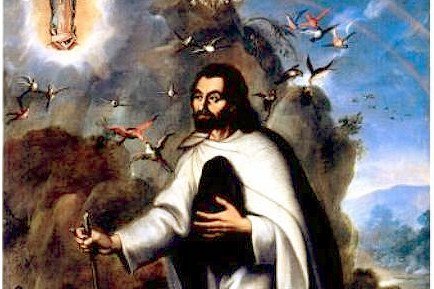
Miguel Cabrera, Fiel retrato del venerable Juan Diego, 18th century — public domain.
The hill of Tepeyac
On the morning of December 9, 1531, Juan Diego was crossing Tepeyac Hill, on the outskirts of what was then Mexico City, on his way to Mass. Tradition holds that he heard birdsong unlike anything he'd known, and then a woman's voice calling him by name in Nahuatl. Climbing toward the sound, he encountered a young woman surrounded by light, who identified herself as the Mother of God and asked him to carry a request to the local bishop, Juan de Zumárraga: that a church be built on that hill in her honor.
Juan Diego did as he was asked, but the bishop — understandably, given how such claims usually turn out — was skeptical and sent him away without a firm answer. Juan Diego returned to the hill, reported the failure, and asked the lady to send someone more credible. She refused, insisting he was the one she wanted, and sent him back a second time. The bishop's household this time asked for a sign, some proof that the apparition was genuine and not the product of grief, exhaustion, or delusion.
The sign and the tilma
The sign, according to tradition, came a few days later, on December 12, after Juan Diego had been delayed by his uncle's grave illness and had tried, by his own account, to avoid the hill entirely to attend to family obligations. The lady met him anyway, assured him his uncle would recover, and directed him to gather Castilian roses from the rocky, frost-covered hilltop — flowers with no business blooming there, out of season, in December. Juan Diego gathered them in his tilma, a simple cloak woven from maguey cactus fiber, and carried them to the bishop.
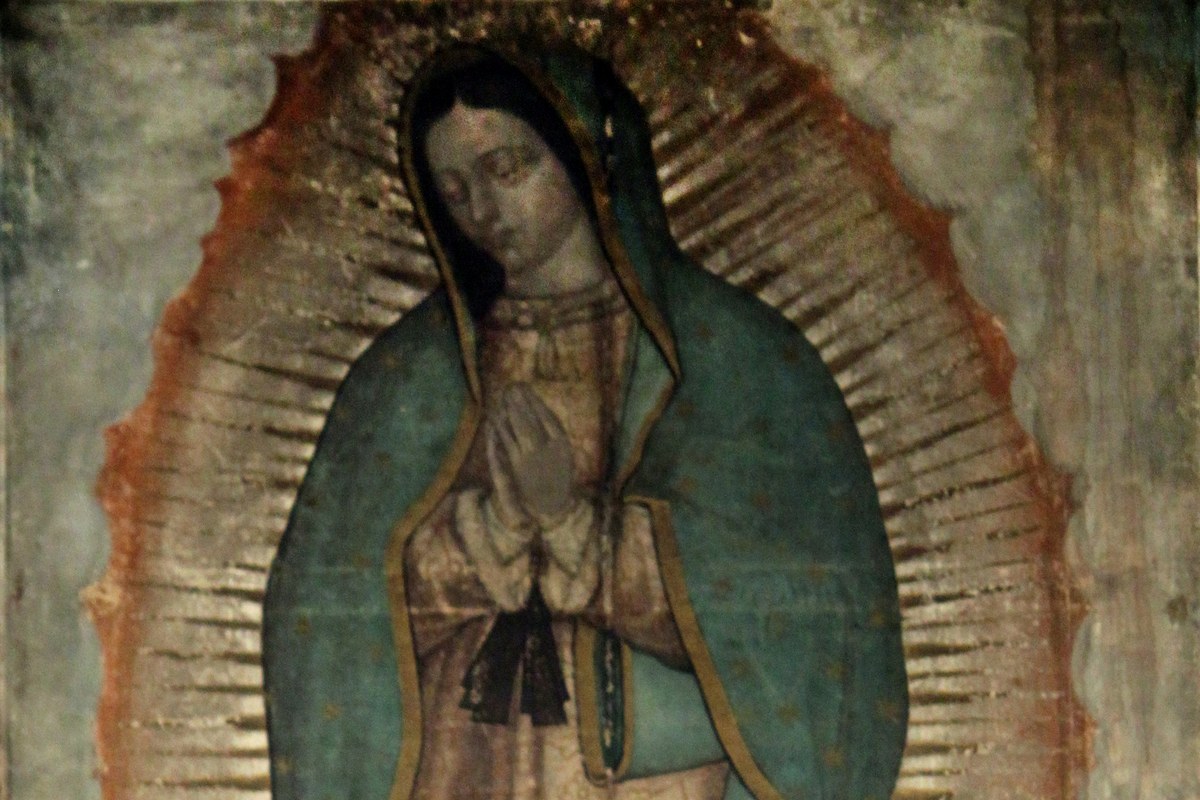
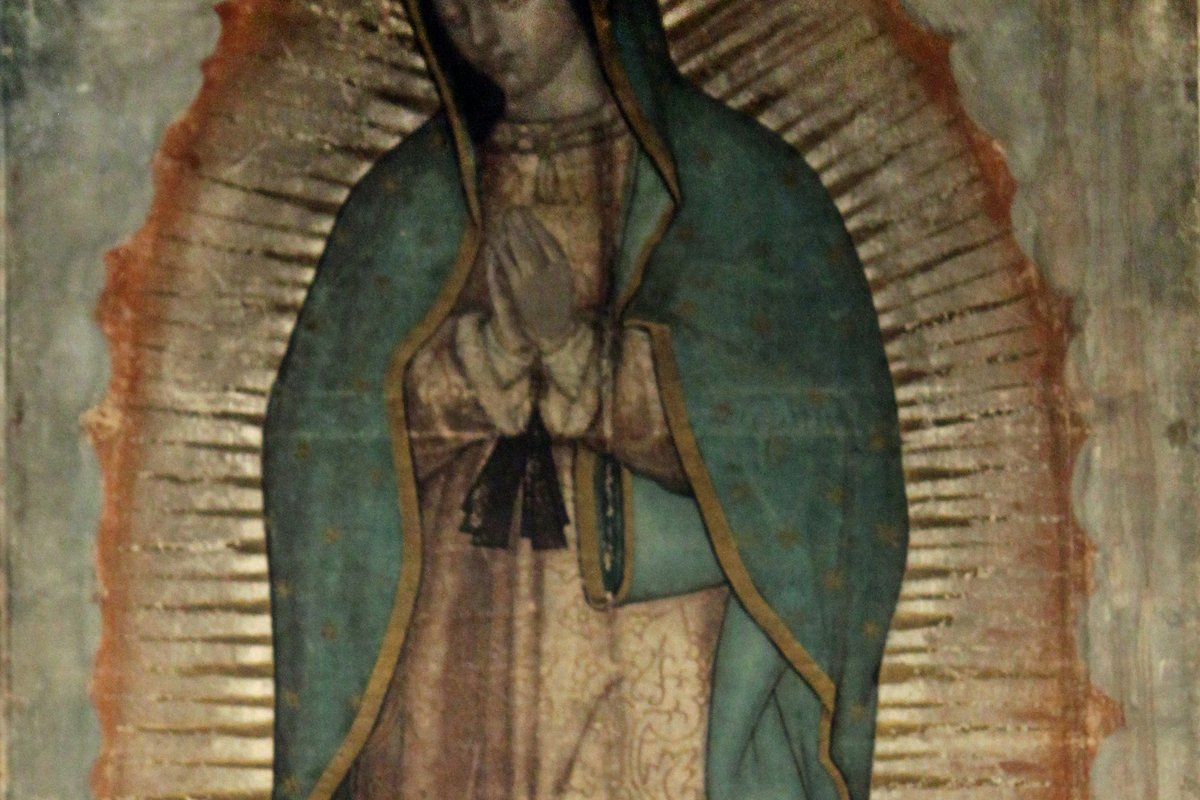
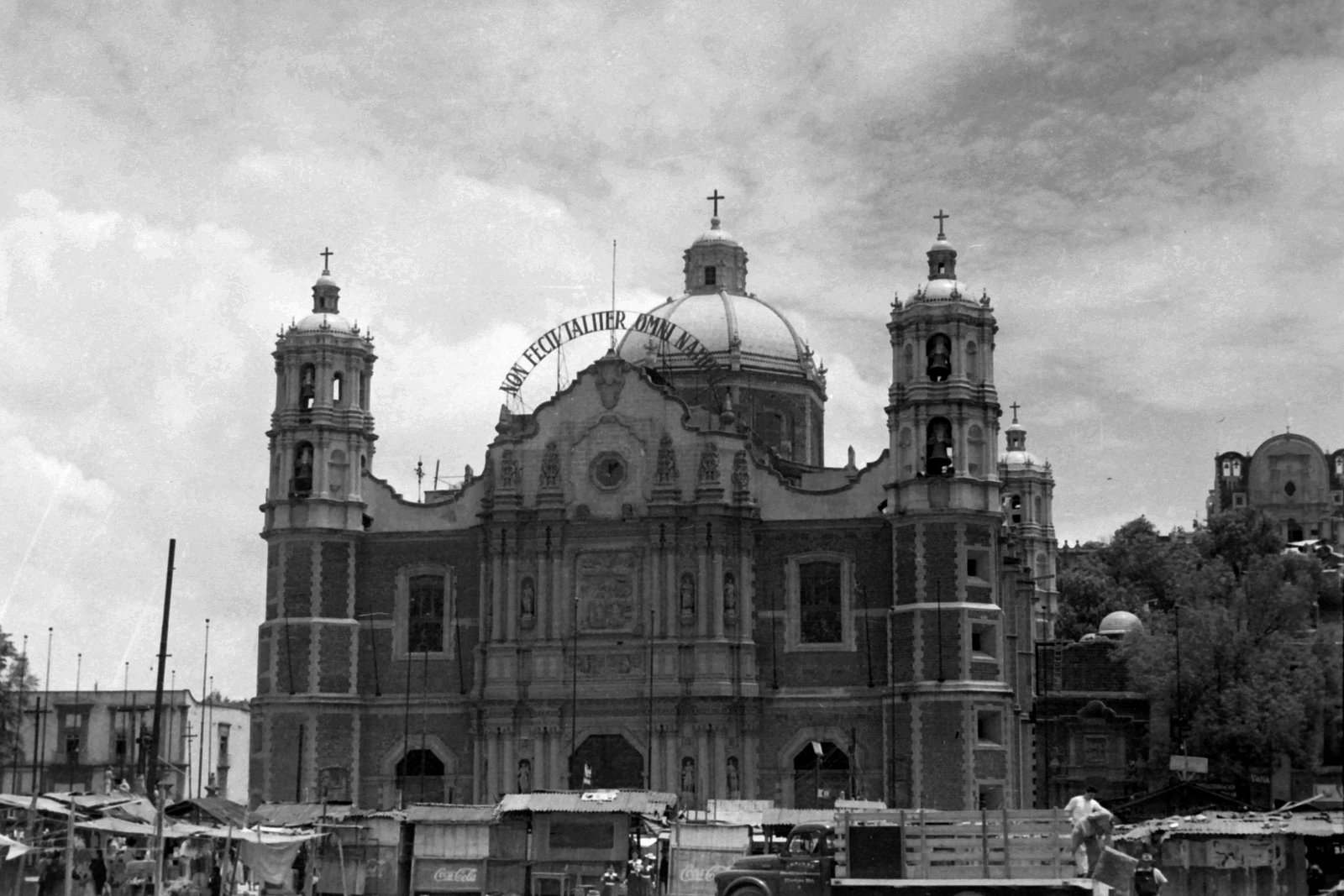
When he unfurled the cloak before Zumárraga and his household, the roses spilled out — and on the fabric itself, tradition holds, an image had appeared: a young woman in a rose-colored tunic and blue-green mantle covered in stars, standing on a crescent moon, hands folded in prayer. The bishop, by every account moved to tears, ordered the church built as requested. The image on the tilma is what Catholics today venerate as Our Lady of Guadalupe. For the fuller apparition narrative and its iconography, see this blog's article on Our Lady of Guadalupe, and for the building constructed to house the tilma, see the article on the Basilica of Our Lady of Guadalupe.
A life spent guarding the image
Juan Diego spent the remaining years of his life, until his death around 1548, living near the small chapel built on Tepeyac Hill, caring for the church and the pilgrims who came to see the tilma. He never remarried, devoted himself to prayer and catechesis, and by most surviving accounts lived with a quiet, unassuming holiness that matched the humility of his role in the apparition itself — a man who had been chosen not for any status he held, but seemingly because he held none.
Why the choice of Juan Diego mattered
It's worth pausing on why Catholic tradition places such weight on who Mary chose to appear to. Sixteenth-century Mexico was a colonial society stratified sharply along ethnic and class lines, with Indigenous converts like Juan Diego occupying a marginal position relative to Spanish clergy and colonists. That the apparition account centers an Indigenous man — addressed with tenderness, in his own language, and entrusted with a message meant for the highest-ranking churchman in the colony — has long been read by historians and theologians alike as central to the event's meaning. The image on the tilma itself reinforces this: Mary is depicted with features and dress drawing on both Spanish and Indigenous visual traditions, a figure legible to both peoples at a moment of profound cultural collision. Devotion to Guadalupe spread rapidly among Indigenous converts in the decades after 1531, and many historians credit it with substantially advancing evangelization across Mexico in a way that purely Spanish clerical efforts had struggled to achieve.
Canonization and legacy
Juan Diego's cause for canonization moved slowly for centuries, in part because of the difficulty of documenting the private life of a man who left no writings of his own and lived at the margins of colonial record- keeping. Pope John Paul II beatified him in 1990 and canonized him on July 31, 2002, in a Mass celebrated in Mexico City before hundreds of thousands of pilgrims, declaring him a model of humility and simple faith for the whole Church. He remains the first canonized Indigenous saint of the Americas, and his memorial, December 9th, falls on the anniversary of that first meeting on Tepeyac Hill — the ordinary morning when an ordinary man became, without any wish for it, one of the most consequential witnesses in the history of the Church in the Americas.
Trivia
Who was Saint Juan Diego?
What was Juan Diego's name before his baptism?
Why did the bishop initially doubt him?
When was Juan Diego canonized?
What happened to Juan Diego's tilma?
Related Reading