The Basilica of Our Lady of Guadalupe

A church built to hold a cloth
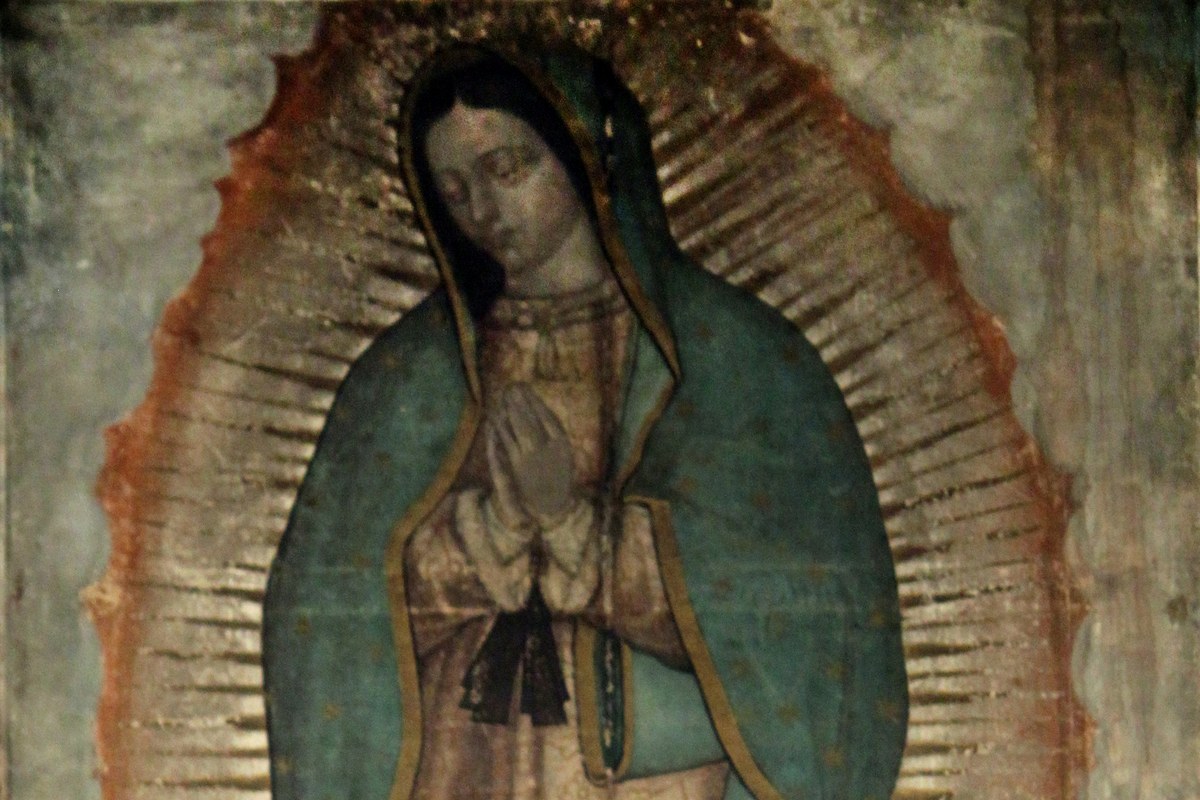
The Basilica of Our Lady of Guadalupe exists for one purpose: to display and protect the tilma, a cactus-fiber cloak traditionally said to have belonged to Saint Juan Diego, bearing an image of Mary that Catholic tradition holds appeared on the fabric in 1531. The story of how that image came to be — the reported apparitions on the hill of Tepeyac, the roses Juan Diego is said to have carried in the cloak, and the bishop who ordered a shrine built as a result — is told in full in this blog's article on Our Lady of Guadalupe. This piece is about what came after: the building itself, and its unusual, still-unfolding architectural history.
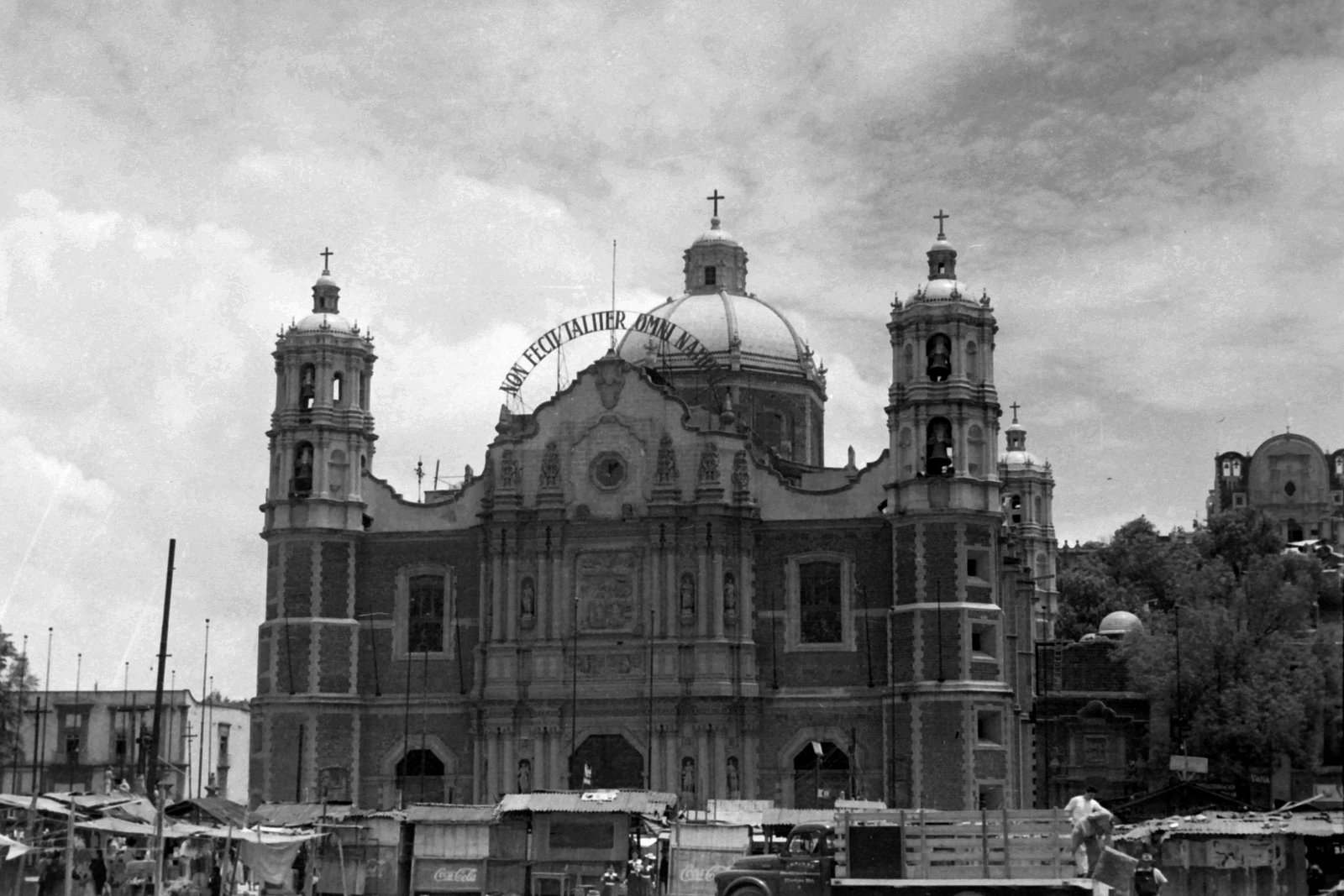
Mexico City Government Archive, Villa de Guadalupe, August 25, 1953 — CC0/public domain.
A modest chapel went up on the site not long after the reported events of 1531, but it was gradually replaced and expanded over the following centuries as the shrine's importance grew. The building most people now call the "Old Basilica" was constructed in stages between 1531 and 1709, when it was formally consecrated, and it housed the tilma for over two and a half centuries, from 1709 until 1974. Successive archbishops of Mexico enlarged and embellished it as pilgrim numbers grew, adding side chapels, a new facade, and eventually a set of bell towers that became a familiar silhouette on the northern edge of the city long before the circular basilica beside it existed.
The hill of Tepeyac itself
The site chosen for the shrine wasn't incidental. Tepeyac had already been a place of religious significance before the Spanish conquest, associated in Aztec tradition with Tonantzin, a mother goddess venerated at a temple on the same rise of ground. Some scholars of colonial Mexican history see that older association as part of why devotion to Our Lady of Guadalupe spread so quickly and so deeply among indigenous converts — a sacred hill that had already drawn generations of pilgrims simply acquired, in Catholic memory, a new reason to be climbed. The Church has never treated this continuity as compromising the apparition's authenticity; if anything, it's often cited as evidence of how naturally the devotion took root in soil already prepared for it.
A building slowly losing the fight with the ground
Mexico City sits on the drained bed of what was once Lake Texcoco, and the soft, waterlogged clay beneath the city has caused serious subsidence problems for centuries — the entire city is famous among engineers for slowly, unevenly sinking. The Old Basilica was no exception. By the mid-twentieth century, its walls had begun visibly tilting and cracking under the strain of uneven settlement, and by the 1970s church authorities concluded that continuing to display an object as precious as the tilma inside a structurally compromised building was no longer responsible.
Rather than attempt an extensive stabilization of the old structure, the decision was made to build an entirely new basilica nearby, engineered from the outset to handle Mexico City's difficult ground conditions.
A circular basilica, built for crowds and clay
Mexican architect Pedro Ramirez Vazquez designed the new basilica, constructed between 1974 and 1976 with Pope Paul VI blessing the project's cornerstone. Its most distinctive feature is its shape: a broad, circular floor plan, a striking departure from the traditional cross-shaped basilicas most Catholics associate with major shrines. The circular design solves two problems simultaneously. Structurally, it distributes the building's considerable weight more evenly across Mexico City's unstable soil than a long rectangular nave would. And practically, it means that no matter where a pilgrim sits among the basilica's many thousands of seats, they have a direct, unobstructed sightline to the tilma, displayed above and behind the main altar.
The tilma itself was moved into its new home on October 12, 1976, traveling the short distance from the old, subsiding basilica to the new circular one, where it remains on permanent display today, protected behind glass and monitored continuously. A moving walkway installed beneath the image lets the steady stream of pilgrims pass directly underneath it without stopping, a practical solution to a crowd-control problem most churches never have to think about: how to let millions of people a year each get their own close, unhurried look at a single object.
The old and new standing side by side
Rather than demolishing the Old Basilica once it was decommissioned, church authorities left it standing beside its modern replacement, its Baroque facade and bell towers still visibly tilted from centuries of subsidence. The two buildings now sit within the same plaza complex, forming an unusual architectural pairing: a leaning colonial-era church, still consecrated and occasionally used, standing a short walk from the low, modern, circular structure that took over its central role. Visitors moving between the two get a rare, tangible sense of nearly five centuries of devotional architecture side by side.
The most visited Marian shrine in the world
Today the Basilica of Our Lady of Guadalupe is widely described as the most visited Marian shrine on earth, with estimates placing annual visitors in the tens of millions — numbers that swell dramatically around the December 12 feast day, when pilgrims from across Mexico and beyond converge on the plaza, some completing the final stretch of their journey on their knees. The building's unusual, thoroughly modern design has become, in its own right, one of the most recognizable pieces of religious architecture in the Americas — a direct engineering response to the very specific problem of keeping a centuries-old relic safe on notoriously unstable ground.
Trivia
What is on display inside the Basilica of Our Lady of Guadalupe?
Why was a new basilica built when the old one already existed?
Who designed the modern basilica?
Is the Basilica of Our Lady of Guadalupe the same as the apparition story?
How many people visit the Basilica of Our Lady of Guadalupe each year?
Related Reading