Saint John Vianney

A future priest who could barely read
Jean-Baptiste-Marie Vianney's path to the priesthood was anything but smooth. Born in 1786 to devout but poor farming parents near Lyon, in southeastern France, he worked in the fields from an early age and grew up functionally illiterate, able to memorize prayers through his mother's teaching but lacking the formal education seminary study demanded. His childhood also coincided with the French Revolution's persecution of the Church, and Vianney later recalled receiving his early religious instruction in secret, from priests who had refused to take the state-mandated oath and were hiding from arrest — an experience that shaped his lifelong devotion to the sacraments long before he could read the Latin needed to celebrate them himself. His struggles with Latin were serious enough that he needed private tutoring just to keep pace with the seminary curriculum, and his studies were then interrupted entirely when he was drafted into Napoleon's army in 1809, at a point in the wars when France badly needed fresh soldiers.
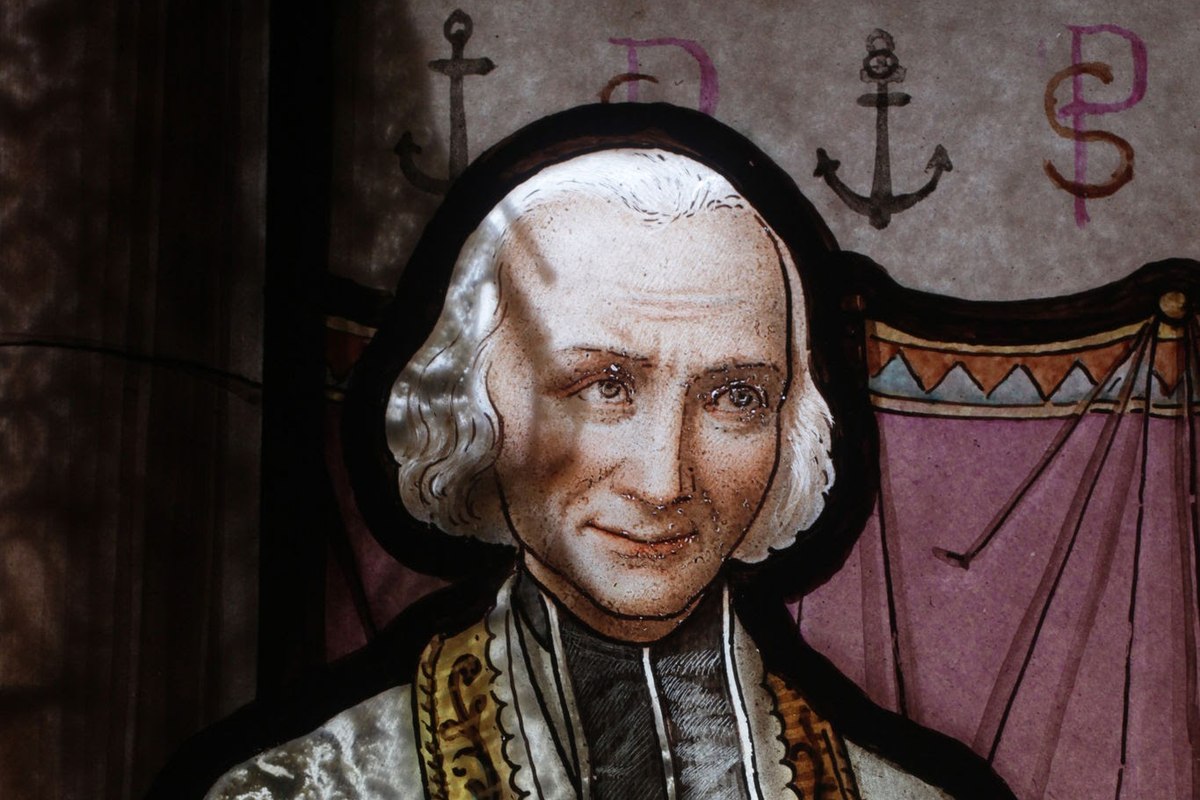
Stained glass depiction of Saint John Vianney — CC BY-SA 4.0, BarãoPandora.
Lost, hidden, and eventually ordained anyway
Whether by accident or design, Vianney became separated from his draft group while traveling to his post and ended up in a remote mountain village populated by army deserters, where he remained in hiding under an assumed name until a general amnesty was declared in 1810, technically making him a deserter himself for over a year. He resumed his studies afterward, still struggling badly with the academic demands of seminary, and was ordained only after his examiners judged that his evident holiness and pastoral instincts outweighed his persistent difficulty with Latin theology. He said his first Mass in 1815 — a winding, improbable path to the priesthood for a man whose academic struggles might easily have ended it before it began.
A tiny village, and an enormous personal investment
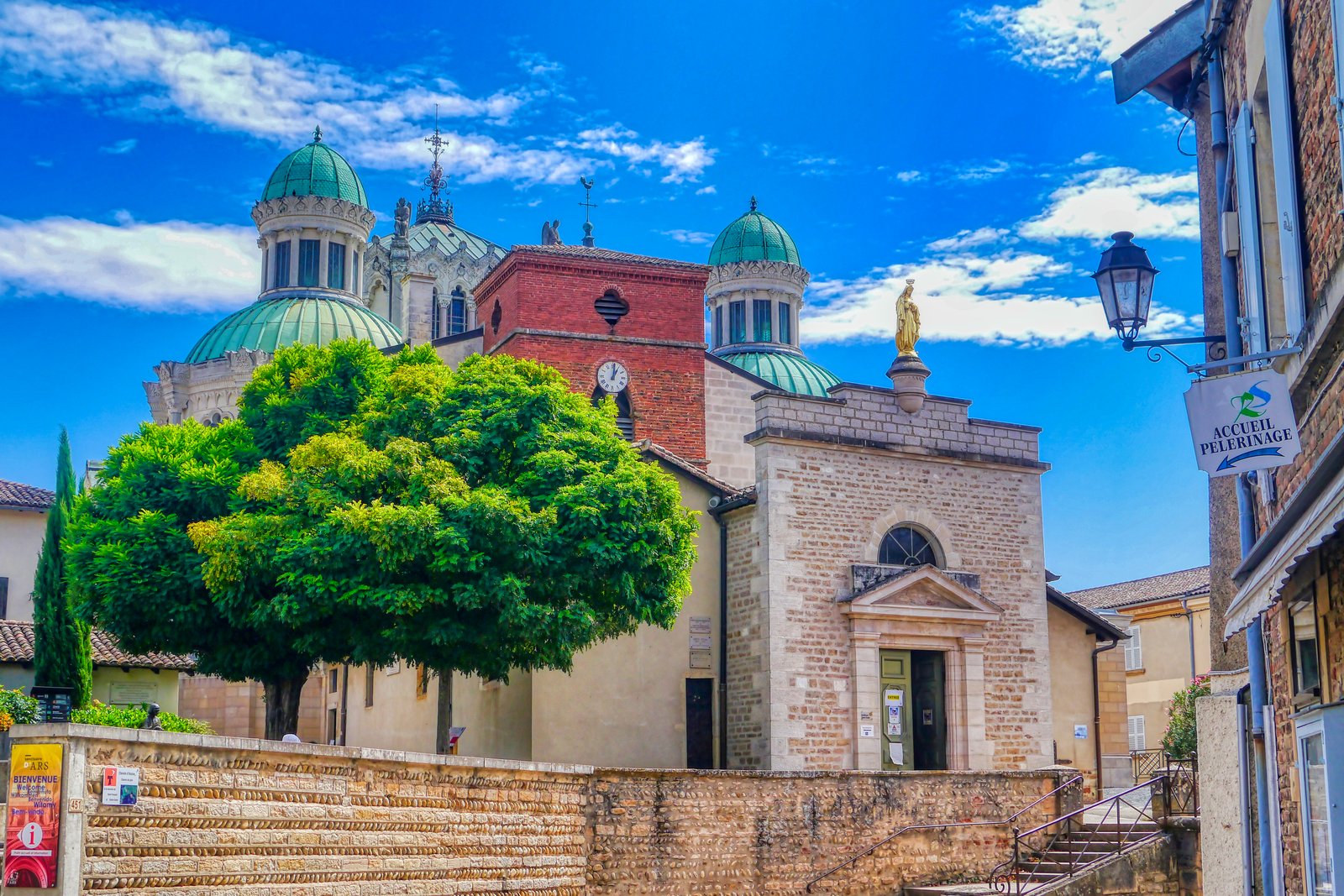
In 1818, Vianney was assigned to Ars, a village of only 230 residents so small and obscure that his bishop reportedly had to give him directions rather than expect him to already know the way. It was hardly a significant post within the wider Church, and by most accounts the village's religious life had grown lax in the years before his arrival, with many residents rarely attending Mass. He treated the post as anything but minor, dedicating himself to visiting the poorest families in the parish, restoring the village church, organizing feast days, preaching plainly and often bluntly against the drinking and dancing he saw as drawing people away from the sacraments, and founding La Providence, a home caring for orphaned and impoverished girls — the kind of sustained, personal, unglamorous ministry that rarely makes headlines but gradually reshapes a small community from the inside.
Sixteen hours a day, for anyone who came
What made Vianney famous, though, was his singular devotion to hearing confessions — often spending up to sixteen hours a day in the confessional, as crowds of penitents began traveling from across France, and eventually from other parts of Europe, specifically to make their confession to him. By the final decade of his life, it was reported that as many as twenty thousand pilgrims a year passed through Ars, arriving by a train line built in part to accommodate the traffic his reputation generated. He reportedly slept only a few hours a night to keep up with the demand, and endured this punishing schedule for decades despite his own poor health. It was this sustained, almost impossible personal availability that built his reputation during his lifetime, and which led Pope Pius XI, in 1929, to name him the heavenly patron of parish priests worldwide — recognition for a man whose academic beginnings had given no hint of the demand his ministry would eventually generate, and whose life of patient, exhausting availability to sinners echoes the later ministry of confessors like Saint John Baptist de Rossi in Rome.
Spiritual battles and a lasting reputation for holiness
Vianney's own account of his life, and the testimony of those around him, describe years of what he called harassment by the devil, including strange noises, disturbed nights, and even a fire that broke out in his bedroom under circumstances he attributed to demonic attack rather than accident, episodes the Church treats as part of his personal spiritual history rather than formally defined teaching, but which he himself took as confirmation that his work in the confessional was doing real spiritual good. Despite the enormous demands of his ministry, he lived with extreme personal simplicity, giving away nearly everything given to him and eating so little that his health suffered for decades. He attempted, more than once, to leave Ars quietly for a stricter monastic life, feeling unworthy of the attention his reputation had brought him, but always returned, unable to abandon the penitents who depended on him. He died in 1859 still serving as parish priest of the same small village he had been assigned to more than forty years earlier, and was canonized by Pope Pius XI in 1925.
Trivia
Why did Vianney struggle to become a priest?
What happened to Vianney during his military service?
What was Ars like when Vianney arrived?
Why is Vianney the patron saint of priests?
Related Reading