Saint Simon the Zealot

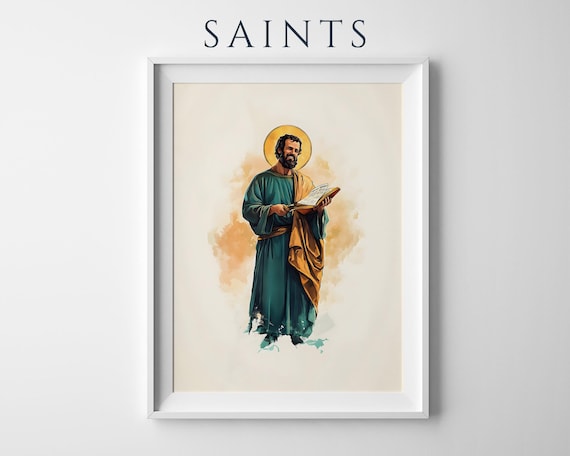
A name on a list, and little else
Of the twelve apostles, Simon is among the least documented. He appears by name in the lists of apostles given in the Gospels of Mark, Matthew, and Luke, and again in the Book of Acts — always in the same brief enumeration, always alongside the same eleven companions, and never once at the center of an individual scene, saying, or miracle recorded anywhere in the New Testament. Whatever role he played among the twelve, it left no distinct trace in Scripture beyond his presence on the list itself.
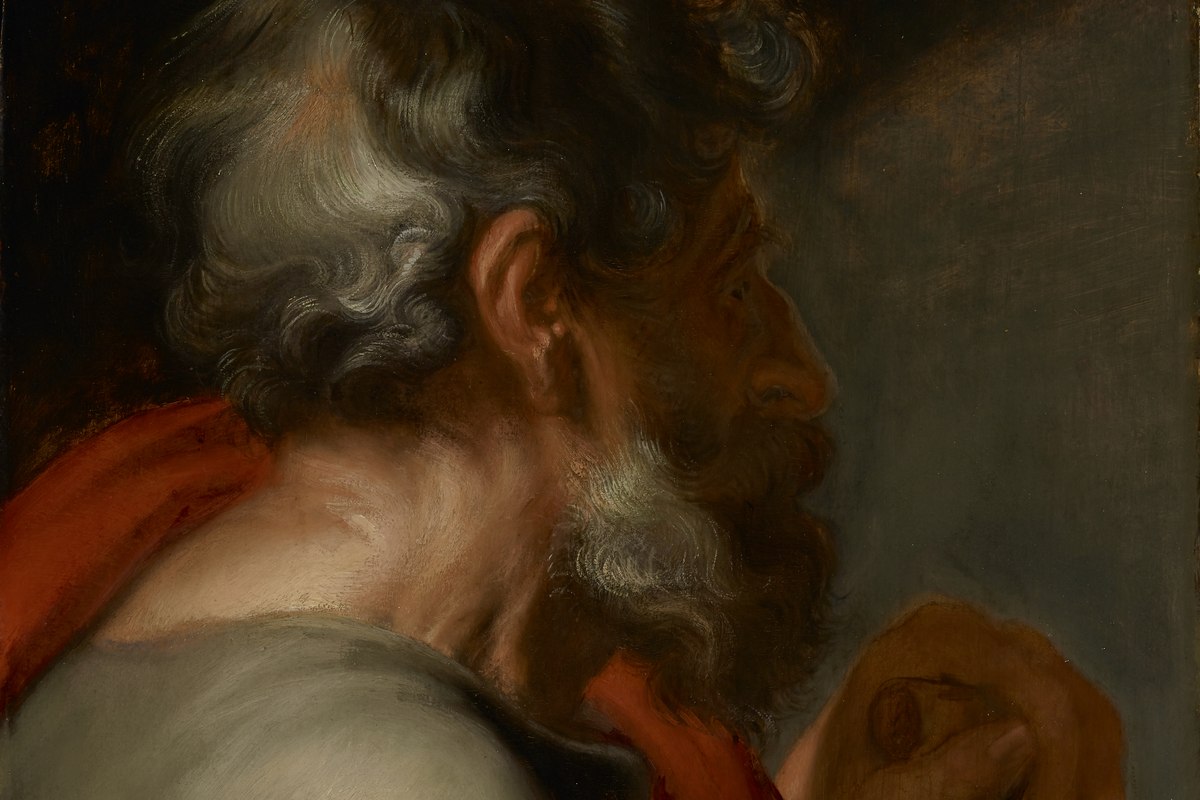
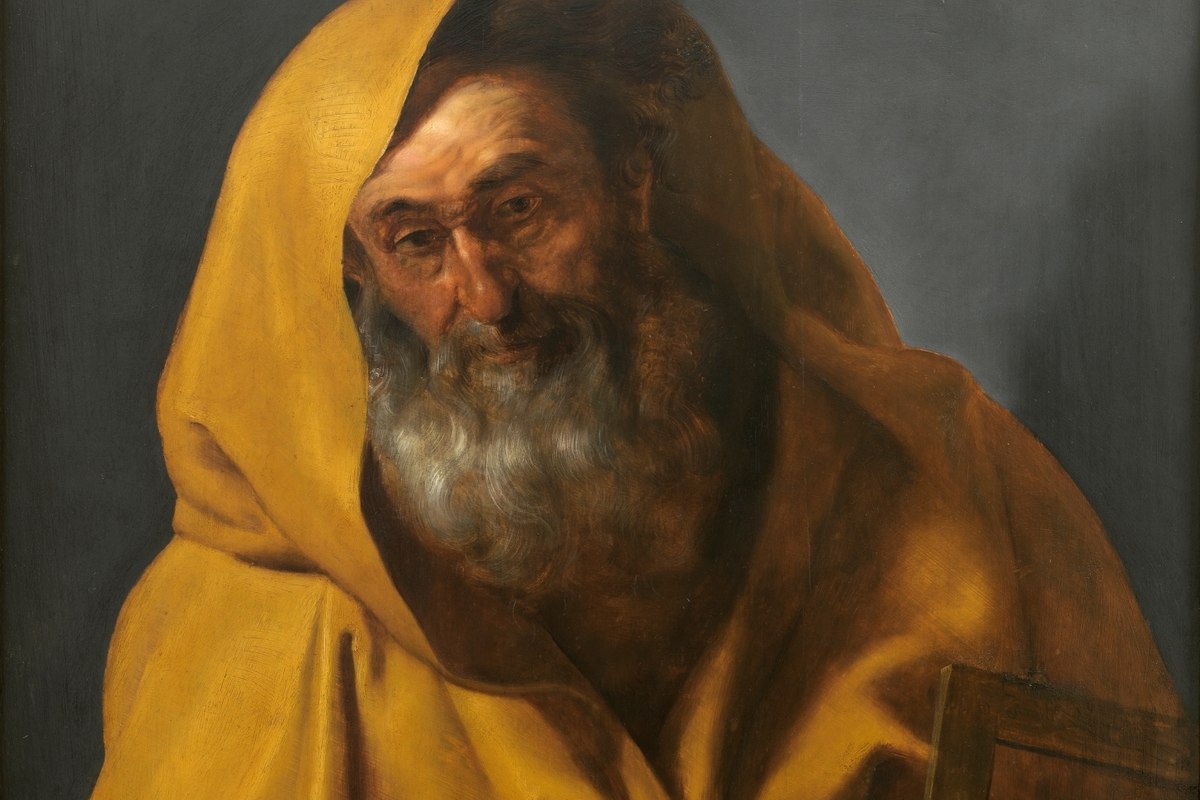
Anthony van Dyck, "The Apostle Simon," 1618 — public domain.
A title more complicated than it sounds
What does survive is his nickname: "the Zealot," a transliteration of an Aramaic word carrying that exact meaning. It's tempting to read this as a reference to the Zealots, the Jewish political movement that would later lead an armed revolt against Rome — but scholars caution that the title more likely describes Simon's zeal for observing Jewish law before his call, rather than membership in any specific political faction. Even his defining label, in other words, resists a simple explanation.
A ministry remembered only in later tradition
What fills the silence of Scripture is later tradition, which holds that Simon preached in Egypt before eventually joining the apostle Jude Thaddaeus on a shared mission to Persia — the same territory, and often the same legendary accounts, associated with Jude's own later ministry. The two are frequently paired in art and tradition specifically because of this shared, mostly undocumented, missionary partnership.
A martyrdom recorded two different ways
Even Simon's death resists a single clear account. One apocryphal tradition, the Passion of Simon and Jude, holds that he was martyred in Persia by being sawed in half — a brutal enough image that it became his lasting attribute in art and gave him patronage over woodworkers, saw workers, and tanners. Yet Saint Basil the Great, writing separately, claimed Simon instead died peacefully at Edessa. Between the two accounts, as with nearly everything else about Simon, no single version has ever definitively won out — leaving one of the twelve apostles remembered largely by the questions his brief record leaves unanswered.
Who the historical Zealots actually were
It's worth separating Simon's nickname from the movement it echoes, since the two are easy to conflate. The Zealots as a distinct political faction — the group that pushed for armed revolt against Roman rule and helped ignite the First Jewish-Roman War in AD 66 — are generally dated by historians to have coalesced as an organized movement only in the decades after Jesus's ministry, not during it. That timing is exactly why scholars are cautious about reading Simon's title as evidence he belonged to that later faction. A zeal for the Law, of the kind several first-century Jewish reform movements shared, is the more defensible reading — but it's a real ambiguity, not a settled point, and the Gospels themselves never explain which sense they intend.
A saint always painted with a saw
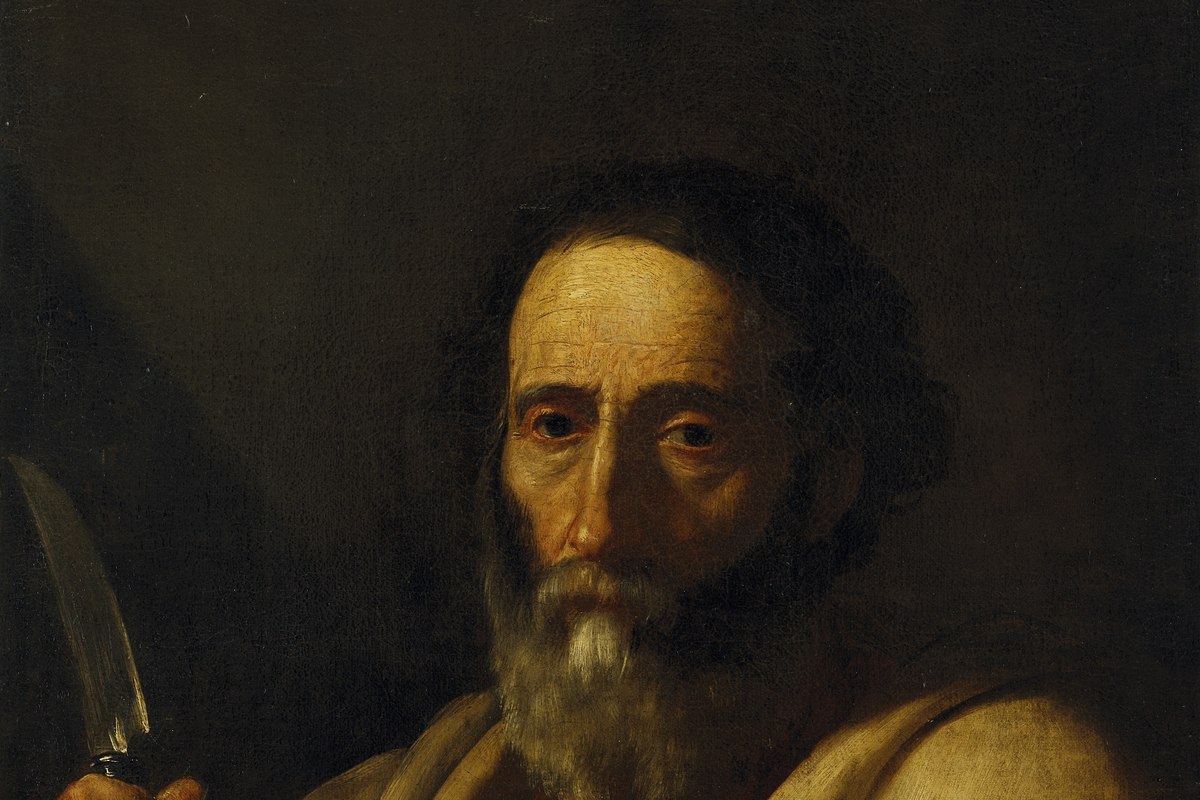
Simon's iconography is unusually consistent given how little else is known about him, almost entirely because of the manner of his traditional martyrdom. Artists depict him as an older, bearded apostle holding a large two-handed saw — sometimes resting against his shoulder, sometimes shown mid-use in scenes of his death — making the saw as reliable a visual shorthand for Simon as keys are for Peter or a sword for Paul. Van Dyck's portrait used as this article's hero image, by contrast, shows him without that attribute at all, a close study of an older man's face rather than a martyrdom scene, which is part of why it reads less as hagiography and more as portraiture. Because his memory is so thin on documented biography, iconography has effectively carried the weight that a fuller written record would normally bear for other apostles.
A silence that is itself worth noticing
It's tempting to treat Simon's thin biography as simply a gap in the record, a name that survived while the story attached to it didn't. But the consistency of that silence across four independent New Testament sources — Mark, Matthew, Luke, and Acts, each compiled by different hands at different times — is itself a small, interesting piece of evidence. Whoever preserved the apostolic lists clearly cared enough about getting Simon's name and title right to include him accurately every time, even while apparently having no individual story about him to pass along. That pattern suggests his role among the Twelve was real and remembered, just never central enough to any specific Gospel scene to generate its own anecdote — a reminder that not every apostle needed to be a leading character for the early Church to consider his presence among the Twelve worth recording faithfully.
Paired with Jude, and a shared feast day
Simon's veneration has been bound to that of Jude Thaddaeus for most of Christian history, a pairing that shows up everywhere from the Roman Martyrology to parish dedications: the two share a joint feast day, October 28 in the Western calendar, and are frequently depicted together in art, usually with Jude carrying his own attribute of a club or an image of Christ. That shared commemoration reflects the tradition that they ministered and were martyred together in Persia — read more about that shared mission in Saint Jude Thaddaeus, whose own record is, if anything, only slightly fuller than Simon's. Eastern Christian tradition, notably, keeps a separate feast day for Simon alone, on May 10, a small but telling sign that even the question of when to remember him was never fully harmonized between East and West.
Trivia
What does 'the Zealot' mean as a title for Simon?
What do the Gospels actually tell us about Simon?
Where did Simon supposedly preach after the resurrection?
How did Simon die?
Related Reading