Saint Raphael the Archangel

Who is Raphael the Archangel?
Raphael's name means "God heals" — a fitting title for the angel whose entire story in Scripture is a chain of quiet cures: a fish's gall that restores sight, a scrap of its heart and liver that drives off a demon, a long road walked safely from beginning to end. He is one of only three angels named directly in the Bible, alongside Michael and Gabriel, though his story unfolds not in the Gospels or the great prophetic books but in the Book of Tobit, a narrative found in the Catholic and Orthodox Old Testament.
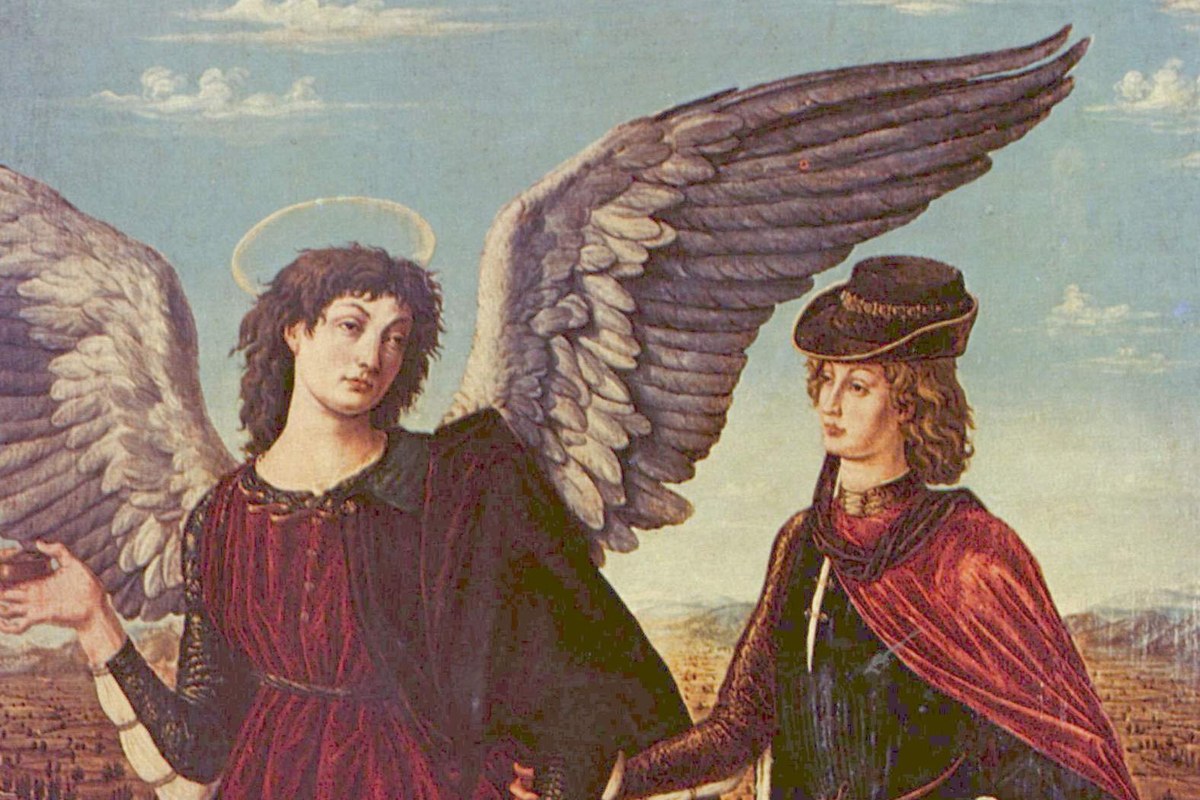
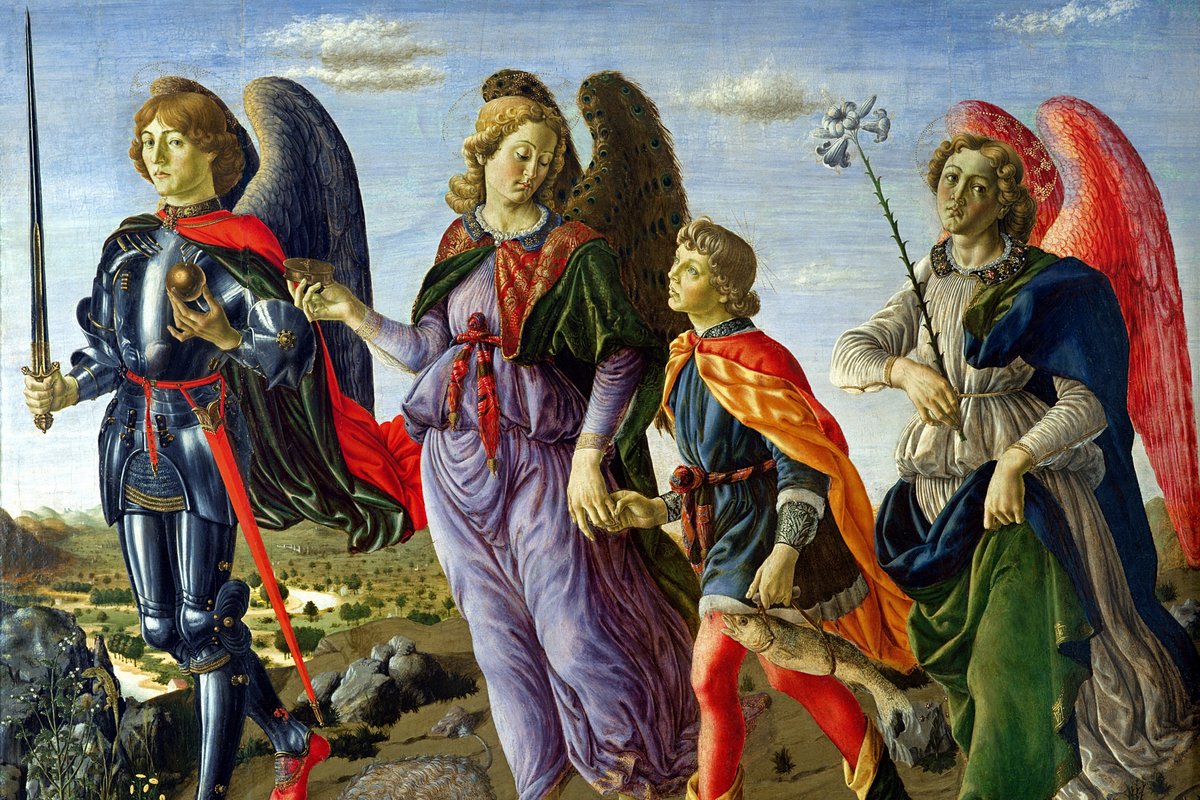
Antonio and Piero del Pollaiuolo, "Tobias and the Angel," c. 1470–1475, National Gallery, London — public domain.
The Book of Tobit itself sits in an unusual place among biblical texts. It's included in the Catholic and Orthodox canons as one of the deuterocanonical books (Greek for "second canon" — books accepted into the Old Testament by Catholic and Orthodox tradition but not included in most Protestant Bibles, which generally follow the shorter Hebrew canon). It survives in Greek and Latin manuscripts, along with fragments in Aramaic and Hebrew found among the Dead Sea Scrolls, which confirms the story circulated among Jewish communities well before the Christian era, whatever its later canonical status among different traditions. Read on its own terms, it's less a prophetic book than a family story — tender, a little funny in places, and full of the kind of domestic detail rarely found in the more dramatic prophetic literature that surrounds it.
The story of Tobit and Tobias
The Book of Tobit opens with two people in trouble hundreds of miles apart: an elderly, devout Israelite named Tobit, blinded by an accident and living in exile, and a young woman named Sarah, tormented by a demon named Asmodeus who has killed each of her seven husbands before their marriages could be consummated. Tobit sends his son Tobias on a journey to recover a debt, and Tobias hires a travel companion for the road — a man who calls himself Azariah, "one of your kinsmen."
Azariah is Raphael, though no one in the story knows it yet. Along the way, he instructs Tobias to catch a large fish and keep its heart, liver, and gall. When the road brings them to Sarah's family, Raphael arranges the marriage and tells Tobias to burn the fish's heart and liver in the wedding chamber — the smoke drives Asmodeus away for good. On the way home, the fish's gall, rubbed into Tobit's eyes, restores his sight. Only once the family tries to reward him does the traveler reveal himself: "I am Raphael, one of the seven angels who stand and serve before the Glory of the Lord" (Tobit 12:15, NABRE).
That line matters theologically as well as narratively. It places Raphael among a group of seven angels described as standing directly in God's presence — a detail later tradition connected to the broader angelic hierarchy discussed in works like The Nine Choirs of Angels, even though Tobit itself doesn't attempt to rank or categorize the angels it names. What the text emphasizes instead is function: Raphael identifies himself by what he does — standing, serving, carrying prayers up "before the Glory of the Lord" — rather than by rank or title. Earlier in the book, Raphael tells Tobias plainly that he had, in fact, brought Tobit's own prayer for relief from his blindness before God, which is part of why he was sent on the journey in the first place; the entire adventure with Tobias turns out to have been the answer to a prayer offered long before the angel ever appeared at the door.
Why Raphael is the patron of travelers and healers
Every part of Raphael's later patronage traces directly back to this one story. He is invoked for safe travel because he walked the whole road with Tobias and brought him home again; for healing because of the cure he worked on Tobit's eyes; for happy meetings and marriage because of Sarah and Tobias; and for physicians because his entire method — a remedy carried, applied, and trusted — reads like medicine practiced by an angel. It is a rare thing in the Bible: an archangel whose reputation rests not on a battle or a single dramatic announcement, but on the accumulated, practical kindness of an entire journey.
Iconography and how Raphael is depicted
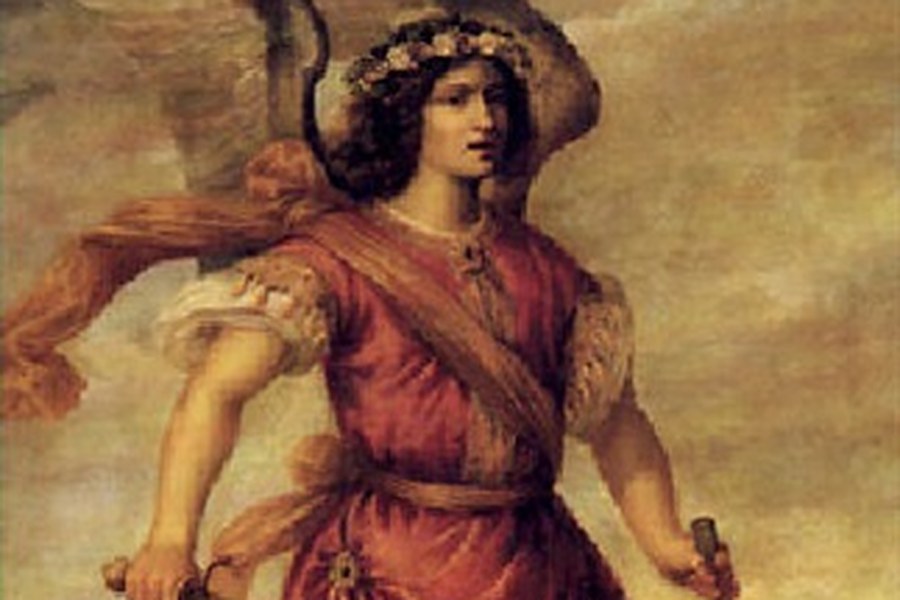
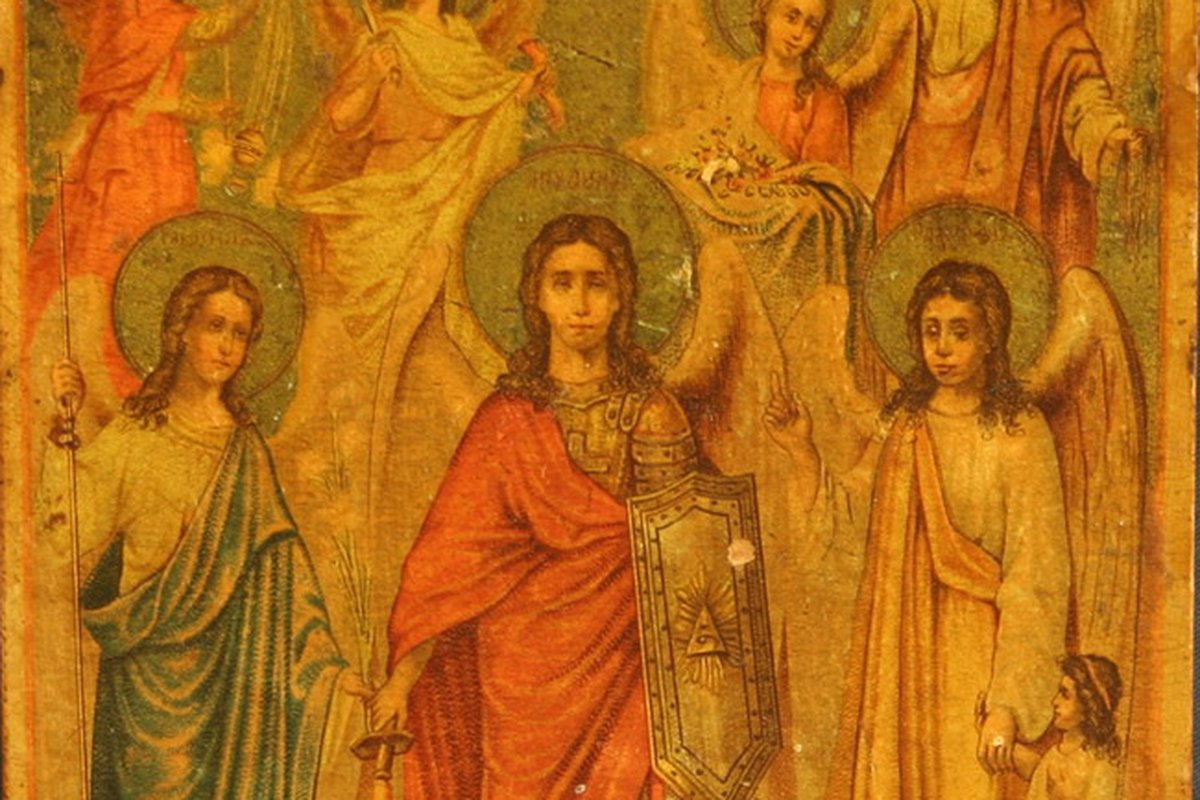
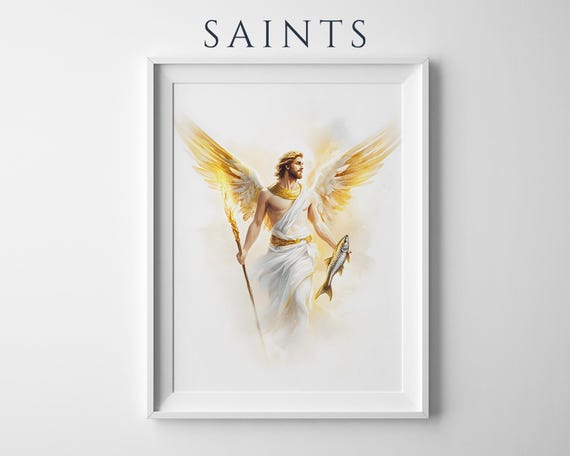
Christian art typically shows Raphael as a young pilgrim rather than a warrior: walking staff in hand, often carrying or accompanied by a fish, and frequently shown beside Tobias himself — sometimes with the small dog that Scripture notes followed the two travelers on their journey (Tobit 11:4). Unlike Michael's sword or Gabriel's lily, Raphael's attributes are the props of an ordinary road trip, a visual reminder that his help came disguised as simple companionship until the very end.
The painting that illustrates this article, by the Florentine brothers Antonio and Piero del Pollaiuolo, was made for one of several confraternities in 15th-century Florence dedicated to Raphael's protection of young travelers — merchant families would commission or venerate such images specifically to ask his protection over sons setting out on business journeys, a very literal continuation of his role guiding Tobias. The theme was popular enough across Renaissance Italy that "Tobias and the Angel" became something of a genre unto itself, appearing in works by Titian, Verrocchio, and Botticelli's workshop, among many others — evidence of how central this one story became to devotional life centuries after it was written.
A patron recognized alongside Michael and Gabriel
Raphael's feast wasn't always joined to the other two archangels. For centuries the Roman calendar kept his feast separately, on October 24, until the 1969 liturgical reform combined the celebrations of Michael, Gabriel, and Raphael into a single shared feast on September 29 — a change meant to emphasize their common identity as messengers and servants of God rather than treating each as a separate, unrelated cult. Because Tobit is absent from most Protestant Bibles, Raphael doesn't carry the same broad recognition across all Christian traditions that Michael and Gabriel do, whose stories both appear in books universally accepted as canonical. Within Catholic and Orthodox devotion, though, his patronage of travelers, physicians, and the blind remains firmly established, and hospitals, medical guilds, and travelers' associations have carried his name for centuries.
Trivia
Why is Raphael called the archangel who heals?
Where does Raphael appear in the Bible?
What is Raphael the patron saint of?
What is Saint Raphael's feast day?
Related Reading