Saint Gianna Molla

A pediatrician building an ordinary life
Gianna Beretta Molla was born in Magenta, Italy, on October 4, 1922, the tenth of thirteen children. She earned degrees in medicine and surgery from the University of Pavia, eventually specializing in pediatrics in 1952. In 1950, she opened her own clinic in the small town of Mesero, where she met an engineer named Pietro Molla. They married in 1955, and over the following years had three children: Pierluigi, Mariolina, and Laura.
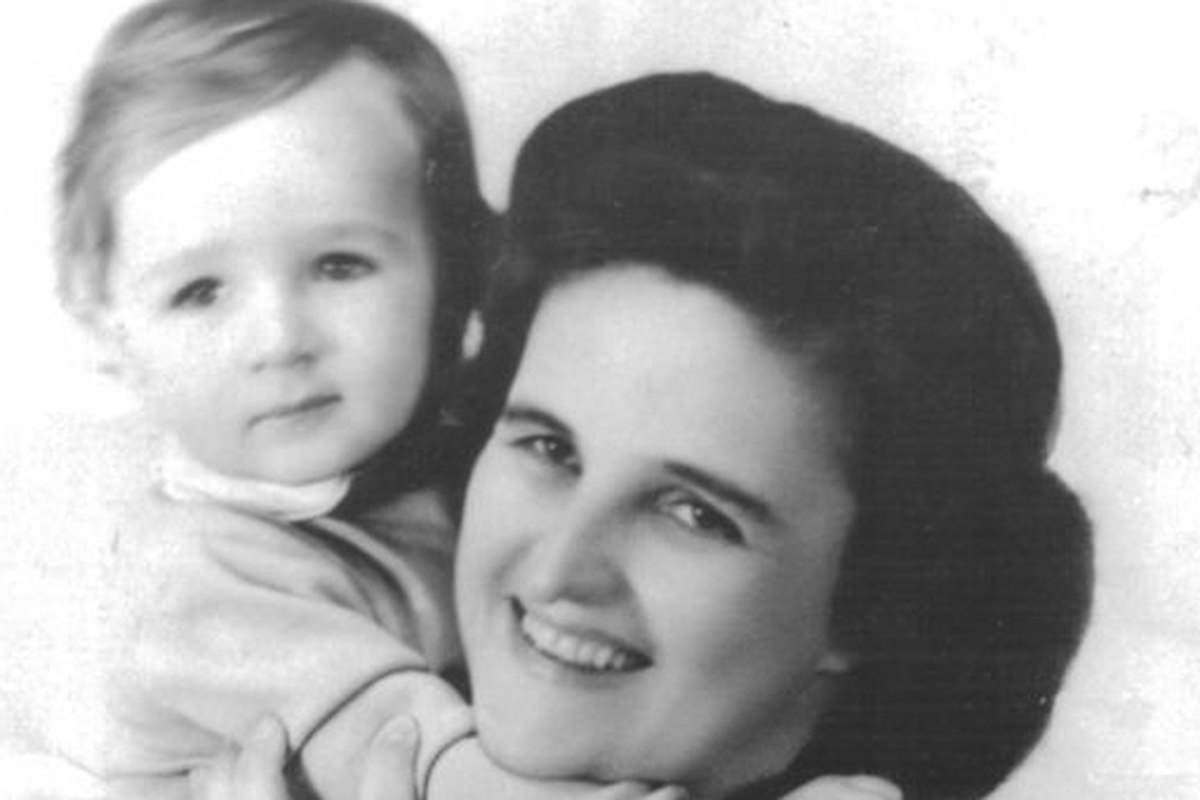
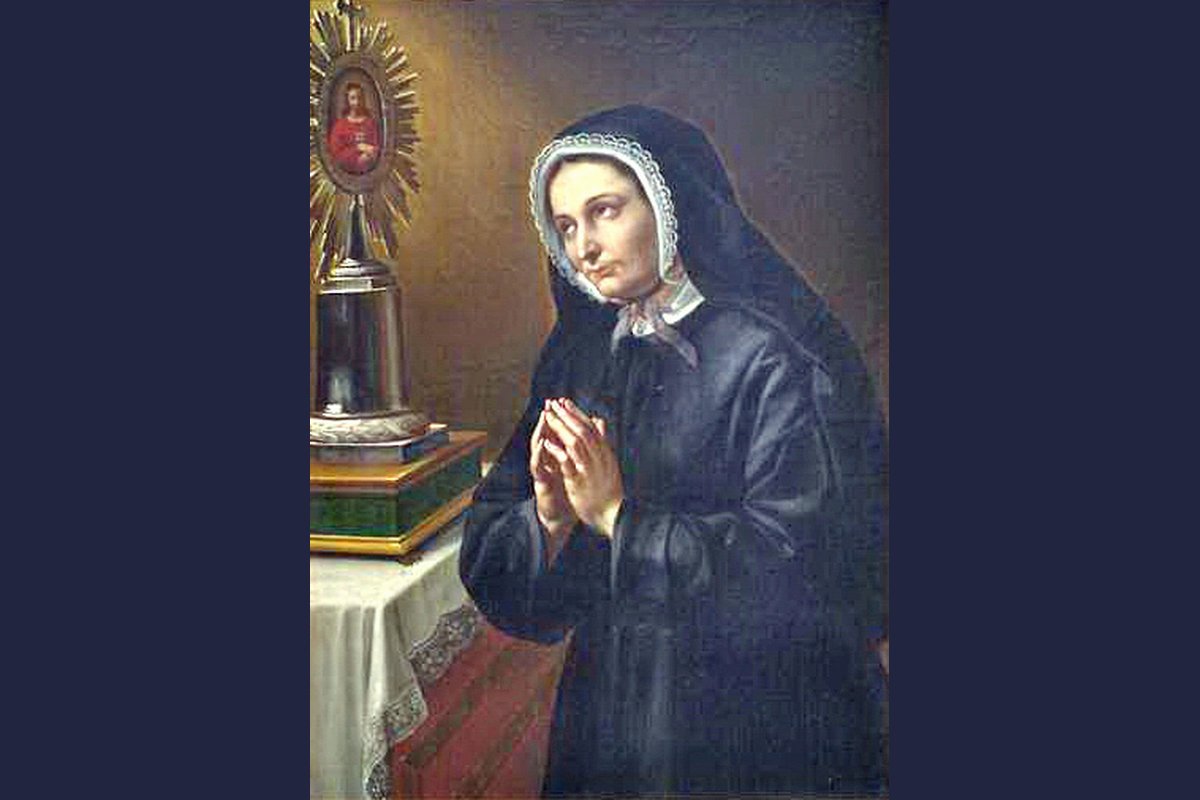
Photograph of Saint Gianna Beretta Molla, 20th century, public domain.
A tumor discovered during her fourth pregnancy
Early in her fourth pregnancy, doctors discovered both a child and a tumor in Gianna's uterus. She consented to surgery to remove the tumor, but refused the complete hysterectomy her surgeons recommended — a procedure that would have ended the pregnancy to save her own life. She chose instead to carry the child to term.
A daughter born, a mother lost
Seven months later, in April 1962, her daughter Gianna Emanuela Molla was born at a hospital in Monza. Post-operative complications led to a severe infection, and Gianna died at home the following week, her choice having cost her own life to preserve her child's.
A husband present for her canonization
Gianna Molla was beatified in 1994 and canonized a decade later, in 2004, in Saint Peter's Square — the first time in the Church's history that a husband had ever witnessed his own wife's canonization. She is venerated today as the patron saint of mothers, physicians, and unborn children.
A faith formed before medicine
Long before she wore a stethoscope, Gianna Beretta grew up in a household that treated daily Mass and quiet acts of charity as ordinary as breakfast. Both of her parents belonged to the Secular Franciscan Order, and several of her siblings went on to religious life — one brother and one sister became priests and a religious respectively. Gianna herself considered missionary work as a young woman, but she came to believe her vocation lay in marriage and in medicine practiced as a form of service rather than in the convent. That conviction shaped how she approached her patients for the rest of her life: she treated the poor of Mesero for reduced fees or no fee at all, and she was known to make house calls on skis in the winter so that no family in the surrounding hills went without care.
Records show a woman who loved skiing, mountains, and dances
It is worth resisting the temptation to flatten Gianna into a solemn figure defined only by her final decision. Records from those who knew her describe an energetic, athletic young woman who skied, climbed in the Alps, and enjoyed dancing and the theater. She was, by the accounts of friends and family collected for her canonization process, cheerful and unpretentious — a professional woman balancing a demanding medical practice with an active social life before her marriage. This ordinariness is part of why the Church later held her up as a model: her holiness did not require withdrawal from the world, but was lived out inside an entirely secular, modern career.
Distinguishing the medical facts from later devotion
Church teaching and Gianna's own canonization documents are precise about what happened medically: doctors discovered a fibroma (a non-cancerous uterine tumor) during her pregnancy, not a malignant cancer, though the surgery itself still carried real risk to both mother and child. Gianna asked her surgeon, Dr. Giuseppe Milanesi, to save the baby if a choice had to be made between her life and the child's — a request her family and postulators have treated as central to her cause. Popular retellings sometimes simplify or dramatize this moment; the documented record is that she consented to a tumor-removal procedure that preserved her pregnancy and explicitly declined a hysterectomy, understanding the risk this carried. Her own doctors and later canonical investigators were careful to describe this as an act of accepted risk in defense of her child's life, not an act of self-destruction, which is an important theological distinction the Church draws in cases like hers.
Symbolism and how she is remembered
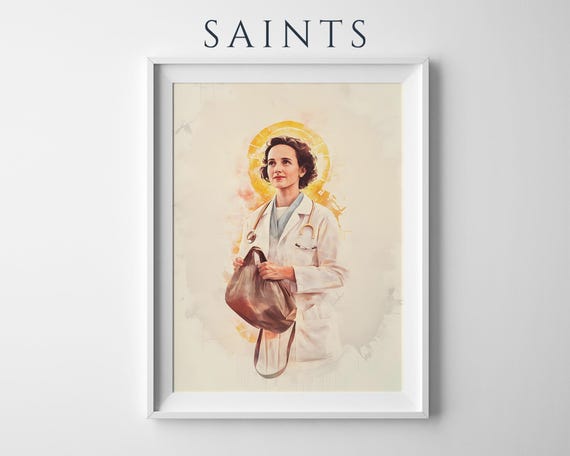
Because Gianna Molla lived in the twentieth century and left behind photographs, medical records, and her husband Pietro's own written testimony, she is depicted in art with none of the ambiguity that surrounds ancient saints — she is shown simply as herself, often in her white doctor's coat or with a stethoscope, sometimes cradling an infant, and occasionally alongside her husband and children. This plain realism is itself a kind of iconography: the Church wanted her image to communicate that sainthood is available inside an ordinary professional and family life, not only through dramatic martyrdom or monastic withdrawal. Her feast day is celebrated on April 28, the date of her death, and her body rests in the parish church of Mesero, which has become a pilgrimage site for families, expectant mothers, and medical professionals.
A cause carried by her own family
Gianna's cause for canonization was unusual not only because her husband lived to see it completed, but because her surviving daughter, Gianna Emanuela Molla — the child whose birth cost her mother's life — became a physician herself and spoke publicly in support of her mother's cause for decades. Pope John Paul II, who beatified and later canonized her, repeatedly cited Gianna Molla in his teaching on the dignity of motherhood and the vocation of Christian family life, describing her as an example of the "civilization of love" he hoped modern families would build. Her canonization Mass in 2004 drew tens of thousands of pilgrims to Saint Peter's Square, including Pietro Molla, who by then was in his nineties, seated where he could watch his late wife formally declared a saint of the Church.
Trivia
Who was Saint Gianna Molla?
What decision made her well known?
How did she die?
When was she canonized, and what makes her canonization unusual?
Was the tumor doctors found actually cancer?
What is Saint Gianna Molla the patron saint of?
Where is she buried, and can she be visited?
Related Reading