Saint Clare of Assisi


A sermon that changed the direction of her life
Clare's turn toward religious life began with a single sermon. Born in 1194 as the eldest daughter of a noble Assisi family, she was a teenager with marriage rapidly approaching when she heard Francis of Assisi preach during a Lenten service at the church of San Giorgio. Whatever he said reached her deeply enough that she sought him out afterward and asked directly for his help living according to the Gospel — a request from a young noblewoman that would have carried real risk to both of them, given the life she was expected to lead instead.
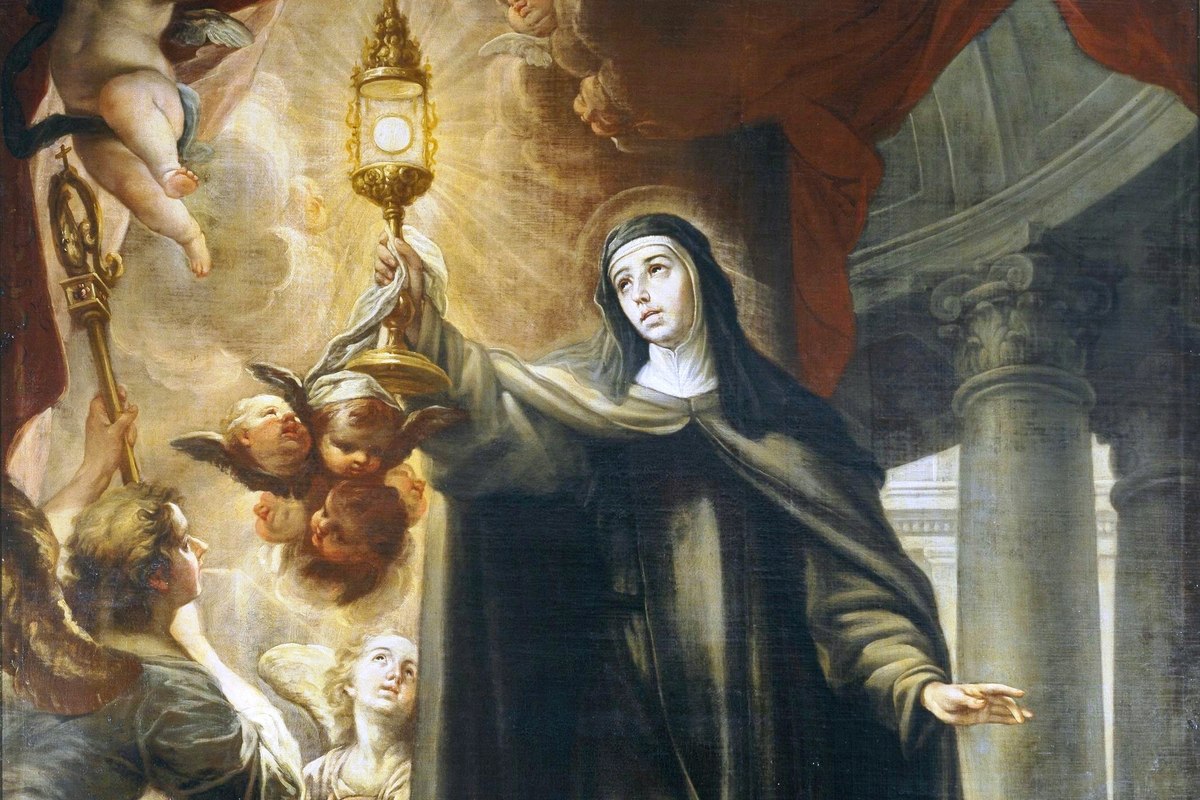
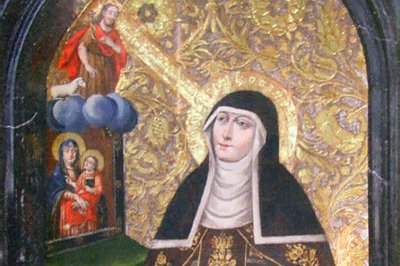
Isidoro Arredondo, "Santa Clara Repelling the Infidels with the Eucharist," 1693 — public domain.
Clare's flight wasn't the end of her family's resistance — it was really just the beginning. Days after she took her vows, several of her male relatives, including uncles, arrived at the convent where Francis had first placed her and attempted to physically drag her out, arguing that her decision brought shame on the family and could still be reversed. Clare is said to have clung to the altar, uncovering her freshly shorn hair to show them how final her commitment already was, and her relatives eventually withdrew. A little over two weeks later, her younger sister Agnes secretly followed her into the same life, prompting another attempt by their family, this time to physically drag Agnes away by force — an effort Clare and Francis are said to have resisted successfully as well. The two sisters would go on to share decades of religious life together, an unusually close bond even within a monastic community.
Fleeing her own family to take religious vows
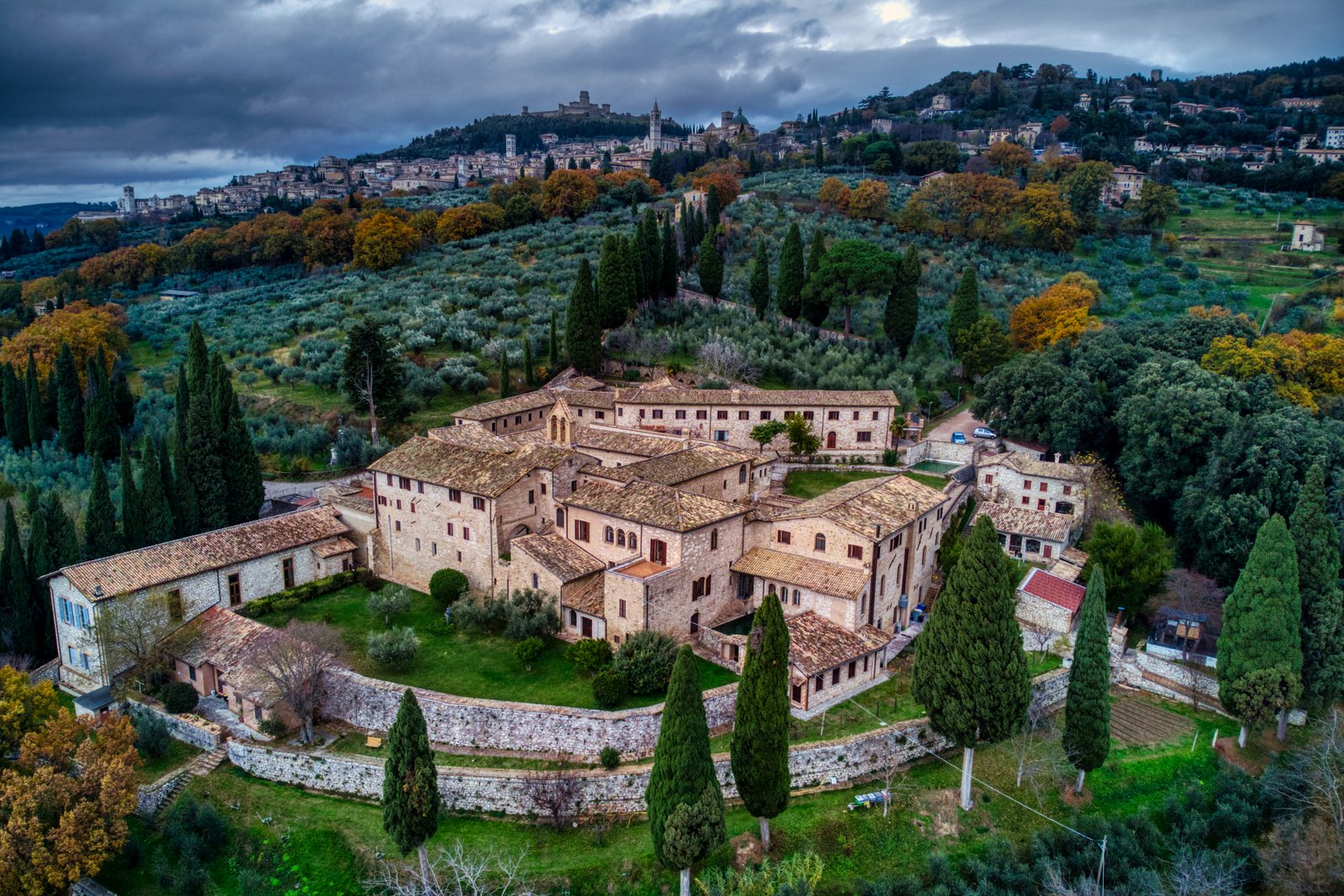
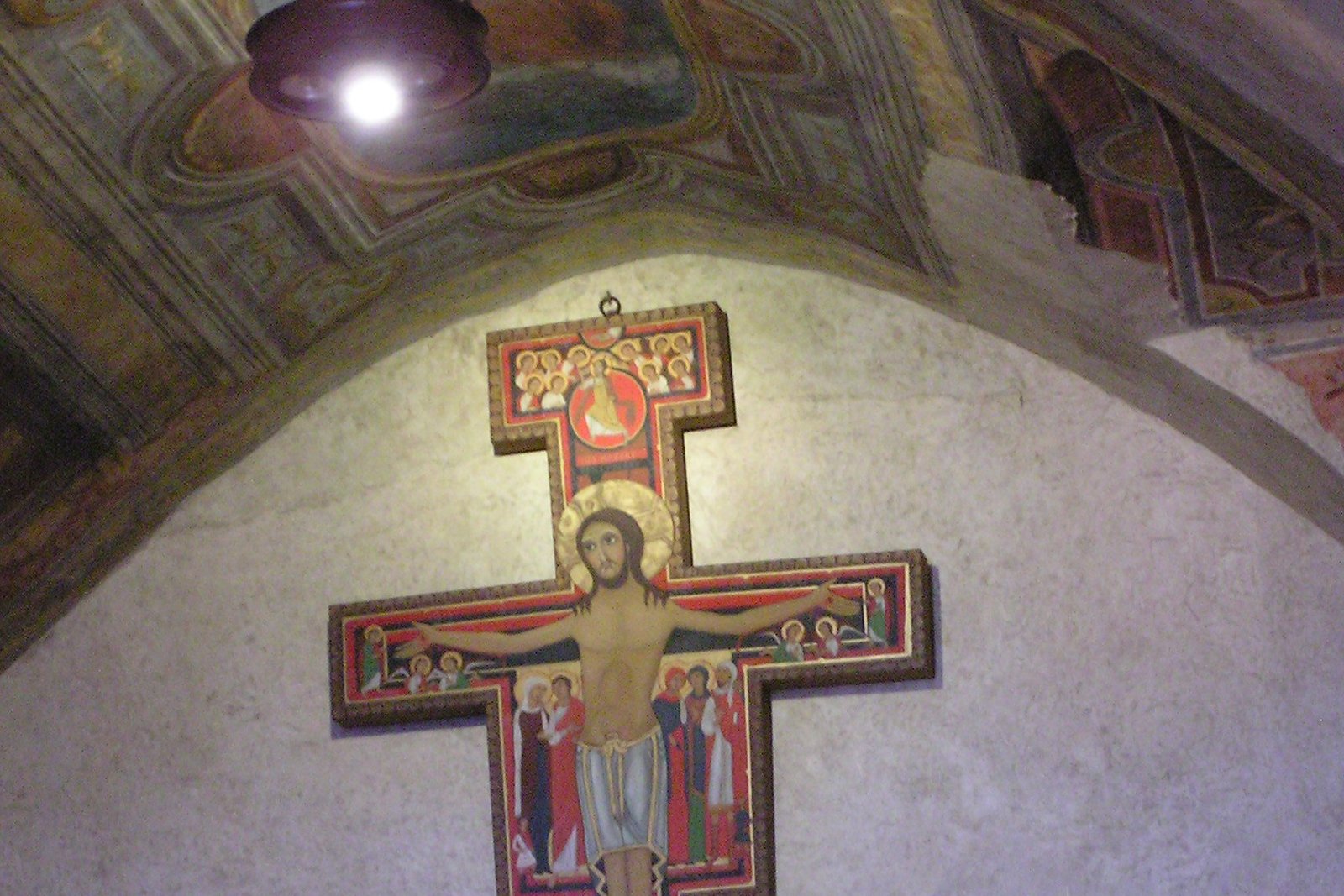
Clare didn't simply ask permission. On Palm Sunday in 1212, at eighteen, she fled her family's home outright, and with Francis's assistance took religious vows that same night. Francis placed her at the convent of San Damiano, where she would go on to serve as abbess for more than forty years — a decision that meant walking away entirely from the marriage and family life that had been arranged for her, in favor of a community she and Francis were only just beginning to build.
A decades-long fight to stay poor
Clare's insistence on absolute poverty wasn't a formality — it was a position she had to defend for most of her adult life against Church authorities who found it impractical for a permanent religious community to own nothing at all, not even collectively. Successive popes offered San Damiano dispensations that would have allowed the community to hold property and guarantee its own financial security, a protection other convents readily accepted; Clare refused each one. She spent decades petitioning for what became known as the Privilege of Poverty, formal papal permission for her community to live without any guaranteed income or possessions whatsoever, relying entirely on alms. Pope Innocent III granted an initial version of this privilege early in her religious life, but it took until just two days before her death in 1253 for Pope Innocent IV to confirm her own Rule of Life — including its insistence on poverty — as the officially approved constitution of her order, meaning Clare very nearly didn't live to see her life's central struggle formally recognized.
The first monastic rule written by a woman
At San Damiano, Clare founded the Order of Poor Ladies — now known as the Poor Clares — in the Franciscan tradition, and eventually wrote its Rule of Life herself, emphasizing what she called "perfect poverty" and forbidding the ownership of property even collectively by the community. It stands as the first known set of monastic guidelines ever written by a woman, a foundational document shaped directly by Clare's own understanding of what Francis of Assisi's original vision required — the two remained close spiritual friends and collaborators for the rest of his life, with Francis relying on Clare's counsel and prayers even as his own reputation as a preacher grew across Europe.
A city saved by the Eucharist alone
Among the legends attached to Clare, one stands out for its sheer audacity: when hostile forces allied with Emperor Frederick II stormed the walls of Assisi, Clare is said to have had the convent chaplain raise the Eucharist at the refectory window in full view of the attackers — and the invading soldiers reportedly fell back and retreated at the sight. Clare died in 1253 and was canonized just two years later; in 1958, Pope Pius XII declared her patron saint of television, a modern honor for a woman once said to have defended her entire city holding nothing more than the consecrated host.
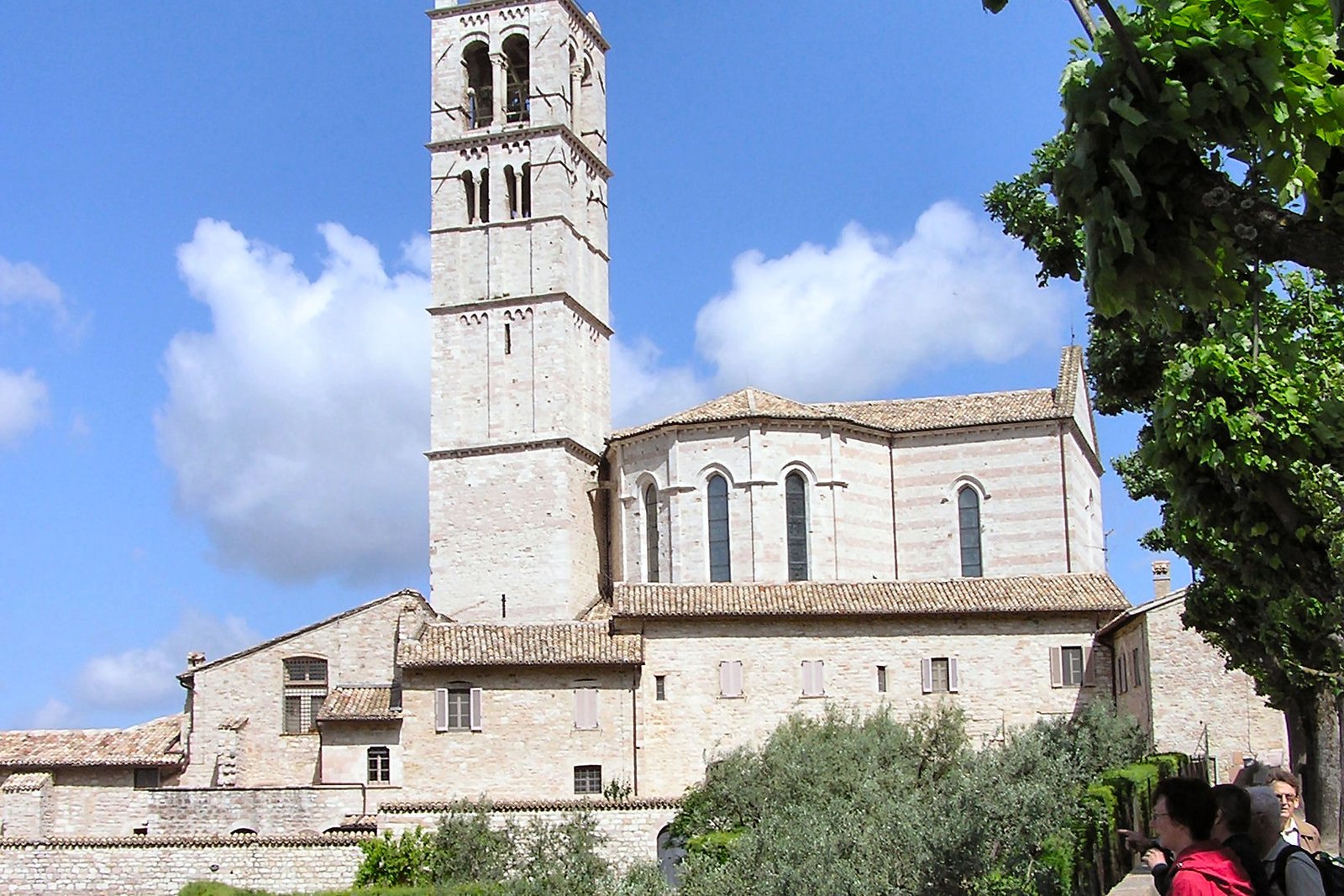
The reason for that particular patronage is itself part of her legend: in the final years of her life, too ill to leave her bed even to attend Mass, Clare reported being able to see and hear the Christmas liturgy being celebrated in the church of San Francesco as though it were projected onto the wall of her own room — an experience later Church authorities cited directly when naming her patron of television in the twentieth century, treating her reported vision as an early precedent for image and sound transmitted across a distance. Clare was canonized in 1255 by Pope Alexander IV, and her feast is kept on August 11, the day after the anniversary of her death. The Poor Clares she founded remain, more than eight centuries later, one of the largest contemplative orders of women in the Catholic Church, still following a Rule of Life whose central, hard-won demand — owning nothing, and trusting that to be enough — was something Clare had to fight for against her own Church almost as persistently as she'd once had to fight against her own family.
Trivia
How did Clare first encounter Francis of Assisi?
How did Clare leave her family to follow Francis?
What did Clare's Rule of Life establish?
What is the legend of Clare saving Assisi?
Related Reading