Jacob's Ladder

A fugitive, not a pilgrim
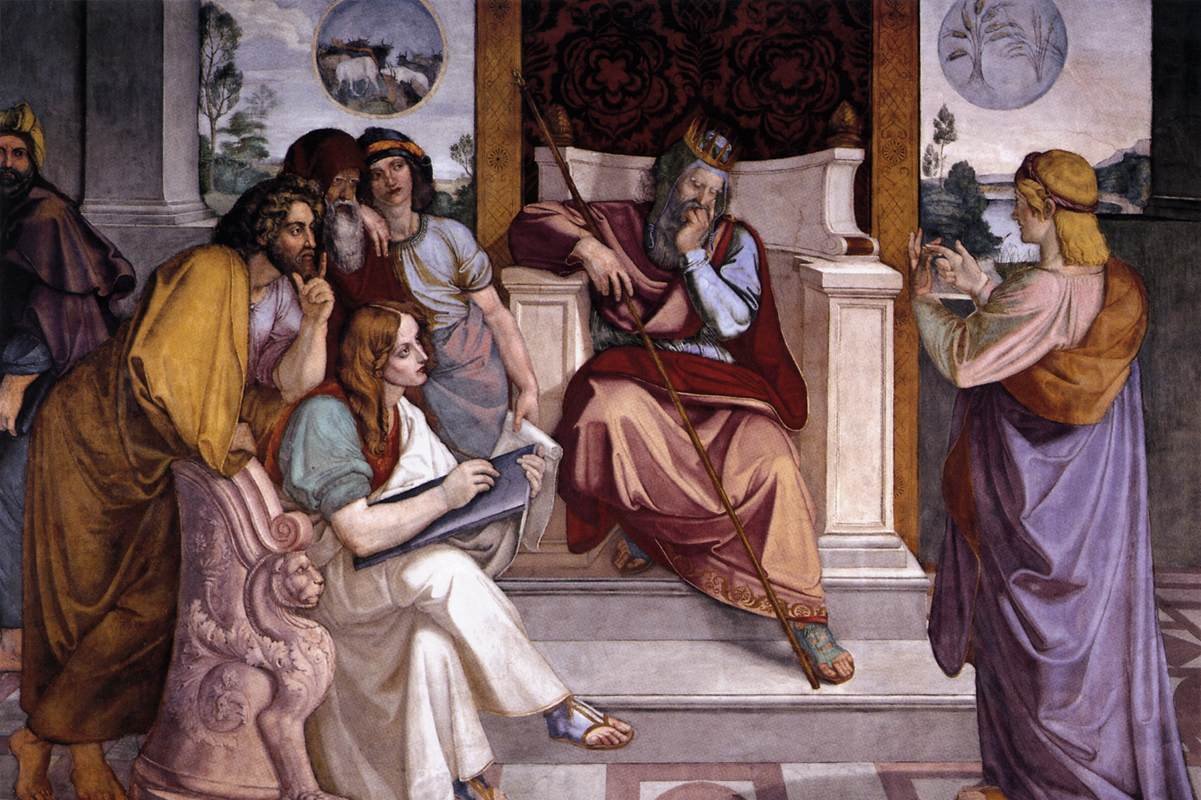
By the time Jacob lies down to sleep in Genesis 28, he is running, not seeking. He has just taken his older brother Esau's blessing through deception, with his mother's help, and Esau's anger has made it unsafe for him to stay. Genesis gives no sense that Jacob has gone looking for God in this moment — he stops for the night simply because the sun has set, picking up a stone to use as a pillow in open country. Whatever happens next happens to a man in the middle of the consequences of his own choices, not in the middle of a spiritual quest, though it would not be the last time flight and providence intertwined in his family's story — his own son Joseph would later be sold into slavery by brothers acting on a similar mix of rivalry and fear.
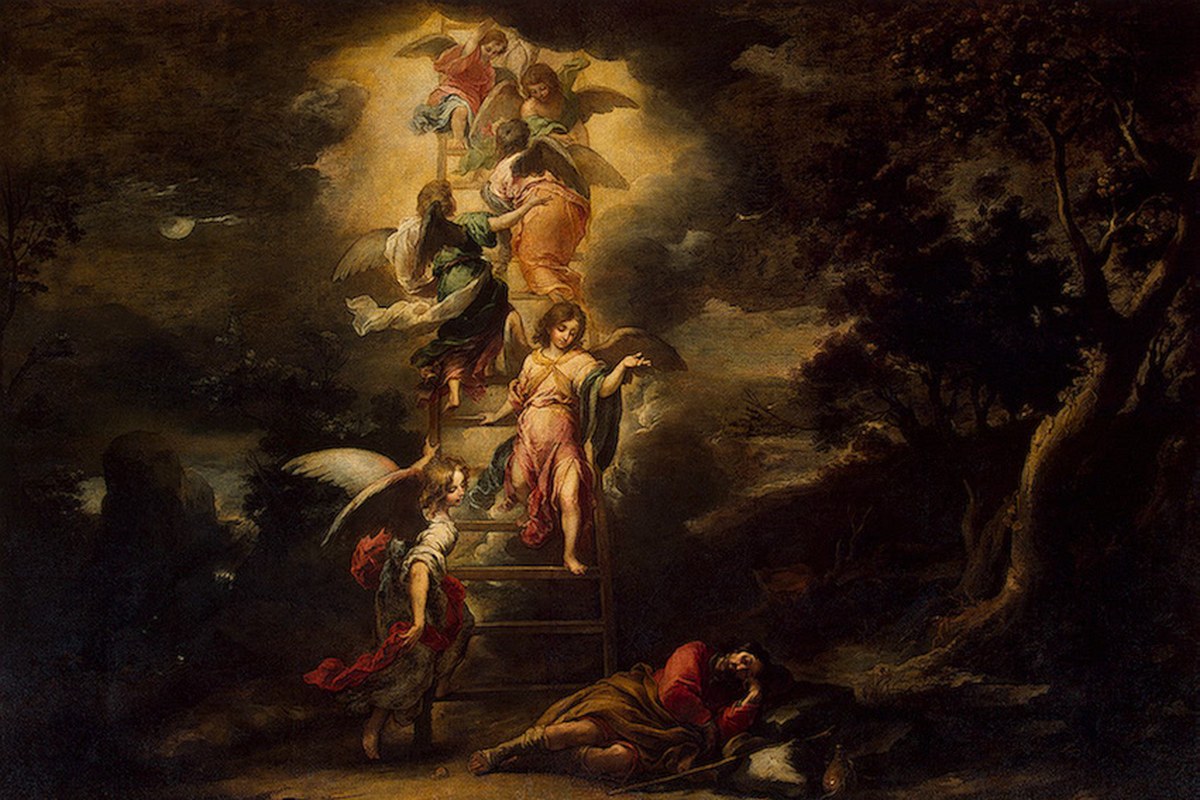
Bartolomé Esteban Murillo, "Jacob's Dream," c. 1660–1665 — public domain.
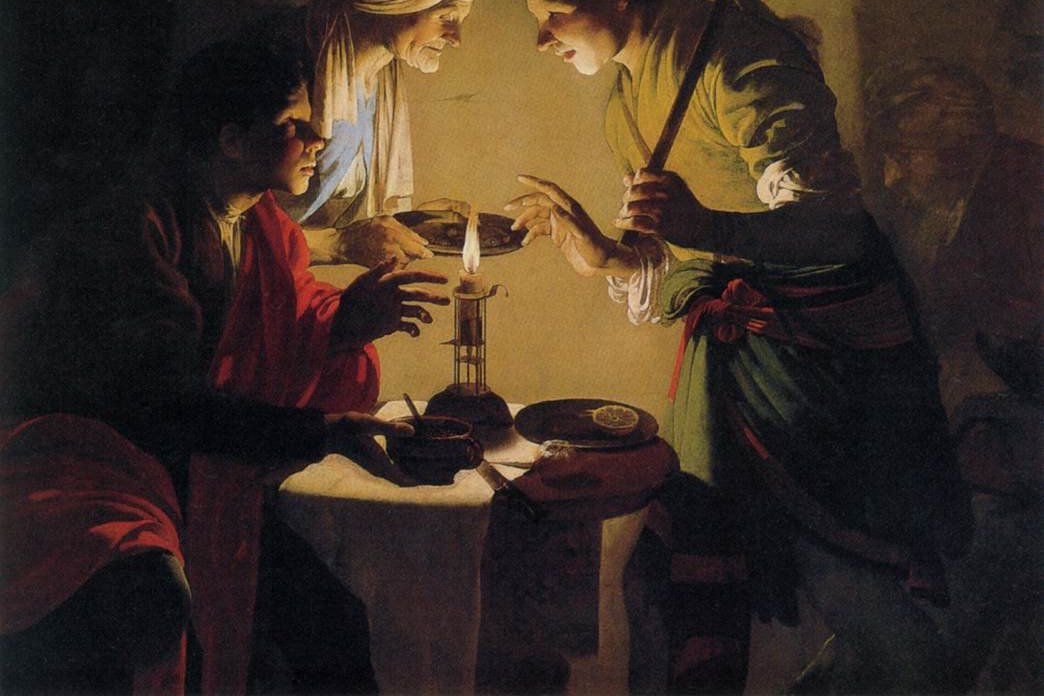
Jacob's flight had been building for years. Genesis describes him as the younger of Isaac and Rebekah's twin sons, born grasping his brother Esau's heel — a detail the text connects directly to his name, traditionally read as related to the Hebrew word for "heel" or one who "supplants." He had already bought Esau's birthright from him once, for a bowl of stew, before the deception over their father's dying blessing pushed the rivalry past the point of no return. Rebekah, fearing for Jacob's life once Esau's fury became clear, sent him away to her own family in Haran, hundreds of miles to the northeast — a journey Jacob makes not as an adventure but as an exile, with nothing but the clothes on his back and, as it turns out, a rock for a pillow.
A stairway between two worlds
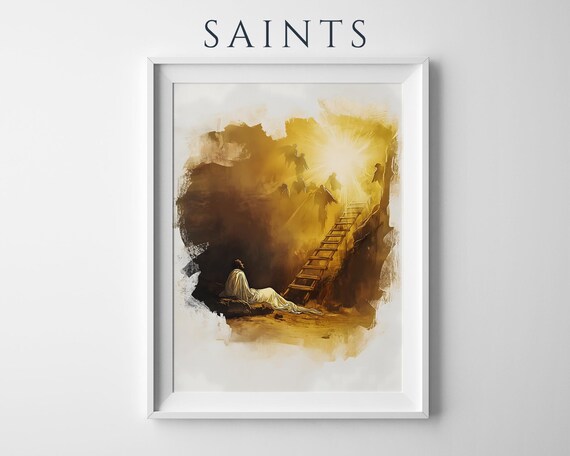
What Jacob sees is unlike any other vision in Genesis: "Then he had a dream: a stairway rested on the ground, with its top reaching to the heavens; and God’s angels were going up and down on it." (Genesis 28:12, RSV-CE). The detail worth noticing is the direction of traffic — the angels are already ascending and descending before Jacob ever appears in the scene, as if this constant movement between heaven and earth had been happening all along, invisible, directly above an ordinary patch of ground he happened to sleep on.
The ladder isn't the only thing Jacob perceives in the vision. Standing above it, God speaks directly to him for the first time in the narrative, identifying himself as "the God of Abraham your father and the God of Isaac" (Genesis 28:13, RSV-CE) and repeating, almost word for word, the same sweeping promise made earlier to Jacob's grandfather Abraham and his father Isaac — that his offspring would be as numerous as the dust of the earth, that they would spread out in every direction, and that "In you and your descendants all the families of the earth will find blessing." (Genesis 28:14, RSV-CE). God then adds something more immediate and personal, a promise aimed directly at the frightened, homeless man in front of him: "I am with you and will protect you wherever you go, and bring you back to this land. I will never leave you until I have done what I promised you." (Genesis 28:15, RSV-CE). The inherited promise given generations earlier to Abraham becomes, in this moment, a promise made specifically to Jacob himself, delivered at what might be the lowest point of his life so far.
Realizing, too late, where he was standing
Jacob's reaction on waking is not triumph but fear: "Truly, the Lord is in this place and I did not know it!... How awesome this place is! This is nothing else but the house of God, the gateway to heaven!" (Genesis 28:16-17, NABRE). The line that has echoed the longest is the admission folded inside the wonder — "I did not know it." Jacob hadn't picked this spot for its holiness. He is confronted, instead, with the possibility that ordinary ground can turn out to be sacred whether or not anyone notices at the time.
Jacob's response to the vision is concrete rather than purely emotional. He takes the stone he had used as a pillow, sets it upright as a marker, and pours oil over it — an act of consecration, marking the spot as holy ground — and renames the place Bethel, Hebrew for "house of God," replacing whatever name it had carried before. He then makes a vow, promising that if God keeps him safe and brings him home again, "the Lord shall be my God" and that he will give back a tenth of everything he receives (Genesis 28:20-22, RSV-CE) — an early instance of the practice of tithing that would later become formalized in Israelite religious law. It's worth noting that Jacob's vow reads less like unconditional faith than like the bargaining of someone still frightened and uncertain; Scripture doesn't smooth over the rough edges of his character even at the moment of his first direct encounter with God.
An image the New Testament reclaims
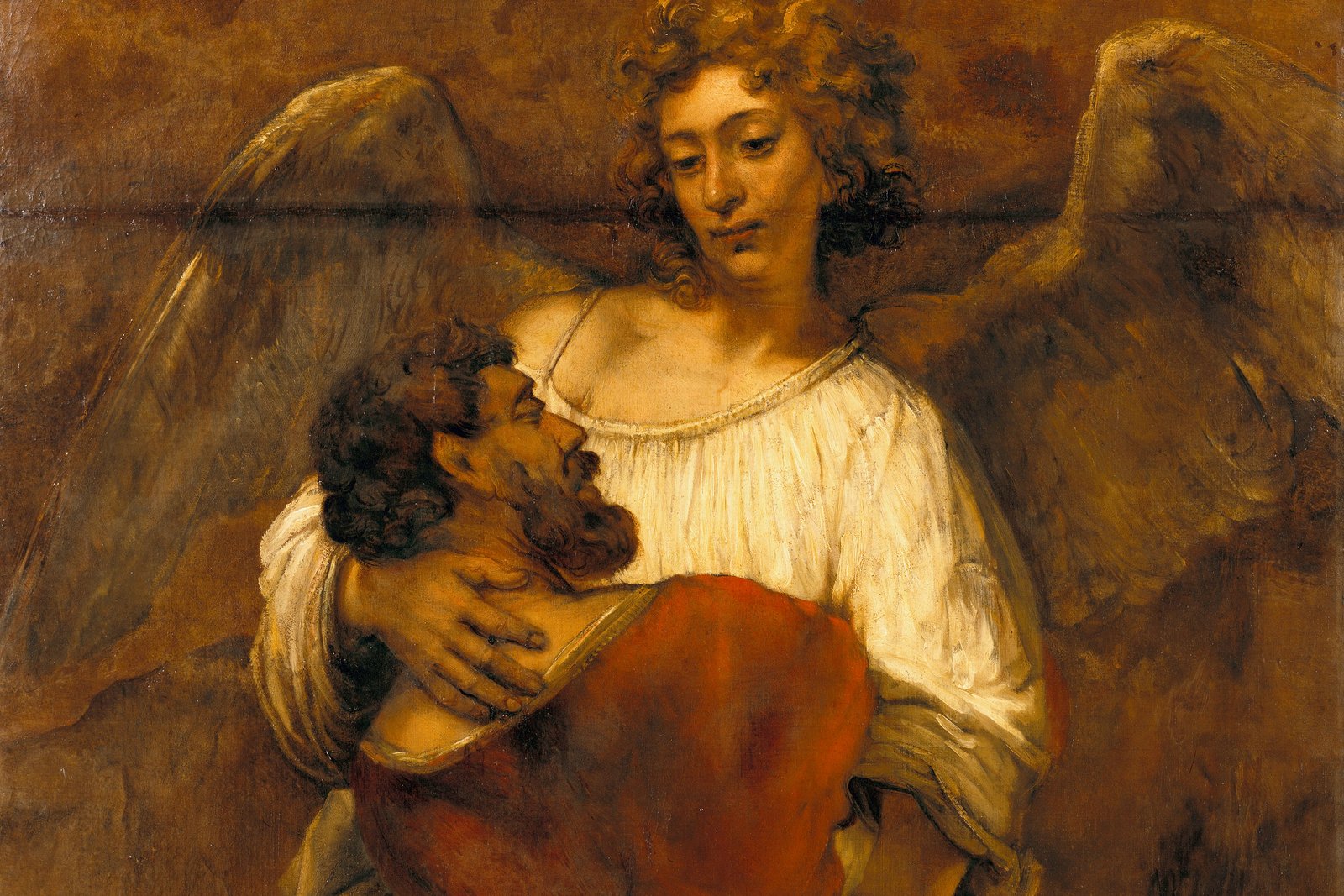
The ladder reappears, briefly but pointedly, centuries later in the Gospel of John, when Jesus tells his new disciple Nathanael, "Amen, amen, I say to you, you will see the sky opened and the angels of God ascending and descending on the Son of Man." (John 1:51, RSV-CE) — language drawn directly from Jacob's vision at Bethel. Christian readers have long taken this as Jesus identifying himself with the ladder itself: the point of contact between heaven and earth that Jacob glimpsed only in a dream becomes, in this reading, a permanent reality in Christ. It's a striking example of how a single Old Testament image — of a fugitive, half-asleep in an empty field with a rock for a pillow — could be picked up and reused centuries later to say something new about who Jesus was believed to be, without discarding anything of what it had originally meant to Jacob himself, the man who would later wrestle with God at the Jabbok river and receive the new name Israel.
Why this image has endured
Christian art has returned again and again to the same composition: a sleeping figure below, a luminous stairway rising above him crowded with angels in motion, heaven visibly connected to the exact spot where an exhausted, guilty man happened to stop for the night. It remains one of Scripture's clearest pictures of grace arriving unearned and unannounced — not at a temple, not during a prayer, but in the middle of a man's flight from his own mistakes.
Trivia
Why was Jacob alone in the wilderness when he had this dream?
What exactly did Jacob see in the dream?
What did Jacob do when he woke up?
What does the name Jacob mean, and does this story change it?
Related Reading