The Tower of Babel

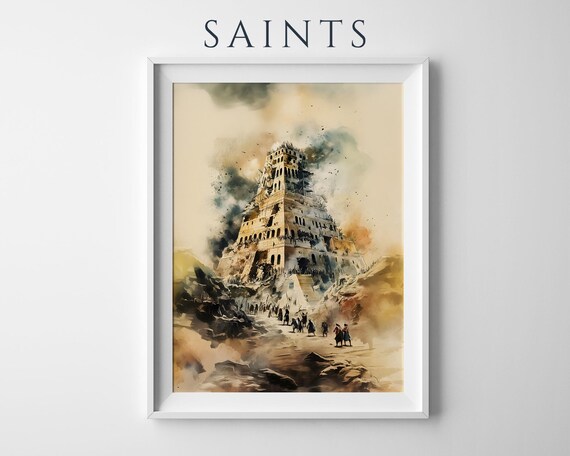
A city built out of fear as much as pride
The builders of Babel state their own motive plainly: "Come, let us build ourselves a city and a tower with its top in the sky, and so make a name for ourselves; otherwise we shall be scattered all over the earth." (Genesis 11:4, RSV-CE). It's easy to read this as a simple story about arrogance, but the builders' own words reveal something closer to anxiety — a fear of scattering, of losing unity, of being forgotten. The tower was meant to be insurance against exactly the outcome the story ends with.
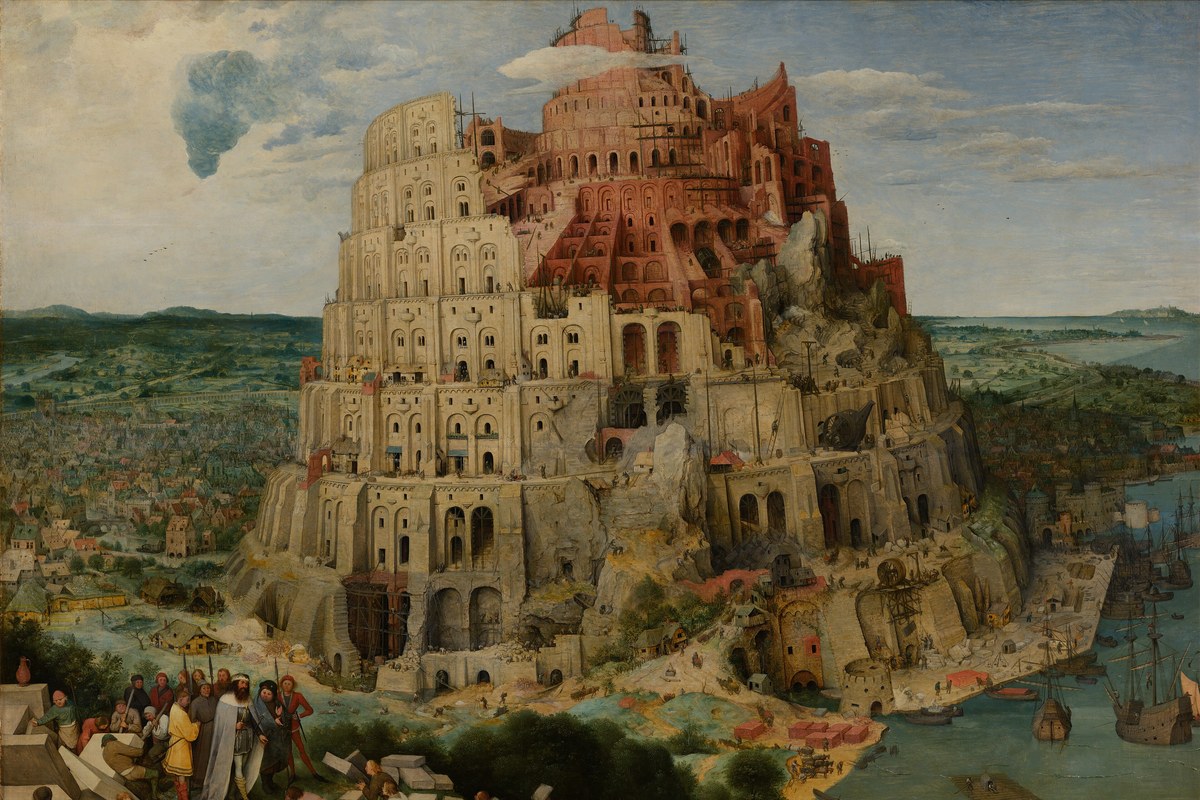
Pieter Bruegel the Elder, "The Tower of Babel," 1563, Kunsthistorisches Museum, Vienna — public domain.
The setting matters, too. Genesis places the story on a plain in the land of Shinar, in Mesopotamia — the same broader region where, only a few chapters earlier, humanity had been told to "God blessed Noah and his sons and said to them: Be fertile and multiply and fill the earth." (Genesis 9:1, RSV-CE), part of the same blessing given to Noah after the flood. Babel's builders were doing the opposite of what that blessing intended: rather than spreading out and filling the earth, they were determined to stay concentrated in one place, under one name, refusing the very dispersal God had built into his instructions to Noah's descendants. Read that way, the tower isn't simply an act of pride in isolation — it's a direct act of resistance against a command already given.
Why God targeted their language, not just the tower
What troubles God about the project isn't its height. It's the momentum that comes from total unity: "Then the Lord said: If now, while they are one people and all have the same language, they have started to do this, nothing they presume to do will be out of their reach." (Genesis 11:6, RSV-CE). The response is precise rather than destructive — not fire, not collapse, but confusion: "Come, let us go down and there confuse their language, so that no one will understand the speech of another." (Genesis 11:7, RSV-CE). Unable to coordinate, the builders simply stop: "So the Lord scattered them from there over all the earth, and they stopped building the city." (Genesis 11:8, RSV-CE).
Where the name comes from
Genesis closes the story with its own built-in explanation: "That is why it was called Babel, because there the Lord confused the speech of all the world. From there the Lord scattered them over all the earth." (Genesis 11:9, RSV-CE) — a direct wordplay in Hebrew between the name Babel and the verb meaning "to confuse." The scattering the builders feared most becomes, in the end, exactly what their own ambition brings about.
The confusion of languages recorded here has long been read by Jewish and Christian commentators alike as the origin point for the world's linguistic diversity — an explanation, within the story's own internal logic, for why humanity no longer shares one common tongue. Some early Christian writers went further still, reading the story of Pentecost in the Acts of the Apostles as a deliberate reversal of Babel: where confusion at Babel had scattered a people who could no longer understand each other, at Pentecost the apostles suddenly found themselves understood by a crowd of visitors "from every nation under heaven," each hearing the message in their own native language. The two stories, read together, trace an arc from division back toward a shared, restored understanding.
A tower with roots in real architecture
Many scholars connect the story to the massive stepped temple towers, or ziggurats, built in ancient Mesopotamia — structures whose ruins would have been familiar to the story's earliest audiences. Pieter Bruegel the Elder's famous 1563 painting, shown above, imagines the tower on exactly that scale: a half-finished structure so vast it dwarfs the city and harbor built up around its base, construction still crawling upward level by level with no end in sight — a fitting image for a project whose real flaw was never its architecture, but its refusal to imagine any limit at all.
A story with no villain punished, only a plan interrupted
It's worth noticing what the Babel story doesn't include. Unlike the flood narrative that precedes it or the destruction of Sodom that follows it later in Genesis, no one at Babel is killed, cursed by name, or singled out for individual judgment. The builders are simply scattered and left unable to finish what they started — a consequence that redirects their ambition rather than annihilating them outright. Many readers have taken that restraint as significant in its own right: even in a story about overreaching pride, Genesis stops well short of wiping out the people involved, choosing instead to interrupt a dangerous unity and send humanity back out into the wider, more varied world it had been instructed to fill in the first place.
Trivia
What were the builders of Babel actually trying to do?
Why did God confuse their language instead of simply destroying the tower?
Where does the name Babel come from?
Is there a historical building behind the story?
Related Reading