Joseph Sold Into Slavery by His Own Brothers

A father's favorite, a family's fault line
Jacob had twelve sons, but only one of them got the coat. Genesis calls it a "long ornamented tunic," and whatever it actually looked like, everyone in the family understood exactly what it meant: Joseph, the eleventh son and the first child of Jacob's beloved wife Rachel, was the favorite, and his father wasn't hiding it. The text is blunt about the fallout — Joseph's brothers "hated him so much that they could not say a kind word to him" (Genesis 37:4).
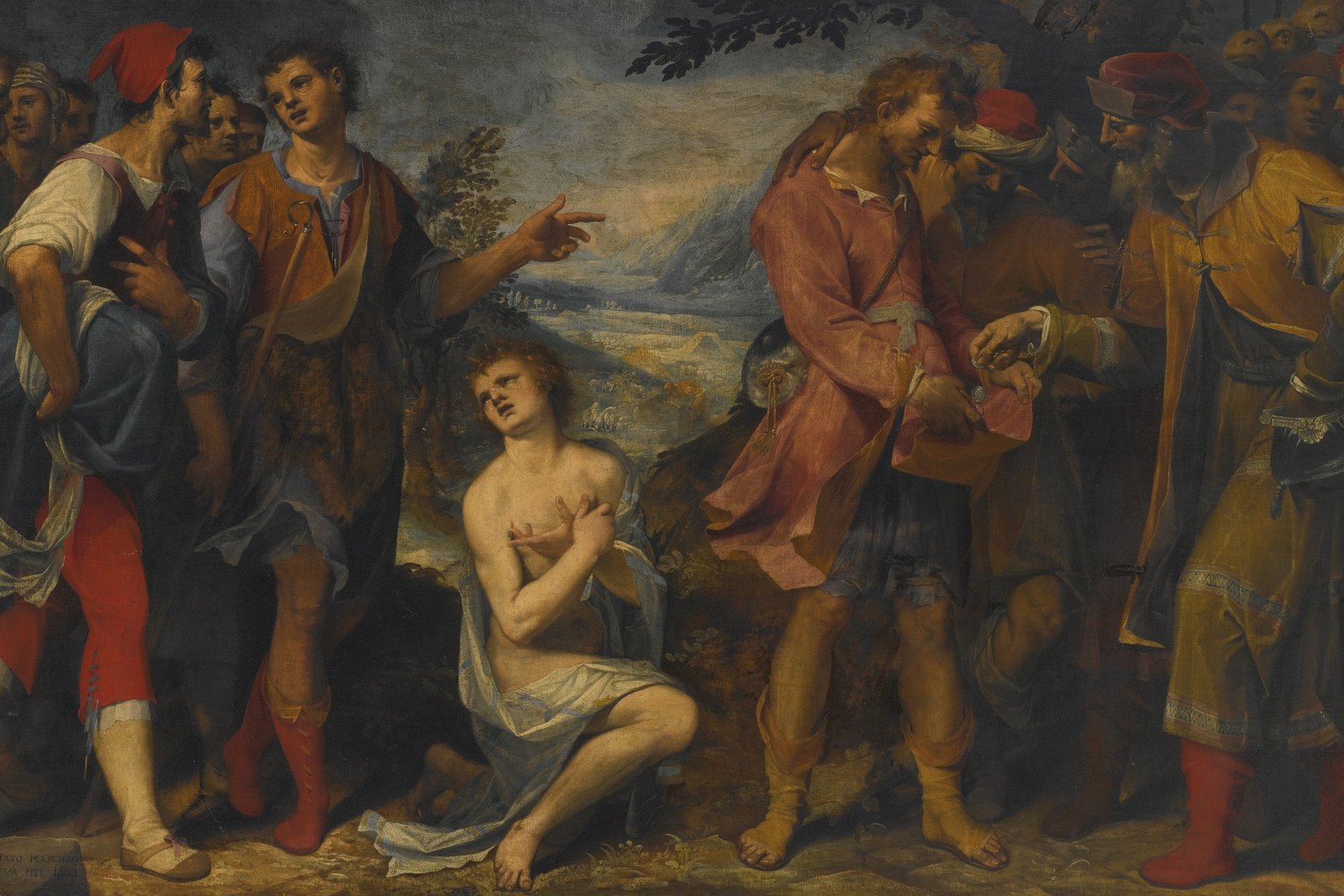
Damiano Mascagni, Joseph Sold into Slavery by His Brothers, c. 1602. Public domain, Wikimedia Commons.
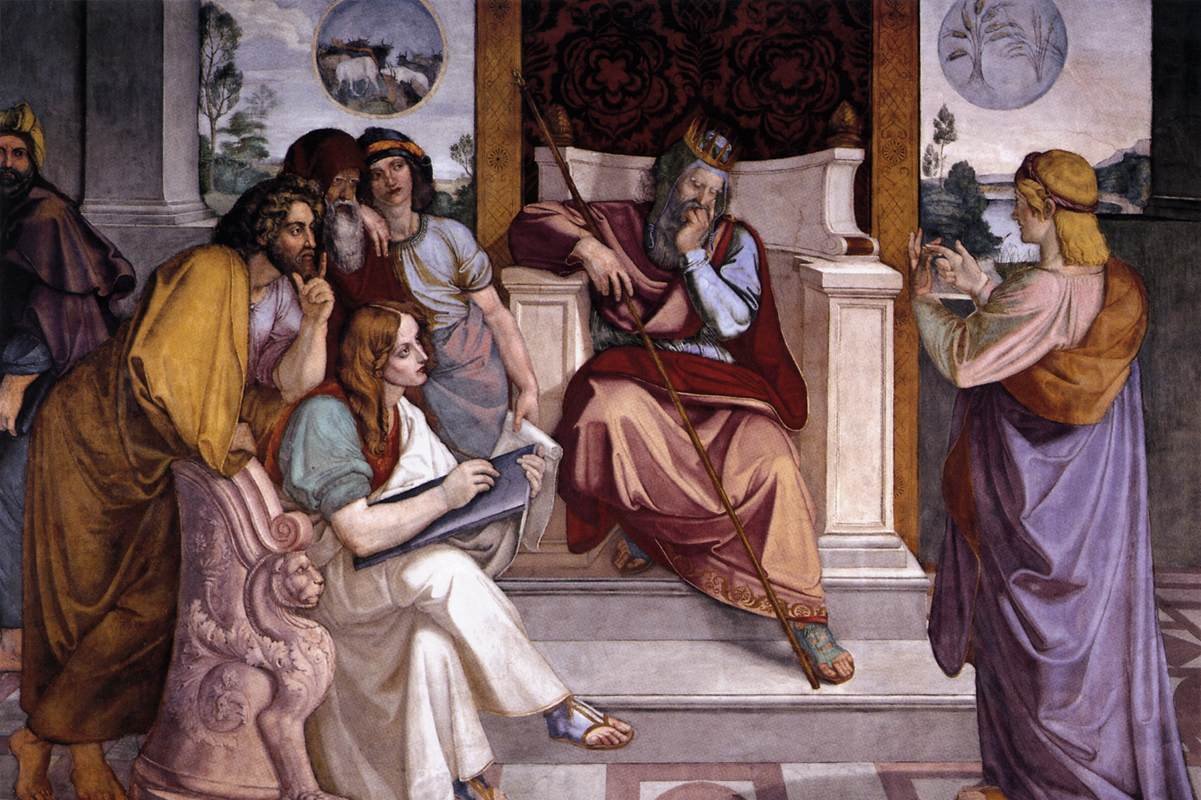
Joseph didn't help his own case. He was seventeen, prone to bringing his father unflattering reports about his brothers' behavior, and — worse — he had dreams, and he told people about them. In one, his brothers' bundled sheaves of wheat bowed down to his own sheaf. In another, the sun, moon, and eleven stars bowed to him. His brothers didn't need a prophet to interpret those; the meaning was obvious, and it made them despise him more.
The pit in Dothan
The breaking point came in a field near Dothan, where the brothers were pasturing the family's flocks far from home. Jacob had sent Joseph to check on them, and when the brothers saw him coming from a distance, Genesis says they "plotted to kill him" before he'd even arrived, mocking him as "that dreamer" (Genesis 37:18–19).
Reuben, the eldest, talked them out of murder — Genesis says his real plan was to rescue Joseph later and return him to their father — and persuaded the others to throw Joseph into an empty cistern instead. While Reuben was away, Judah proposed a different kind of solution. "What is to be gained by killing our brother and concealing his blood?" he asked. "Come, let us sell him to these Ishmaelites, instead of doing away with him ourselves" (Genesis 37:27). A caravan of Midianite traders happened to be passing on their way to Egypt. The brothers pulled Joseph from the pit and sold him for twenty pieces of silver.
A coat dipped in blood
To cover the crime, the brothers killed a goat, soaked Joseph's tunic in its blood, and brought it to Jacob with a question rather than a confession: "We found this. See whether it is your son's tunic or not" (Genesis 37:32). Jacob recognized it instantly and reached the conclusion they wanted him to reach without a single lie being spoken aloud. "My son's tunic! A wild beast has devoured him! Joseph has been torn to pieces!" he cried, tearing his own garments and refusing to be consoled (Genesis 37:33–35).
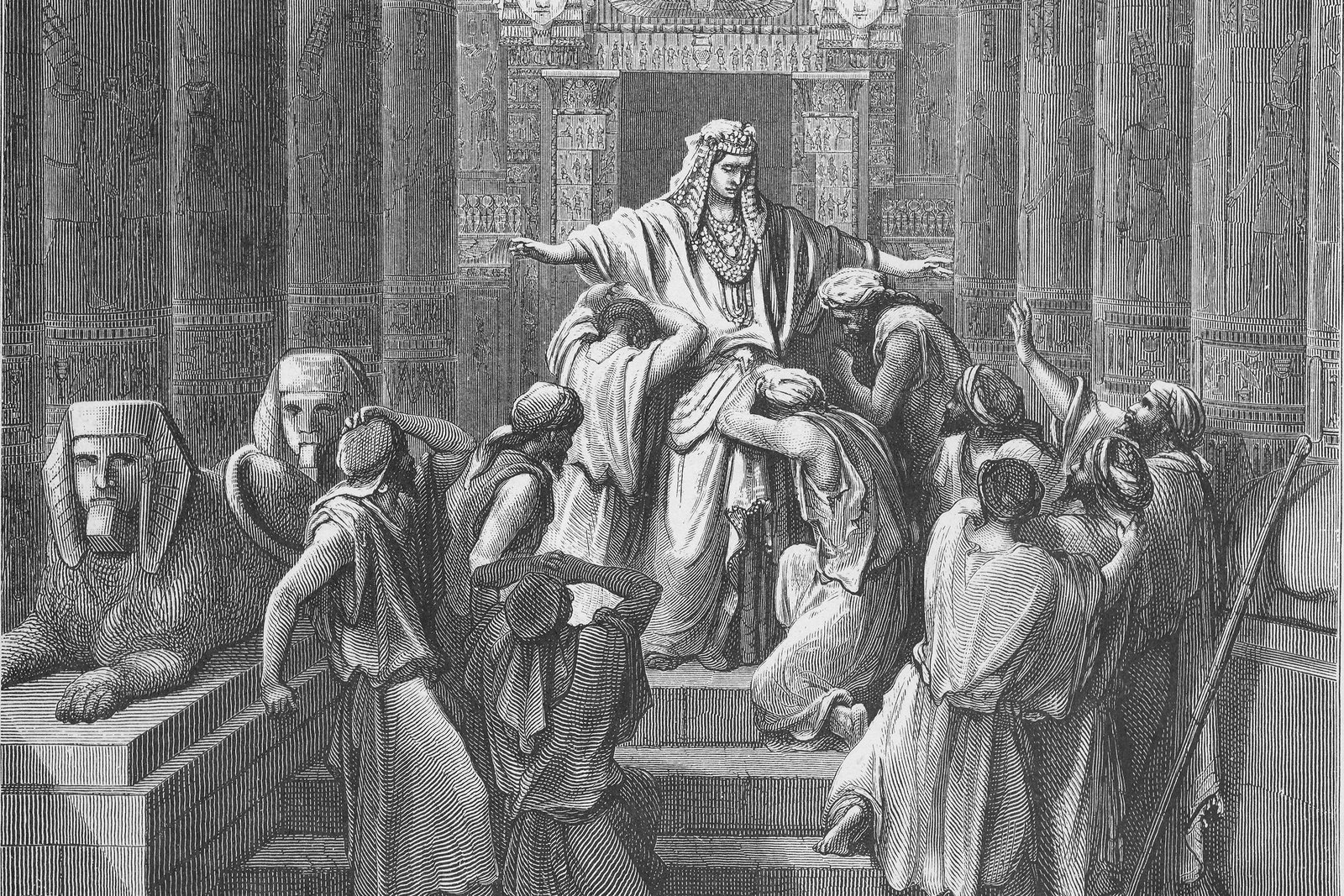
Meanwhile, the Ishmaelite traders carried Joseph on to Egypt, where Genesis says he was sold again — this time to Potiphar, "an official of Pharaoh and his chief steward" (Genesis 37:36). It's the last verse of the chapter, and it's easy to read past it, but it quietly sets the stage for everything that follows: Joseph's rise in Potiphar's household, his imprisonment, his gift for interpreting dreams, and eventually his rise to become the second most powerful man in Egypt — the position from which he would one day feed the very brothers who sold him, without ever revealing at first who he was.
Why the coat mattered so much
It's worth pausing on the tunic itself, since so much of the story turns on it. Scholars who study the Hebrew text note that the phrase traditionally translated "coat of many colors" (a rendering that goes back to the ancient Greek and Latin translations of the Bible) more literally describes a long garment with sleeves — the kind of tunic worn by someone who didn't have to do physical labor, in contrast to the shorter, sleeveless garments practical for herding flocks. Whatever its exact appearance, the gift wasn't simply sentimental; in a household economy where the elder sons expected to inherit the bulk of their father's authority and property, dressing the second-youngest son as someone exempt from manual work was a public announcement of favoritism with real consequences for status and inheritance. That's part of why the brothers' resentment reads as more than petty jealousy — they were watching their father signal, in front of the whole camp, who he actually intended to elevate.
A story about mercy read forward
Catholic tradition has long read Joseph's story as a foreshadowing of Christ — not as official Church dogma, but as a typology commentators and preachers have drawn on for centuries. A beloved son, rejected and effectively sold by his own brothers, who later becomes their salvation rather than their judge, has an obvious resonance with the Gospel. It's a connection worth naming as tradition and reflection, not a claim of prophecy in the technical sense.
What makes Joseph's account endure, though, isn't just the parallel — it's the shape of the story itself. Betrayal by family is one of the oldest wounds in scripture, going back to Cain and Abel and echoing through Joseph's own father's flight from his brother Esau in Jacob's Ladder, and Joseph's story doesn't pretend the wound wasn't real. The brothers' cruelty is never softened or excused. But the narrative keeps pushing forward past the pit and the false report, toward a reunion years later where Joseph, weeping, tells his brothers not to be distressed with themselves — because what they intended for evil, God intended for good (a theme made explicit later in Genesis 50:20). It's a story that takes betrayal seriously and still insists the last word doesn't belong to it.
Trivia
Why did Joseph's brothers hate him so much?
How much did Joseph's brothers sell him for?
What did Joseph's brothers tell their father Jacob happened to him?
Who bought Joseph once he reached Egypt?
Is the story of Joseph considered a prefiguration of Christ in Catholic tradition?
Related Reading