The Creation of the Sea and Sky


A sky built to hold back the water
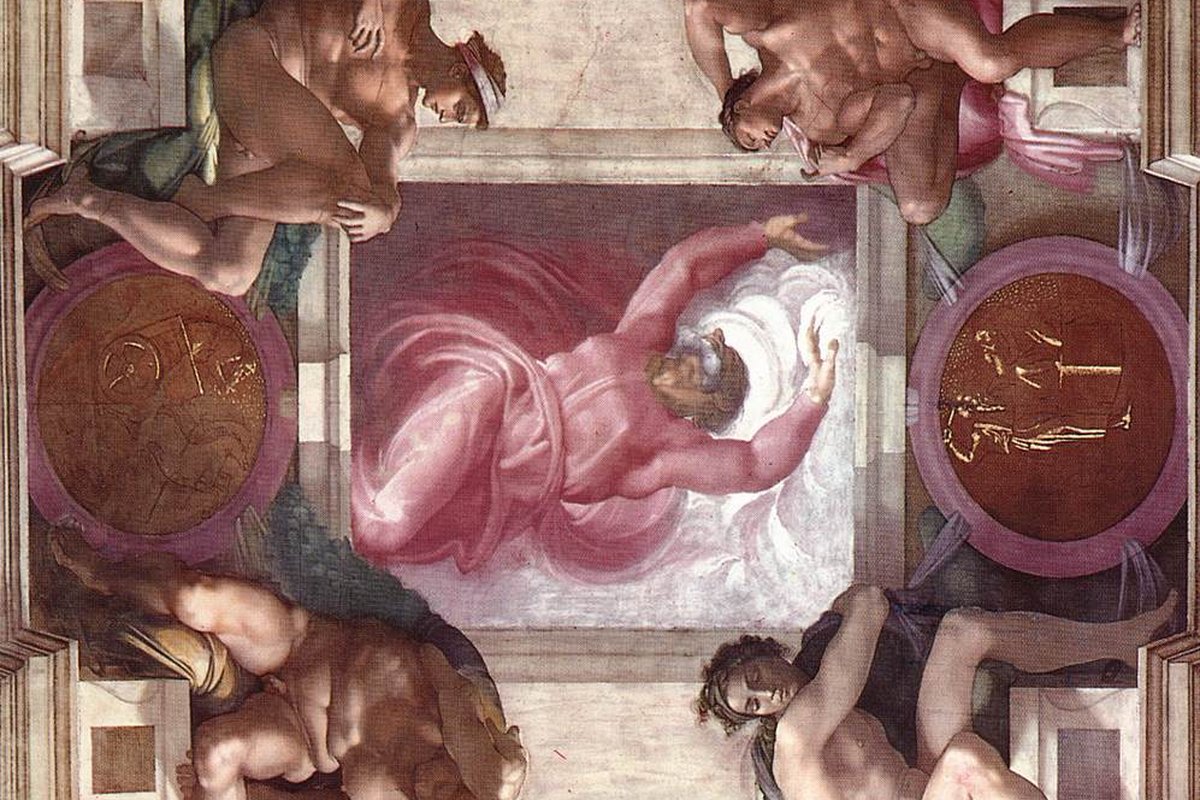
On the first day, Genesis deals with light. On the second, it turns to structure: "Then God said: Let there be a dome in the middle of the waters, to separate one body of water from the other" (NABRE, Genesis 1:6). The verse assumes a world already full of water — the "abyss" mentioned back in verse 2 — and God's action is to drive a wedge through the middle of it: "God made the dome, and it separated the water below the dome from the water above the dome. And so it happened" (NABRE, Genesis 1:7). God then names the result: "God called the dome 'sky.' Evening came, and morning followed — the second day" (NABRE, Genesis 1:8).
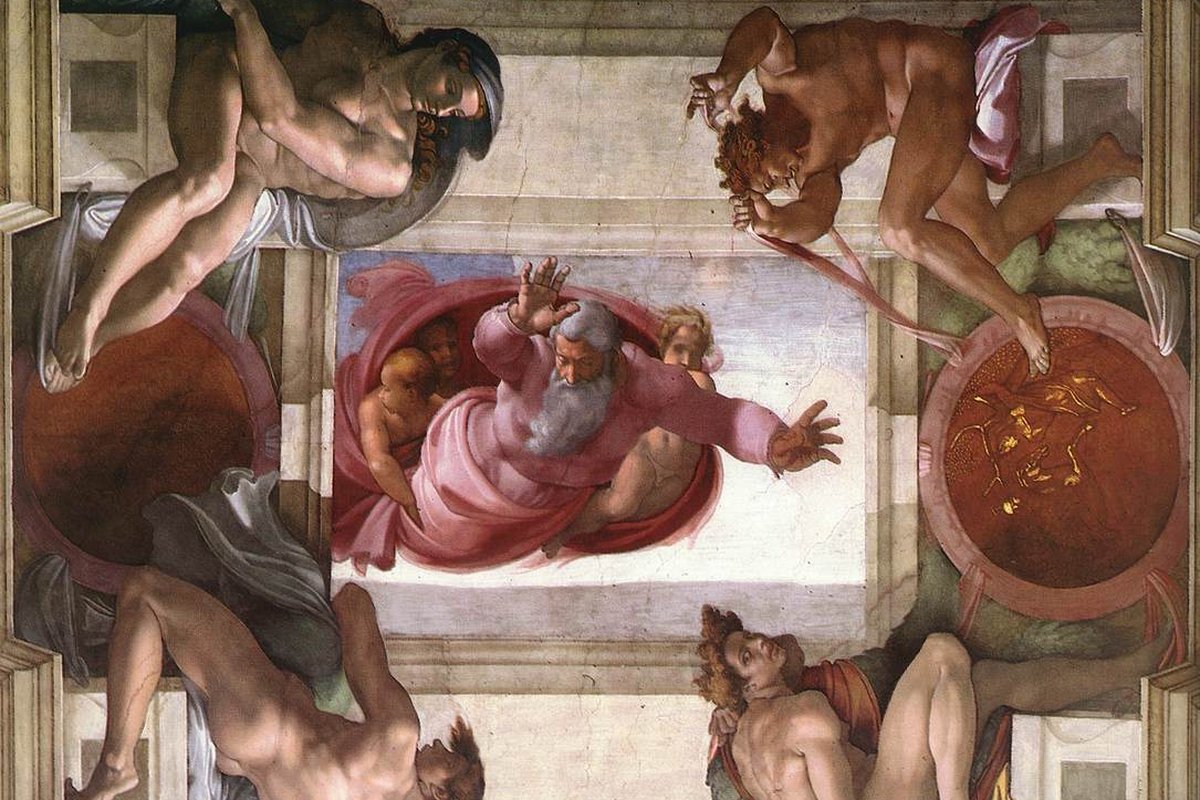
Michelangelo, "Separation of the Earth from the Waters," Sistine Chapel ceiling (Wikimedia Commons, public domain)
Read quickly, this can sound like a simple statement that the sky separates clouds from the sea below. But the Hebrew word behind "dome" — raqia — carries a much more physical meaning than that. It describes something hammered or beaten out flat, the same verb used elsewhere for metalworkers pounding sheets of metal into shape. The ancient audience of Genesis wasn't picturing empty atmosphere. They were picturing a solid, vaulted ceiling stretched across the world like a great inverted bowl.
How the ancient world pictured the heavens
This makes far more sense once it's placed alongside the cosmology shared broadly across the ancient Near East. Peoples across the region — including Israel's neighbors in Mesopotamia and Egypt — pictured the cosmos in similar terms: a flat or gently domed earth, a solid sky-vault overhead holding back a cosmic ocean, and another sea of waters resting below the land, occasionally breaking through as springs or the deep. Genesis 1:6-8 fits comfortably inside that shared picture of the universe rather than describing anything resembling a modern atmosphere.
That physical picture shows up again elsewhere in the Old Testament. Job describes the skies as "hard as a molten mirror" (Job 37:18), and Ezekiel's vision describes something "like a firmament, shining like crystal, awesome" stretched above four living creatures (Ezekiel 1:22) — the same solid-sky imagery, used to different ends. None of this is presented as scientific instruction; it's the shared conceptual vocabulary the biblical writers used to talk about the structure of the cosmos, the same way a modern writer might casually say the sun "rises" without making a claim about geocentrism.
The day without "it was good"
There's a small, easy-to-miss detail in verse 6 through 8 worth pausing on: it's the only day of the creation week where the text doesn't say "God saw that it was good." That refrain appears after day one's light (Genesis 1:4), after day three's dry land and vegetation — twice, in fact (Genesis 1:10, 12) — and after every day that follows, but it's absent here. Readers over the centuries have noticed and speculated about the gap, some linking it to the theme of division itself, since the "good" evaluations tend to follow completed, settled work rather than an act of separation still pending its full resolution on day three. Genesis itself offers no explanation, and any reading of the silence has to stay speculative rather than definitive.
The same dome, opened again in the Flood
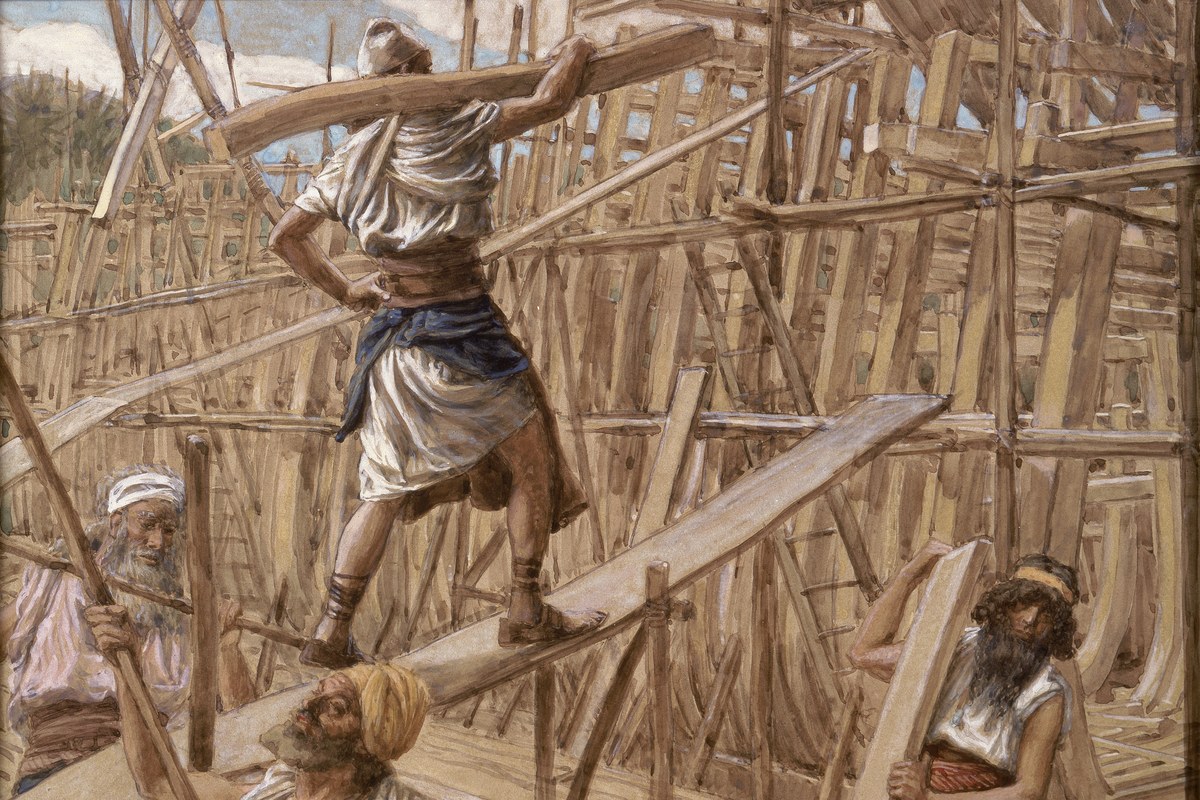
This picture of a solid sky holding back a cosmic ocean isn't just scenery for the creation account — it does real narrative work later in Genesis. When the Flood begins, the text describes "the fountains of the great deep" bursting open and "the floodgates of the sky" being opened (NABRE, Genesis 7:11), language that only makes full sense against the backdrop of day two's dome: the waters above the sky, held back since creation, are now let back through. Noah's ark isn't simply riding out heavy rain in this picture — it's surviving a partial undoing of the very ordering God performed on the second day, which is part of why the Flood carries such weight as an act that threatens to return creation to the formless, watery chaos it started from.
How the Church has read this passage
Catholic teaching has never required treating Genesis 1 as a scientific account of the physical universe's assembly, and this has been the Church's settled position for a very long time, not a modern accommodation to science. Saint Augustine, writing well over a thousand years before modern cosmology, already cautioned against reading the early chapters of Genesis in a narrowly literal, physical sense and insisted the text be read primarily for the theological truths it teaches about God and creation. The Catechism of the Catholic Church follows that same emphasis, treating Genesis 1 as inspired teaching about who God is and how the world depends on him, expressed through the literary and cosmological forms available to its ancient human authors — not as a rival account to be checked against a telescope. Read that way, the dome of day two isn't a claim demanding scientific defense; it's part of a carefully structured poem about a God who takes chaos and gives it shape, a theme that opens in the creation of light the day before and continues straight through to the seventh day of rest.
Not a science text, but not empty of meaning either
It's tempting for modern readers to treat Genesis 1:6-8 as either a factual claim to be defended or a primitive error to be dismissed. Neither reading captures what the verse is doing. Its authors were writing theology in the cosmological language available to their time — describing a universe that is ordered, bounded, and put in its place by a God who speaks it into structure one deliberate stage at a time. The dome overhead isn't meant to be measured. It's meant to mark a world where chaos has a ceiling, and where even the water above the sky answers to a voice.
Trivia
What does Genesis 1:6-8 say God created on the second day?
What is the 'dome' or 'firmament' in Genesis 1:6-8?
Why doesn't God call the second day of creation 'good' the way he does the other days?
Does the Bible describe the sky as solid elsewhere?
Related Reading