The Call of Abraham


Who Abraham was before the call
Before Genesis 12, Abraham — still called Abram at this point — is simply one more name in a genealogy: the son of Terah, living in Harran, part of a family and a culture with no particular claim to holiness. Nothing in the text marks him out as exceptional. That's part of the point of what happens next: the call doesn't come to someone who has earned it through some prior act of greatness. It simply arrives.
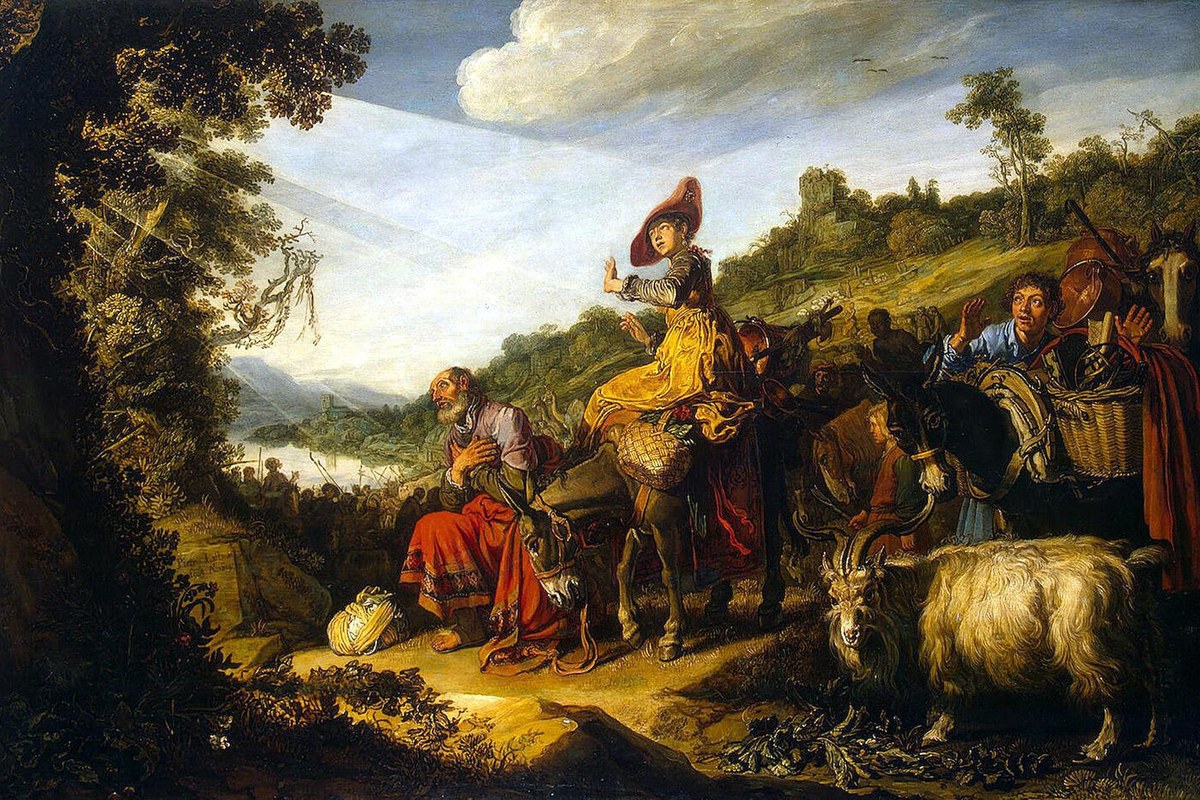
Pieter Lastman, "Abraham's Journey to Canaan," 1614 — public domain.
What God asked, and what it cost
The instruction is specific, and it escalates: "The Lord said to Abram: Go forth from your land, your relatives, and from your father’s house to a land that I will show you." (Genesis 12:1, RSV-CE). Country, then kindred, then family — each phrase widens the scope of what Abram is being asked to leave, and the destination is deliberately withheld. He isn't given a map, only a direction and a promise: "I will bless those who bless you and curse those who curse you. All the families of the earth will find blessing in you." (Genesis 12:2-3, RSV-CE). Genesis records his response in a single unadorned sentence: "Abram went as the Lord directed him, and Lot went with him. Abram was seventy-five years old when he left Haran." (Genesis 12:4, RSV-CE). No negotiation, no recorded hesitation — just a man old enough to know exactly what he was giving up, doing it anyway.
Why this one moment anchors everything after
Nearly every major covenant in the rest of the Bible refers back to this one. God's promises to Isaac, to Jacob, to the nation of Israel at Sinai, and to David's royal line are all framed as continuations of what began with Abraham in Genesis 12. The apostle Paul later points to this same episode to argue that righteousness comes through faith rather than strict adherence to the law, since Abraham was credited with righteousness for trusting the promise decades before any law existed to follow. Judaism, Christianity, and Islam all name Abraham as a founding figure of faith for exactly this reason — a single act of trust that the rest of the story never stops referring back to.
The promise renewed, and a new name to go with it
The call in Genesis 12 isn't the last word on the covenant — it's the opening one, repeated and expanded across several later chapters as Abraham's story unfolds. Years pass with no child born to fulfill the promise of descendants, and in Genesis 15, when Abram voices his doubt aloud, God renews the pledge under a striking nighttime ritual involving a smoking firepot and a flaming torch passing between the halves of sacrificed animals — an ancient covenant-making ceremony that would have been immediately recognizable to Abram's contemporaries as a solemn, binding oath. Genesis records his response simply: he "Abram put his faith in the Lord, who attributed it to him as an act of righteousness." (Genesis 15:6, NABRE), a single line that the apostle Paul would later build an entire argument on in his letters to the Romans and Galatians.
The promise is sealed again, more formally, in Genesis 17, when Abram is ninety-nine years old. God tells him, "No longer will you be called Abram; your name will be Abraham, for I am making you the father of a multitude of nations" (Genesis 17:5, NABRE) — the new name carrying the promise inside it, since "Abraham" was understood to echo the Hebrew phrase for "father of a multitude." Circumcision is instituted in this same chapter as the physical sign of the covenant, marking every male descendant of Abraham's household as a visible participant in the promise made decades earlier to one childless old man in Harran.
Isaac, born of the promise, and the test that followed
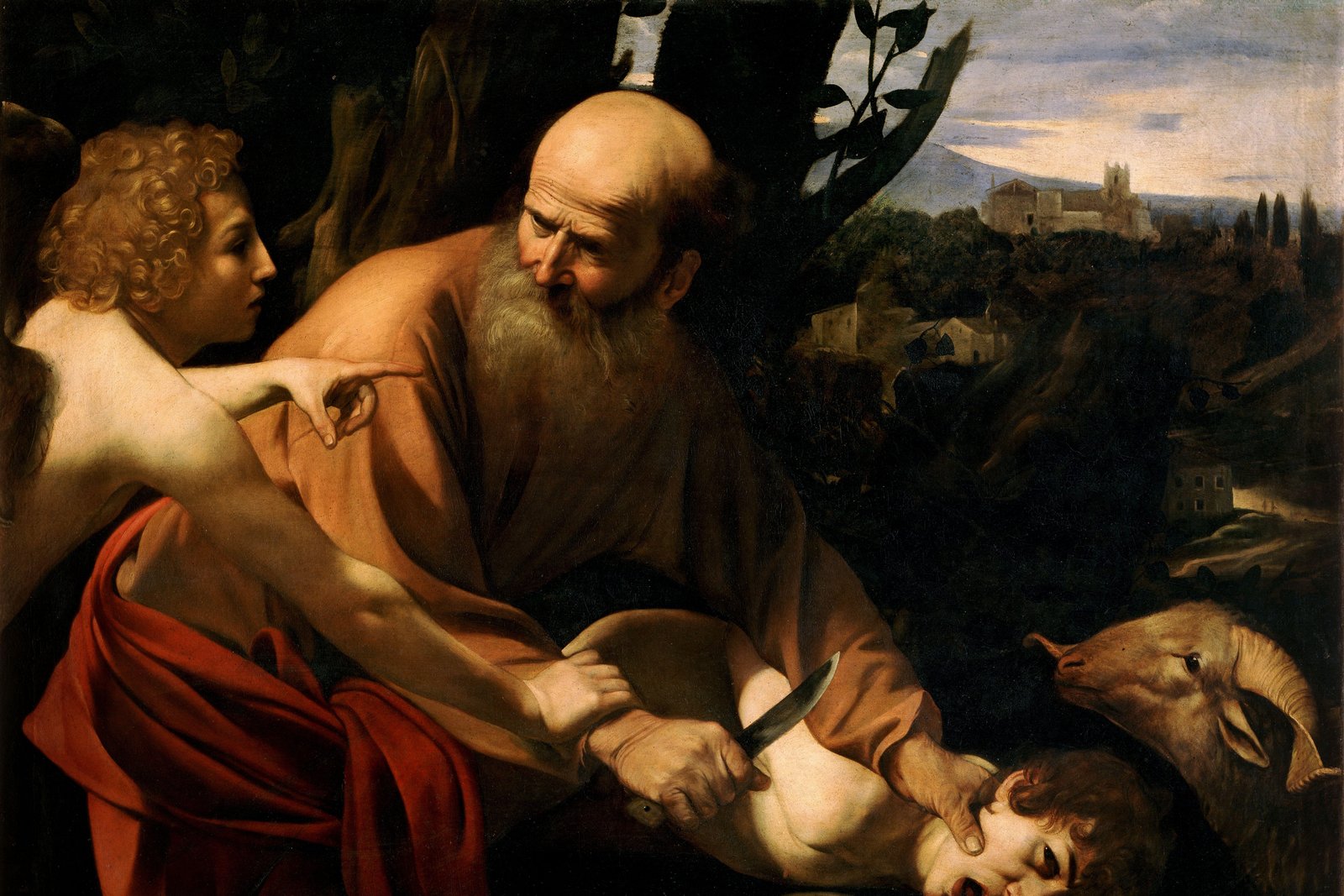
Abraham was a hundred years old when his son Isaac was finally born to his wife Sarah, the long-delayed fulfillment of the promise God had first made when Abraham was seventy-five. It's precisely because Isaac was so long-awaited, and so central to everything the covenant depended on, that the later episode in Genesis 22 — when Abraham is instructed to offer Isaac in sacrifice on Mount Moriah, only to have an angel stop his hand at the last moment — reads as such a severe test of the same faith first shown in Genesis 12. Christian tradition has long read the episode as a foreshadowing of God's own sacrifice of his Son, and Jewish tradition remembers it as the Akedah, the "binding," one of the most solemn moments in the Hebrew Scriptures. Both readings trace their weight back to the same root: a man who had already proven, once, that he would give up everything he had on the strength of a promise alone.
Iconography and how the story is depicted
Christian art typically shows this story as a journey already underway: Abraham, his wife Sarah, his nephew Lot, and their household moving along a road with flocks, donkeys, and belongings, often glancing back toward the land they're leaving even as they press forward. It's a deliberately domestic image rather than a miraculous one — no burning bush, no parted sea — because the point of the story was never the spectacle. It was the willingness to walk. The New Testament's Letter to the Hebrews later placed Abraham at the head of its great roll call of the faithful, describing him as a man who "went out, not knowing where he was to go" (Hebrews 11:8, NABRE) — still, centuries later, the simplest and most complete summary of what happened on that road out of Harran.
Trivia
Why is Abraham called the father of faith?
What exactly did God promise Abraham?
How old was Abraham when he left Harran?
Was Abraham always called Abraham?
Related Reading