Our Lady of Aparecida: Brazil's Patroness Found in a Fishing Net

A poor catch and a broken statue
The story of Our Lady of Aparecida begins, fittingly for a nation this devoted to her, with ordinary men doing ordinary work. Early on the morning of October 12, 1717, three fishermen from the village of Guaratinguetá — Domingos Garcia, Filipe Pedroso, and João Alves — set out on the Paraíba do Sul River with a job to finish before nightfall. The Count of Assumar, governor of the province of São Paulo and Minas Gerais, was passing through on his way to Vila Rica, and the village wanted to put on a proper banquet for him. That meant fish, and plenty of it.
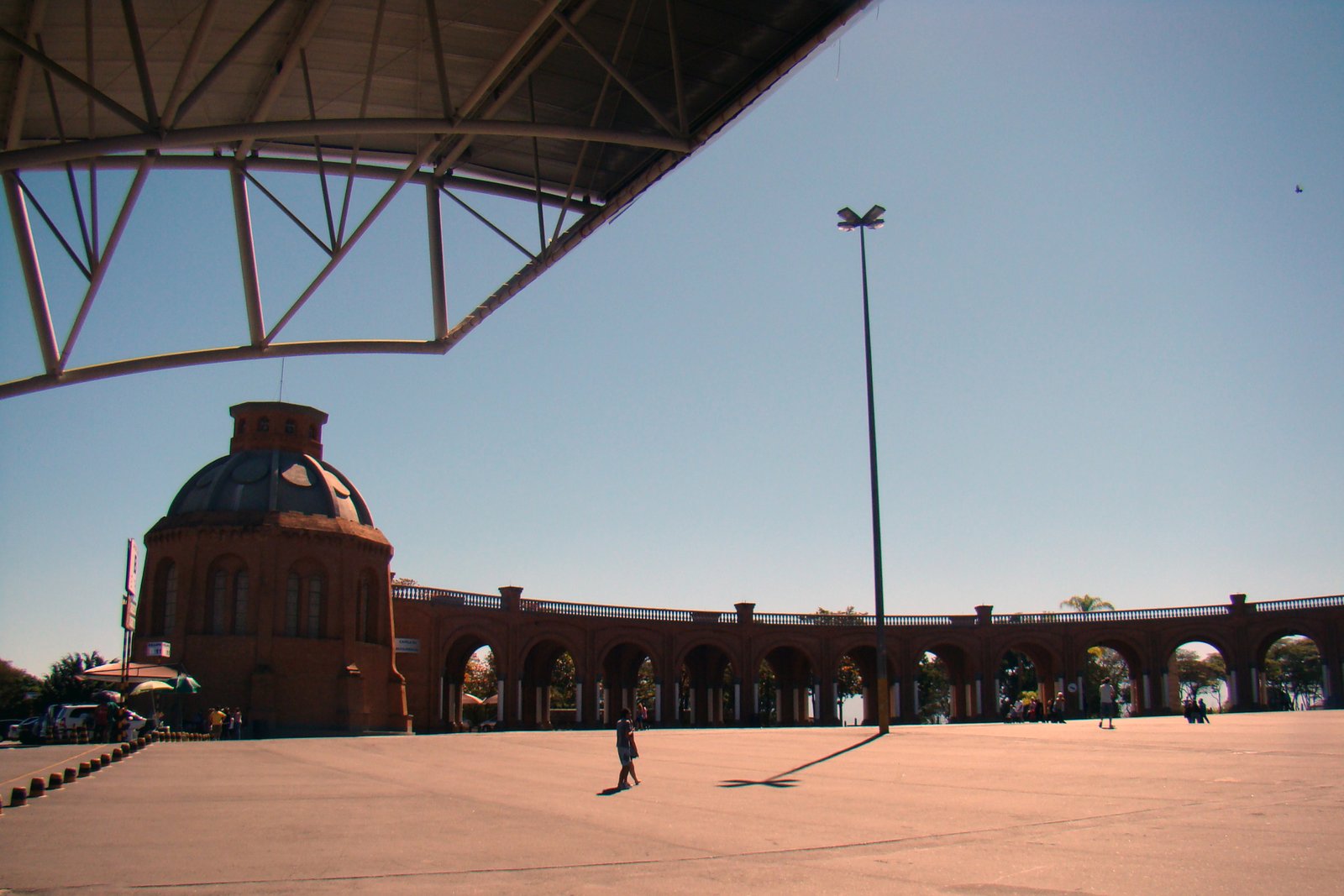
Rodrigo Soldon, Basílica de Nossa Senhora Aparecida, photograph, 2009. CC BY 2.0, via Wikimedia Commons.
For hours, there was nothing. According to the traditional account preserved by Vatican News, the three men had nearly given up when João Alves decided on one more cast. What came up in his net wasn't a fish at all — it felt heavier, like a piece of waterlogged wood. When they pulled it free and looked closely, they found a small statue of the Virgin Mary, carved or molded from clay, its head broken off and missing. Moments later, a second cast of the same net brought up the missing head. The men reassembled the pieces, and — as the story is told — the empty river suddenly gave up so many fish that their small boat strained under the weight.
Whatever one makes of that detail, the fishermen themselves clearly took it as a sign. Filipe Pedroso carried the statue home and set it on a small altar in his own house. Word spread through the neighboring villages, and within a few years, enough people were coming to pray before the little image that a proper chapel had to be built to hold them.
From a broken clay figure to a national devotion
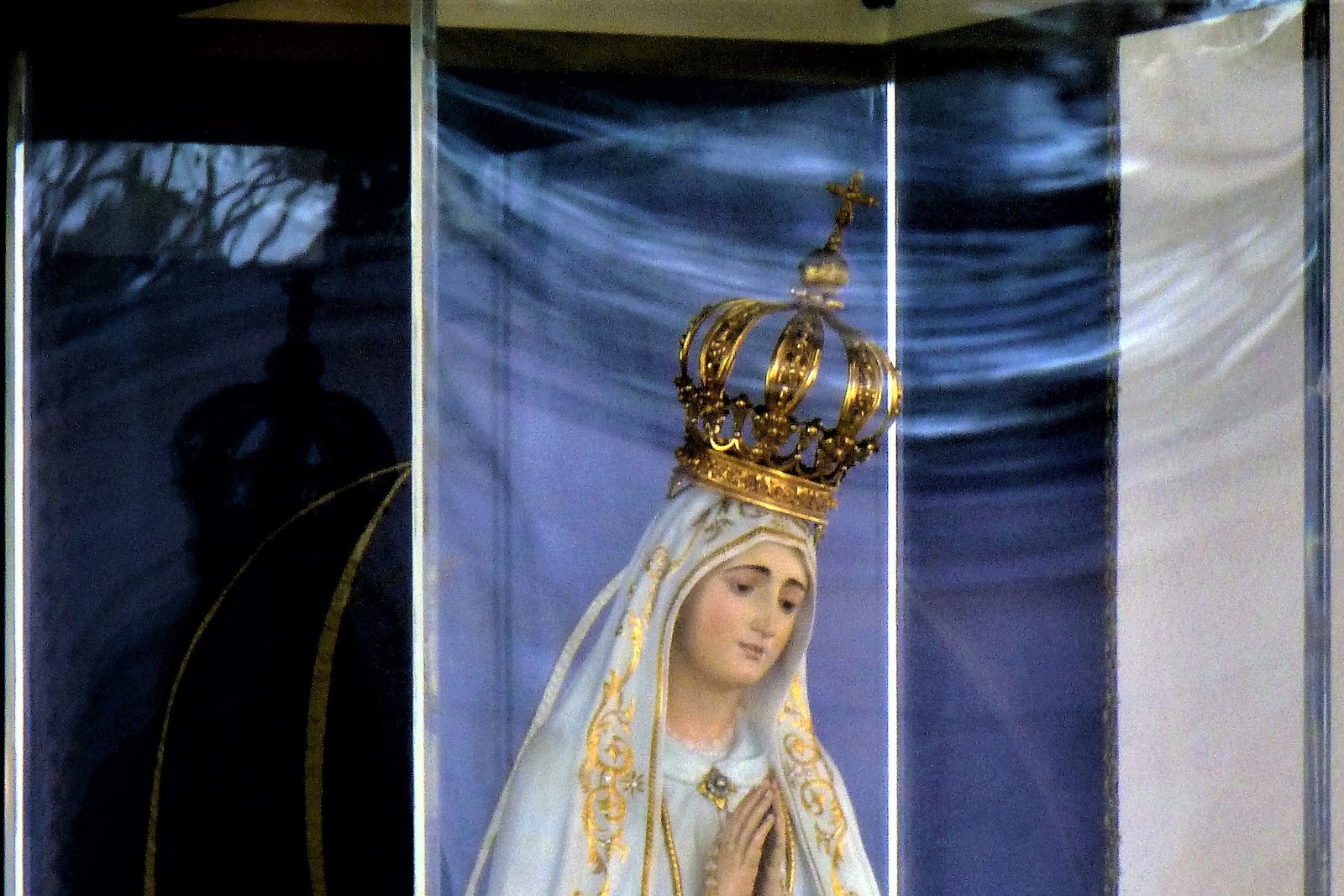
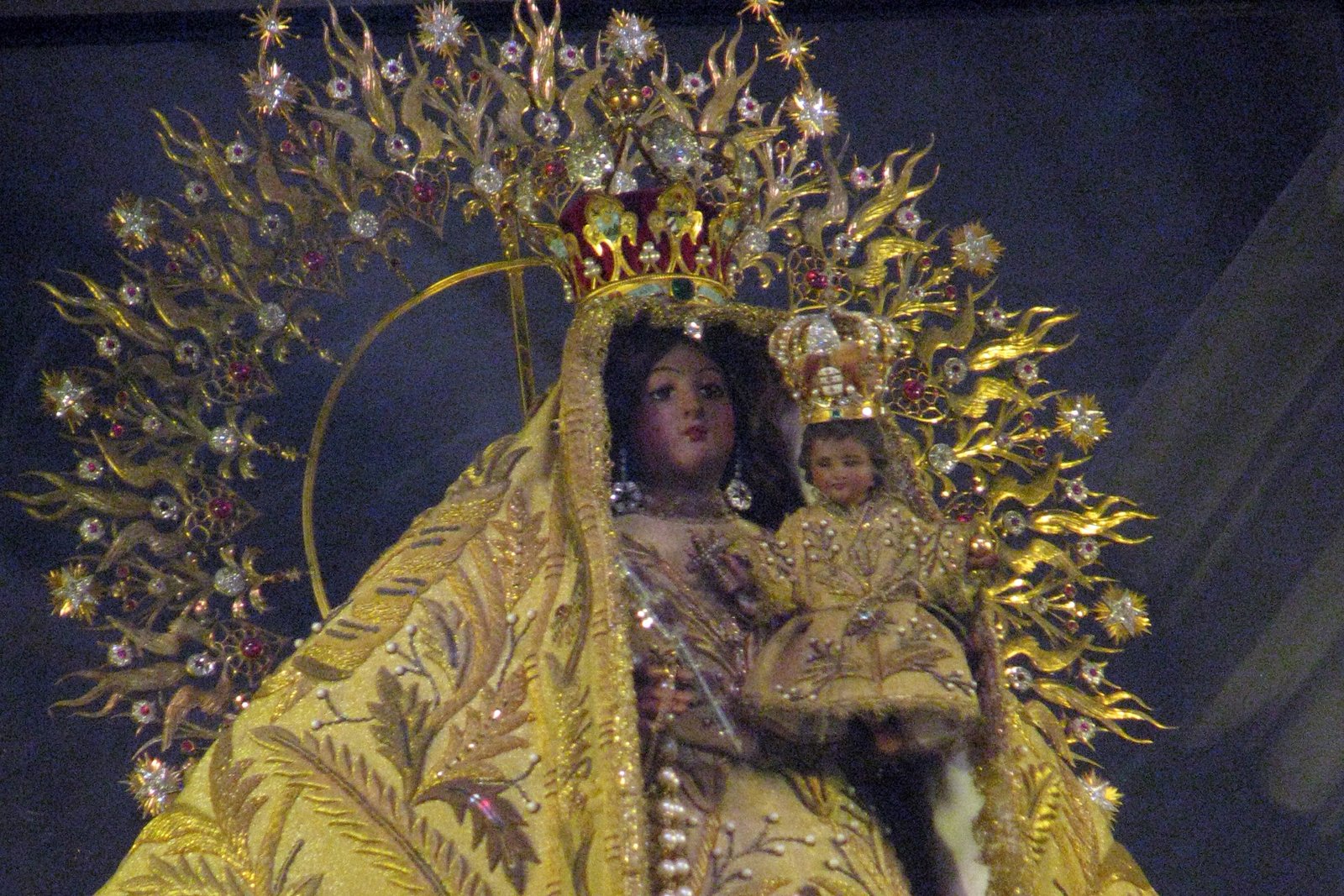
What exactly the fishermen pulled from the water matters for understanding why this particular object became so beloved. The statue depicts the Immaculate Conception — Mary shown in the traditional pose associated with that title, hands folded at her chest in prayer, head slightly bowed. Sources describe its height as somewhere between 36 and 40 centimeters, a little over a foot tall, made of terracotta clay rather than carved wood or cast metal. It's a modest, humble object by any measure — which is part of why the devotion that grew up around it feels so rooted in ordinary people's experience rather than in royal or clerical patronage from the start.
The name itself tells the story plainly: "Aparecida" means "the one who appeared," and the full devotional title, Nossa Senhora da Conceição Aparecida — Our Lady of the Appeared Conception — refers directly to how she came to the fishermen's attention, emerging unexpectedly from the river rather than through a vision or an apparition in the usual sense. (This blog's article on the Black Madonna of Czestochowa covers another Marian image whose popular nickname and dark coloring likewise shaped its national devotion, in that case in Poland rather than Brazil.)
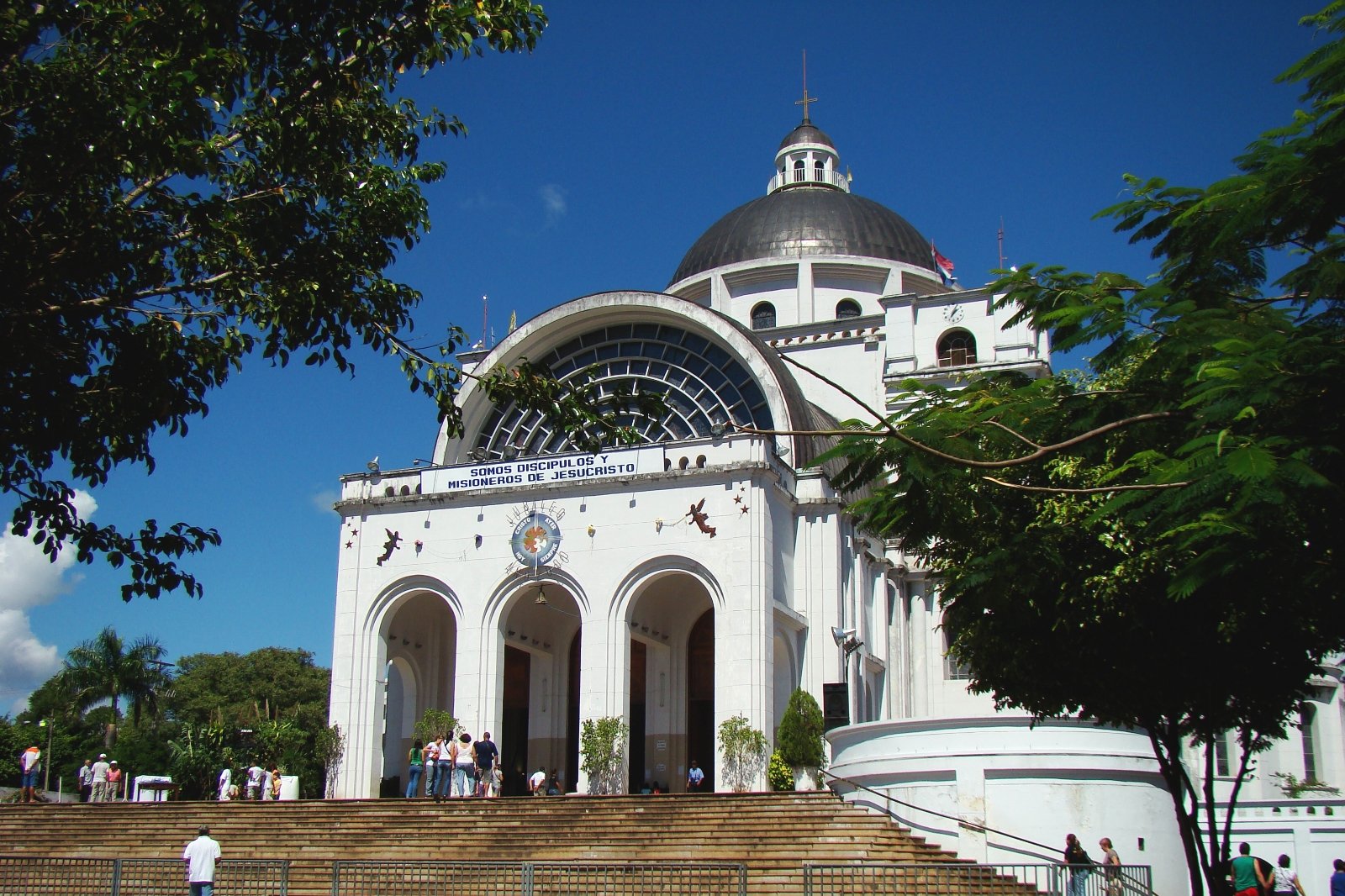
As pilgrims kept coming, the simple hut gave way to larger and larger buildings. A chapel went up to accommodate the growing crowds, and later, in 1737, a bigger one replaced it. In 1846, work began on what became known as the "Old Basilica," completed in 1888 and still standing today in the town now named Aparecida do Norte in honor of the statue found in its waters.
A dark statue and a devotion that crosses lines
One of the most striking features of the statue today is its color: the clay has darkened over three centuries into a deep brown, the combined effect of the material's age, sediment absorbed from the river where it spent who knows how long before the fishermen found it, and the smoke of uncountable candles lit in front of it by the faithful. That dark coloring earned the image the popular, affectionate nickname "Aparecida Negra" — the Black Aparecida — a name used alongside her formal title.
That coloring has given the devotion a particular resonance for Afro-Brazilian Catholics, many of whom find in the statue's dark-toned face a Mother who visibly reflects their own community rather than a distant, foreign image. It's worth being careful here about what is tradition and what is official teaching: the Church's own position is that the statue's color is simply a physical effect of its material and age, not a doctrinal statement about Mary's actual appearance. But the devotional meaning Afro-Brazilian communities have found in that color over generations is a real and significant part of the statue's story, even if it developed organically rather than through any formal Church pronouncement.
Crowned by a saint, declared patroness by a pope
The statue's rise through the Church's own recognition followed a clear, documented timeline. In 1904, Pope Saint Pius X ordered the statue formally crowned — a solemn liturgical gesture (distinct from simply placing a crown on an image) meant to publicly honor a devotion that had, by then, already spread across Brazil for nearly two centuries. The crowning was carried out locally by Bishop José de Camargo Barros of São Paulo.
The bigger milestone came a generation later. On July 16, 1930, Pope Pius XI formally declared Our Lady of Aparecida the Patroness of Brazil, elevating what had grown as grassroots devotion into an officially recognized national patronage. Fifty years after that, in July 1980, Pope John Paul II visited the shrine in person and bestowed on the newer church there the formal title of basilica — a visit that also marked the consecration of the vast building constructed specifically to house the growing crowds of pilgrims.
A small statue in one of the world's largest churches
By the mid-twentieth century, it had become clear that even the enlarged Old Basilica couldn't hold the number of pilgrims arriving each year. In the 1940s, missionaries of the Congregation of the Most Holy Redeemer recognized the need for an entirely new, much larger building, and architect Benedito Calixto designed a structure in the shape of a Greek cross — 173 meters long and 168 meters wide, with a dome reaching 70 meters and a steeple rising to 105 meters. Construction began in 1955 and continued in stages for decades, with sections completed as funds and labor allowed.
The result, the Basilica of the National Shrine of Our Lady of Aparecida — often called simply the "New Basilica" to distinguish it from the older church nearby — now ranks among the largest Catholic churches in the world, with space for as many as 45,000 worshippers at once. Only St. Peter's Basilica in Vatican City is generally considered larger. Inside that enormous structure, visitors find the same small clay statue the fishermen pulled from the Paraíba do Sul River three centuries earlier, enshrined behind the main altar — a deliberate, almost startling contrast between the modesty of the object and the scale of the devotion it inspired.
A feast day that stops the country
Few Marian feast days carry the civic weight that October 12 carries in Brazil. A federal law signed in 1980 formally established the date as a national public holiday, and it remains one today — banks, schools, and most businesses close, and the small city of Aparecida do Norte swells with pilgrims arriving from across the country. On the feast day itself, hundreds of thousands of visitors typically converge on the shrine for Masses and processions, making it one of the largest annual religious gatherings in the Americas.
The date carries a second, more secular layer of meaning in Brazil as well: October 12 is also observed as Children's Day (Dia das Crianças), a coincidence of timing that has, over the decades, blended the solemn pilgrimage atmosphere of the feast with a day of family celebration nationwide. For millions of Brazilians, the two observances now feel inseparable — a single autumn holiday that honors both the small statue found in a fisherman's net and the children in their own homes.
What began as an accident of a slow fishing morning has become, three hundred years on, one of the largest and most enduring expressions of Marian devotion anywhere in the world — proof, to the millions who make the pilgrimage each year, that the most ordinary circumstances can still produce something that reshapes a nation's sense of itself.
Trivia
How was the statue of Our Lady of Aparecida found?
Why is the statue sometimes called the 'Black Aparecida'?
How big is the original statue, and what is it made of?
When did Our Lady of Aparecida become Brazil's patroness?
Is October 12 a public holiday in Brazil?
Related Reading