Mission San Juan Capistrano

A Mission Founded Twice
Mission San Juan Capistrano takes its name, and its patron, from a 15th-century Italian Franciscan priest, Saint John of Capistrano — though the mission's real founding story has less to do with its distant patron than with how badly its first attempt went. In October 1775, missionaries raised a wooden cross and hung two bronze bells from a tree branch at the site, intending to start the eighth mission in the chain Spain was building up the California coast. Within days, word arrived that Native warriors had attacked Mission San Diego de Alcalá to the south and killed a missionary there. Fearing the new outpost couldn't be defended, the small party buried the bells in the ground and fled back to the safety of the San Diego presidio.
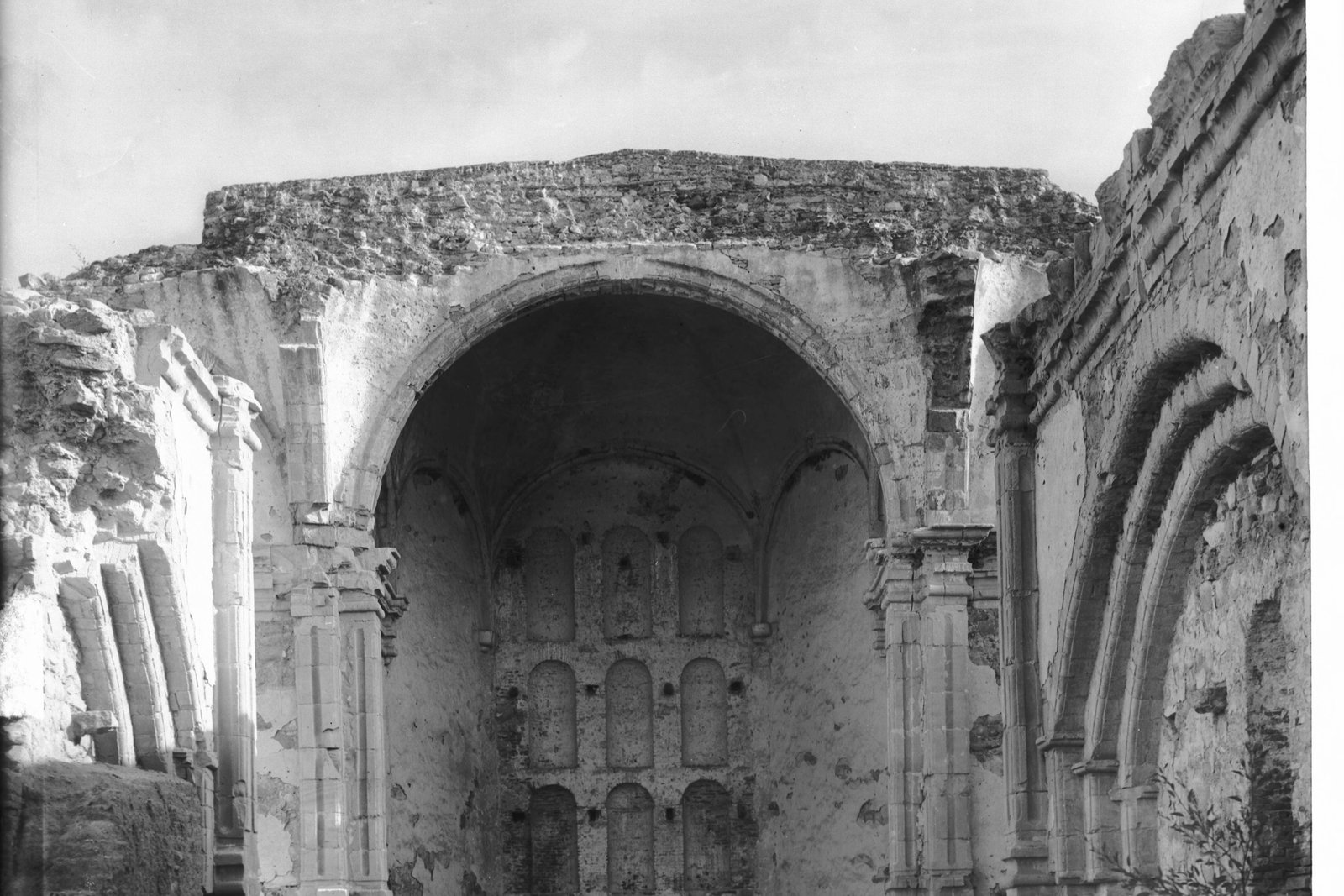
Photograph by C.C. Pierce, 1901, "Mission San Juan Capistrano, showing ruined altar of ancient stone church, California" (CHS-2091), California Historical Society — public domain.
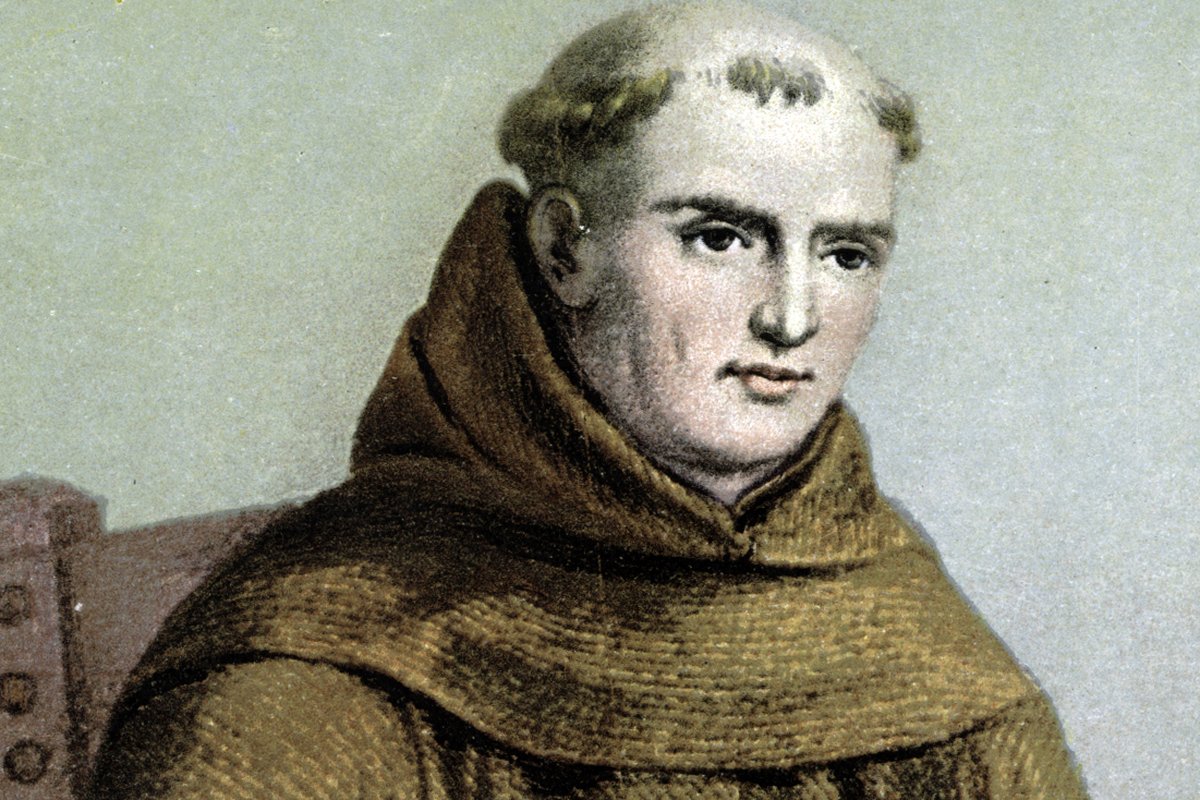
It took a full year for anyone to come back. When Father Junípero Serra, the Franciscan father-president of the California missions, returned to the site on October 30, 1776, with two companion priests and an armed escort, they dug up the buried bells and found the original wooden cross still standing. Serra celebrated a High Mass of thanksgiving on November 1, 1776 — the date still honored as the mission's official founding, making it the seventh mission in Alta California. (For the fuller, and far more contested, story of the man himself — a friar canonized in 2015 whose legacy remains genuinely disputed — see our article on Saint Junípero Serra.)
A shortage of water soon forced the settlement to relocate a few miles west, to a spot overlooking two creeks near a Native Acjachemen village the Spanish called Sajavit. It was there, over the following decades, that the mission grew into the sprawling quadrangle of chapels, workshops, and living quarters whose ruins still stand in the city of San Juan Capistrano today.
The Great Stone Church
By the 1790s, the mission's original adobe chapel — a 1782 building that would later become known as Serra Chapel — was too small for a growing community, and the friars decided to build something far more ambitious: a stone church unlike anything else attempted in the mission system. Every other mission church in California was built of adobe brick under a flat timber roof. San Juan Capistrano's new church, begun in 1797 under the direction of a master stonemason named Isídro Aguilár, was laid out in the shape of a cross, 180 feet long, with 50-foot stone walls, a 120-foot bell tower, and a design feature no other mission attempted: six — eventually seven — vaulted stone domes.
The scale of the undertaking is hard to overstate. The entire Native workforce of the mission quarried sandstone from creek beds up to six miles away, hauling it by oxcart, by hand, and by simple dragging to the building site, while limestone was crushed on the grounds into a mortar strong enough to bind it all together. Aguilár died six years into the project, before it was finished, and the friars and workers who carried the work forward lacked his training — a shortfall later blamed for the irregular walls that may have made the finished building more vulnerable than it should have been. The church was finally completed and blessed in September 1806, after nine years of labor, and for a brief six years it stood as, by most contemporary accounts, the most magnificent building anywhere in Spanish California.
It did not survive the decade. On the morning of December 8, 1812 — the Feast of the Immaculate Conception — a powerful earthquake struck Southern California during the first Mass of the day. The tremor jammed the church's doors shut, brought the bell tower crashing down, and collapsed most of the nave's stone roof onto the congregation below. Forty worshippers and two boys who had been ringing the bells in the tower were killed. It remains one of the deadliest single disasters in the history of the California missions. The surviving sanctuary and sacristy were the only parts of the building left intact, and a 1815 attempt to rebuild the rest failed for lack of skilled labor; the ruin has stood essentially unrebuilt ever since, long nicknamed by admirers the "American Acropolis" for its broken, classically proportioned arches. The World Monuments Fund listed the ruin among its 100 Most Endangered Sites in 2002, and a $7.5 million seismic retrofit was completed in 2004 to keep what remains standing safely for visitors.
Serra's Chapel, Still in Use
While the Great Stone Church's ruin dominates photographs of the mission, the building with the stronger claim to historical weight is a much plainer one: Serra Chapel, completed in 1782 as the mission's second permanent church. At roughly 115 feet long, it predates the stone church by fifteen years, and it is generally identified as the oldest building in California still in continuous use — not preserved as a museum piece, but still consecrated and still holding Mass. It also holds a distinction unique among all the missions Serra founded or visited: it is the only church anywhere in California where historical records confirm Serra himself celebrated Mass, since the chapel at his own Mission San Carlos Borromeo was rebuilt after his death and San Francisco's Mission Dolores church was still under construction during his lifetime.
The chapel's interior centers on a strikingly ornate gilded altarpiece, a retablo hand-carved from 396 pieces of cherry wood and covered in gold leaf, made in Barcelona roughly two centuries ago and installed at the mission in the 1920s after sitting unused in a Los Angeles cathedral warehouse for over a century. Three missionary priests who died in service at San Juan Capistrano are entombed beneath its sanctuary floor.
Building the Mission, and Its Human Cost
Like the other 20 missions along the California coast, San Juan Capistrano was built almost entirely by the forced and semi-forced labor of the Acjachemen people, whose ancestral villages had stood in the area for centuries before the Spanish arrived. Mission records describe a once-independent Native population of coastal villages reorganized under Franciscan supervision into a highly structured labor system — "neophytes," as converts were called, who farmed the fields, quarried the stone, wove the cloth, and built the very walls that stand today, under a regime that included corporal punishment for those who tried to leave. Epidemic disease introduced by contact with Europeans devastated the community further; a 19th-century smallpox outbreak nearly wiped out the remaining Juaneño population living near the mission. It's a part of the mission's history that shouldn't be set aside simply because the buildings themselves are beautiful — the same records that preserve the mission's baptismal and construction registers also preserve, unmistakably, the toll that building them took.
The Return of the Swallows
For all its earthquake drama, San Juan Capistrano is probably still best known to most Americans for something far gentler: the swallows. Cliff swallows have nested in the mission's crumbling walls for generations, drawn by the shelter of the ruins and the insect life along the nearby creeks. According to the mission's own folklore, the birds first took refuge there after a local innkeeper began tearing down their mud nests elsewhere in town — a tidy legend, even if the real pull was almost certainly the mission's abundant eaves and archways.
What turned a seasonal bird migration into a nationwide tradition was a mix of local promotion and popular music. In 1915, a magazine article noted the birds' habit of nesting at the mission each spring; the mission's restoration-minded pastor in the 1910s and 1920s, Father St. John O'Sullivan, leaned into the story to draw visitors and donations. A live radio broadcast from the mission grounds in March 1939 announcing the swallows' arrival caught the attention of songwriter Leon René, who wrote "When the Swallows Come Back to Capistrano" that same year — a hit recorded over the following decades by artists from Glenn Miller to Pat Boone. Tradition holds that the main flock arrives around March 19, the feast of Saint Joseph, and departs again each October around the feast of Saint John. In recent decades the swallows themselves have largely moved on to quieter nesting spots as the area around the mission has developed, but the Fiesta de las Golondrinas, San Juan Capistrano's annual spring festival, still celebrates the legend every year.
A Living Parish Today
Secularized by the Mexican government in 1833 and left to decay for decades afterward, the mission was formally returned to the Catholic Church by a proclamation signed by President Abraham Lincoln in 1865 — the original document is still on display in the mission's old soldiers' barracks, now a museum room. Today the historic compound, including Serra Chapel and the Great Stone Church ruins, is maintained by the Roman Catholic Diocese of Orange as a museum and National Historic Landmark, drawing roughly half a million visitors a year. The parish's regular Sunday worship now takes place next door at Mission Basilica San Juan Capistrano, a separate church completed in 1984 and raised to the rank of minor basilica in 2000 — while Serra Chapel, two and a half centuries old, still quietly holds its own Masses inside the walls where Serra once stood.
Trivia
When was Mission San Juan Capistrano founded?
What happened to the Great Stone Church at Mission San Juan Capistrano?
Why are swallows associated with Mission San Juan Capistrano?
What is the oldest building at Mission San Juan Capistrano?
Is Mission San Juan Capistrano still an active church today?
Related Reading