The Crucifixion in Christian Art

An image the earliest Christians avoided
It's easy to assume the cross has always been Christianity's central visual symbol, but for roughly the faith's first four centuries, direct images of Christ's crucifixion were strikingly rare. Crucifixion in the Roman world was a punishment reserved for slaves, rebels, and the lowest social classes, carrying an intense social stigma — displaying it prominently risked reinforcing exactly the mockery pagan critics already aimed at Christians for worshipping a man executed as a common criminal. Early Christian art favored indirect symbols instead: the fish, the Chi-Rho monogram, the anchor, and the Lamb of God, all of which pointed toward Christ's identity and sacrifice without showing the execution scene itself.
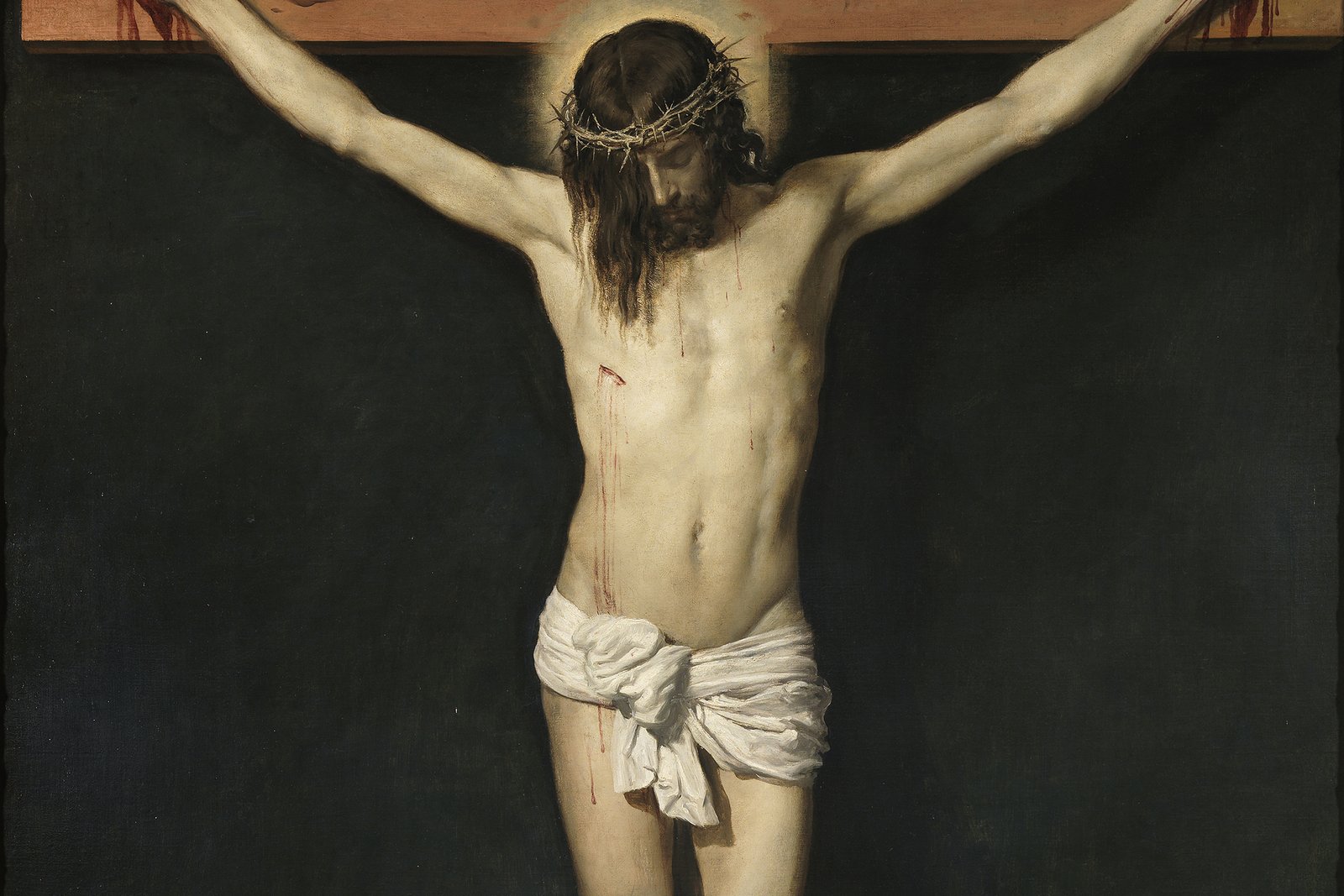
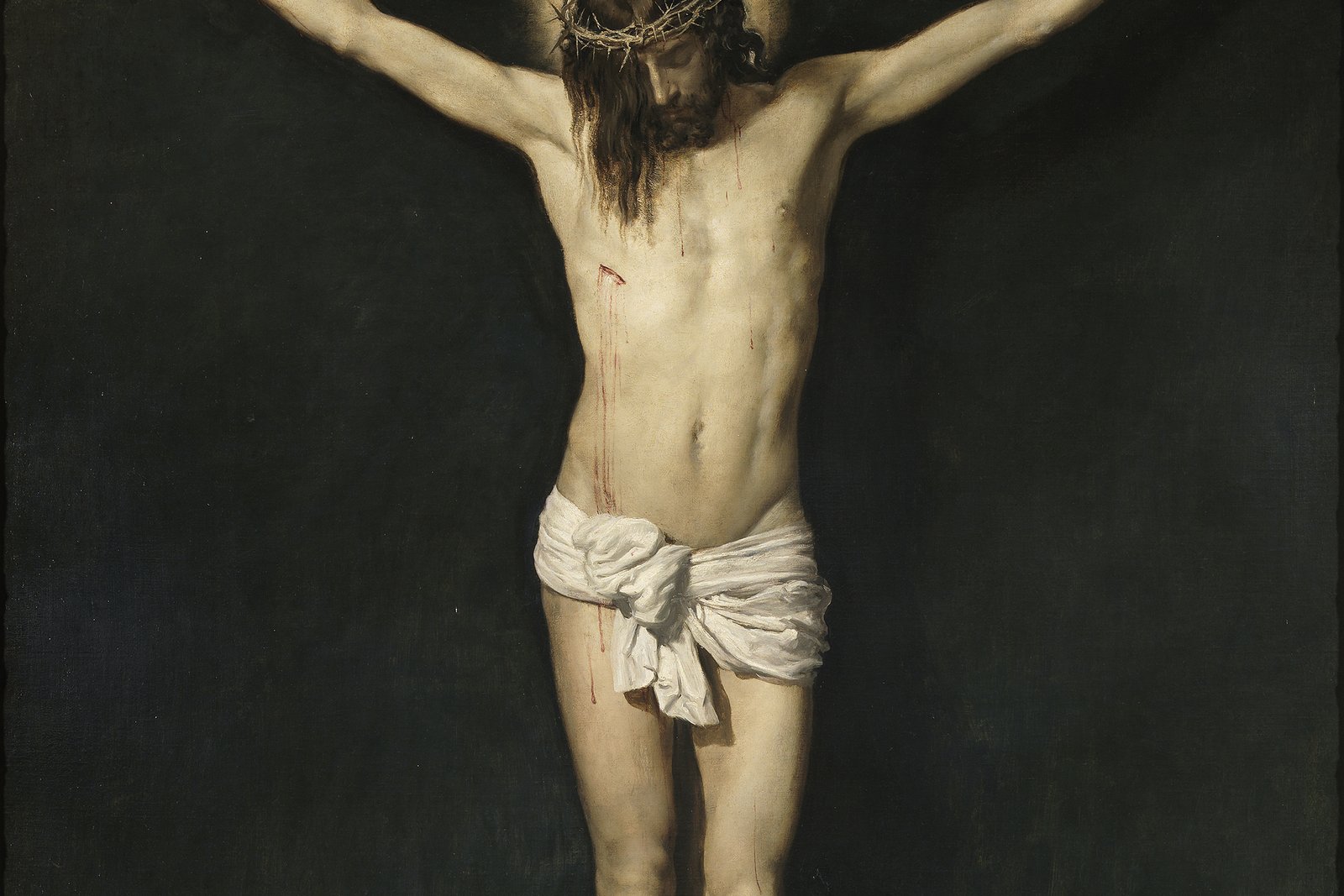
Diego Velázquez, "Christ Crucified," c. 1632, Museo del Prado, Madrid — public domain.
Ironically, one of the very earliest surviving images connected to Christ's crucifixion wasn't made by a believer at all. The Alexamenos graffito, a crude drawing scratched into Roman plaster and now dated to roughly the late second or early third century, mocks a Christian named Alexamenos by showing him worshipping a crucified figure with a donkey's head — evidence that outsiders associated Christians with a crucified god well before Christians themselves were producing such images for devotion. The oldest known devotional depiction, by contrast, is a small carved ivory panel from around 420-430 AD, held today by the British Museum, showing a youthful, beardless Christ upright on the cross, eyes open, without visible suffering.
The calm, triumphant Christ of Byzantium
Once Crucifixion imagery became more common following Christianity's legal protection under Constantine, a distinct visual convention developed and dominated for centuries in Byzantine art. Christ was typically shown alive and upright, dressed in a long robe called a colobium rather than left largely bare, his expression calm and his eyes frequently open rather than closed in death. This wasn't a failure of technical skill or observation — it reflected a deliberate theological emphasis on Christ's divine nature and his triumph over death, prioritizing the resurrection implied within the crucifixion scene over any dwelling on physical agony. Icon painters worked within tightly inherited conventions passed down through workshop tradition, and departures from this calm, victorious Christ were slow and gradual rather than sudden.
Toward visible suffering: Gothic and Romanesque shifts
Starting in the Romanesque period and accelerating through the Gothic era, roughly the eleventh through fourteenth centuries in Western Europe, artists began showing a more visibly suffering Christ. His body sags into a pronounced S-curve rather than standing rigidly upright, his head droops instead of facing forward, and his eyes are frequently closed, signaling death rather than serene endurance. Art historians connect this shift to broader changes in medieval devotional practice, particularly a growing emphasis — encouraged by figures like Saint Francis of Assisi and later mystical writers — on meditating personally and emotionally on Christ's physical suffering as a path to spiritual identification with him, rather than approaching the crucifixion primarily as a triumphant theological statement. Crucifixes carved for private devotion during this period often go further still, showing wounds, blood, and visibly strained musculature in graphic detail.
Renaissance restraint and Baroque intensity
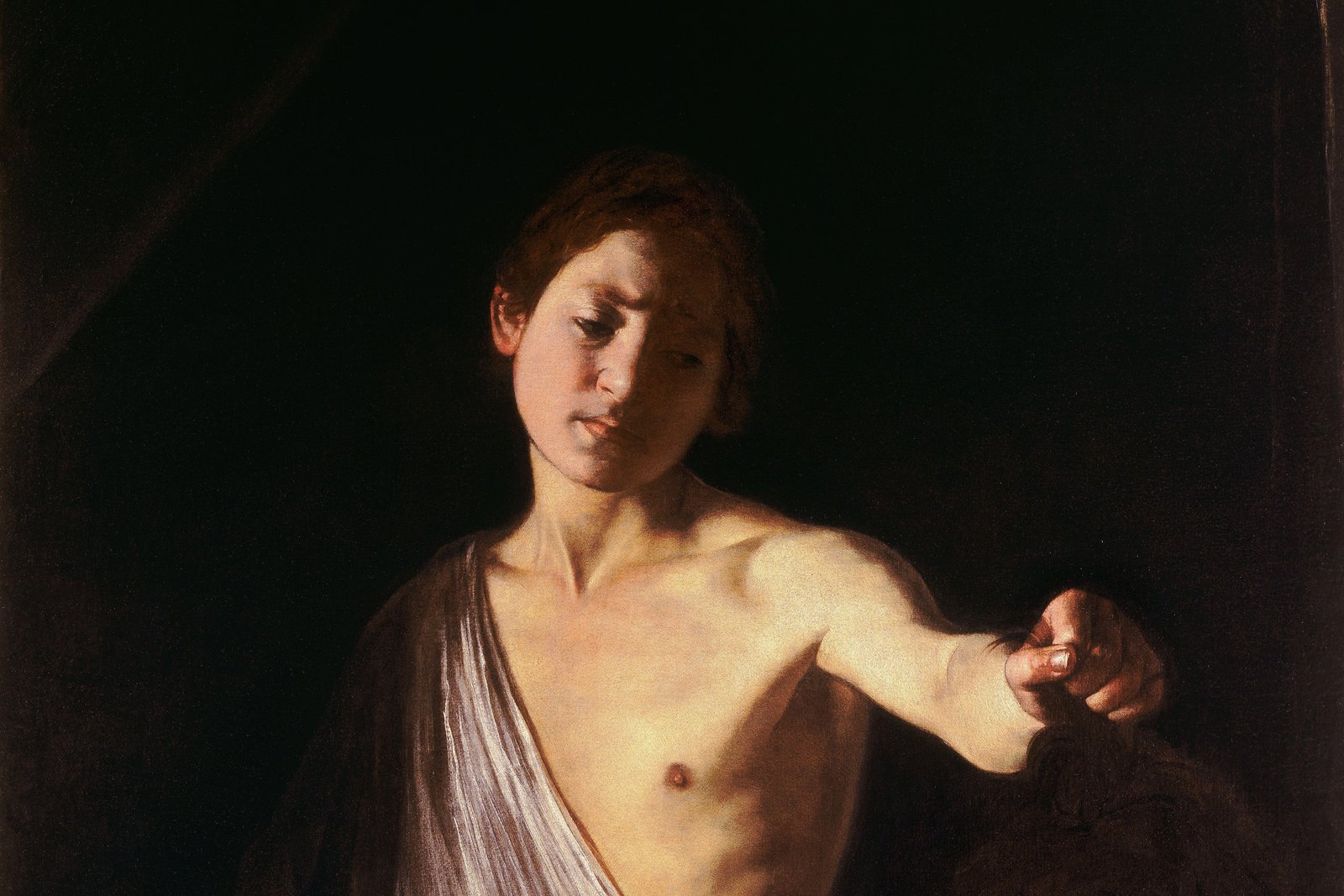
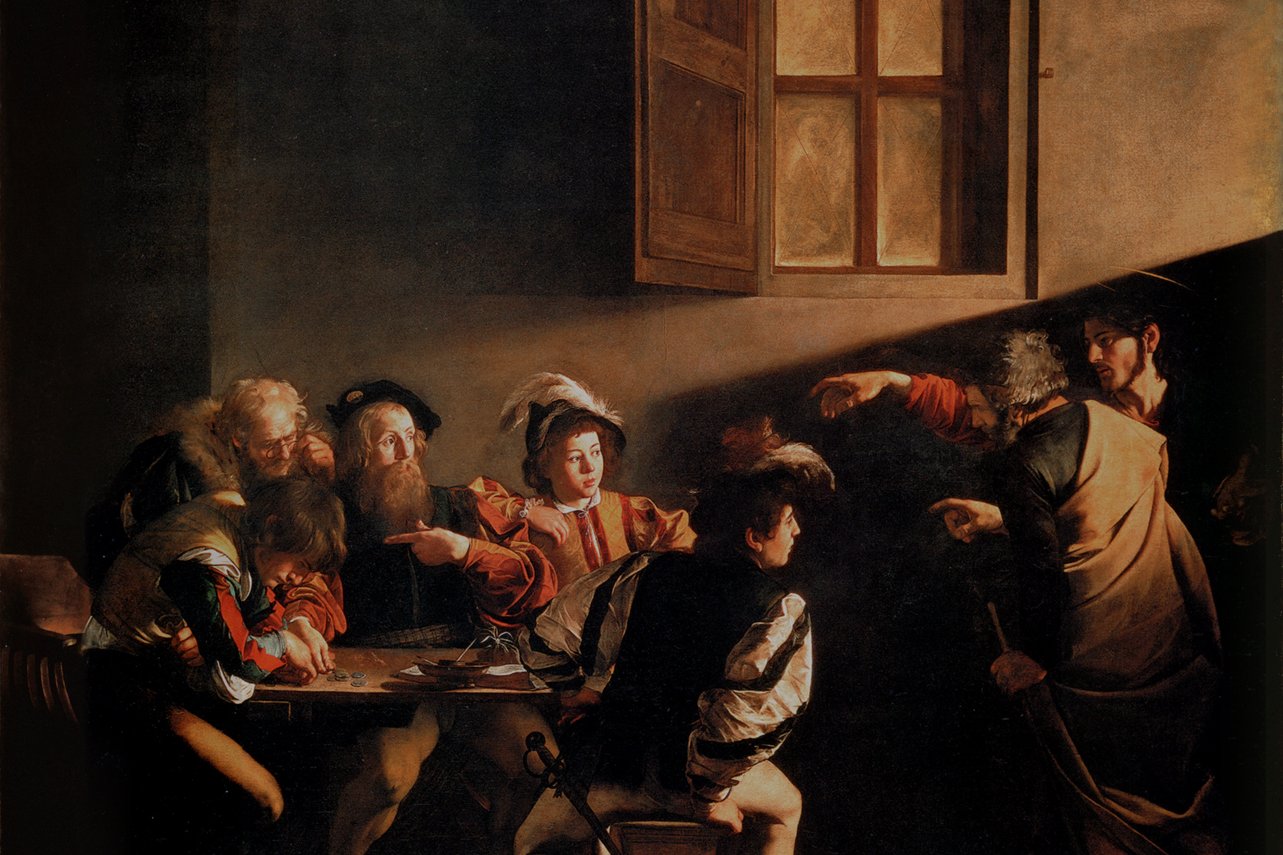
Renaissance artists generally balanced these two impulses — human suffering and theological dignity — favoring anatomically convincing but composed figures, often surrounded by carefully arranged groups of mourners, soldiers, and onlookers built with the era's new mastery of perspective and proportion. The Baroque period that followed, however, pushed emotional and physical intensity further again, in keeping with its broader taste for dramatic light and heightened realism, the same sensibility on display in Caravaggio's Calling of Saint Matthew.
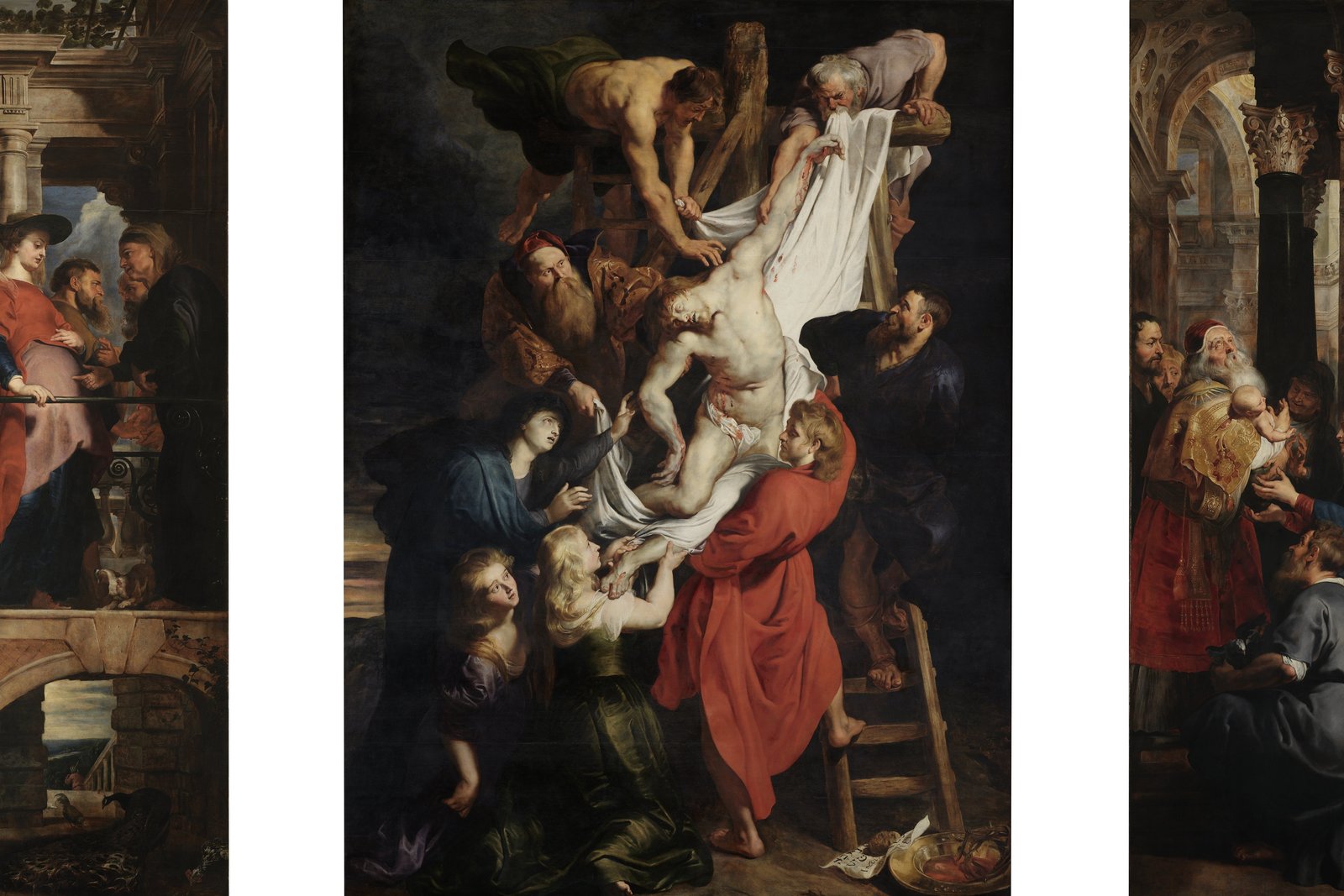
Diego Velázquez's Christ Crucified, painted around 1632 and held today at the Museo del Prado in Madrid, exemplifies this Baroque approach through restraint rather than excess. Christ hangs alone against a completely dark, undefined background, with none of the surrounding crowd of mourners and soldiers typical of earlier compositions — just his illuminated body, a crown of thorns, and streaks of blood, isolated in darkness. The effect concentrates the viewer's attention entirely on the physical fact of the body itself, without narrative distraction. Peter Paul Rubens, working in the same broader period, took a more physically dynamic approach in his own crucifixion scenes, often depicting the moment soldiers pierced Christ's side with dramatic, muscular energy and swirling composition rather than Velázquez's stillness — two very different Baroque solutions to the same subject, painted within a few decades of each other.
A single subject, endlessly reinterpreted
Few subjects in the history of Christian art have been reinterpreted as many times, in as many different emotional registers, as the crucifixion. The same core scene — one man executed on a cross — has been rendered as calm triumph, raw physical agony, quiet isolation, and dramatic spectacle, depending on the theological priorities and artistic conventions of the era producing it. That range is itself worth noticing: rather than a single fixed image handed down unchanged, the crucifixion in art has always been a subject artists actively reworked to speak to their own moment, even while depicting an event that, for Christians, never changes.
Trivia
Why didn't early Christians paint the Crucifixion?
What is the oldest known image of the Crucifixion?
How did Byzantine artists typically show the Crucifixion?
What changed in Gothic and Renaissance Crucifixion paintings?
What is distinctive about Velázquez's Christ Crucified?
Related Reading