Ash Wednesday Fasting and Abstinence Rules in the US

Two rules, not one
The confusion starts with language: "fasting and abstinence" gets said as a single phrase so often that most people assume it describes one rule. It doesn't. Fasting and abstinence are two distinct obligations, with two different age ranges, and Ash Wednesday happens to be one of the only two days each year — the other is Good Friday — when both apply to the same person on the same day.
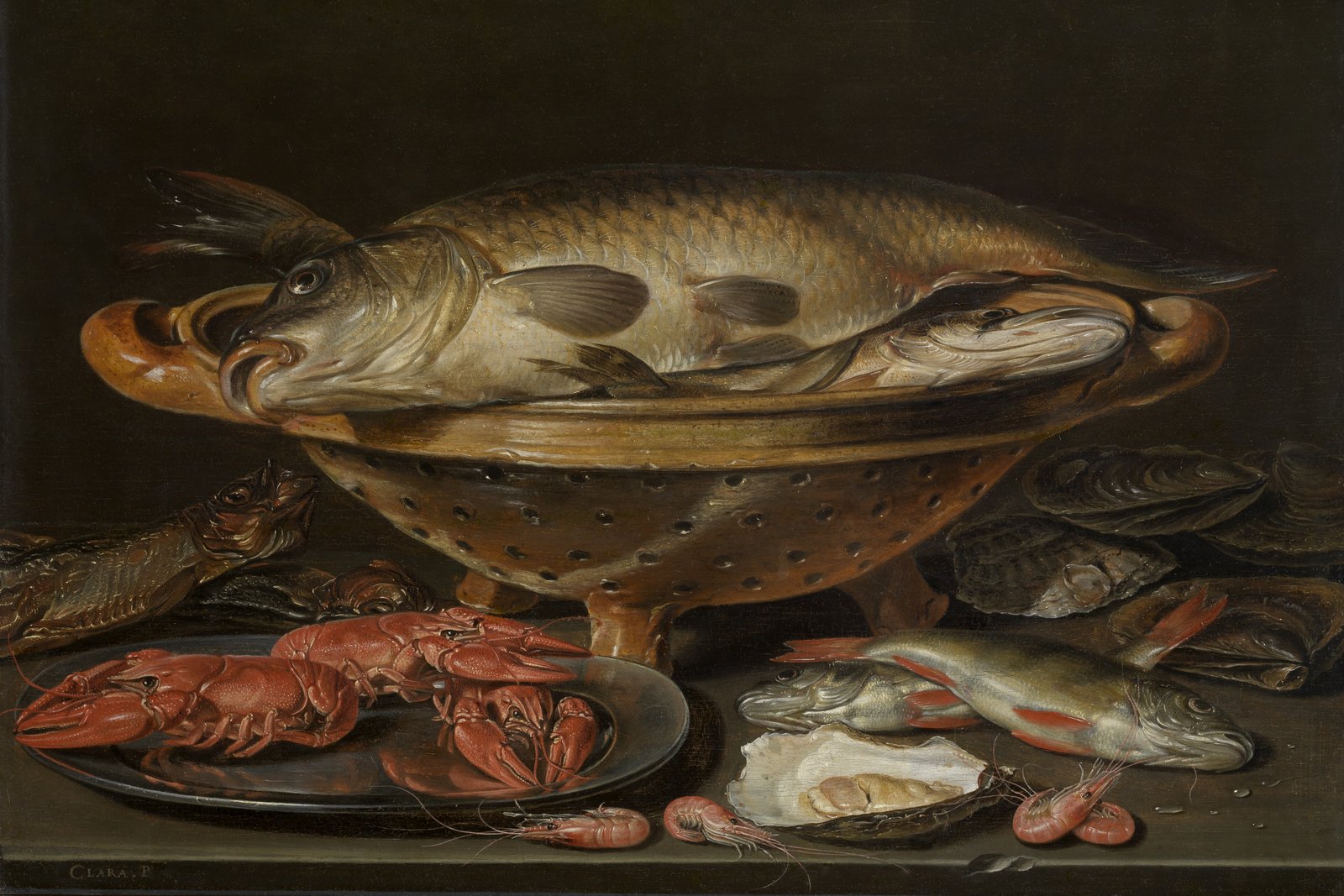
Clara Peeters, Still Life of Fish, c. 1612-1621, public domain via Wikimedia Commons.
Fasting is about how much you eat. Abstinence is about what you eat. Getting Ash Wednesday right means keeping those two questions separate, because a Catholic who's old enough for one obligation isn't necessarily old enough for the other.
Who fasts, and what fasting actually means
The fasting law binds Catholics between 18 and 59 years old. Outside that window — anyone younger than 18, and anyone 60 or older — the fasting obligation simply doesn't apply, full stop.
For those it does bind, the USCCB's standard is specific: one full meal is permitted during the day, along with two smaller meals that, combined, still don't add up to a second full meal. No food is permitted between those three meals. It's a day of noticeably less food, not a day of no food — a distinction that surprises people who hear "fasting" and assume it means going without eating entirely until sundown, the way fasting works in some other religious traditions.
Who abstains, and what abstinence actually means
The abstinence law binds a wider group over a longer span of life: Catholics age 14 and older, with no upper limit written into the obligation at all. A 70-year-old Catholic who's long past the fasting law is still bound by abstinence — that's the detail that trips people up most, since it's easy to assume both rules quietly end together once someone reaches a certain age. They don't.
Abstinence means no meat for the day. Specifically, the meat covered by this rule is the flesh of warm-blooded land animals and birds — beef, pork, poultry, and the like. Fish and other cold-blooded creatures, including shellfish, are explicitly not covered, which is the whole reason parish fish fries exist as a Lenten tradition: a fish dinner satisfies the abstinence rule without requiring anyone to go hungry for it.
In the United States, abstinence isn't limited to Ash Wednesday alone — it also applies to every Friday during Lent, right through Good Friday. Ash Wednesday is simply the day it starts. For the full rundown of how the Friday abstinence pattern plays out across the whole season, see our complete guide to Lenten fasting and abstinence rules.
Putting the two together on Ash Wednesday
Because the age ranges don't line up, Ash Wednesday actually sorts Catholics into a few different categories:
- Ages 14-17: bound by abstinence only — no meat, but no fasting requirement yet.
- Ages 18-59: bound by both — no meat, and the reduced-meal fasting pattern.
- Age 60 and older: bound by abstinence only again — the fasting obligation has ended, but abstinence from meat never does.
- Under 14: bound by neither, though parents are generally encouraged to involve younger children in some simpler form of the day's penitential spirit even without a strict obligation.
That layered structure is exactly why a single household can have grandparents, parents, and a teenager all observing Ash Wednesday slightly differently and all be doing it correctly.
Who's excused, and why the exemptions exist
Illness is the most straightforward exemption — anyone whose health would be put at genuine risk by fasting, including those managing chronic conditions, isn't expected to fast regardless of age. Pregnant and nursing women are excused for the same reason: their nutritional needs take priority over the discipline. People doing hard physical labor, where skipping food could affect their ability to work safely, are traditionally recognized as excused as well. Beyond these general categories, a parish priest has the pastoral discretion to grant an individual dispensation for circumstances the general rule doesn't anticipate.
None of these exemptions are loopholes to be managed around — they reflect a consistent principle running through the whole discipline: fasting and abstinence are meant to be a manageable, health-conscious practice, not a rigid rule applied without regard for a person's actual circumstances.
Why the Church asks for this at all
It would be easy to treat all of this as a checklist — meals counted, ages checked, meat avoided — without asking what it's actually for. The Catechism places the specific fourth precept of the Church, "You shall observe the days of fasting and abstinence established by the Church," within a broader purpose: it exists to "ensure the times of ascesis and penance which prepare us for the liturgical feasts and help us acquire mastery over our instincts and freedom of heart" (CCC 2043). Fasting isn't an end in itself; it's training, a deliberate loosening of the grip ordinary appetite has on a person, aimed at the freedom the Church believes genuine conversion requires.
That same idea runs through the Catechism's description of penitential seasons generally: "The seasons and days of penance in the course of the liturgical year (Lent, and each Friday in memory of the death of the Lord) are intense moments of the Church's penitential practice," with "voluntary self-denial such as fasting and almsgiving" named among the fitting spiritual exercises for those times (CCC 1438). Ash Wednesday's specific meal-and-meat rules are a small, concrete expression of something larger: a season built, quite literally, around the idea that the body has a role to play in genuine repentance, not just the mind and the will.
A small rule, kept for a bigger reason
Measured in raw numbers, Ash Wednesday's obligations are modest — one smaller day of eating, one day without meat, carved out by age ranges that most households can work out at a glance. What the day does with that small rule is larger: it opens all of Lent with something felt in the body as well as prayed in the heart, a reminder on the very first day of the season that the forty days ahead are meant to be lived differently, not just thought about differently.
Trivia
Who has to fast on Ash Wednesday?
What does the fasting rule on Ash Wednesday actually allow you to eat?
Who has to abstain from meat on Ash Wednesday?
Does fish count as meat under the abstinence rule?
Is anyone excused from fasting or abstinence on Ash Wednesday?
Related Reading