The Chi-Rho Symbol: History and Meaning

Two letters, one word
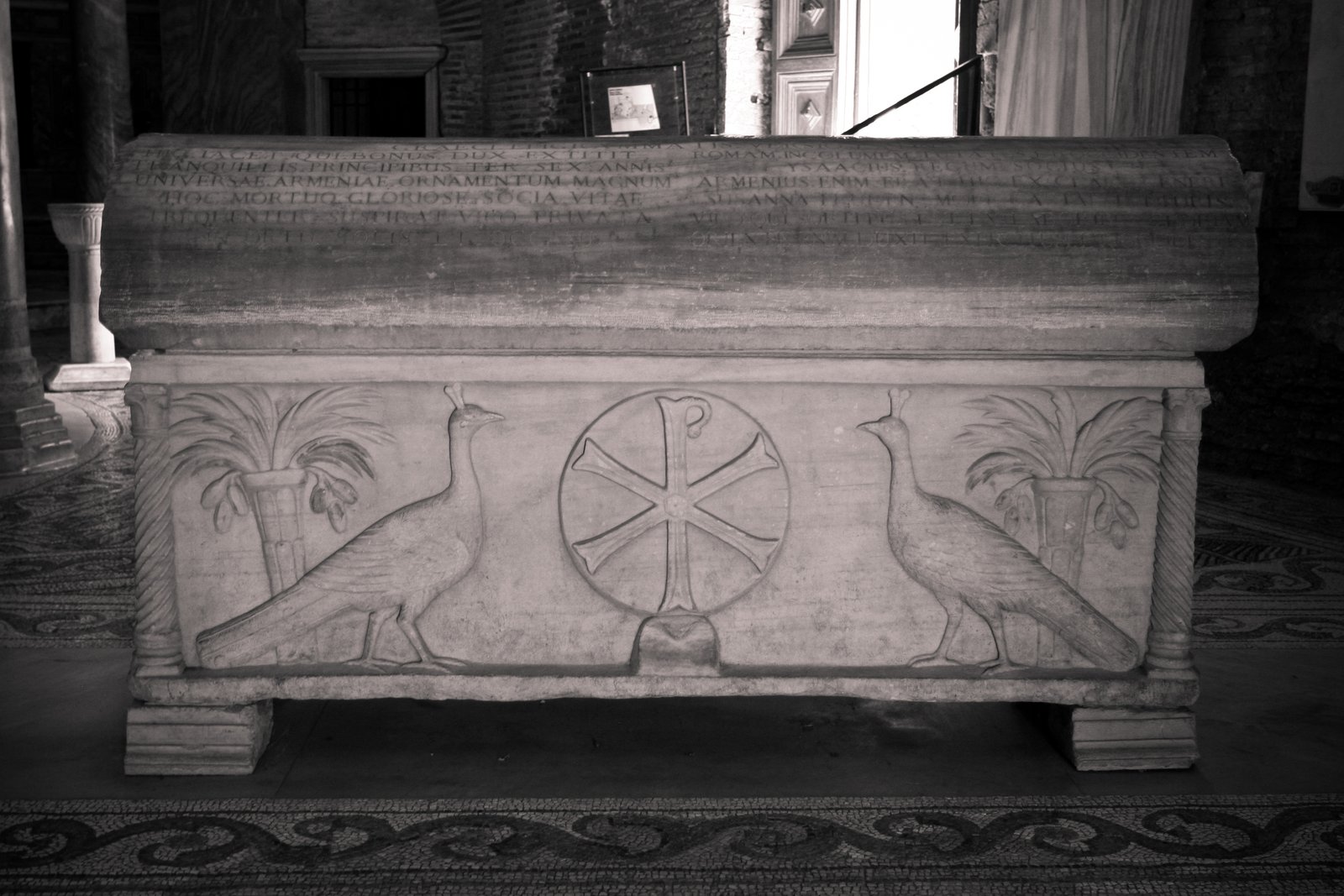
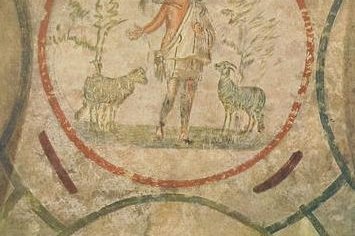
A Christogram is a symbol built from letters rather than a picture, and the Chi-Rho is the oldest and most influential example in Christian art. It layers two Greek capital letters — chi, shaped like an X, and rho, shaped like a P — one on top of the other, forming a compact monogram of the word Christos, Greek for "Christ" or "anointed one." Unlike the Agnus Dei lamb, which pictures Christ through an animal standing in for him, the Chi-Rho names him directly, abbreviated into a shape simple enough to stamp on a coin or carve into stone in seconds.
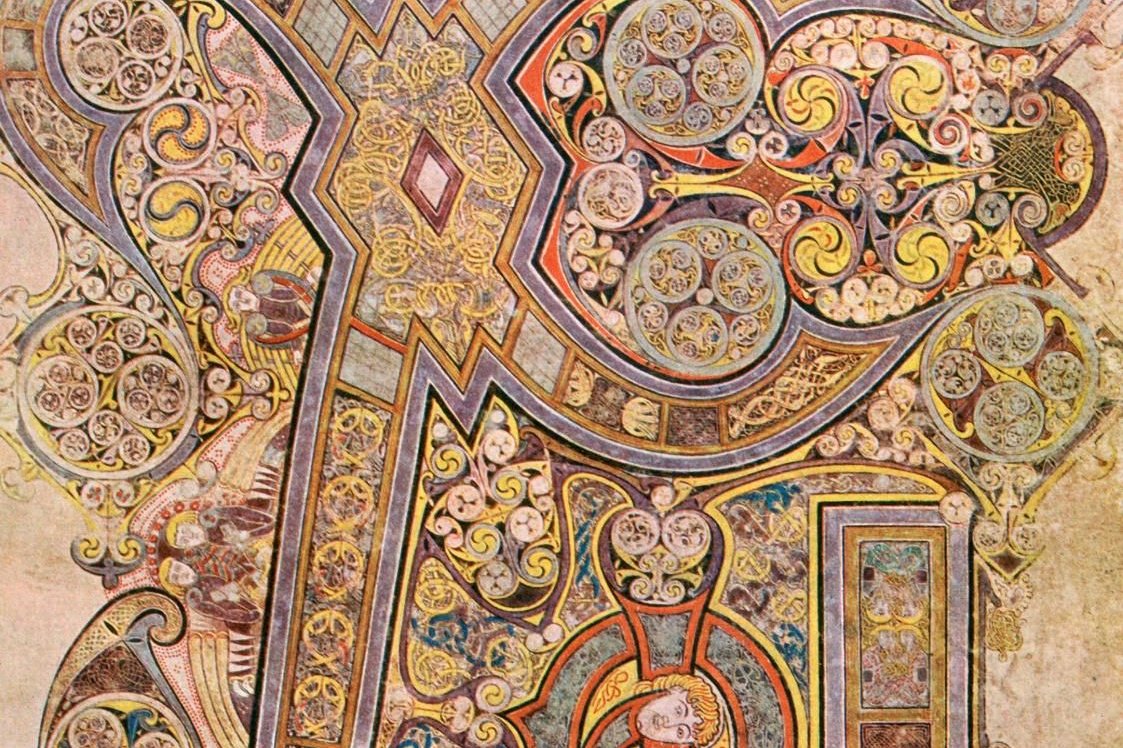
Book of Kells, Chi-Rho page (folio 34r), c. 800 AD, Trinity College Dublin — public domain.
The symbol predates Christianity's legal toleration in the Roman Empire, appearing in scattered early Christian catacomb art and inscriptions well before the fourth century. But it was a single, well-documented historical moment that turned it from an obscure scribal abbreviation into one of the most recognized symbols in the ancient world.
Constantine's vision and the Labarum
In 312 AD, the Roman general Constantine marched toward Rome to face his rival Maxentius at the Battle of the Milvian Bridge, a contest that would decide control of the western half of the empire. According to the Christian historian Eusebius of Caesarea, writing his account of Constantine's life decades later, the emperor reported seeing a sign of light in the sky above the sun, accompanied by words promising that by this sign he would conquer. A separate, roughly contemporary account by the Christian writer Lactantius describes Constantine being instructed in a dream to mark his soldiers' shields with a heavenly sign — specifically identified as the Chi-Rho.
It's worth being precise about what kind of source this is: both Eusebius and Lactantius were Christian writers with clear reasons to present Constantine favorably, and neither account is a contemporary eyewitness record of the event itself. Historians treat the story as part of an early and influential Christian tradition about Constantine's conversion, not as a documented fact in the way a modern historical record would be verified. What is better attested is the outcome — Constantine won the battle, went on to become sole emperor, and shortly afterward issued the Edict of Milan in 313 AD, ending centuries of Roman persecution of Christians.
Following the victory, Constantine adopted a new military standard called the Labarum: a vertical staff crowned with a wreathed Chi-Rho monogram, carried at the head of Roman legions. Its adoption marked an extraordinary reversal — a symbol tied to a faith that had recently been criminalized was now stamped onto imperial coinage, military banners, and official seals, spreading the Chi-Rho across the entire Mediterranean world within a single generation.
From battle standard to sacred manuscript
Centuries after Constantine, the Chi-Rho found an entirely different setting: the illuminated manuscripts of early medieval Ireland and Britain, where monastic scribes elevated it into one of the most elaborate pieces of decorated writing to survive from the period. The single most famous example appears in the Book of Kells, a lavishly illustrated Gospel manuscript produced by Columban monks around 800 AD, now housed at Trinity College Dublin.
At the verse in Matthew's Gospel that introduces the birth of Christ, the scribes didn't simply write the Chi-Rho as an abbreviation and move on — they devoted an entire full page to it, expanding the two overlapping letters until they filled the whole sheet of vellum, then packed every available space inside and around the letterforms with dense spiral ornament, interlacing knotwork, and small hidden figures of animals and angels, some so small they're easy to miss without close inspection. Nothing else in the manuscript receives this scale of visual investment, a deliberate signal that the scribes considered the moment of Christ's incarnation the theological center of the entire Gospel text, worth more artistic attention than any other single verse.
A different Christogram tradition
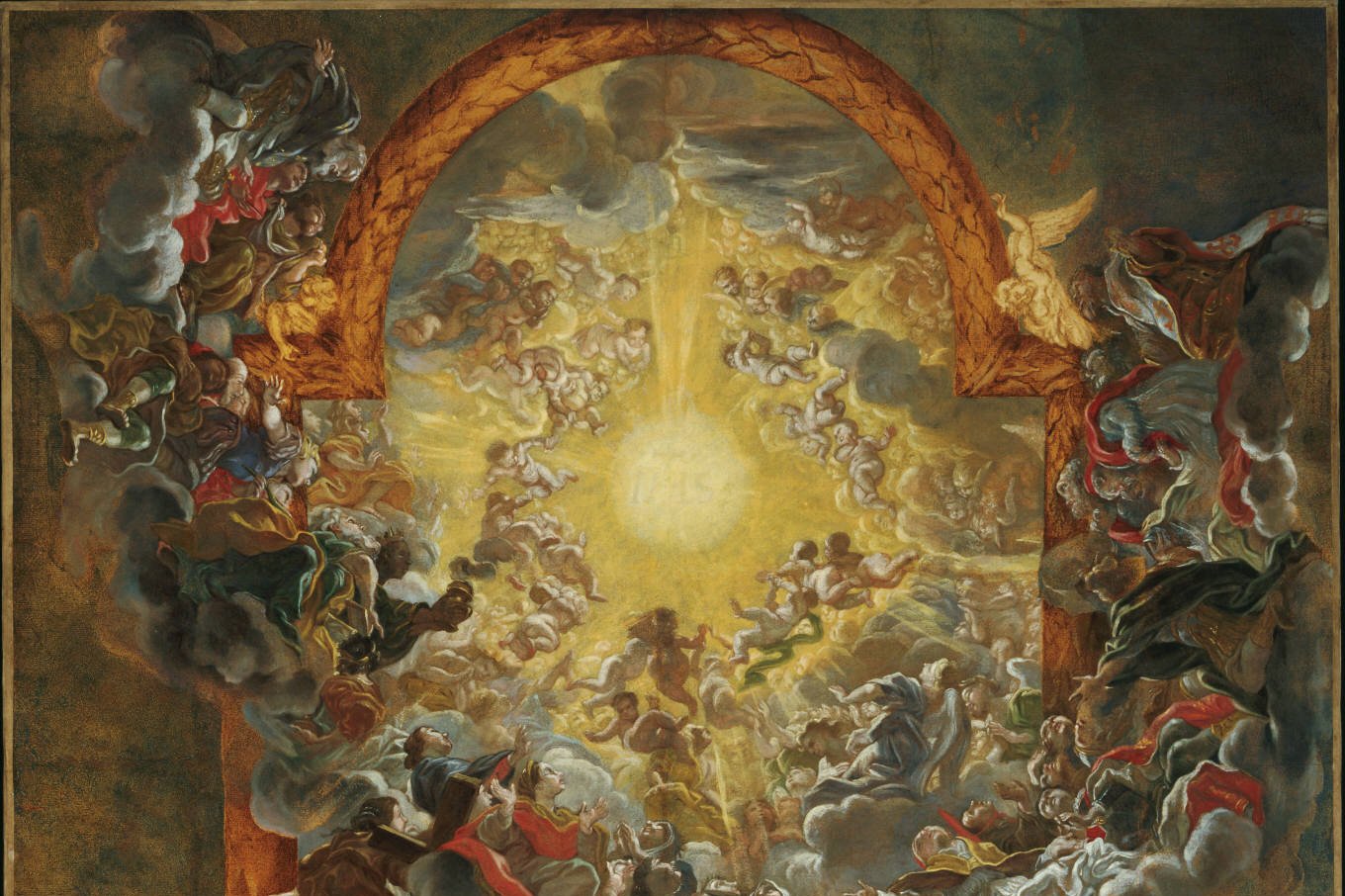
The Chi-Rho isn't the only monogram Christians have used to abbreviate Christ's name. A separate and later tradition uses the letters IHS, drawn from the first three letters of "Jesus" in Greek, which became especially associated with the Jesuit order founded in the sixteenth century and still appears widely on altars and vestments today. The two symbols are sometimes confused, but they have entirely separate linguistic origins and developed centuries apart — the Chi-Rho traces to Christ's title in Greek, while IHS traces to his given name.
A symbol that outlasted an empire
The Roman Empire that adopted the Chi-Rho as an imperial emblem no longer exists, but the symbol itself never disappeared from Christian visual culture. It moved from military standards to catacomb inscriptions, from imperial coins to the gold-leafed pages of Insular manuscripts, and it still appears today on vestments, church furnishings, and devotional art — one of the few visual symbols in continuous Christian use across roughly seventeen centuries, tracing back to two Greek letters an emperor is said to have seen written in the sky before a battle that changed the course of Christian history.
Trivia
What does Chi-Rho actually mean?
What is the story of Constantine and the Chi-Rho?
What is the Labarum?
Why is the Chi-Rho page in the Book of Kells so much larger and more detailed than other pages?
Is the Chi-Rho the same thing as the letters IHS?
Related Reading