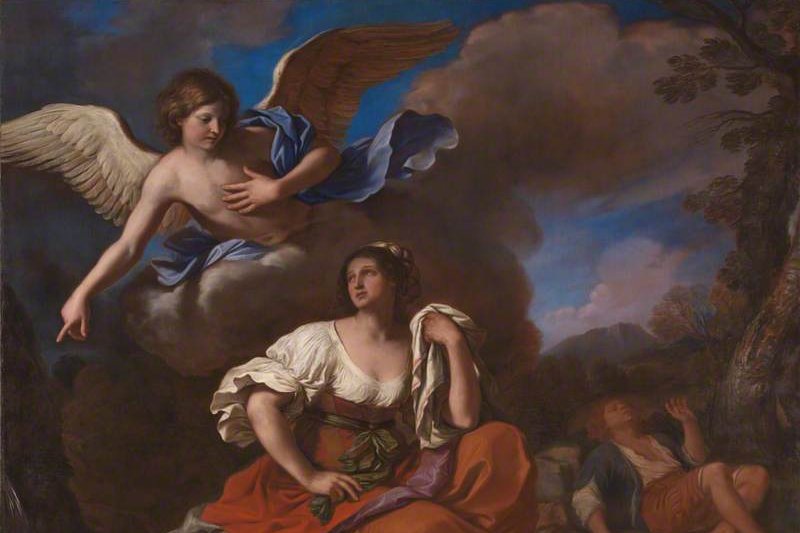
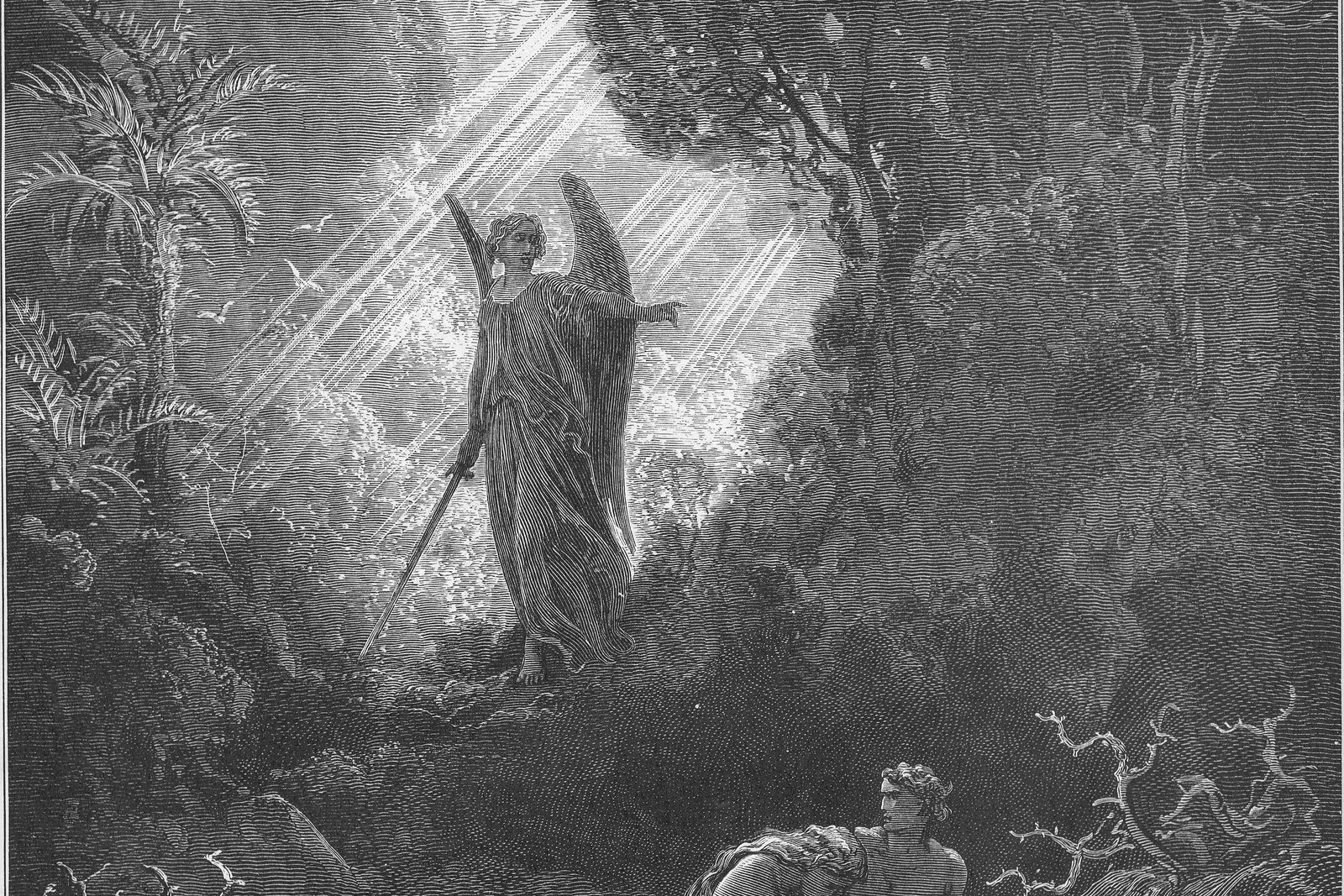
Gabriel Appears to Daniel


A name called out over a river
The Book of Daniel opens its eighth chapter with a vision so strange that Daniel himself, "sought the meaning of the vision" he had seen, unable to work it out on his own (Daniel 8:15, NABRE). What happens next is unusual even by the standards of Old Testament visions: a figure who "looked like a man" stands before him, and a human voice calling out over the river Ulai gives an instruction with a name attached — "Gabriel, explain the vision to this man" (Daniel 8:15-16, NABRE). It's one of only two places in the entire Old Testament where an angel is identified by a personal name at all, the other being Michael, also named in Daniel.
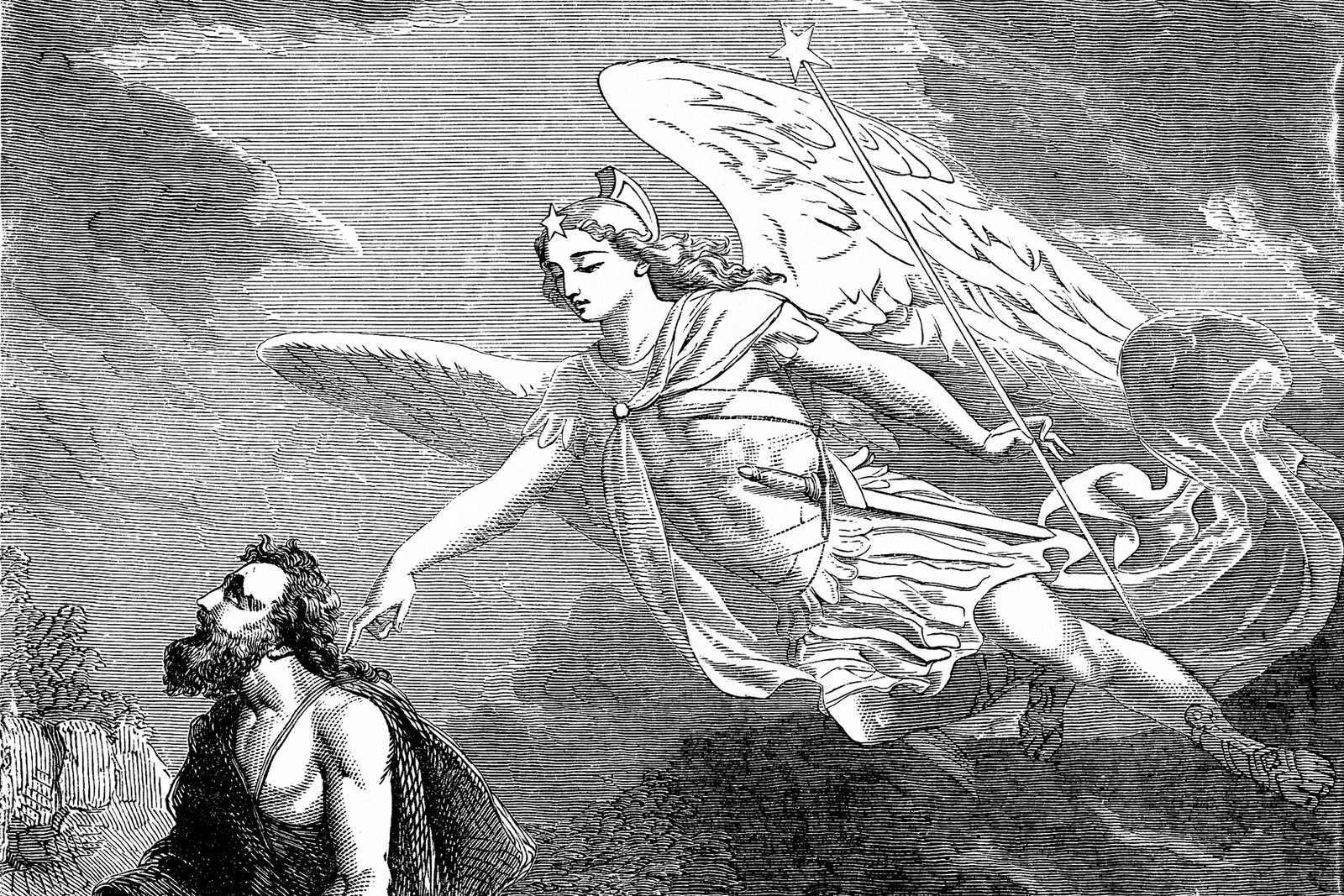
Daniel's Prayer and the Angel Gabriel (1886), public domain via Wikimedia Commons
Terror first, understanding second
Whatever Daniel expects, it isn't comfort. "When he came near where I was standing, I fell prostrate in terror," Daniel writes, and even after Gabriel tells him to "understand, O son of man, that the vision refers to the end time," Daniel's body gives out entirely — he "fell forward unconscious," and it takes Gabriel physically touching him before he can even stand again (Daniel 8:17-18, NABRE). Gabriel's role here isn't to soothe; it's to explain — and Scripture is careful to show that even a messenger sent with a clarifying purpose can be, in his very presence, more than a person can easily bear.
What the ram and goat meant
The vision Gabriel unpacks in Daniel 8 involves a two-horned ram overrun by a swift-moving goat with a single prominent horn, which is later broken and replaced by four smaller horns. Gabriel's interpretation ties the imagery to a sequence of empires and their fall — traditionally understood by later Jewish and Christian readers as describing the Medo-Persian empire's defeat by Alexander the Great, and the later division of Alexander's conquests among four of his generals after his death. Whether or not every detail of that identification is settled among scholars, the passage's own claim is clear: Gabriel is sent to translate frightening, symbolic imagery into an account of real historical upheaval Daniel's people would live through.
A second visit, mid-prayer
Gabriel returns in Daniel 9, and this time the circumstances are different — Daniel isn't watching a strange vision unfold; he's praying, "confessing my sin and the sin of my people Israel" over the ruined state of Jerusalem (Daniel 9:20, NABRE). Gabriel arrives "in flight at the time of the evening offering" and tells Daniel plainly why he has come: "I have now come to give you understanding, "and adds that the answer to Daniel's prayer had been given the moment Daniel began praying, "because you are beloved" (Daniel 9:21-23, NABRE). It's a smaller, quieter scene than the first encounter — no collapse, no terror described this time — but it frames Gabriel's role the same way: not a distant messenger who delivers a verdict, but one sent specifically because of Daniel's own prayer.
Seventy weeks
What Gabriel gives Daniel next is one of the most debated passages in the Old Testament. "Seventy weeks are decreed for your people and for your holy city," Gabriel says, before transgression stops, sin ends, and "a holy of holies" is anointed (Daniel 9:24, NABRE). The passage goes on to lay out a detailed, symbolic timetable — sixty-two weeks, then one final week split in two, an anointed one "cut down," a coming destruction of "the city and the sanctuary" (Daniel 9:25-27, NABRE). Most interpreters read "weeks" here as weeks of years, seventy sets of seven, roughly 490 years in total — but precisely which historical events fulfill which stage of the prophecy has been argued over since the Second Temple period, among both Jewish and Christian interpreters, and this article does not attempt to settle that dispute. What's clear from the text itself is the shape of Gabriel's mission: he comes bearing a defined span of time, not a vague promise, tying Israel's coming restoration to a schedule rather than leaving it open-ended.
The same messenger, centuries later
Christian tradition holds that this is the same angel who reappears in Luke's Gospel, hundreds of years after Daniel. Standing before the priest Zechariah in the Jerusalem Temple, the angel introduces himself in almost identical terms to how Daniel would have recognized him: "I am Gabriel, who stand before God. I was sent to speak to you and to announce to you this good news" (Luke 1:19, NABRE) — the same messenger who once explained a terrifying vision to a Babylonian-exile prophet now announcing, in person, the births of John the Baptist and, in the following chapter, of Jesus himself to Mary. Only two books of the Bible name an angel as Gabriel — Daniel and Luke — and across the centuries between them, his role stays remarkably consistent: not simply delivering messages, but explaining what God is doing at exactly the moment someone most needs to understand it.
Why Daniel matters to how Gabriel is remembered
Long before Saint Gabriel the Archangel became associated chiefly with the Annunciation in Christian art and devotion, it was the Book of Daniel that first gave him a name, a role, and a consistent character: an angel sent specifically to make sense of what would otherwise remain terrifying and opaque. That pattern — Gabriel arriving not to act on Israel's behalf directly, but to explain what God has already set in motion — is what later readers carried forward into how they understood his appearance to Zechariah and to Mary centuries later.
Trivia
Where exactly does Gabriel appear in the Book of Daniel?
What vision did Gabriel explain in Daniel 8?
What is the '70 weeks' prophecy Gabriel gives in Daniel 9?
Did Daniel react calmly to seeing Gabriel?
Is this the same Gabriel who appears in the New Testament?
Related Reading