Absalom's Rebellion

A rebellion built long before it was declared
What sets Absalom's rebellion apart from most palace coups described elsewhere in the Old Testament is how patiently it was assembled. Long before any open declaration against his father David, Absalom spent years quietly cultivating loyalty among ordinary Israelites with legal grievances. "Absalom used to rise early and stand alongside the road leading to the gate," Scripture records, positioning himself directly in the path of anyone traveling to seek the king's judgment (2 Samuel 15:2, NABRE). To each one, he offered the same practiced sympathy: "Your case is good and just, but there is no one to hear you in the king's name" (2 Samuel 15:3, NABRE), before floating the idea that would eventually become his open ambition: "If only I could be appointed judge in the land! Then everyone who has a lawsuit to be decided might come to me and I would render him justice" (2 Samuel 15:4, NABRE).
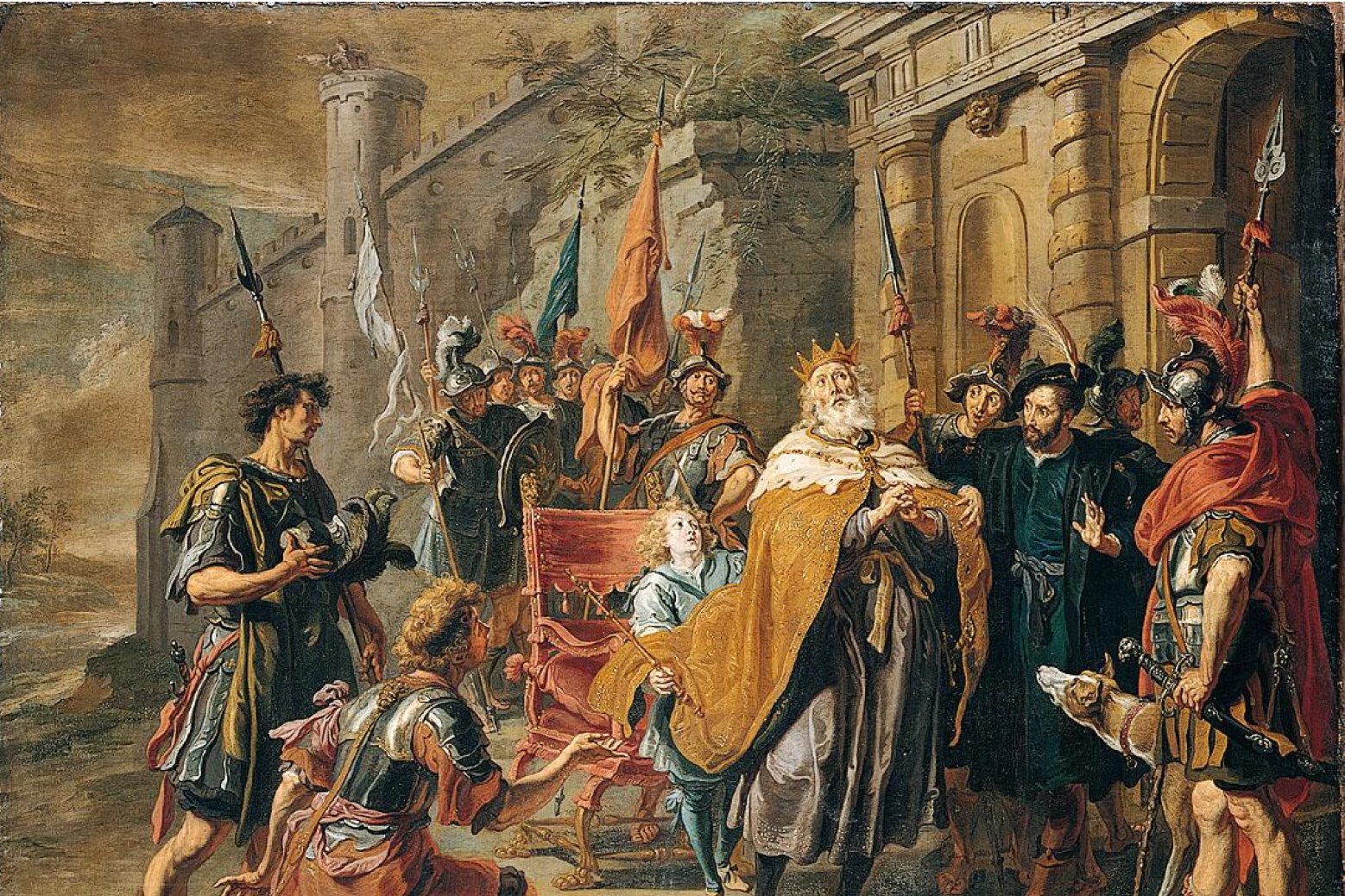
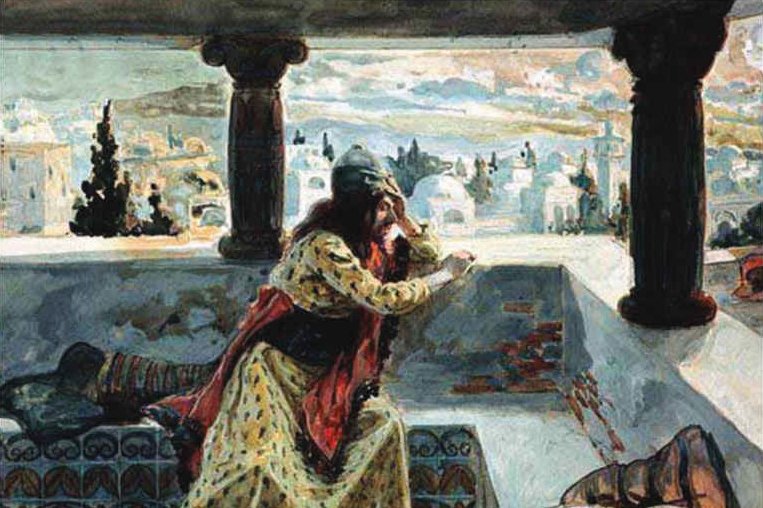
Willem van Herp, David Mourns the Death of Absalom (17th century), public domain via Wikimedia Commons
Family wounds behind the political ones
The rebellion doesn't emerge from nothing — it follows years of real fracture within David's own household. Absalom had earlier killed his own half-brother Amnon in retaliation for a crime committed against their sister Tamar, and spent a long period afterward estranged from his father before an eventual, incomplete reconciliation. That family history sits beneath the political rebellion that follows, complicating any reading of Absalom simply as an ambitious outsider seizing opportunity — this is a son, already carrying deep and unresolved grievance against his father, turning years of careful public relations into an open bid for the throne itself.
A father's order his commanders don't keep
When the rebellion finally reaches open war, David does something notable given the circumstances: rather than treating Absalom simply as an enemy to be destroyed, he instructs his commanders to deal gently with his son for his sake, making his wish to have Absalom spared unmistakably clear even as he sends his own forces to put down the revolt. It's a father's instruction sitting uneasily alongside a king's military necessity — David wants the rebellion crushed, but not at the cost of his son's life.
A beauty the text keeps returning to
Scripture takes an unusual interest in Absalom's physical appearance, noting that "in all Israel there was no man more praised for his beauty than Absalom, flawless from the sole of his foot to the crown of his head" (2 Samuel 14:25, NABRE). The same passage adds a detail that reads almost like foreshadowing once the rebellion's ending is known: each year, when Absalom shaved his famously heavy hair, the clippings alone weighed "two hundred shekels according to the royal standard" (2 Samuel 14:26, NABRE). A man introduced to readers chiefly through his hair and his beauty is later killed because that same hair catches him in a tree — the narrative seems to want readers to notice the irony rather than stumble into it by accident.
A prophecy hanging over the whole house
Long before Absalom ever rose early to work the crowd at the city gate, the prophet Nathan had already warned David that his own sins against Uriah the Hittite and Bathsheba would bring lasting trouble on his household: "the sword shall never depart from your house," Nathan told him, adding that David would see turmoil rise from within his own family (2 Samuel 12:10-11, NABRE). Absalom's revolt is one clear fulfillment of that warning — not an isolated outbreak of ambition, but one chapter in a longer pattern of violence within David's family that Scripture frames as a consequence of the king's own earlier failures, not merely of Absalom's character. Reading the rebellion against that backdrop changes its shape: it becomes less a simple story of a treacherous son and more a continuation of a household already wounded at its root.
Counsel from a trusted friend turned rival
The rebellion also draws in Ahithophel, one of David's most trusted counselors, who defects to Absalom's side and brings with him a reputation for shrewd, almost unfailingly accurate advice — advice David had relied on for years. Ahithophel's defection is treated in the text as a genuine blow to David, a betrayal as personal as it is political, and his counsel very nearly costs David the kingdom outright before another advisor's competing strategy wins out instead. His presence in Absalom's camp is a reminder that the rebellion wasn't simply a father-versus-son drama playing out in isolation — it pulled in the wider political and personal loyalties of David's entire court, splitting long friendships along with the kingdom itself.
Caught by his own hair
The decisive moment of the battle turns on an accident that later generations have found hard to read as anything but grimly fitting. Riding through the forest of Ephraim, Absalom "unexpectedly came up against David's servants," and as his mule passed beneath a large oak tree, "his hair caught fast in the tree. He hung between heaven and earth while the mule under him kept going" (2 Samuel 18:9, NABRE) — suddenly and completely helpless, suspended and exposed, with the very animal he'd been riding continuing on without him. Absalom's hair is mentioned elsewhere in his story as remarkable, a detail of personal vanity and physical impressiveness — which makes its role here, trapping him at the exact moment his rebellion needed him most, difficult for readers not to notice.
Killed against explicit orders
Found by David's men while still caught in the tree, Absalom is killed by Joab, David's own commander, directly against the king's explicit wish that his son be spared. It's a decision made by Joab's own calculation — that a rebellion this serious couldn't be allowed to persist with its leader still alive — carried out in open defiance of the one instruction David had been most insistent about before the battle began.
Grief that overwhelms victory
What follows is one of the rawest moments of grief recorded anywhere in the Old Testament. Learning of his son's death, David doesn't celebrate his rebellion's defeat: "The king was shaken, and went up to the room over the city gate and wept. He said as he wept, 'My son Absalom! My son, my son Absalom! If only I had died instead of you, Absalom, my son, my son!'" (2 Samuel 19:1, NABRE). His mourning is so complete and so public that Joab has to confront him directly, warning that his visible grief risks humiliating the very soldiers who had just risked their lives to save his kingdom — a king caught between two irreconcilable identities in the same moment: a ruler whose throne had just been saved, and a father who had just lost, against his own explicit wish, the son who had tried to take it from him.
Trivia
How did Absalom build support for his rebellion against David?
What was Absalom's relationship to David?
How did Absalom's rebellion end?
How did David react when he learned Absalom had been killed?
Did David want Absalom killed?
Related Reading