Mother Angelica: The Nun Who Built EWTN From a Garage

From a hard childhood to a cloister
Rita Antoinette Rizzo was born in Canton, Ohio, on April 20, 1923, into a marriage that didn't last. Her parents separated when she was a small child, and she grew up with her mother in real financial hardship — the kind of early life that, by most accounts, left her with little obvious path toward founding anything, let alone a television network. In 1944, against her mother's wishes, she entered the Poor Clares, a cloistered order of nuns devoted to poverty, prayer, and strict enclosure, and took the religious name Sister Mary Angelica. She professed her final, solemn vows in 1953 — the permanent commitment to poverty, chastity, and obedience that the Catechism of the Catholic Church describes as characterizing consecrated life "in a stable state of life recognized by the Church" (CCC 944).
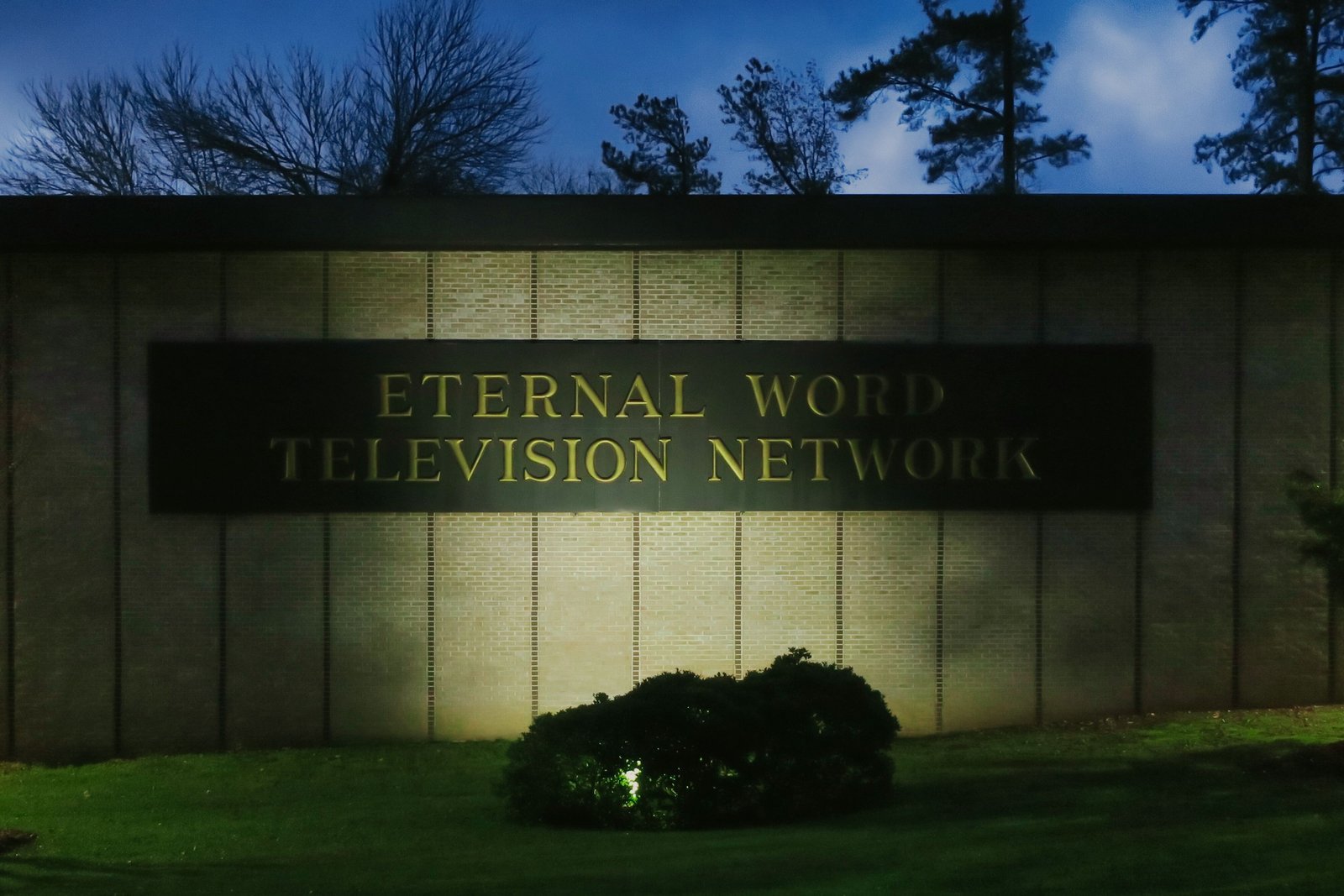
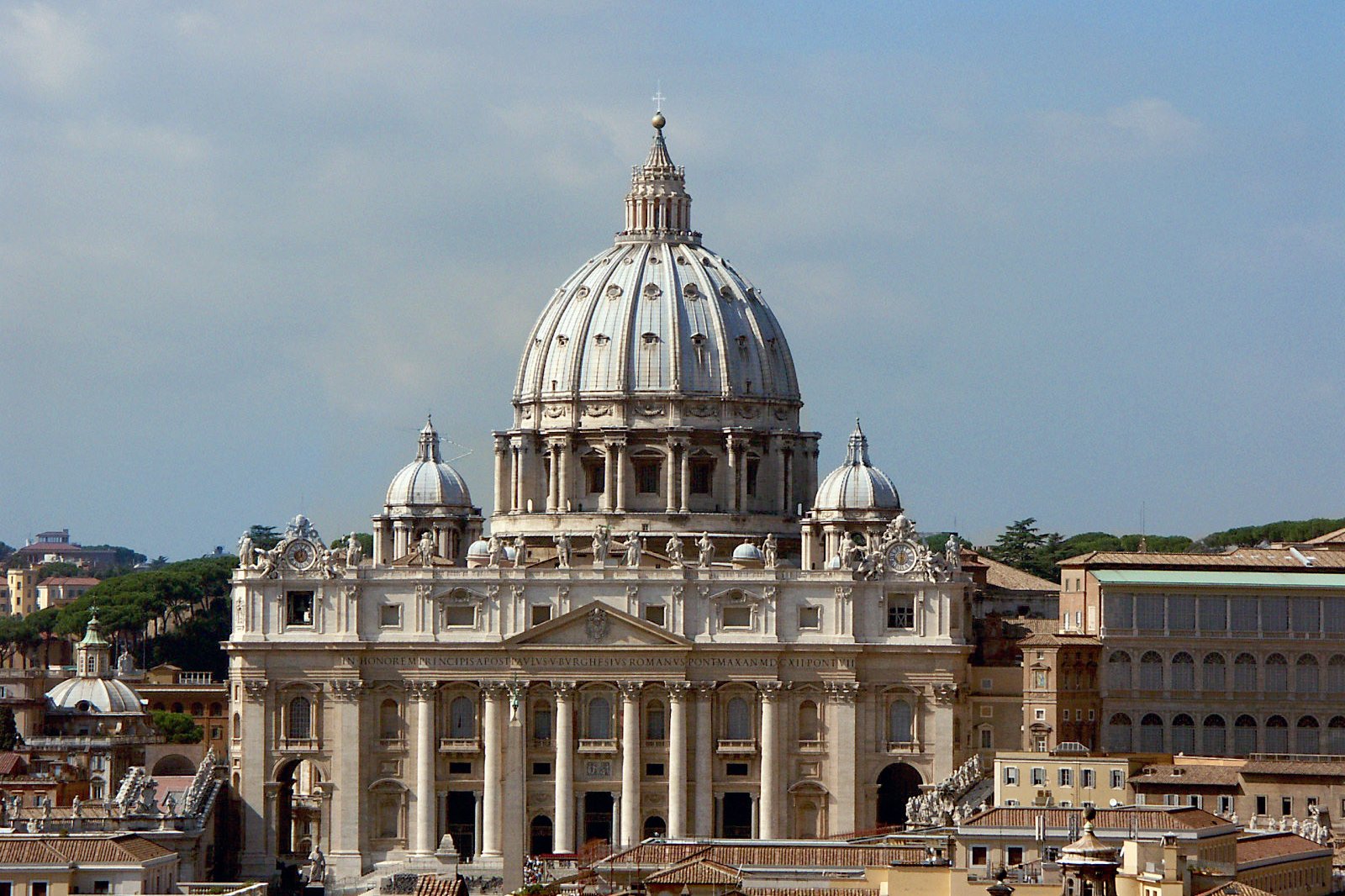
Photograph of EWTN Studios, Irondale, Alabama, by Nheyob, 2024. CC0, via Wikimedia Commons.
A life sealed behind a monastery's enclosure walls is, almost by definition, not supposed to produce a media empire. That it did owes a great deal to an injury, a bargain she made during it, and a stubbornness that never really left her.
An injury, a vow, and a move to Alabama
According to multiple accounts of her life, a serious accident involving a floor-polishing machine left her pinned against a wall with a severe back injury, and doctors weren't sure she would walk again. Facing surgery with no guarantee of recovery, she made a private vow: if she could walk again, she would build a monastery in the American South, a region with relatively few Catholic religious houses at the time. She did walk again, and she kept the promise. Her new community, Our Lady of the Angels Monastery, was formally established in Irondale, a suburb of Birmingham, Alabama, in May 1962.
It was ordinary work, at first — a small, self-supporting monastery of Poor Clares doing what cloistered nuns do, running a little printing apostolate to support themselves. The leap into broadcasting came later, and almost by accident.
Building EWTN out of nothing
By her own account, Mother Angelica grew frustrated in the late 1970s after a falling-out with a Chicago television station over a religious program she found objectionable — an experience that convinced her the Church needed to control its own media rather than depend on outside broadcasters' goodwill. Rather than lobby anyone else to fix the problem, she decided to build the alternative herself.
She had no television training, no major donor, and, according to her own retelling, around $200 in the bank when she started. What she did have was a garage behind her monastery, which she and her small community converted into a working studio. She secured a license from the Federal Communications Commission, and on August 15, 1981 — the feast of the Assumption — EWTN, the Eternal Word Television Network, went on the air.
It is hard to overstate how improbable that beginning was. A cloistered nun with no broadcasting background, financed by nothing resembling the capital a cable network normally requires, put a Catholic channel on a satellite feed from a converted garage in suburban Alabama — and it worked. EWTN grew steadily through the 1980s and 1990s, adding a radio arm (WEWN) and expanding internationally. Today the network's reach is commonly cited at roughly 250 million homes across more than 145 countries and territories, run from the same Irondale campus her original garage studio grew into, now also home to the National Catholic Register under EWTN's wider media umbrella.
A famously outspoken host — and a few famous fights
For nearly two decades, Mother Angelica herself was EWTN's main draw, hosting Mother Angelica Live from 1983 to 2001 — an unscripted, often blunt program where she answered viewer questions, taught the faith in plain language, and, periodically, said something that made headlines. She was unapologetically conservative in her Catholic commentary, and she was willing to criticize figures far more powerful than a nun running a small cable network typically would. In 1993, she publicly objected to a dramatized Way of the Cross performed at a World Youth Day event in Denver, calling the staging irreverent — a criticism that drew pushback from the event's own organizing archbishop. In 1997, she took issue on air with a pastoral letter on the Eucharist written by Cardinal Roger Mahony of Los Angeles, arguing it was unclear about Christ's real presence in the sacrament; the dispute became public and drew a demand from the cardinal for a retraction through her own bishop. These were real, documented controversies, not legend — and they're part of why she became, for a stretch of the 1990s, arguably the most recognizable (and most argued-about) Catholic media figure in the country.
Stroke, silence, and death
Mother Angelica's public life ended abruptly. She suffered a stroke in September 2001 that affected her face and left eye, and a second, more serious stroke later that same year required surgery to remove a blood clot and left her with partial paralysis and significant speech impairment. From that point on, she largely withdrew from public view, living out her final years in near-silence at the Poor Clares' monastery in Hanceville, Alabama — the Shrine of the Most Blessed Sacrament, to which her community had relocated in the 1990s. She died there on March 27, 2016, Easter Sunday, at the age of 92.
No publicly confirmed cause for her beatification has been opened as of this writing, so she isn't a figure on the Church's formal canonization track the way some other twentieth-century Catholics are. What she left behind instead is simply the network — one still broadcasting from the ground she and a handful of nuns converted from a garage, built on a bet that a woman with no money, no training, and a bad back could put the Catholic faith on television and have it actually work.
For more on how religious communities like the Poor Clares structure a life of vowed poverty and prayer, see our guide to how to know your vocation, and for the broader landscape of Catholic devotional life she spent her career broadcasting, our essential Catholic prayers guide covers the same devotions EWTN has aired for over four decades.
Trivia
Who was Mother Angelica?
Why did Mother Angelica start a TV network?
Is there an open sainthood cause for Mother Angelica?
What happened to Mother Angelica in her later years?
What is EWTN today?
Related Reading