The National Eucharistic Revival: Why US Bishops Launched It

A survey result the bishops couldn't ignore
In 2019, Pew Research Center asked a representative sample of self-identified US Catholics a simple question about what happens to the bread and wine at Mass. The results made headlines: 69% said they personally believed the bread and wine "are symbols" of the body and blood of Christ, while only 31% said they "actually become" his body and blood. Among Catholics who attend Mass every week, the number affirming the Church's teaching rose to about 63% — better, but still meaning more than a third of regular Mass-goers didn't choose that answer either.
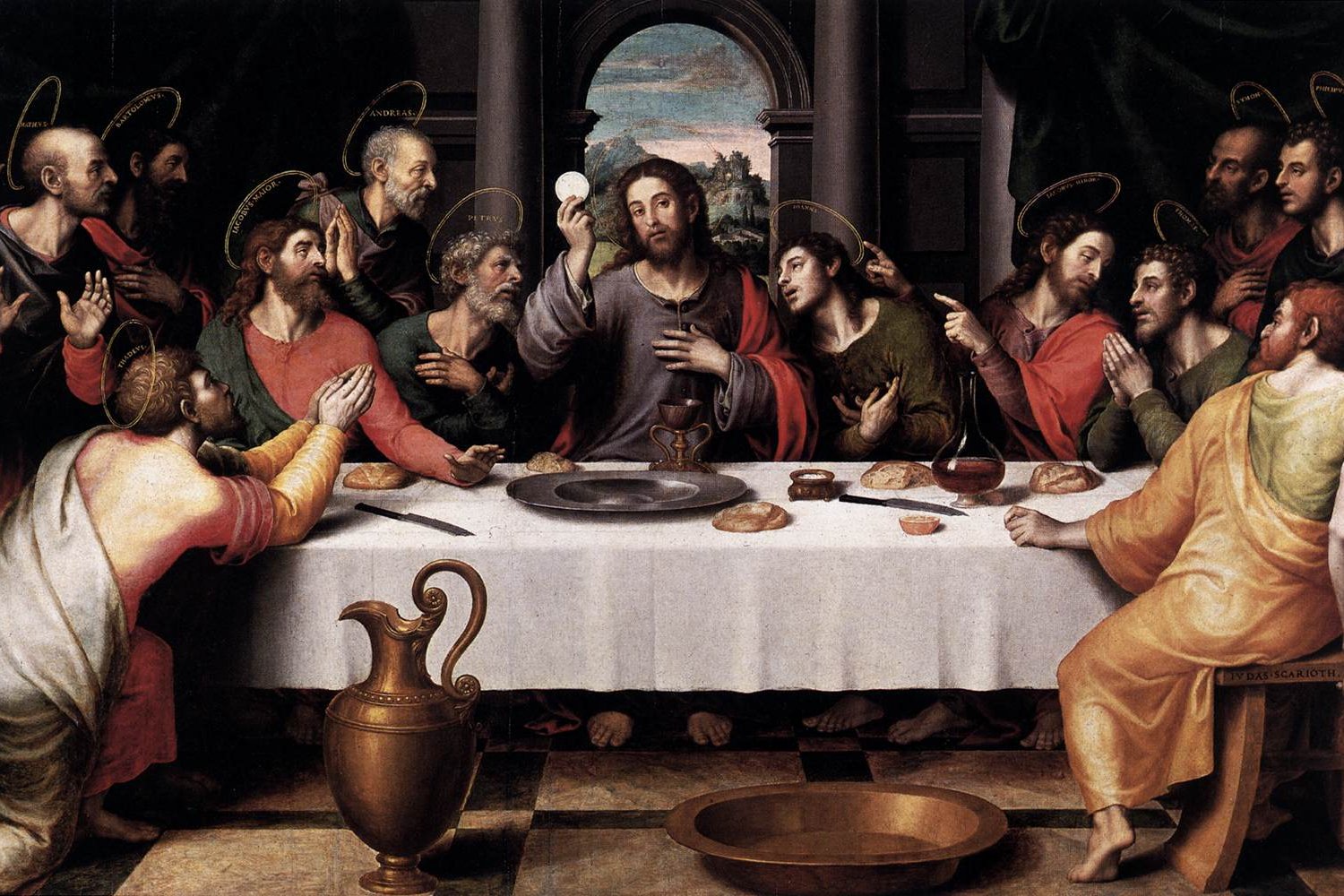
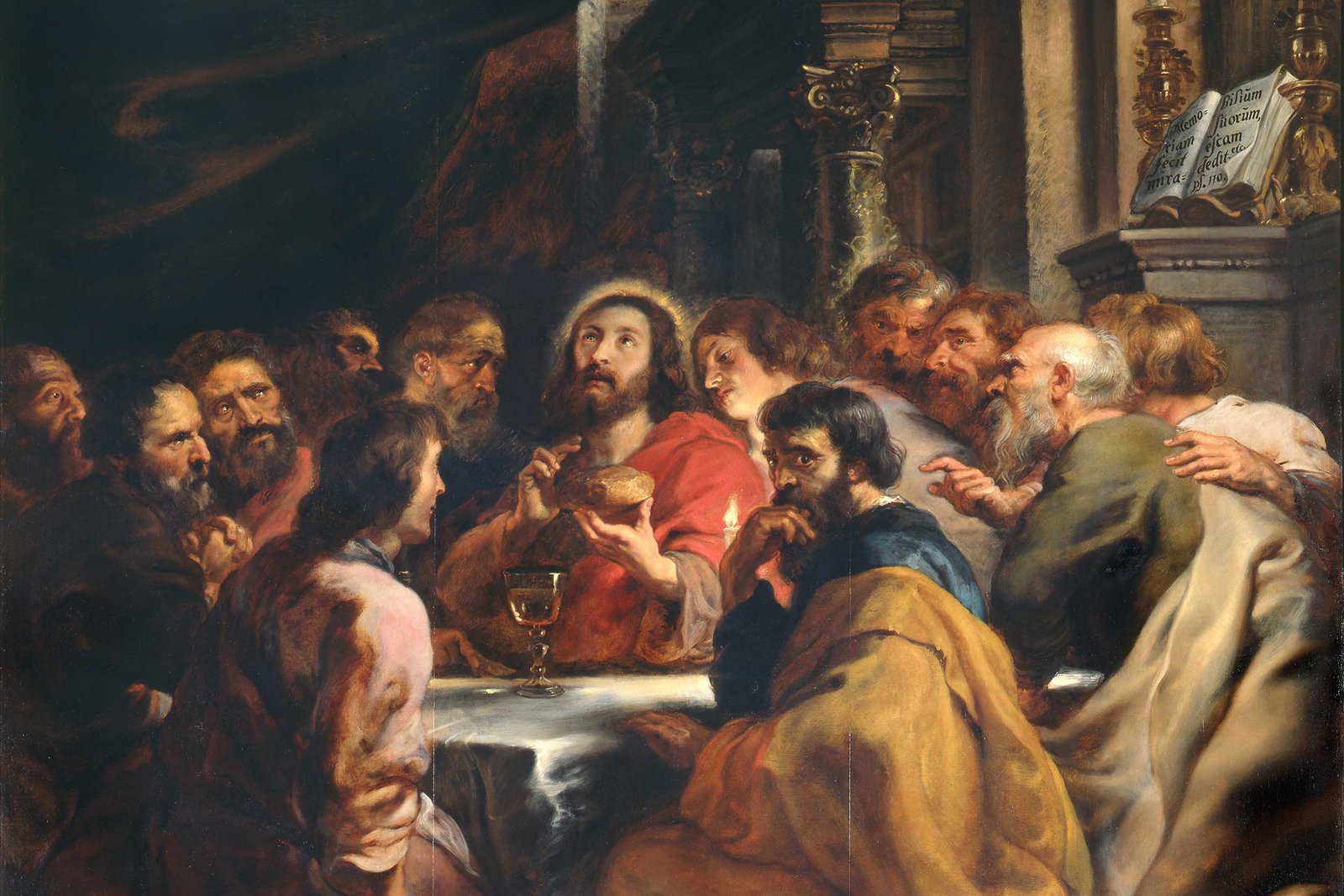
Juan de Juanes, The Last Supper, c. 1562, Museo del Prado, Madrid — public domain.
The number spread fast in Catholic media and, predictably, drew pushback. Researchers like Hans Plate of Vinea Research argued Pew's two answer options were both partly defensible depending on how a respondent heard the word "symbol," and that confusion about Church teaching — not necessarily rejection of it — was driving some of the gap. Pew's own Gregory Smith defended the neutrality of the wording. Pew's data itself hints at this split: among the weekly Mass-goers who didn't pick the "real presence" option, the survey found a mix of people who simply didn't know the Church's teaching and people who knew it and disagreed. Whatever the precise number, the underlying signal — that a meaningful share of Catholics weren't articulating belief in the Real Presence the way the Church intends it — was enough for the US bishops to act.
What the Church actually teaches about the Eucharist
Before describing the bishops' response, it's worth being precise about what, exactly, is at stake. The Catechism of the Catholic Church states that in the Eucharist, "the body and blood, together with the soul and divinity, of our Lord Jesus Christ and, therefore, the whole Christ is truly, really, and substantially contained" under the appearances of bread and wine (CCC 1374). This is not a claim about a symbol pointing to something else, nor a general sense of God's presence the way Christ might be present "in the poor" or "where two or three are gathered." The Catechism calls it presence "in the fullest sense" (CCC 1374).
The Church teaches that this happens through a change it calls transubstantiation — a word the Council of Trent used to describe "a change of the whole substance of the bread into the substance of the body of Christ our Lord and of the whole substance of the wine into the substance of his blood" (CCC 1376). The outward appearances — taste, texture, chemical composition — don't change; what the Church holds changes is the underlying reality of what the bread and wine are. This takes place at the moment of consecration during Mass, when a priest, acting in the person of Christ, repeats the words Christ himself used at the Last Supper, and the presence "endures as long as the Eucharistic species subsist" (CCC 1377) — which is also the doctrinal basis for reserving the consecrated host in a tabernacle and for the practice described in Eucharistic Adoration Explained.
Three years, three phases
The USCCB structured the Revival in overlapping phases rather than a single event. A Year of Diocesan Revival ran roughly June 2022 to June 2023, with individual dioceses hosting Eucharistic congresses, days of formation for priests, and large-scale adoration events suited to local needs. A Year of Parish Revival followed, running into mid-2024, pushing the focus down to the parish level — more frequent Eucharistic processions, expanded adoration hours, and renewed catechesis on what the Mass actually is, intended to reach Catholics who might never travel to a diocesan event. The third phase, framed as a Year of Going Out on Mission, centers on sending revived parishes and individual Catholics back out to evangelize, with the Indianapolis Congress serving as its launch point rather than its conclusion.
Indianapolis and the long walk there
The National Eucharistic Congress ran July 17-21, 2024, at Lucas Oil Stadium in Indianapolis — according to organizers, the first congress of its kind held on US soil since one in St. Paul, Minnesota, in 1941, more than eight decades earlier. Roughly 50,000 people registered to attend five days built around Mass, extended periods of Eucharistic adoration, catechetical talks, and a Eucharistic procession through the city's downtown streets.
Getting there was itself part of the event. Starting around Pentecost weekend in May 2024, four pilgrimage routes set out from opposite corners of the country — Lake Itasca, Minnesota; San Francisco; New Haven, Connecticut; and Brownsville, Texas — each one followed for its entire length by a small team of "perpetual pilgrims," mostly young adults, carrying a consecrated host in procession. Together the four routes covered more than 6,500 miles through 65 dioceses over two months, stopping at parishes, shrines, and even secular landmarks along the way, before converging on Indianapolis the day before the Congress opened.
Why this matters beyond one stadium event
None of this changes what the Church teaches — the doctrine described in CCC 1374-1377 was no less true in 2018 than it is now. What the Revival addresses is something more fragile: whether ordinary Catholics in the pew actually know, and hold onto, that teaching in daily practice. A parish adding a weekly holy hour, a pastor preaching more directly on what happens at the altar, a family driving to a diocesan Eucharistic congress — these are small, uneven, parish-by-parish changes, not a single dramatic fix. But they're the kind of changes that a survey about belief in the Real Presence is actually asking about in the first place: not whether a doctrine exists on paper, but whether it's taught, understood, and lived somewhere specific, parish by parish, Mass by Mass.
For Catholics trying to make sense of their own faith in light of all this, the Revival's quieter, ongoing work — adoration chapels staying open longer, parish teaching series, local Eucharistic processions — is arguably more consequential than the stadium in Indianapolis, however striking that week was. It's also a reminder that doctrine and devotion aren't separate tracks: what Catholics believe about the Eucharist shapes whether they bother to kneel before it, and whether they kneel before it shapes what they come to believe.
Trivia
What is the National Eucharistic Revival?
What did the 2019 Pew Research survey actually find?
What does the Catholic Church actually teach about the Real Presence?
What happened at the National Eucharistic Congress in Indianapolis?
What was the National Eucharistic Pilgrimage?
Related Reading