Our Lady of Charity of El Cobre: Cuba's Patroness from the Bay of Nipe

A statue that would not sink
The traditional account of Our Lady of Charity's origin begins with ordinary work turned frightening by sudden weather. Around 1612, three men were crossing the Bay of Nipe, on Cuba's northeastern coast, when a storm rose up around their small vessel. The men are remembered in Cuban tradition as "los tres Juanes" — the three Juans — though only two of them actually shared that name: brothers Juan and Rodrigo de Hoyos, indigenous Cuban laborers who worked gathering copper ore (the "cobre" that later named the town), and Juan Moreno, an enslaved African boy who worked alongside them.
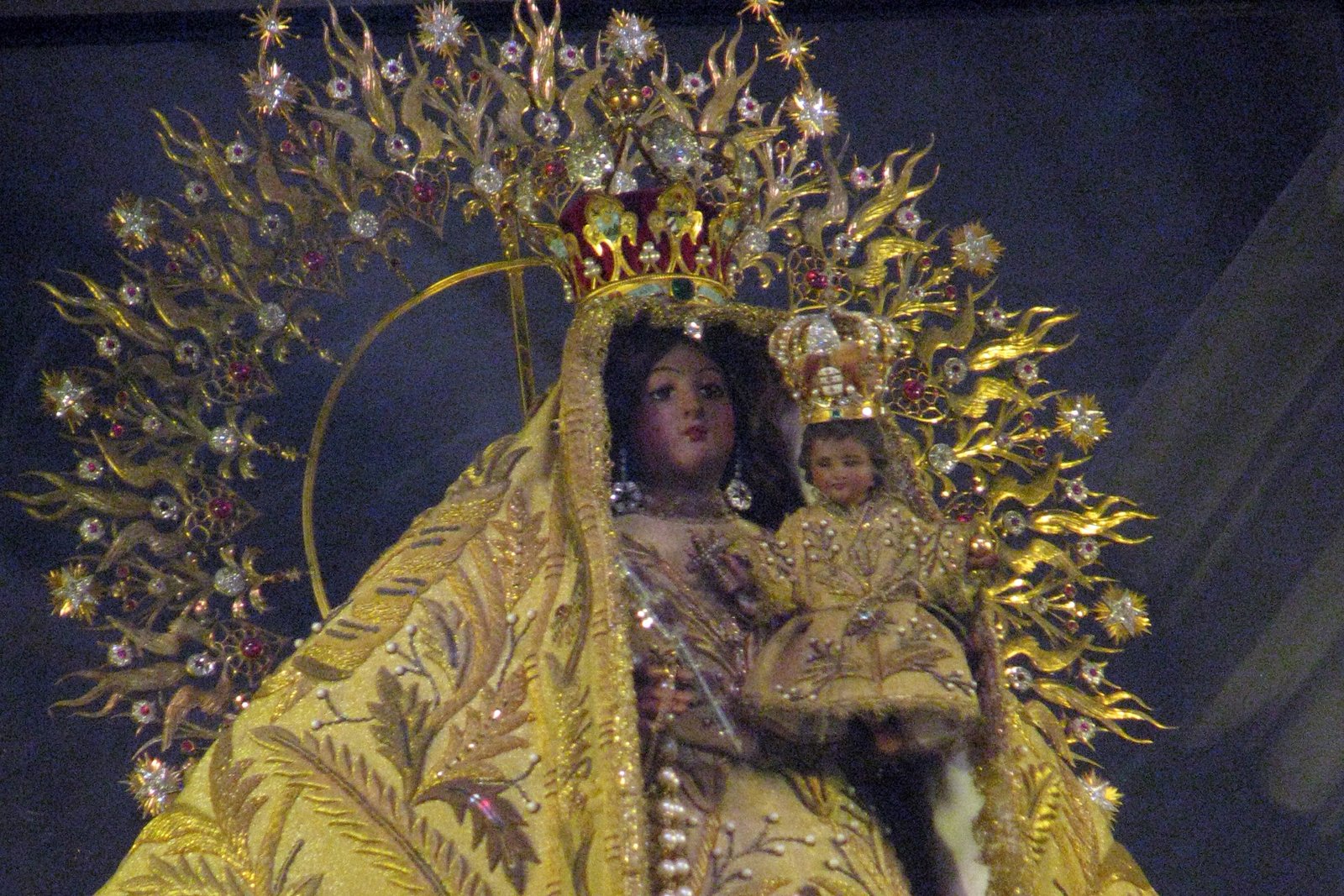
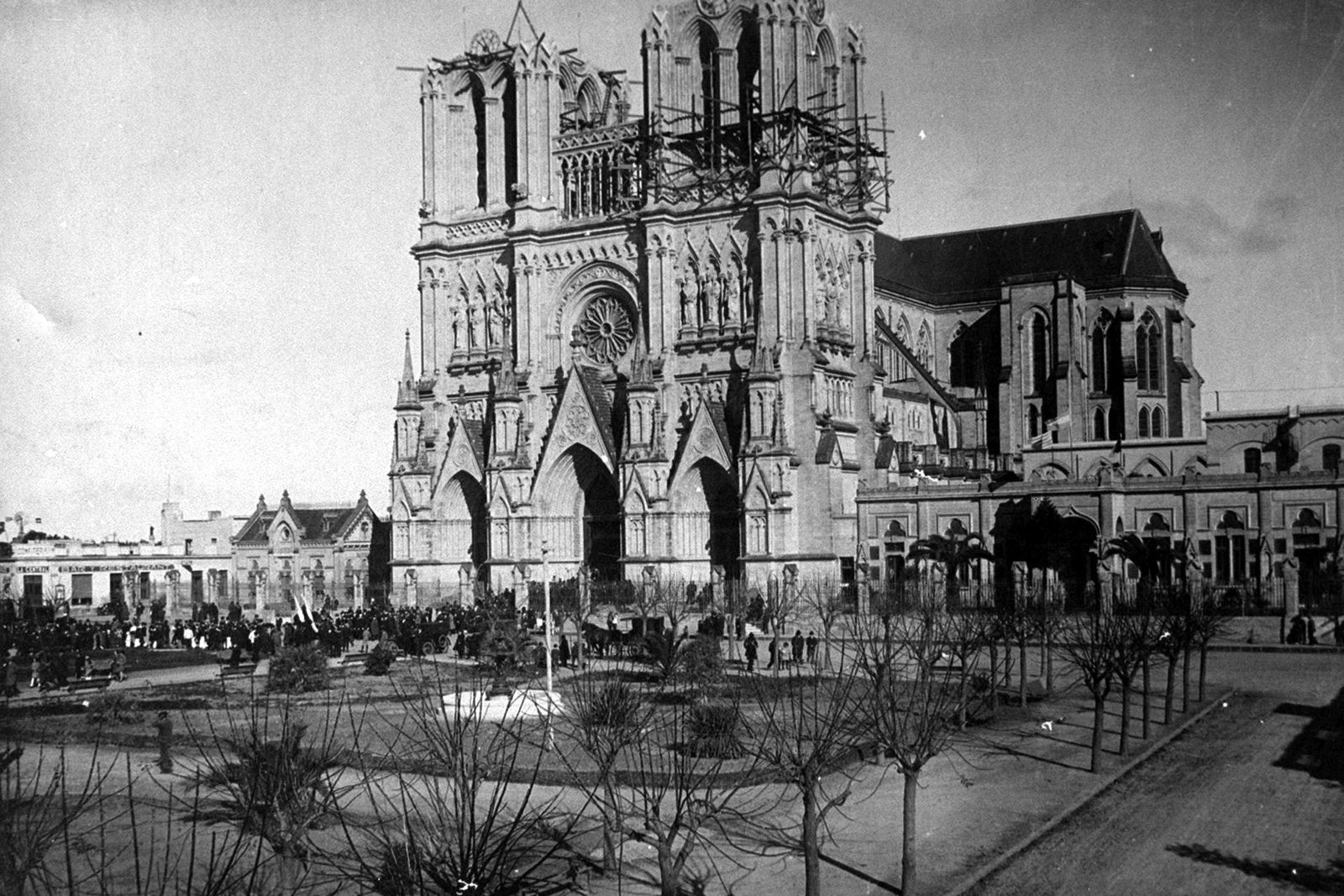
Photo by Hyppolyte de Saint-Rambert, Santuario Nacional de Nuestra Señora de la Caridad del Cobre (2011). CC BY-SA 4.0, via Wikimedia Commons.
As their boat struggled against the waves, one of the men spotted something floating calmly ahead of them on the water: a small wooden statue of the Virgin Mary, entirely dry despite the storm around it, attached to a wooden board bearing the inscription "Yo soy la Virgen de la Caridad" — "I am the Virgin of Charity." They pulled the statue from the water, and tradition holds that the sea calmed soon after. Whatever the precise sequence of events, word of the discovery spread quickly through the mining communities and surrounding villages, and the small image soon had a devoted following drawn from exactly the mix of people who had found her: indigenous Cuban laborers, enslaved and free Africans, and the Spanish colonists who governed the mining settlement at El Cobre.
An image that reflected everyone who found her
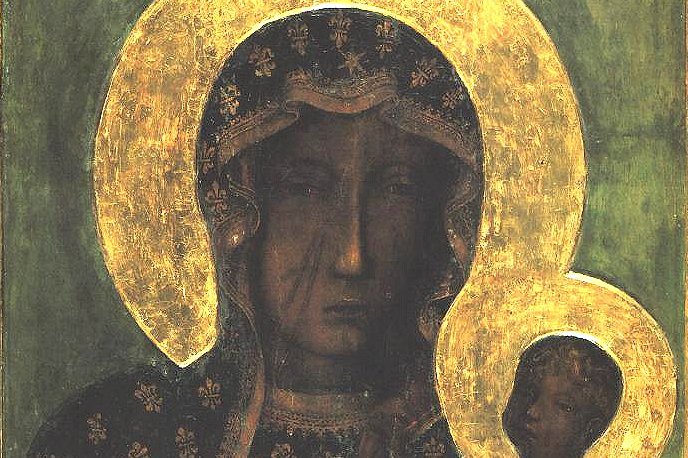
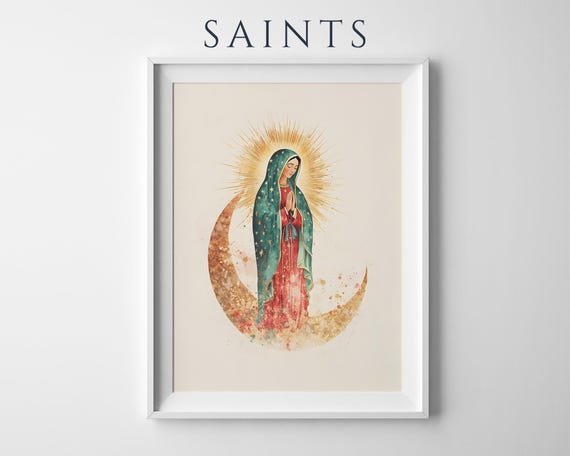
Part of what made devotion to this particular statue take root so quickly and so broadly, across lines that otherwise divided colonial Cuban society sharply, was the image itself. The statue shows Mary with the Christ Child resting on her left arm, standing above a crescent moon, roughly 40 centimeters tall — and over the centuries, observers and devotees alike have often described her features and coloring in ways that let different communities see something of themselves reflected in the image. For a colony built on the forced labor of enslaved Africans and the hard work of indigenous Cubans alongside Spanish settlers, a Marian image discovered jointly by representatives of all three groups — and found, moreover, by the humblest members of that mining community rather than by clergy or colonial officials — carried an unusually inclusive resonance from the very start.
That inclusiveness deepened over the centuries that followed, as devotion to Our Lady of Charity spread across the island and became woven into Cuba's sense of its own national identity, crossing lines of race and social class in a way relatively few colonial-era Marian devotions managed as thoroughly.
Oshún, Santería, and an honest distinction
No honest account of this devotion can skip past one of its most distinctive features: Our Lady of Charity's deep association, for many Cuban believers, with Oshún, an orisha — a deity figure — from Santería, the Afro-Cuban religious tradition that developed among enslaved Yoruba people and their descendants, blending West African religious practice with the Catholicism imposed on them by colonial society. Oshún is associated in Yoruba-derived tradition with rivers, love, beauty, and fertility, and many practitioners of Santería honor Our Lady of Charity's image as a visible representation of Oshún, lighting candles and bringing offerings to her shrine in ways that draw on both traditions simultaneously.
This is worth stating plainly and respectfully, because it's a real, well-documented, and long-standing feature of Cuban religious life, not a fringe curiosity. It's equally worth being precise about what it is not: official Catholic teaching does not recognize or endorse any identification between the Virgin Mary and an orisha figure from a separate religious tradition. The Church venerates the image at El Cobre as a representation of Mary, full stop, under the title of Our Lady of Charity. The syncretism many Cuban families practice — honoring both traditions through the same image — is a genuine feature of lived religious culture on the island, existing alongside, rather than as part of, the Catholic Church's own formal teaching about who and what the image represents.
From popular devotion to official patroness
Devotion to Our Lady of Charity grew for roughly three centuries largely through grassroots practice — pilgrimage, local feast-day celebrations, and a reputation for answered prayers that spread well beyond the mining town where she was found. That popular devotion gained particular intensity during Cuba's long struggle for independence from Spain in the 19th century, when both Cuban soldiers and, during the later Spanish-American War period, soldiers on opposing sides reportedly carried her image or invoked her protection — a detail that later became part of the case Cuban bishops made to Rome for her formal recognition.
That recognition came on May 10, 1916, when Pope Pius XI formally declared Our Lady of Charity of El Cobre the Patroness of Cuba, responding to a petition submitted by Cuban bishops together with veterans of the independence wars. The declaration formalized what had already been, for generations, a devotion that crossed every line of race, class, and political affiliation on the island — a rare point of common ground in Cuban religious and civic life.
A visit from Rome
Nearly a century after that papal declaration, the shrine received a visit that brought it fresh international attention. In September 2015, Pope Francis traveled to Cuba as part of a broader trip that also took him to the United States, and made a point of visiting the Basilica of Our Lady of Charity at El Cobre, near Santiago de Cuba, where he prayed before the small image and addressed Cuban Catholics directly. The visit came at a significant moment in the recent history of US-Cuban and Vatican-Cuban relations, and photographs of the pope kneeling before the modest 40-centimeter statue — the same image three men once pulled from stormy water centuries earlier — were widely circulated as a symbol of the Church's continuing presence in Cuban life.
Today, the Basilica of Our Lady of Charity remains one of Cuba's most visited religious sites, drawing pilgrims of every background — Catholic, Santería practitioner, and those who move easily between both traditions — to stand before the same small, dry statue that once calmed a storm in the Bay of Nipe.
Trivia
Who found the statue of Our Lady of Charity of El Cobre?
Why is she especially significant to Afro-Cuban religious practice?
When did Our Lady of Charity become Cuba's official patroness?
Did Pope Francis visit the shrine at El Cobre?
What does the statue look like, and how was it found intact despite the storm?
Related Reading