The Angel Who Struck Down Herod Agrippa


The king who arrested Peter
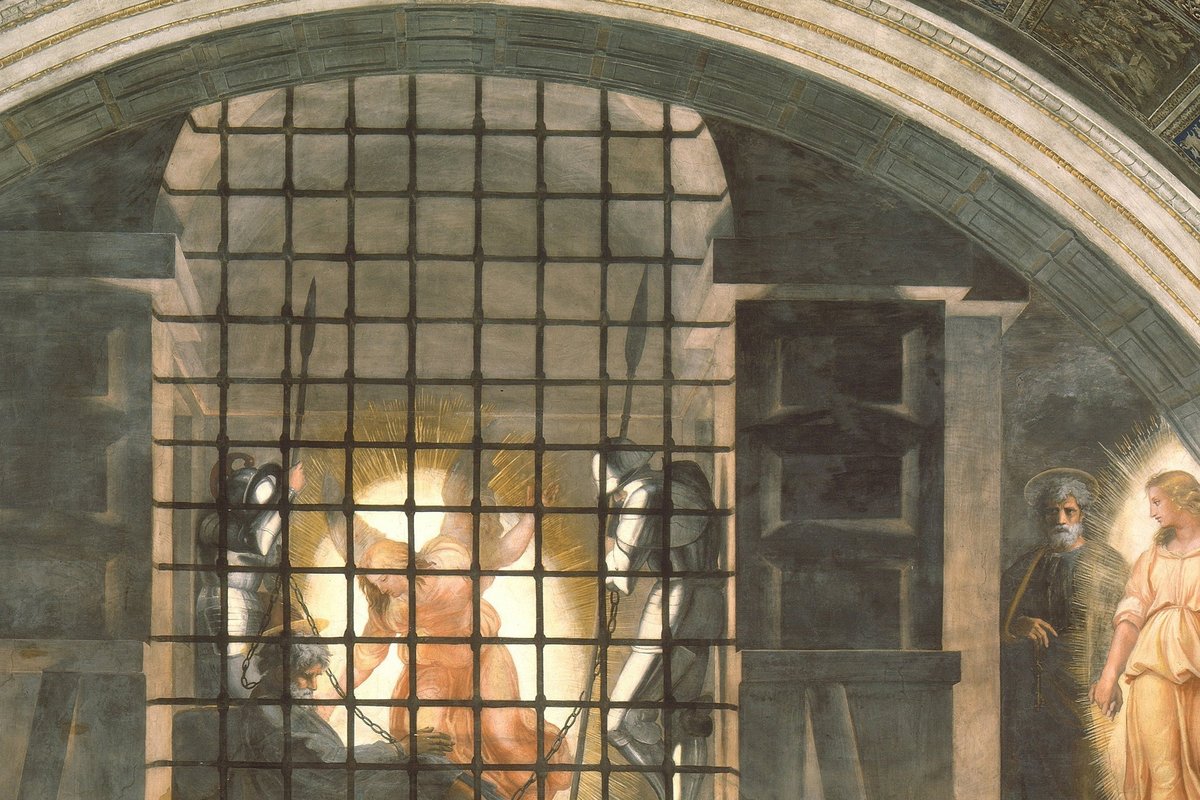
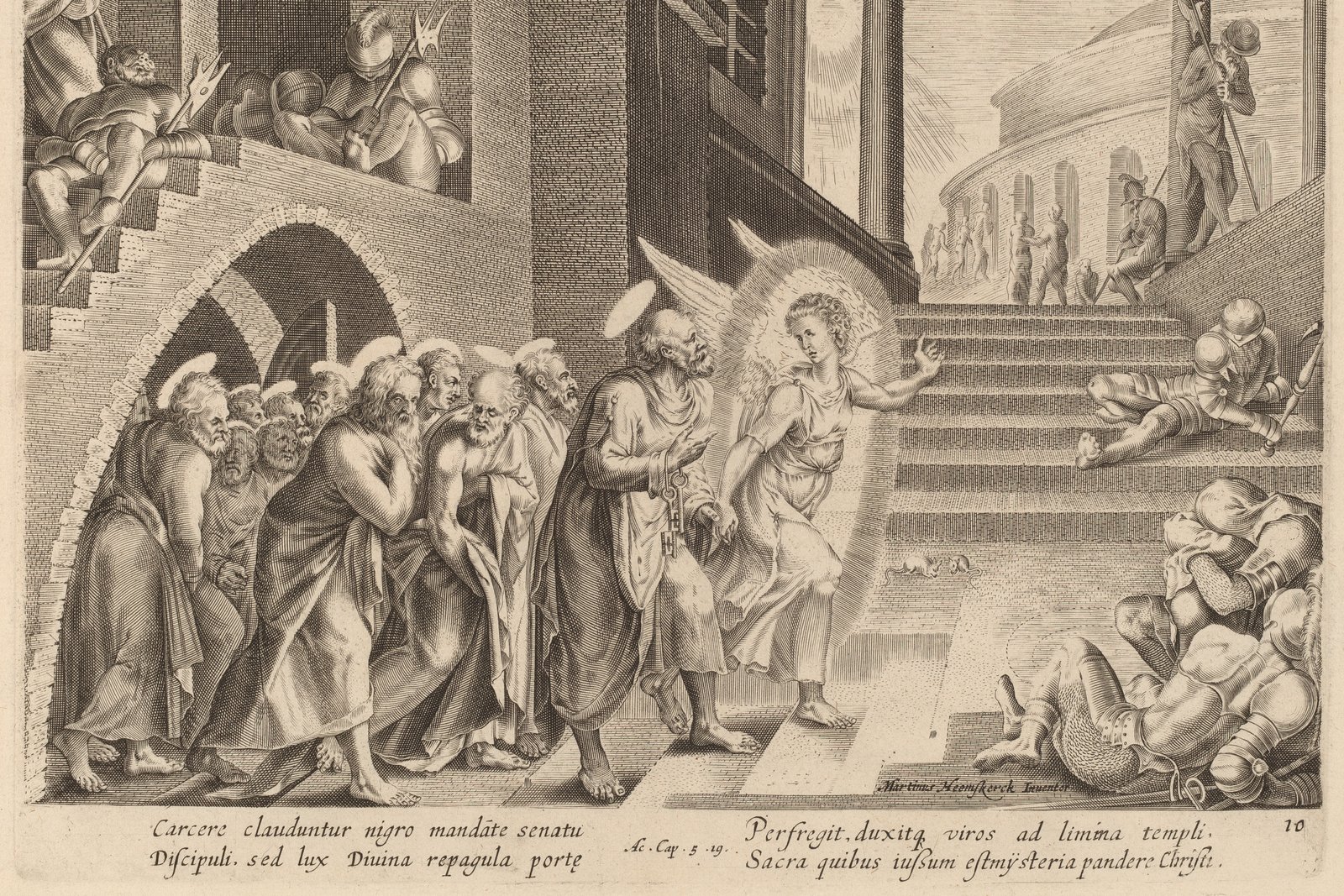
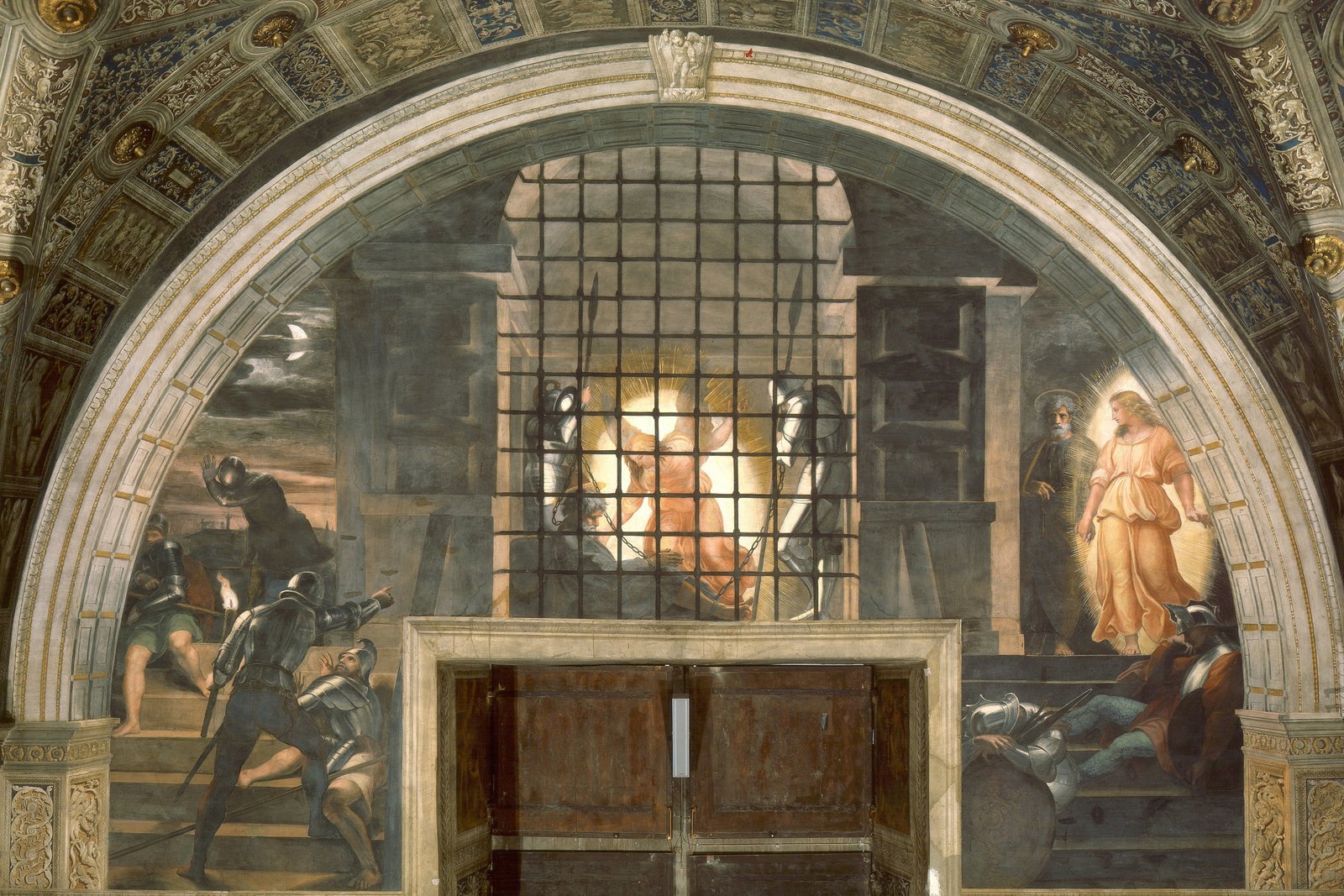
Acts 12 opens with Herod Agrippa I moving directly against the young church in Jerusalem. He has the apostle James, brother of John, "killed by the sword," and when he sees how well this plays with the Jewish leadership, he has Peter arrested as well, holding him under a guard of "four squads of four soldiers each" ahead of a planned public trial (Acts 12:1-4, NABRE). It's against this backdrop — a king willing to execute one apostle and publicly try a second to shore up his own popularity — that the chapter's closing scene has to be read. Peter escapes his cell that same chapter, led out by an angel who frees him in the night while the guards sleep undisturbed around him.
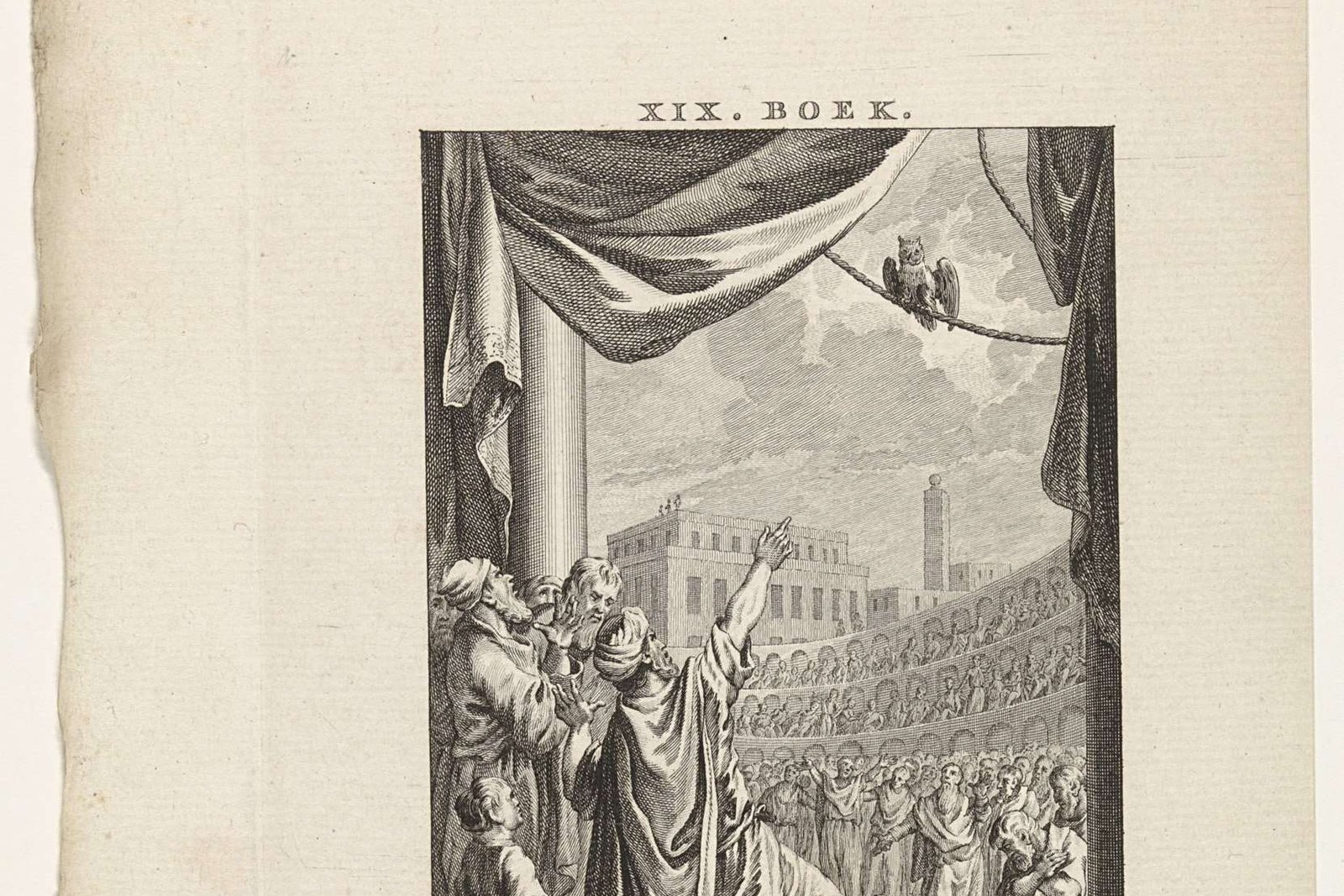
Theodoor Koning, Voorteken voor de dood van Herodes Agrippa (1783), public domain via Wikimedia Commons
A diplomatic dispute, and a speech
The scene that ends in Herod's death begins, oddly, with a trade dispute. Luke records that Herod "had long been very angry with the people of Tyre and Sidon," who come to him "in a body" seeking peace, since their territory depended on food supplied from land under Herod's control (Acts 12:20, NABRE). Herod agrees to address them, and does so "attired in royal robes, seated on the rostrum," speaking publicly to the assembled crowd (Acts 12:21, NABRE). It's an ordinary piece of ancient political theater — a king in ceremonial dress, granting an audience — right up until the crowd's response.
"The voice of a god, not of a man"
Whatever Herod actually says, Luke doesn't record it — what he records is how the crowd reacts: "This is the voice of a god, not of a man," they cry out (Acts 12:22, NABRE). It's flattery of the most dangerous kind in a biblical framework where accepting worship due to God alone is treated as a serious offense, not a harmless compliment. Luke gives no indication that Herod objects, corrects the crowd, or deflects the praise in any way. The text moves immediately from the acclamation to the consequence, with no gap for Herod to have responded rightly and simply failed to be recorded doing so.
Struck down at once
The judgment, as Luke tells it, is immediate and total: "At once the angel of the Lord struck him down because he did not ascribe the honor to God, and he was eaten by worms and breathed his last" (Acts 12:23, NABRE). There's no delay, no illness that develops over time in Luke's telling — the acclamation and the angel's action are presented as directly connected, cause and effect in the space of a single verse. Luke is explicit about the reason, too: not simply pride in general, but the specific failure to redirect glory that belonged to God back toward its source.
What the historian Josephus adds
This is one of the rarer moments in the New Testament where an event finds a clear echo outside Scripture. The first-century Jewish historian Flavius Josephus, writing decades later in his Antiquities of the Jewish People, records his own account of Herod Agrippa I's death at Caesarea — the royal robes, the crowd's flattering acclamation, and a sudden, fatal affliction that follows almost immediately after. Josephus describes the king struck with severe abdominal pain rather than Luke's specific image of being consumed by worms, and situates the death in AD 44. The two accounts aren't identical in every detail, and this article isn't claiming they are — but the broad shape of the story, a proud king struck down suddenly after accepting divine honors in public, appears independently in both a Christian and a non-Christian source close to the events themselves, which is unusual enough to be worth noting on its own.
An angel of judgment, not a one-off anomaly
Scripture elsewhere depicts angels carrying out acts of direct judgment against the proud or the unjust, so Herod's death isn't an isolated oddity within the biblical imagination. The destroying angel in Exodus strikes Egypt's firstborn; an angel decimates Sennacherib's besieging army outside Jerusalem in 2 Kings; tradition has long read the fall of the rebel angels themselves as the first instance of this same pattern, pride meeting a swift and final correction. Herod Agrippa's death fits this same established biblical category rather than introducing something new: angels in Scripture are never only gentle messengers or protective guardians. They also, at times, carry out God's judgment directly and visibly, with no human intermediary involved.
Why this scene rarely appears in religious art
Unlike Michael trampling Satan or Gabriel's Annunciation, Herod's death by an angel has never become a popular subject for devotional art, and the reasons aren't hard to guess. It's a story about divine judgment falling on a specific, historical ruler rather than a universal moment like the Annunciation or a widely venerated warrior-angel like Michael — there's no obvious devotional use for a painting of a king being struck down mid-speech, and the ailment Luke describes (being "eaten by worms") lacks the visual drama of a sword or a scale. The few depictions that do exist, including the eighteenth-century engraving illustrating this very article, tend to appear in illustrated Bible histories rather than in churches or private devotion, treating the episode as history to be recorded rather than a scene meant to inspire ongoing prayer.
Two angels, one chapter, one point
Reading Acts 12 as a whole makes the pairing hard to miss. The same chapter that shows an angel quietly freeing a persecuted apostle from a heavily guarded cell closes with an angel publicly striking down the king who ordered that persecution. Luke isn't simply recording two unconnected events that happened to involve angels — he's building a chapter-long argument about how God relates to power. The apostle who suffers unjustly is delivered; the king who accepts glory that isn't his is not spared. It's one of the more sobering entries among Scripture's angel stories precisely because it refuses to separate mercy from judgment — the same messenger who can open a prison gate is shown, in the very next scene, closing the door on a reign that had overstepped what any earthly ruler is owed.
Trivia
Who was Herod Agrippa, and why does he appear in Acts 12?
What did Herod Agrippa actually do to provoke the angel's action?
What exactly does Acts say happened to him?
Is there a historical record of this outside the Bible?
Why does Luke place this story right after Peter's rescue from prison?
Related Reading