National Shrine of the North American Martyrs, Auriesville

A hillside the Church calls Ossernenon
The National Shrine of the North American Martyrs occupies a quiet rise of farmland above the Mohawk River in Auriesville, New York, about forty miles west of Albany. Catholic tradition identifies this hillside as the site of Ossernenon, a Mohawk village that stood here in the 1640s — the place where Saint Isaac Jogues and Saint René Goupil were held captive and ultimately killed, and where Saint Kateri Tekakwitha is traditionally said to have been born around a decade later.
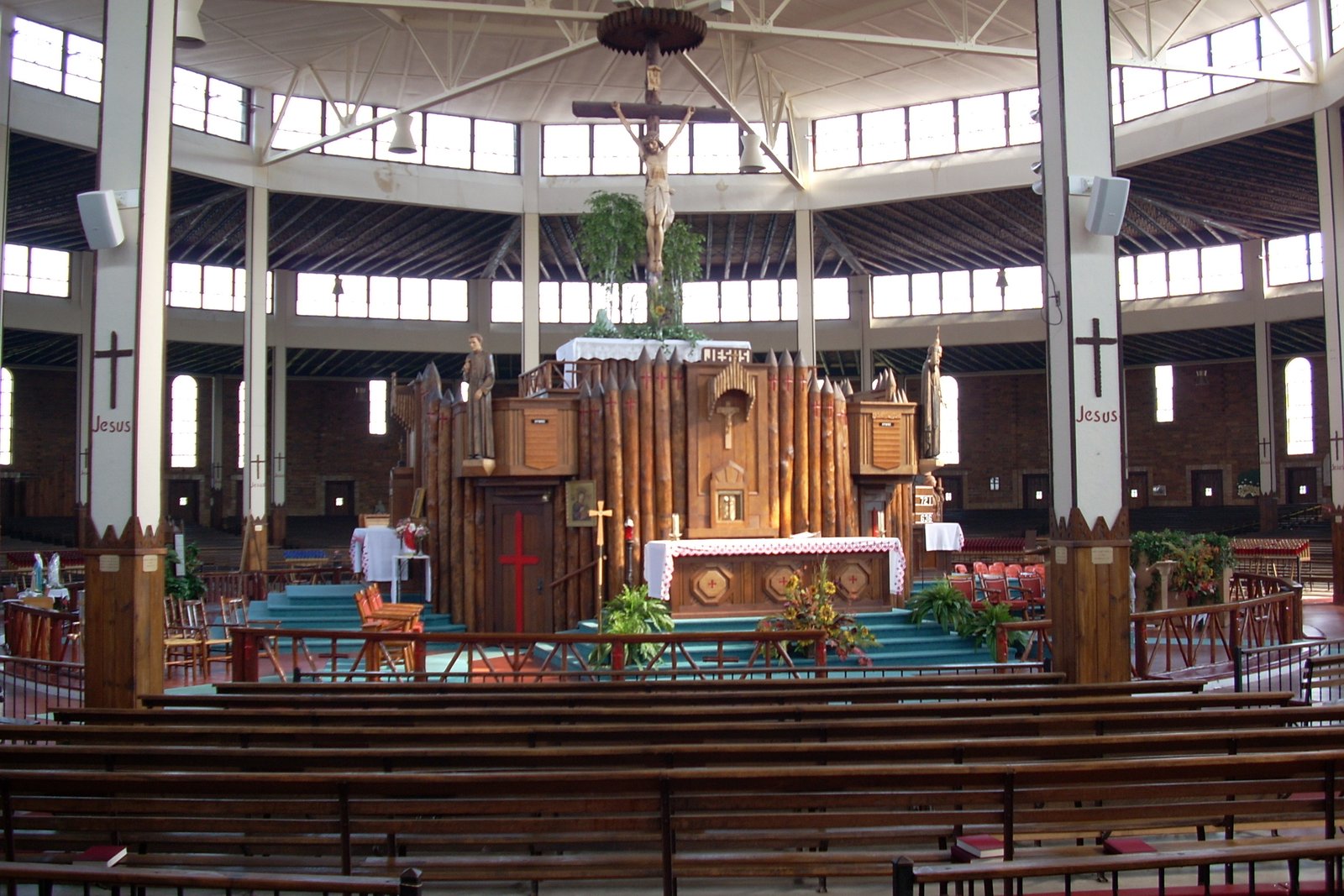
LotR, Interior of Martyrs Shrine Coliseum, 2007, Wikimedia Commons — public domain.
That identification isn't uncontested history, and the shrine itself does not pretend otherwise. Nineteenth-century historian John Gilmary Shea and local researcher General J. S. Clark argued, based on their study of colonial-era records and regional geography, that this hillside was the former village site, and their conclusion is what led to the shrine being built here in the first place. Some archaeologists today place the actual location of Ossernenon roughly nine miles to the west instead, and no excavation at Auriesville has produced definitive physical confirmation either way. What's certain is the broader history: Jesuit missionaries really were tortured and killed by Mohawk captors at a village called Ossernenon in this stretch of the Mohawk Valley in the 1640s — the shrine's precise footprint is a matter of historical argument, not the underlying events themselves.
What happened here in the 1640s
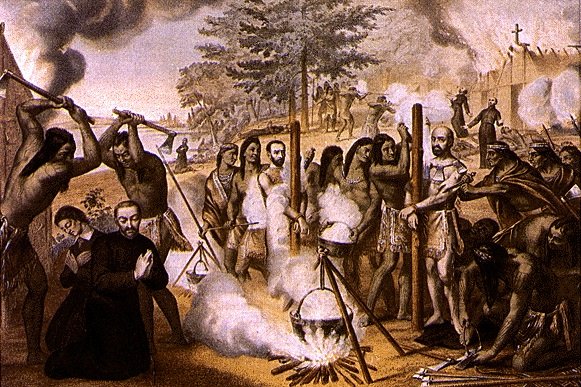
In 1642, a small party that included the Jesuit priest Isaac Jogues and a lay volunteer surgeon, René Goupil, was captured by a Mohawk raiding party while traveling to resupply the Huron missions further west. Brought to Ossernenon, Goupil was killed within weeks — struck with a hatchet after making the sign of the cross over a child, an act some in the village read as sorcery. He is remembered as the first of the eight Jesuit missionaries and lay companions later canonized together as the North American Martyrs. Jogues survived roughly a year of captivity and torture before escaping with the help of Dutch traders, returned to Europe, and then — in a decision that still startles people who hear his story for the first time — chose to come back to North America and eventually to this same Mohawk community. He was killed with a tomahawk at Ossernenon on October 18, 1646; a companion, Jean de Lalande, was killed there the following day.
Roughly a decade after Jogues's death, a Mohawk woman gave birth to a daughter at Ossernenon who would be baptized Kateri and would grow up to become, in 2012, the first Native American person canonized a saint. The shrine treats this sequence — missionaries martyred on this ground, followed within a generation by a woman from the same community who embraced the faith they died proclaiming — as the heart of its spiritual identity, and devotion to all three figures is woven through the site today, from a dedicated chapel to the gift shop's offerings.
From ten acres to a national shrine
The shrine's modern history begins in 1884, when Father Joseph Loyzance, a Jesuit parish priest from Troy, New York, purchased ten acres of this hillside and built a small devotional shrine under the title "Our Lady of Martyrs." Loyzance then led a pilgrimage of roughly 4,000 people from Albany and Troy to the new shrine, and other parishes soon began making their own annual visits during the summer months, establishing a pilgrimage pattern that has continued, with interruptions, for well over a century.
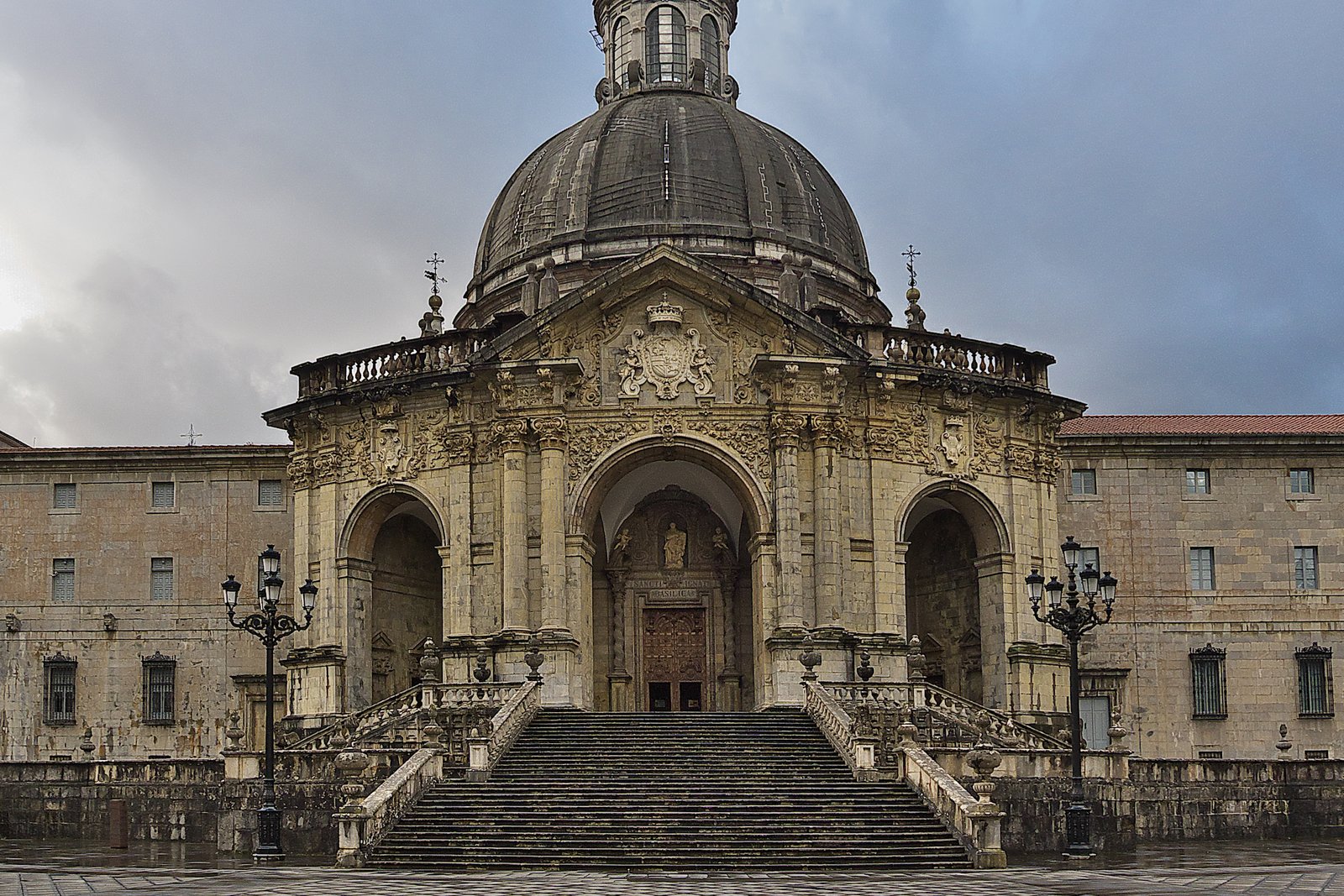
The site's scale changed dramatically around its martyrs' canonization. Pope Pius XI canonized Jogues, Goupil, and six other Jesuit missionaries and companions together in 1930 as the North American Martyrs, and that same year a large circular church — known at the shrine as the Coliseum — was completed on the grounds, built specifically to handle the much larger crowds the canonization was expected to draw. It was among the first churches of its kind built in the United States, and it remains the shrine's visual signature: a round sanctuary, rather than the traditional long nave, able to seat an estimated 6,000 worshippers for a single Mass. The Jesuits administered the shrine for more than 130 years before transferring ownership of the main campus to a lay organization, the Friends of Our Lady of Martyrs Shrine, in 2017. In January 2025, the U.S. Conference of Catholic Bishops formally designated Auriesville a national shrine.
What's there now
The shrine today covers roughly 600 acres of the Mohawk Valley hillside, with the Coliseum as its anchor and a cluster of smaller chapels, a visitor center, and a museum devoted to the history of the North American Martyrs and Kateri Tekakwitha spread across the grounds. The visitor center includes a chapel dedicated to Our Lady Undoer of Knots, a devotional title for Mary that has grown in popularity internationally over the past few decades. Outdoor Masses, processions, and a "Ravine Walk" tracing the approximate path early pilgrims associated with the martyrs' ordeal are regular features of the pilgrimage season, which runs mainly from late spring through early autumn given the site's exposure to harsh upstate New York winters.
Auriesville functions as a working pilgrimage and retreat destination rather than a historical monument alone — parishes, schools, and individual visiting priests regularly schedule retreats there, and the shrine maintains its own calendar of feast-day liturgies, novenas, and special events through the year. For American Catholics in particular, it occupies a distinctive place: Jogues, Goupil, and Lalande are counted among the small number of canonized saints martyred on what is now United States soil, and the shrine built around their memory remains, nearly a century and a half after Father Loyzance's first small chapel, one of the Northeast's most visited Catholic pilgrimage sites.
Trivia
Where is the National Shrine of the North American Martyrs located?
Who is the shrine dedicated to?
What is the Coliseum at Auriesville?
When was the shrine founded, and who started it?
Is the shrine still an active pilgrimage site today?
Related Reading