Saint Michael the Archangel

Who is Saint Michael the Archangel?
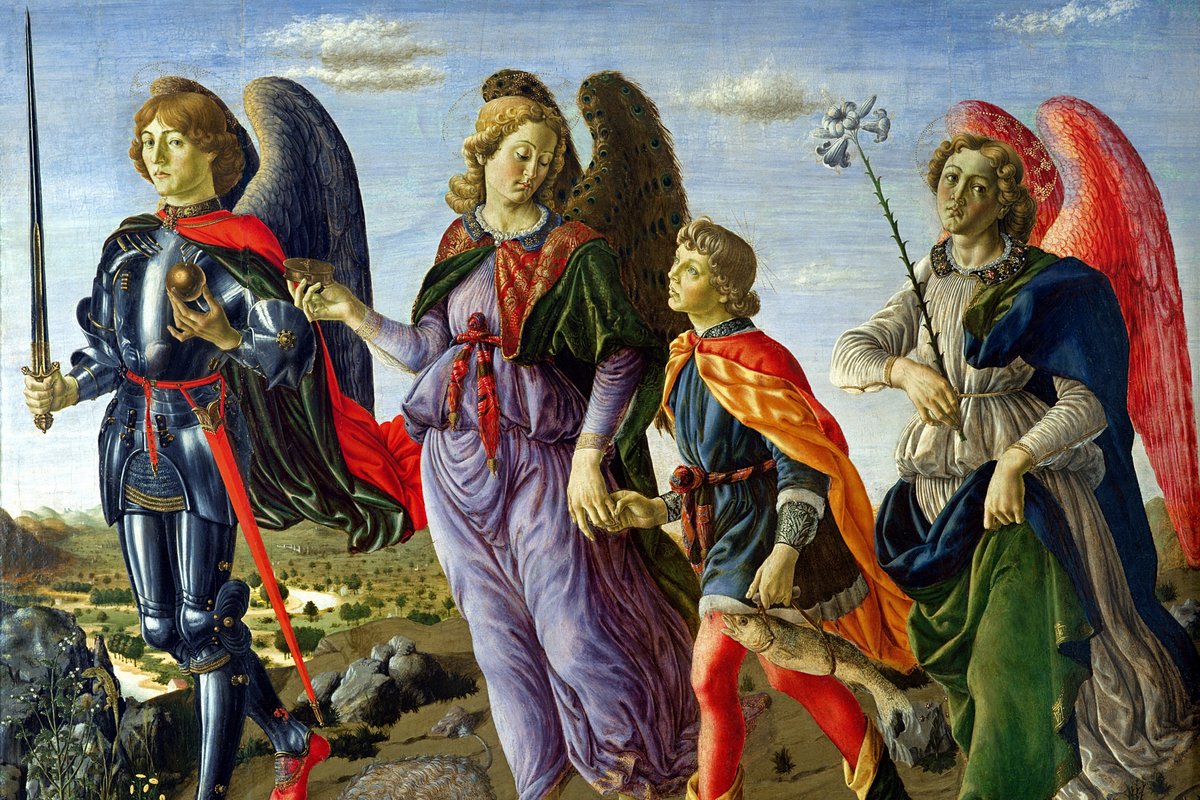
Michael's name means "Who is like God?" — traditionally read as a challenge thrown at the pride of the rebel angels who set themselves up as God's equals. He is one of only a handful of angels named directly in the Bible, alongside Gabriel and (in the Catholic and Orthodox traditions) Raphael — the three archangels honored together on a single feast day, September 29, precisely because Scripture names all three explicitly while leaving the identities and numbers of other angels largely undescribed.
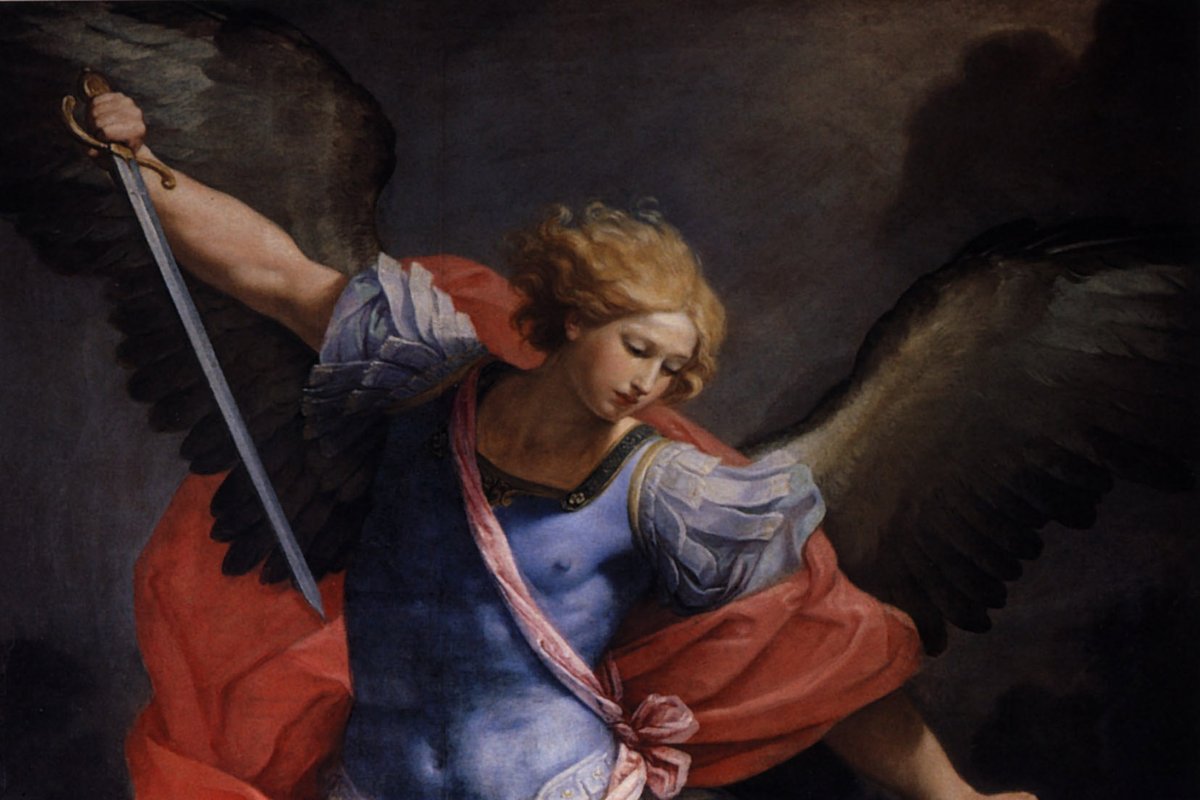
Guido Reni, "Saint Michael the Archangel," 1636, Santa Maria della Concezione, Rome — public domain.
The Book of Daniel describes Michael as "one of the chief princes" sent to help against the prince of Persia (Daniel 10:13, RSV-CE), and later as "Michael, the great prince, guardian of your people" (Daniel 12:1, NABRE) — language that casts him as Israel's specific heavenly protector during a period of political danger and captivity. By the time the Book of Revelation was written, several centuries later, his role had grown into something even larger: the commander of the angels "fighting against the dragon" and casting the ancient serpent down out of heaven (Revelation 12:7-9, RSV-CE). That single passage — Michael leading heaven's armies against Satan himself — became the foundation for nearly everything later Christian art and devotion would build around him.
A prayer born from a private vision
Michael's association with spiritual protection was reinforced dramatically in the nineteenth century. Pope Leo XIII composed the "Prayer to Saint Michael" in 1886, reportedly after a disturbing experience in which he described witnessing what he understood as a vision of demonic forces being permitted to test the Church more severely for a period of time. Whatever its exact nature — accounts of the vision itself come from those close to the pope rather than from Leo's own written testimony, so it is treated as pious tradition rather than doctrine — the prayer he wrote asking Michael to "defend us in battle" and be "our protection against the wickedness and snares of the devil" was recited after every low Mass for decades afterward and remains widely prayed by Catholics today, especially in times of personal or communal crisis.
Why the sword and the scales?
Christian art has depicted Michael with a sword since at least the early medieval period, visualizing his role as the leader of the heavenly armies described in Revelation. The scales are a later addition to his iconography, tied to a tradition — not a specific Bible passage — that pictures Michael weighing souls at the moment of judgment, balancing their deeds; this image likely absorbed older Near Eastern and Egyptian traditions of a divine figure weighing the heart of the dead, reshaped into a distinctly Christian form over the medieval centuries. Michael is also frequently shown standing on or spearing a dragon or serpent, a direct visual reference to Revelation 12, and in some traditions he carries a banner inscribed "Quis ut Deus" (Latin for "Who is like God"), turning his own name into a battle cry against Lucifer's pride.
Guido Reni's 1636 painting, shown above, brings both symbols together: Michael standing triumphant, sword raised, over a defeated figure at his feet — a composition that became one of the most copied images of the archangel in Western art, reproduced in churches and devotional prints across Europe for centuries afterward.
Michael in Jewish and early Christian tradition
Long before Christian art settled on Michael's familiar sword-and-scales appearance, Jewish tradition had already given him a prominent role as a heavenly intercessor and guardian of Israel, reflected in the Book of Daniel's description of him as "your prince" watching over God's people during exile. Early Christian communities carried that role forward, and devotion to Michael as a healer and protector spread widely in the Eastern Church, where numerous shrines and later basilicas were dedicated to him — long predating his more militant, sword-bearing image in Western medieval art. This layered history is part of why Michael's story feels less like a single tale and more like a role that deepened gradually across centuries of Jewish and Christian tradition.
Why people turn to Saint Michael today
Because his story is fundamentally about protection — of Israel in Daniel, of heaven itself in Revelation — Michael has become the angel most associated with guarding a home, a family, or a threshold. He is also recognized as patron of soldiers, police officers, and paramedics, professions that likewise stand watch against danger on others' behalf. That's part of why his image remains one of the most requested pieces of sacred art: it's less a decoration than a quiet, standing reminder of watchfulness, much like devotion to guardian angels more broadly, though Michael's is a protection understood as far more forceful and public in scale.
Shrines built on the strength of a single name
Michael's reputation as heaven's defender has produced some of Christendom's most dramatic sacred sites, often built, according to local tradition, on spots where he was believed to have appeared. Mont Saint-Michel in Normandy, France, grew from a small oratory built after a bishop reported a vision of the archangel in the eighth century into a fortified abbey perched on a tidal island, one of the most recognizable pilgrimage sites in Europe. In Italy, the Sanctuary of Monte Sant'Angelo on the Gargano peninsula marks a cave where Michael was likewise said to have appeared, and has been a continuous site of pilgrimage since late antiquity, predating even Mont Saint-Michel by several centuries. These sites reflect a consistent pattern across Michael's veneration: unlike saints remembered chiefly through relics of an earthly body he never had, devotion to him clusters instead around places associated with his appearances and interventions, treated by the Church as matters of pious tradition rather than formally defined dogma, but venerated continuously for well over a thousand years regardless.
Trivia
Why is Saint Michael the Archangel shown holding a sword and scales?
Is Michael called an archangel in the Bible?
What is Saint Michael's feast day?
What is Saint Michael the Archangel the patron saint of?
Related Reading