The Seven Archangels in Catholic Tradition

The three the Church actually names
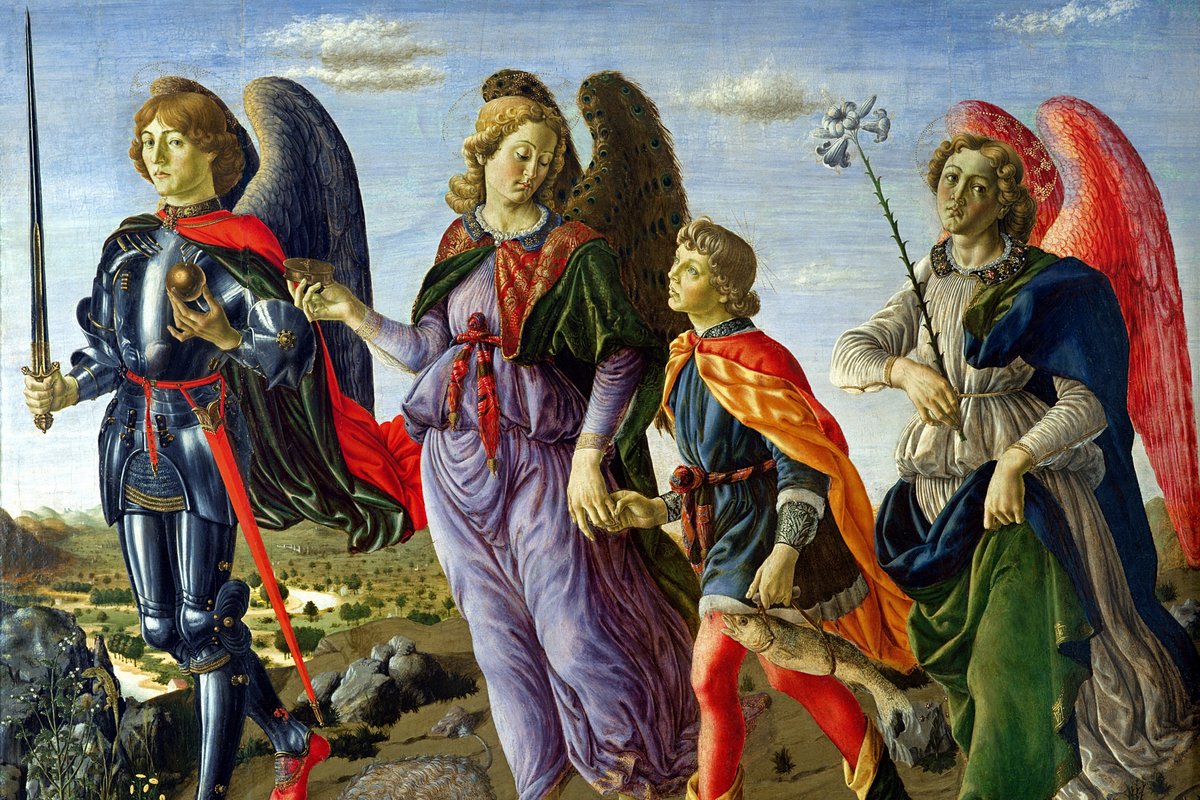
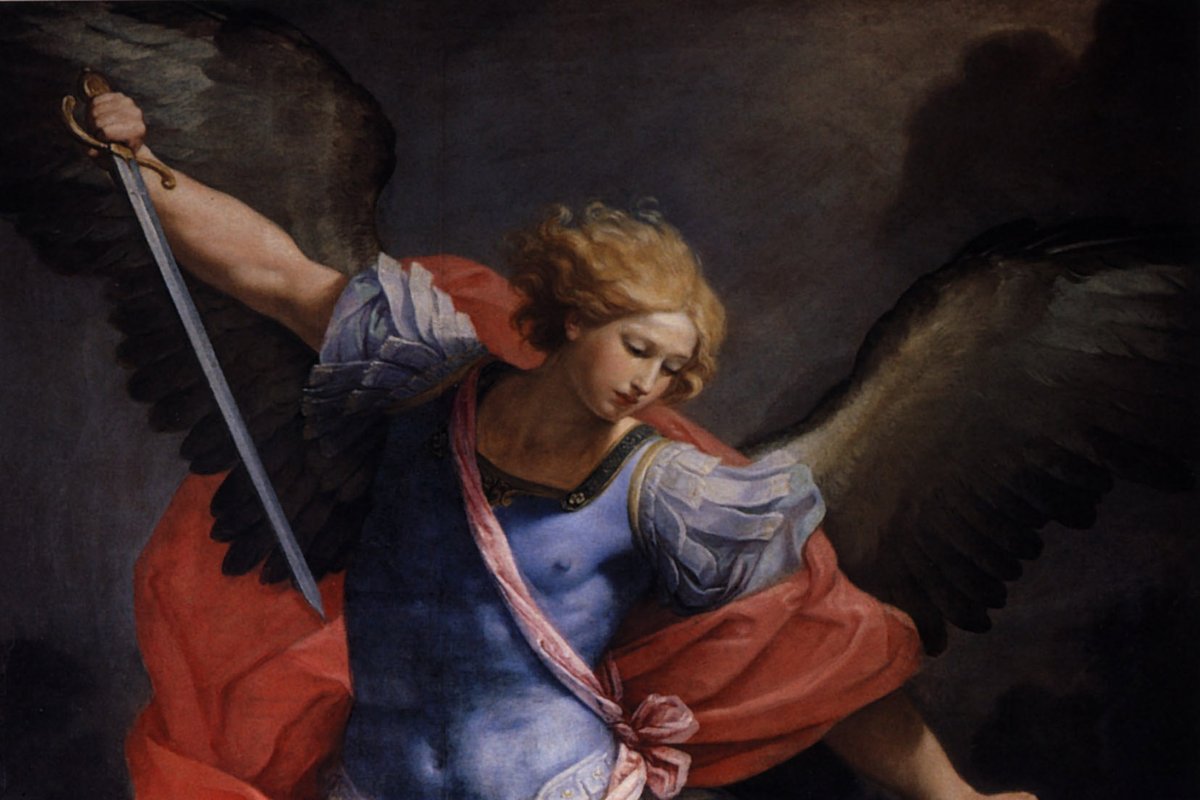
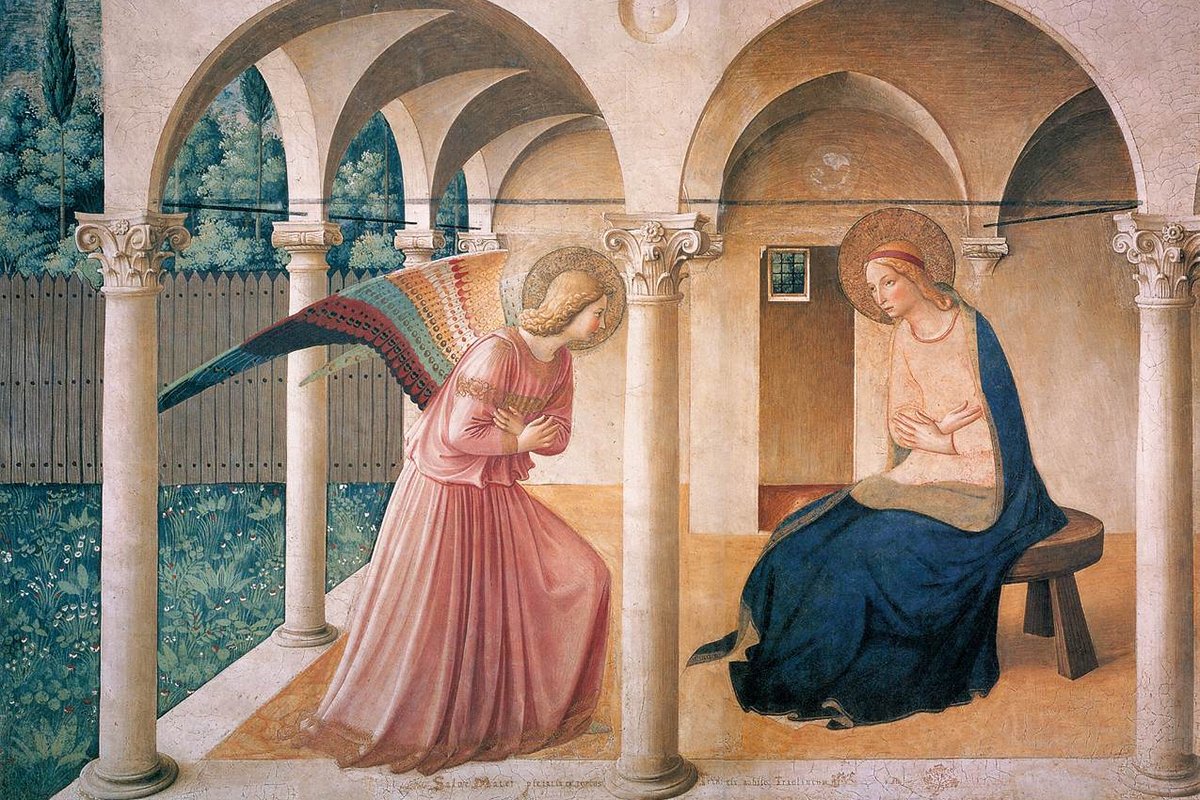
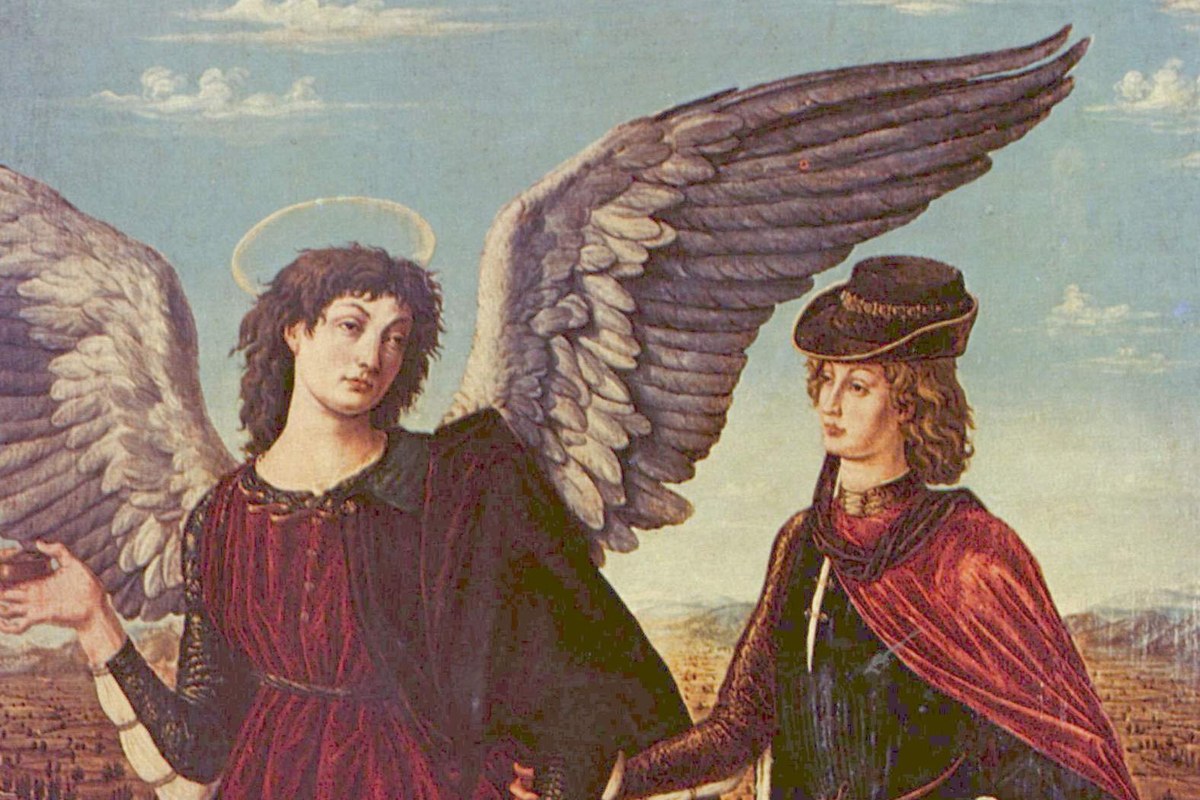
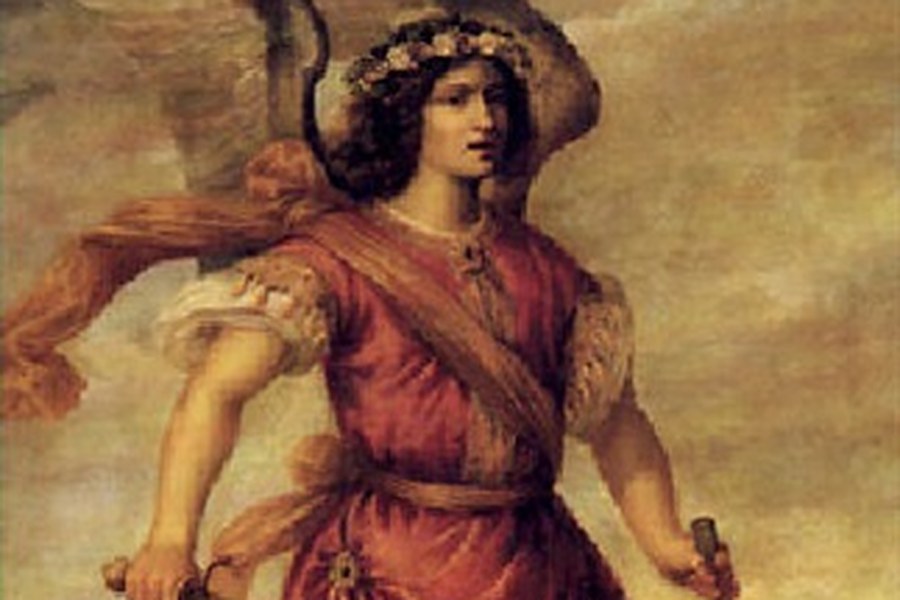
Start with what's certain: the Catholic Church officially venerates exactly three archangels by name — Michael, Gabriel, and Raphael. Each appears, named, in canonical Scripture: Michael in the Book of Daniel, the Letter of Jude, and Revelation; Gabriel in Daniel and Luke's Gospel, where he announces both John the Baptist's and Jesus's births; Raphael throughout the Book of Tobit, where he guides and heals as a hidden traveling companion. All three now share a single feast day, September 29, which the Church created by combining what had once been three separate celebrations. This blog covers each of them individually — see Saint Michael the Archangel, Saint Gabriel the Archangel, and Saint Raphael the Archangel.
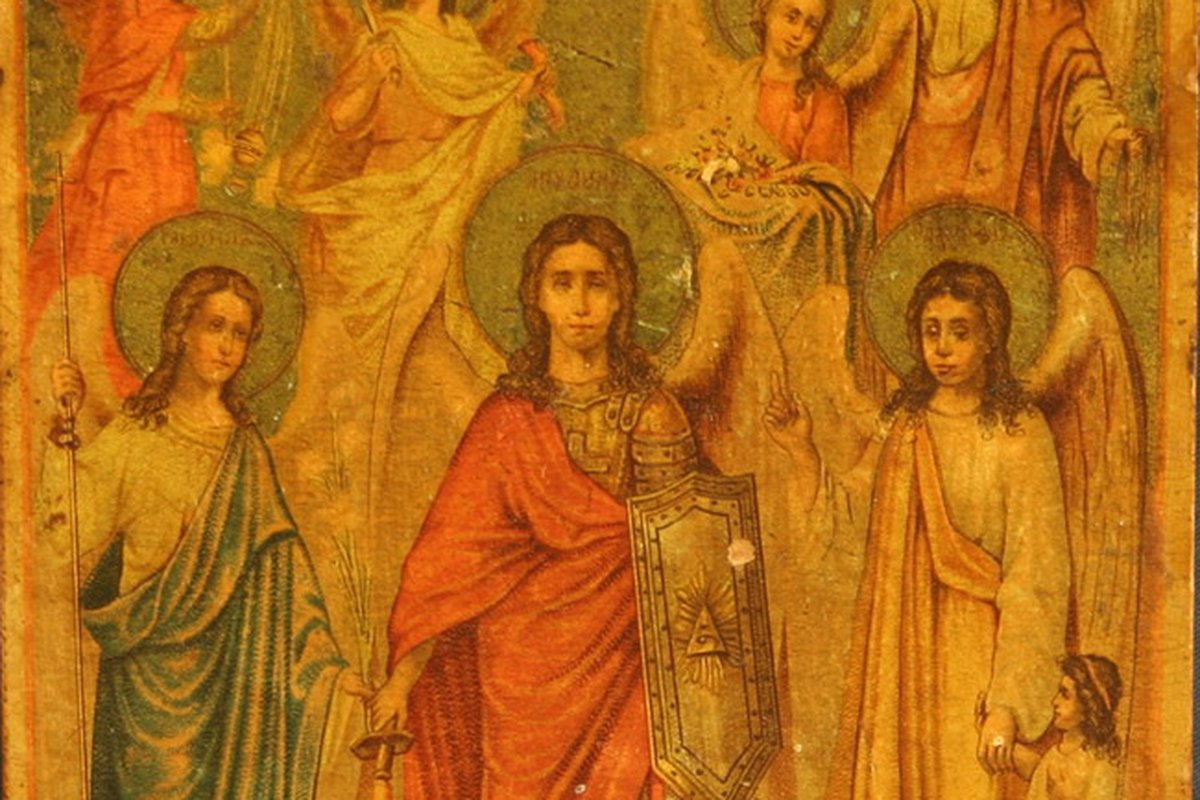
Unknown artist, 'Council of the Seven Holy Archangels,' Russian icon, early 20th century — public domain.
That's the official picture, and it's worth being precise about it before going any further: no other angel is named or venerated by the Catholic Church with the same liturgical standing as these three.
Where "seven" comes from
The idea of seven archangels is older and stranger than a simple expansion of the list of three. Its nearest biblical foothold is a single verse in the Book of Tobit, where Raphael, revealing his true identity at the end of the story, says: "I am Raphael, one of the seven angels who stand and serve before the Glory of the Lord" (NABRE, Tobit 12:15). Notice what the verse does and doesn't say — it places Raphael among seven angels of high standing, but it never calls them "archangels," and it names none of the other six.
The fuller tradition of seven named archangels comes from the Book of Enoch, a Jewish apocalyptic text from roughly the last centuries BC. It is not part of the Catholic biblical canon — though the Ethiopian Orthodox Church does regard it as Scripture — and its lists of archangels vary somewhat between manuscripts, but typically include Michael, Gabriel, Raphael, Uriel, and a rotating cast of additional names such as Raguel, Sariel, and Remiel. This is squarely apocryphal, extra-biblical material: colorful, ancient, and influential on later devotion, but never part of the Church's official doctrine.
Enoch's angels aren't presented as abstract figures, either — the text assigns each one specific cosmic responsibilities, watching over thunder, the seasons, human spirits, or the movements of the stars, in a way that reflects the period's broader fascination with ordered, hierarchical spiritual realms. That level of specificity is part of why the book proved so popular in certain Jewish and early Christian circles even after it fell outside the settled biblical canon: it offered a detailed answer to questions Scripture itself leaves largely unaddressed, namely how the unseen world of angels is actually organized.
Why the Church pulled back
The Church didn't simply ignore this wider tradition — at one point, it actively moved against it. In 745, the Council of Rome, held under Pope Saint Zachary, condemned devotion to named angels beyond Michael, Gabriel, and Raphael, responding directly to a cult that had grown up around a supposed angel called "Uriel," promoted by a heretical figure active in the Frankish church at the time. The concern wasn't abstract: unregulated devotion to invented or extra-biblical angelic names was seen as opening the door to superstition and practices the Church considered incompatible with sound doctrine.
That caution has held ever since. The modern Vatican Directory on Popular Piety continues to discourage devotion to angels under names not found in Scripture, explicitly making an exception only for Gabriel, Raphael, and Michael — a direct, centuries-long throughline from the eighth-century council to today's liturgical practice.
The Church's underlying worry has never really been about angels themselves, but about where invented religious devotions can lead once they take on a life of their own, detached from any accountable teaching authority. A named angel with an assigned cosmic role, prayed to outside any framework the Church can examine and correct, opens a door to exactly the kind of freelance spiritual practice — invented names, invented powers, invented promises — that centuries of pastoral experience taught the Church to treat with real caution, regardless of how sincerely devout the impulse behind it might be.
A wider devotion in the East
Not every Christian tradition drew the same line. Eastern Orthodox Christianity keeps a broader feast — the Synaxis of the Archangel Michael and the Other Bodiless Powers — commonly naming figures such as Uriel, Selaphiel, Jegudiel, and Barachiel alongside Michael, Gabriel, and Raphael. The Ethiopian Orthodox Church goes further still, formally venerating seven named archangels as part of a canon that includes the Book of Enoch itself. This blog's own article on Saint Uriel the Archangel covers how that particular figure is remembered across these different traditions, including where his devotion stands, and doesn't stand, within Catholic practice specifically.
Two traditions, held honestly
None of this is really a contradiction so much as a difference in how strictly each tradition ties devotion to the text of canonical Scripture. The Catholic Church's three-archangel practice isn't a rejection of angels' wider role in salvation history — it's a deliberate discipline, adopted after real historical experience with where looser devotion to invented angelic names could lead. Understanding both halves of the story, the restrained three and the wider seven, gives a fuller picture of just how seriously Christian tradition has always taken the question of who, exactly, stands closest to the throne of God.
Trivia
How many archangels does the Catholic Church officially recognize?
Where does the tradition of seven archangels come from?
Did the Catholic Church ever take action against devotion to angels beyond the three named archangels?
Do other Christian traditions venerate more than three archangels?
You May Also Like
Related Reading