Saint Uriel the Archangel

Who is Uriel?
Uriel's name is usually translated "God is my light," though some scholars read it as "God is my flame" — the Hebrew root can point either way, and both meanings suit an angel whose defining role, in the texts where he appears, is helping someone else see clearly. Unlike Michael, Gabriel, and Raphael, Uriel never appears in a book that made it into the Catholic biblical canon. He belongs instead to a set of Jewish writings from the centuries around the New Testament era, most notably 2 Esdras (also called 4 Ezra) and the Book of Enoch.
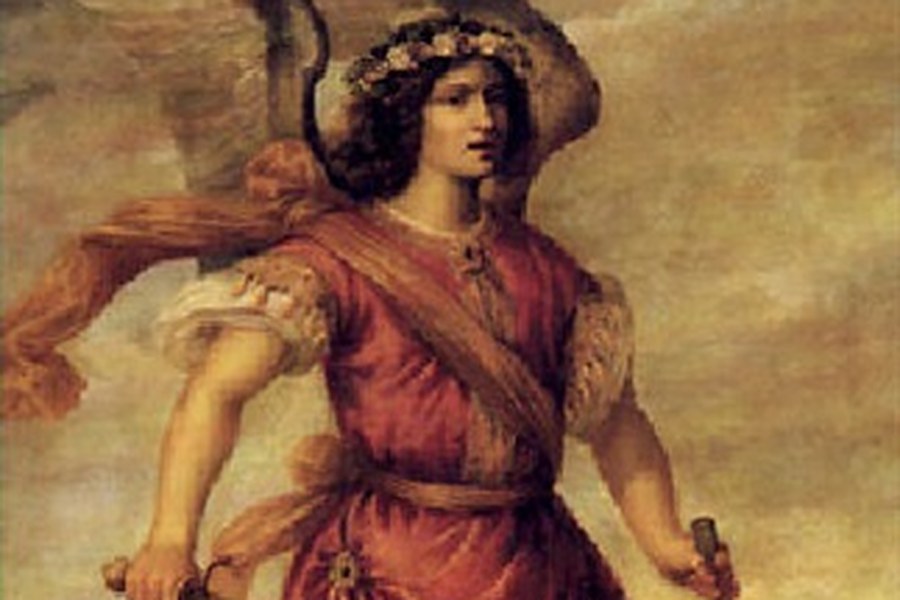
Attributed to Bartolome Roman, Archangel Uriel, Cuzco School, 17th century (Wikimedia Commons, public domain)
Where Uriel comes from, if not the Bible
In 2 Esdras, Uriel is sent to answer the prophet Ezra, who is wrestling with one of the oldest questions in Scripture: why God allows the righteous to suffer while evil seems to prosper. Rather than offering easy comfort, Uriel answers Ezra's anguish with harder questions of his own, pressing him to recognize the limits of human understanding before any answer can help. In the Book of Enoch, Uriel appears again as one of the angels who explain the order of the heavens and the natural world to Enoch during his visionary journeys. Both books were influential in Jewish and early Christian thought, but neither was ever accepted into the Bible as the Catholic Church canonized it.
Why Uriel isn't one of the "big three"
For a period in the early medieval Church, devotion to named angels beyond Scripture had grown widespread enough to concern Church authorities. A Roman council convened under Pope Zachary in 745 addressed the problem directly: it condemned the veneration of angels not named in the canonical Bible, and confirmed that only Michael, Gabriel, and Raphael could be licitly honored by name in the Roman rite. Uriel, known only from apocryphal writings, fell outside that boundary. That ruling is why Uriel has no official feast on the Roman Catholic calendar today, even though Michael, Gabriel, and Raphael share one on September 29.
This is a case worth being precise about: Uriel's absence from the official list is a matter of Church discipline regarding canonical sources, not a theological verdict on whether such an angel exists. Eastern Orthodox Christianity took a different path, and continues to honor Uriel alongside the other archangels at a shared feast each November — a reminder that this is a question tradition has answered differently across the Christian world, not one settled the same way everywhere.
Uriel's other traditional associations
Beyond the "angel of understanding" reputation, later folk tradition and popular devotional writing — much of it well outside any officially sanctioned source — has attached a scattering of other roles to Uriel over the centuries: guide of souls after death, angel presiding over thunder and earthquakes, or interpreter of prophecy. None of these carry any real weight beyond popular tradition, and readers should treat them the same way this article treats the rest of Uriel's story — as accumulated folklore layered onto a figure the Church itself never formally defined, rather than as settled teaching. Some later esoteric and occult traditions, well outside Christianity altogether, also adopted Uriel's name for their own purposes, borrowing the striking "God is my light" meaning without any connection to the Jewish apocalyptic texts where the name actually originates — a reminder that a name left officially undefined by the Church tends to accumulate meanings from wherever people find a use for it.
How art has depicted an angel with no fixed iconography
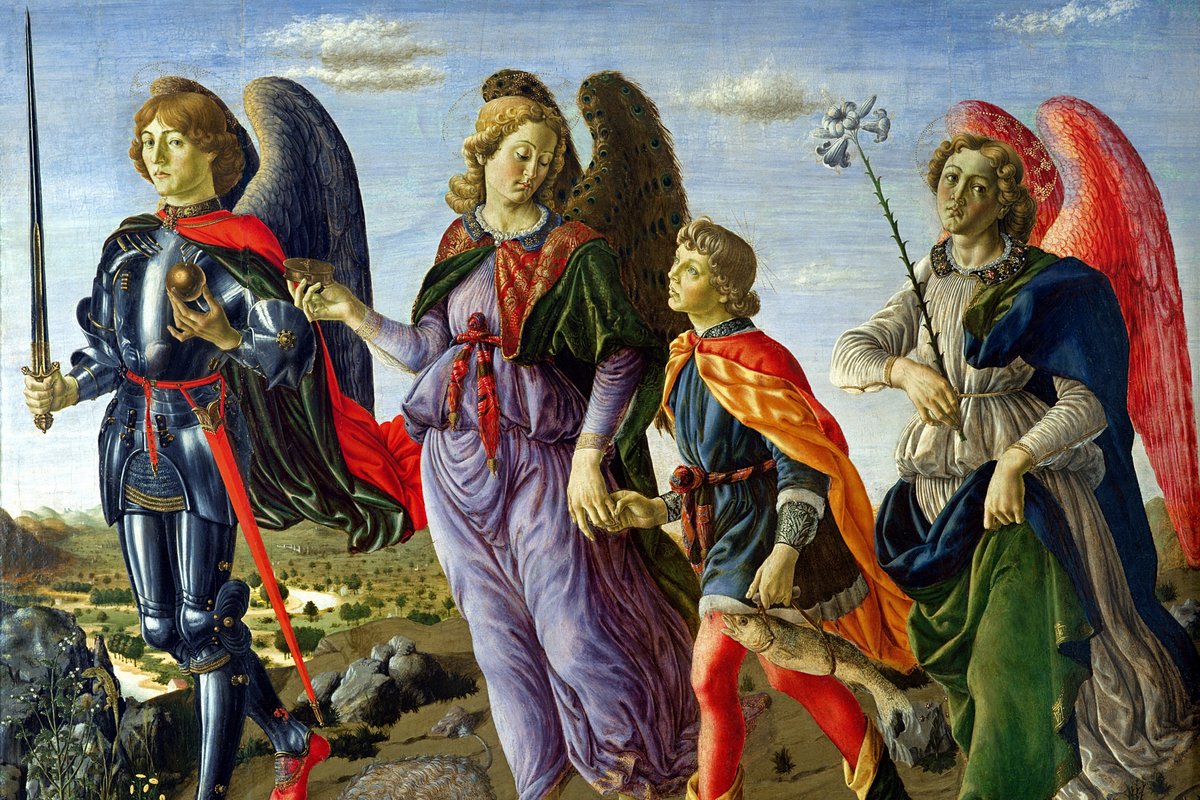
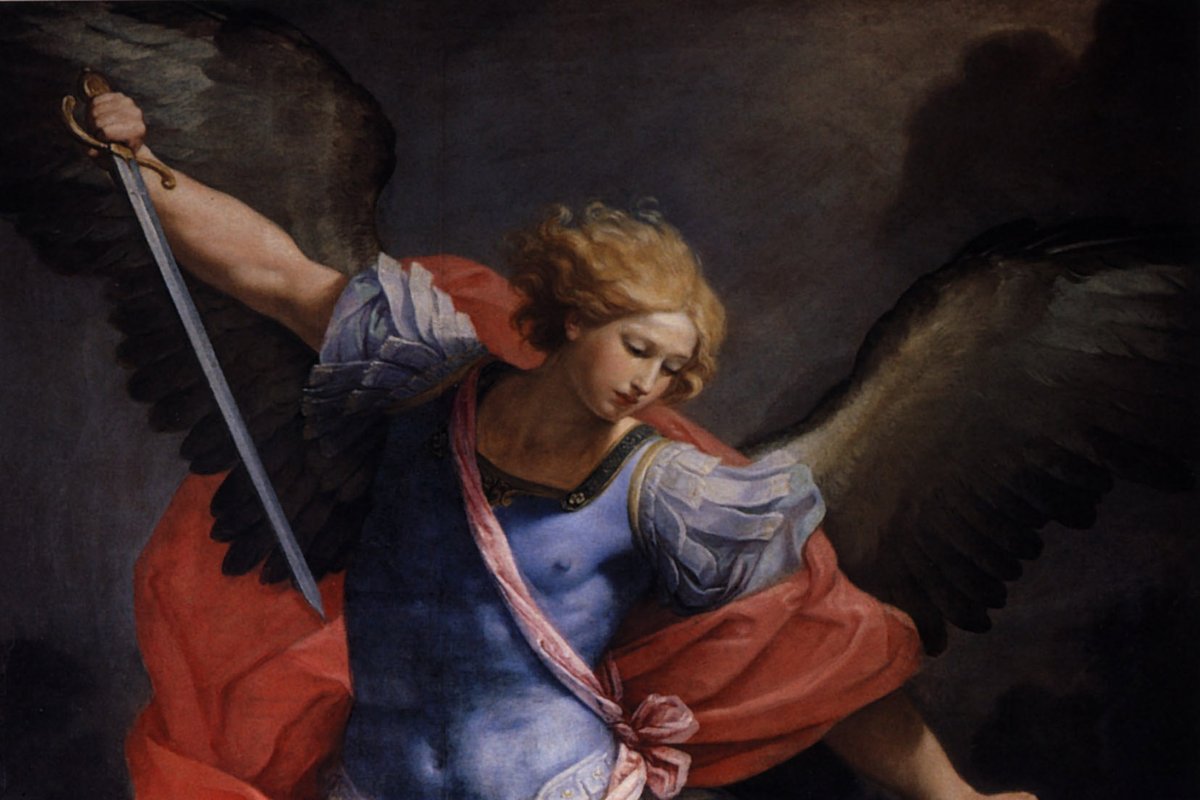
Because Uriel never received formal Church sanction, artists depicting him had no established, church-sanctioned visual tradition to draw on the way they did for Michael's sword and scales or Gabriel's lily. The result is considerably more variation than you'll find for the three canonical archangels: some paintings show Uriel as a soldier, echoing Michael's warrior imagery; others emphasize a flame or a scroll, gesturing at his connection to light and to the hard questions Ezra brought him. The 17th-century Spanish colonial painting illustrating this article, showing Uriel dressed as a soldier holding a sword and crowned with flowers, reflects one regional devotional tradition among several — Spanish colonial art in particular developed a notable, if unofficial, devotion to a fuller set of "seven archangels" beyond the canonical three, drawing partly on apocryphal sources like the ones behind Uriel's own story.
What Uriel has come to represent
Across the centuries, and independent of any official ruling, Uriel's association with Ezra's hard questions has given him a lasting reputation as the angel of understanding — the one who helps a troubled mind make sense of what it cannot yet fully grasp. That is the quality most Christian art and devotion has held onto: not a warrior or a messenger, but a source of clarity for anyone wrestling with a question too large to answer alone.
Trivia
Is Uriel named in the Bible?
Does the Catholic Church officially recognize Uriel as an archangel?
Then why does devotion to Uriel exist at all?
What does the name Uriel mean?
Related Reading