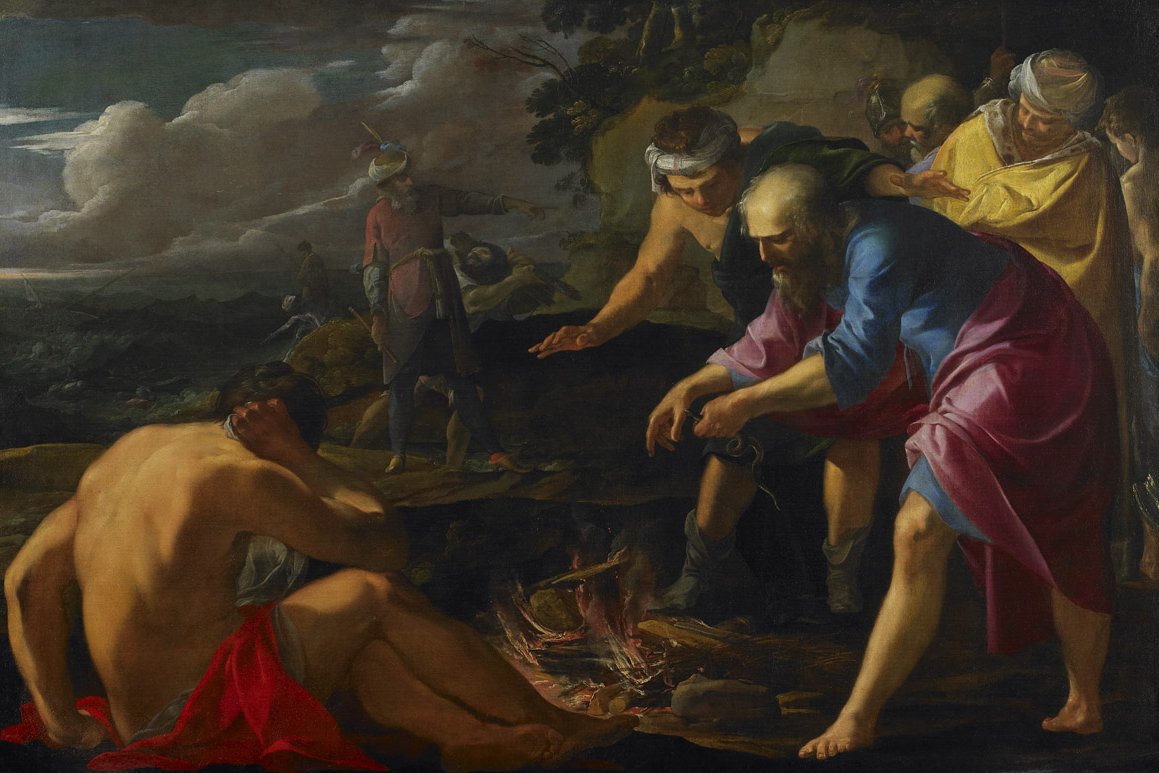
The Angel Who Calmed Paul in the Storm


A warning given, and ignored
Acts 27 opens with Paul already a prisoner, handed over to "a centurion named Julius of the Cohort Augusta" (Acts 27:1, NABRE) for transport to Rome, where he intends to appeal his case directly to Caesar. He isn't traveling alone in any real sense — Luke, writing in the first person here ("we went on board," Acts 27:2, NABRE), is with him, along with a small group of companions, on a voyage that will take them island-hopping across the eastern Mediterranean as autumn turns toward the dangerous winter sailing season.
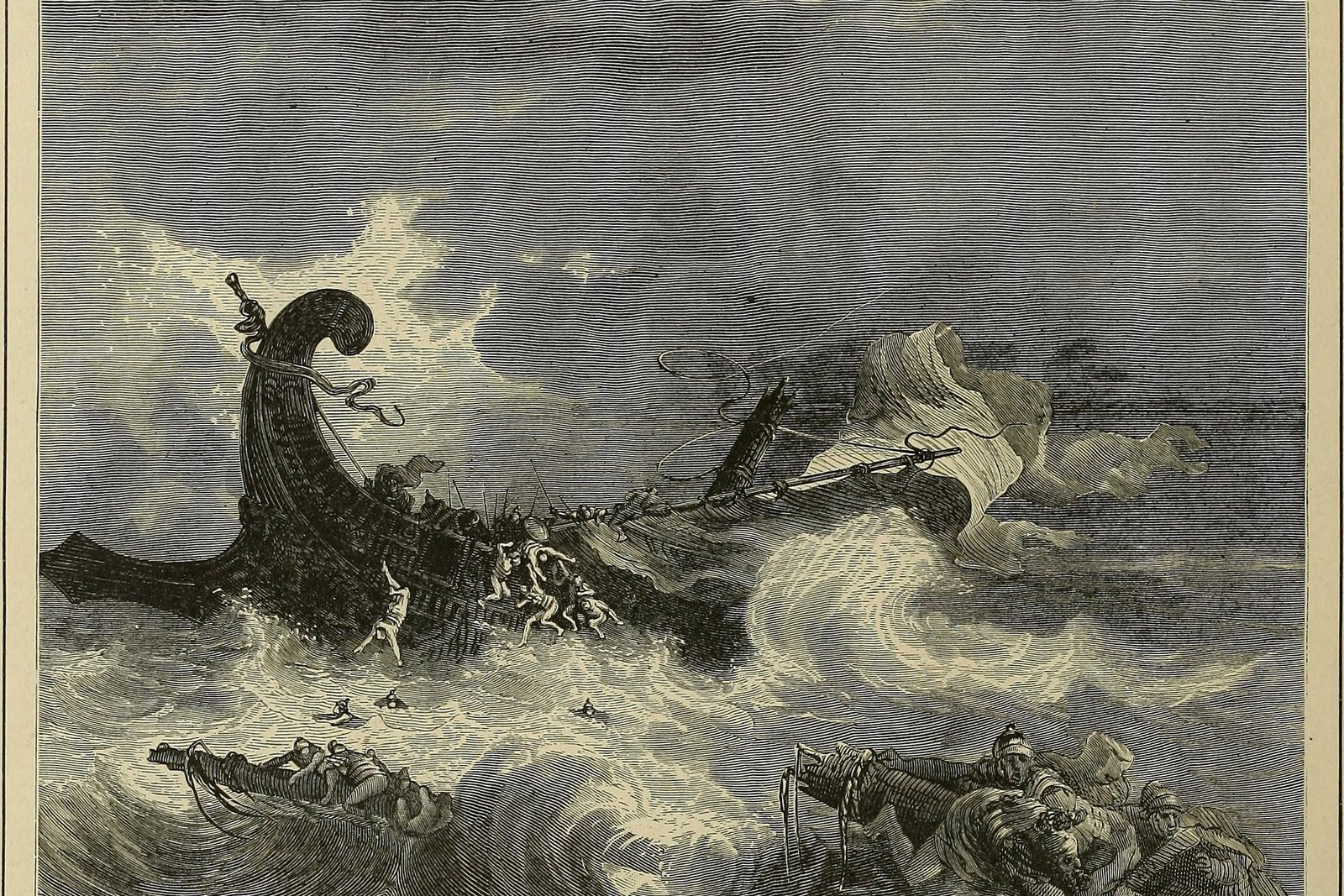
Gustave Doré, "St. Paul Shipwrecked" (Acts 27:43-44), engraving, 1866 -- public domain.
By the time the ship reaches a harbor on Crete, the weather has already turned risky enough that Paul — who elsewhere in his letters mentions surviving shipwrecks before — speaks up with a direct warning: "Men, I can see that this voyage will result in severe damage and heavy loss not only to the cargo and the ship, but also to our lives" (Acts 27:10, NABRE). It's a specific, serious prediction, not vague unease. The centurion in charge, however, "paid more attention to the pilot and to the owner of the ship than to what Paul said" (Acts 27:11, NABRE), and the majority decides to press on toward a better harbor for winter. They sail anyway.
Two weeks with no way to know which direction was up
The consequences arrive almost immediately. A hurricane-force wind Luke calls "a Northeaster" strikes the ship soon after it leaves Crete, and from there the situation deteriorates steadily: the crew can't head into the wind, they lash cables around the hull to hold it together, they throw cargo overboard, and eventually "with their own hands they threw even the ship's tackle overboard" (Acts 27:19, NABRE) in a desperate effort to lighten the vessel and keep it afloat.
What follows is one of the more physically harrowing passages in the New Testament, and Luke doesn't soften it: "Neither the sun nor the stars were visible for many days, and no small storm raged. Finally, all hope of our surviving was taken away" (Acts 27:20, NABRE). For sailors navigating entirely by sun and stars, the loss of both for an extended stretch meant total disorientation — no way to know their position, their heading, or how close land might actually be. Luke's own summary of the crew's morale by this point is as blunt as it gets: hope, entirely, was gone.
Paul stands up in the middle of it
It's at this lowest point that Paul speaks again — not with an "I told you so," but with something closer to comfort. "When many would no longer eat, Paul stood among them and said, 'Men, you should have taken my advice and not have set sail from Crete and you would have avoided this disastrous loss. I urge you now to keep up your courage; not one of you will be lost, only the ship'" (Acts 27:21-22, NABRE). The reminder of his earlier warning isn't gloating; it's establishing why what he's about to say deserves to be believed.
The reason for his confidence is specific and immediate: "For last night an angel of the God to whom (I) belong and whom I serve stood by me and said, 'Do not be afraid, Paul. You are destined to stand before Caesar; and behold, for your sake, God has granted safety to all who are sailing with you'" (Acts 27:23-24, NABRE). It's a short message, delivered without spectacle in Luke's account — no description of light or appearance, just an angel standing beside Paul in the night and speaking plainly. And its content does two things at once: it reassures Paul personally about his own destiny, and it extends that same safety, explicitly, to everyone else trapped on the same sinking ship — soldiers, sailors, and fellow prisoners alike, none of whom had any particular claim on Paul's God.
Paul's closing line to the crew makes his own certainty unmistakable: "Therefore, keep up your courage, men; I trust in God that it will turn out as I have been told" (Acts 27:25, NABRE). Not hope. Trust, stated as settled fact, based entirely on a message he alone had received.
What actually happened, days later
Luke doesn't let the promise sit untested for long. The storm continues, the ship eventually strikes a sandbar and begins breaking apart, and in the chaos of the wreck, the soldiers guarding the prisoners "planned to kill the prisoners so that none might swim away and escape" (Acts 27:42, NABRE) — a real, immediate threat to Paul's life that had nothing to do with the weather at all. It's the centurion, wanting specifically "to save Paul," who stops them (Acts 27:43, NABRE), and Luke records the outcome plainly: some swam, others clung to planks and wreckage, "In this way, all reached shore safely." (Acts 27:44, NABRE) — every single person on board, exactly as the angel had told Paul weeks before the ship ever ran aground.
A message built for more than one man
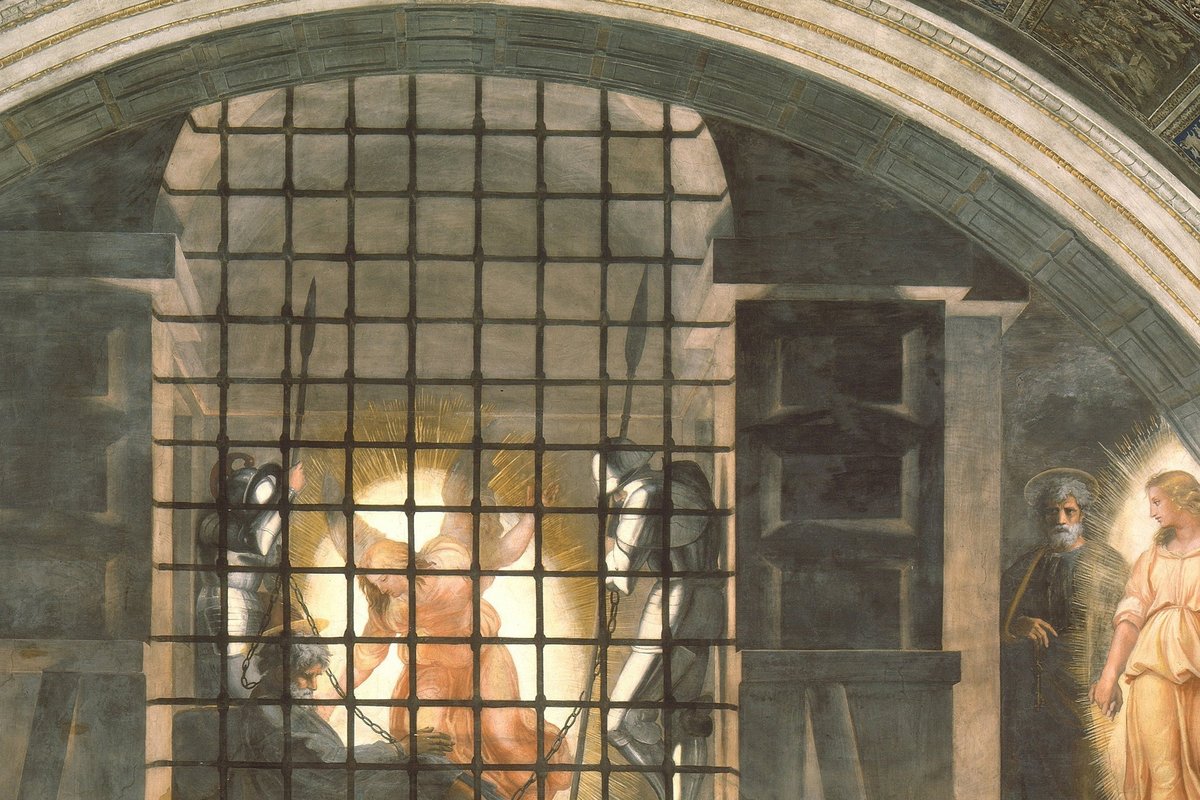
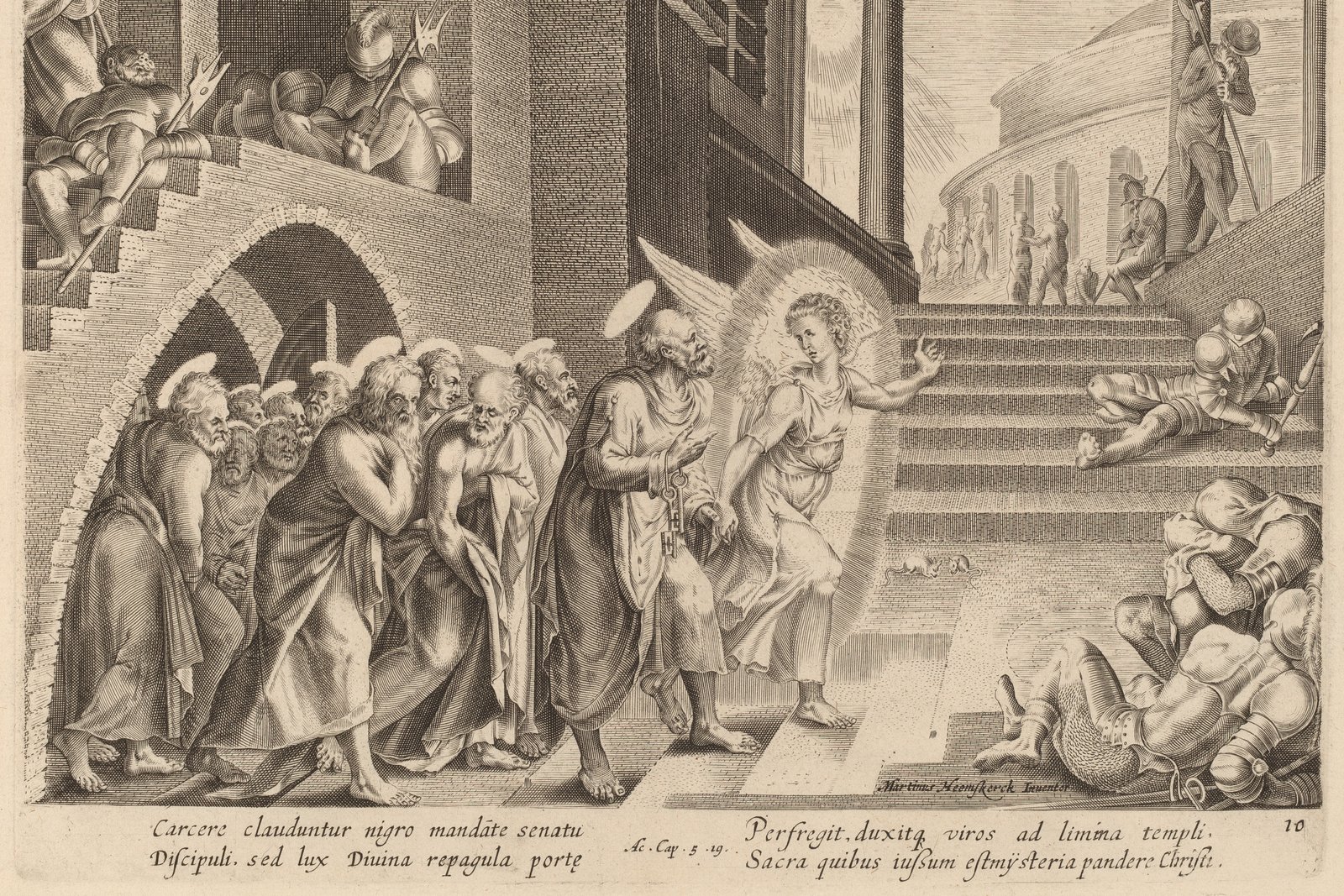
What sets this scene apart from some of Scripture's other angelic appearances is how deliberately its reassurance reaches beyond the one person receiving it. The angel doesn't simply promise Paul his own survival — he links it explicitly to the survival of the whole company around him, tying one man's unfinished purpose (standing before Caesar) to the safety of everyone caught in the same danger. It's a pattern that echoes elsewhere in Acts, where an angel frees Peter from a Jerusalem prison with a similarly brief, purposeful message rather than an elaborate vision — divine reassurance delivered at exactly the moment despair has taken hold, and confirmed, days later, in exactly the way it was promised.
Trivia
Why was Paul on a ship in the first place?
Did Paul warn anyone before the storm hit?
What exactly did the angel say to Paul?
Did everyone survive the storm, as the angel promised?
How does this episode compare to other angel appearances to the apostles?
Related Reading