Paul's Shipwreck on Malta


A prisoner heading toward Rome
By this point in Acts, Paul is no longer a free traveling missionary but a prisoner, being transported by sea toward Rome to have his case heard before Caesar, following his formal appeal after a long legal ordeal in Judea. The voyage itself becomes one of the most detailed and harrowing travel narratives anywhere in the New Testament — a journey that turns, well before reaching its intended destination, into a fight simply to survive.
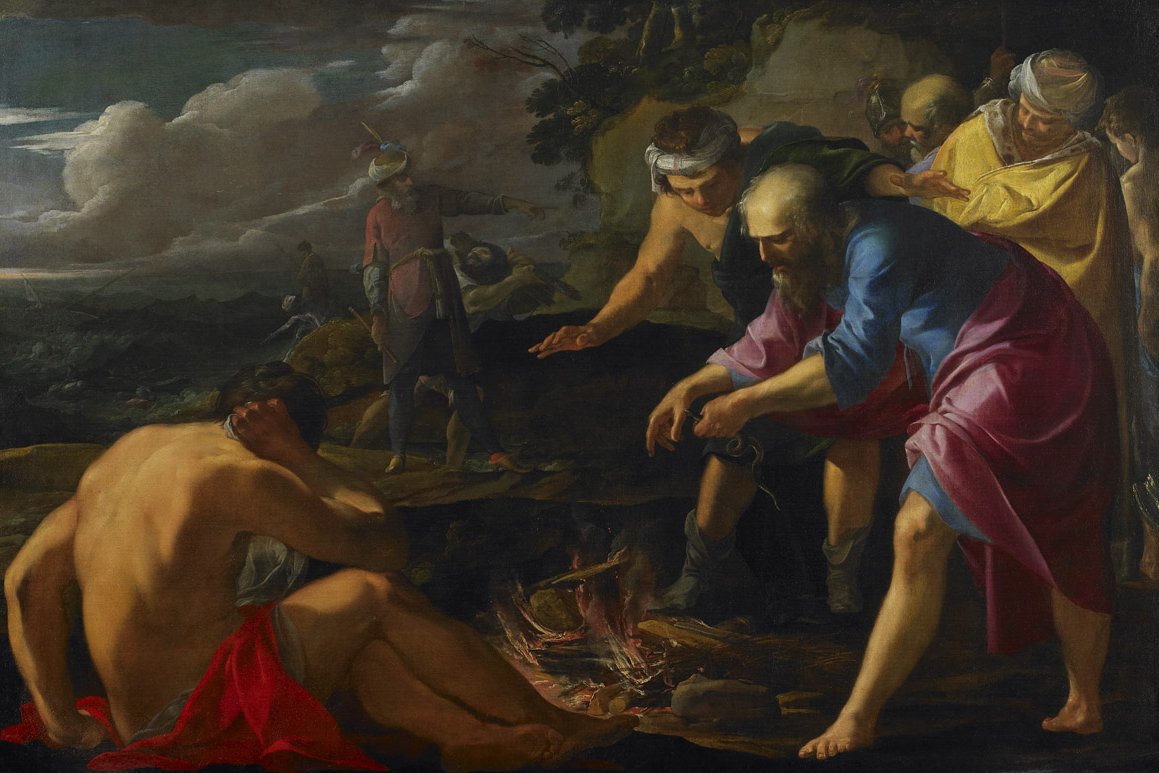
Laurent de La Hyre, Saint Paul Shipwrecked on Malta (17th century), public domain via Wikimedia Commons
Fourteen days without sun, stars, or hope
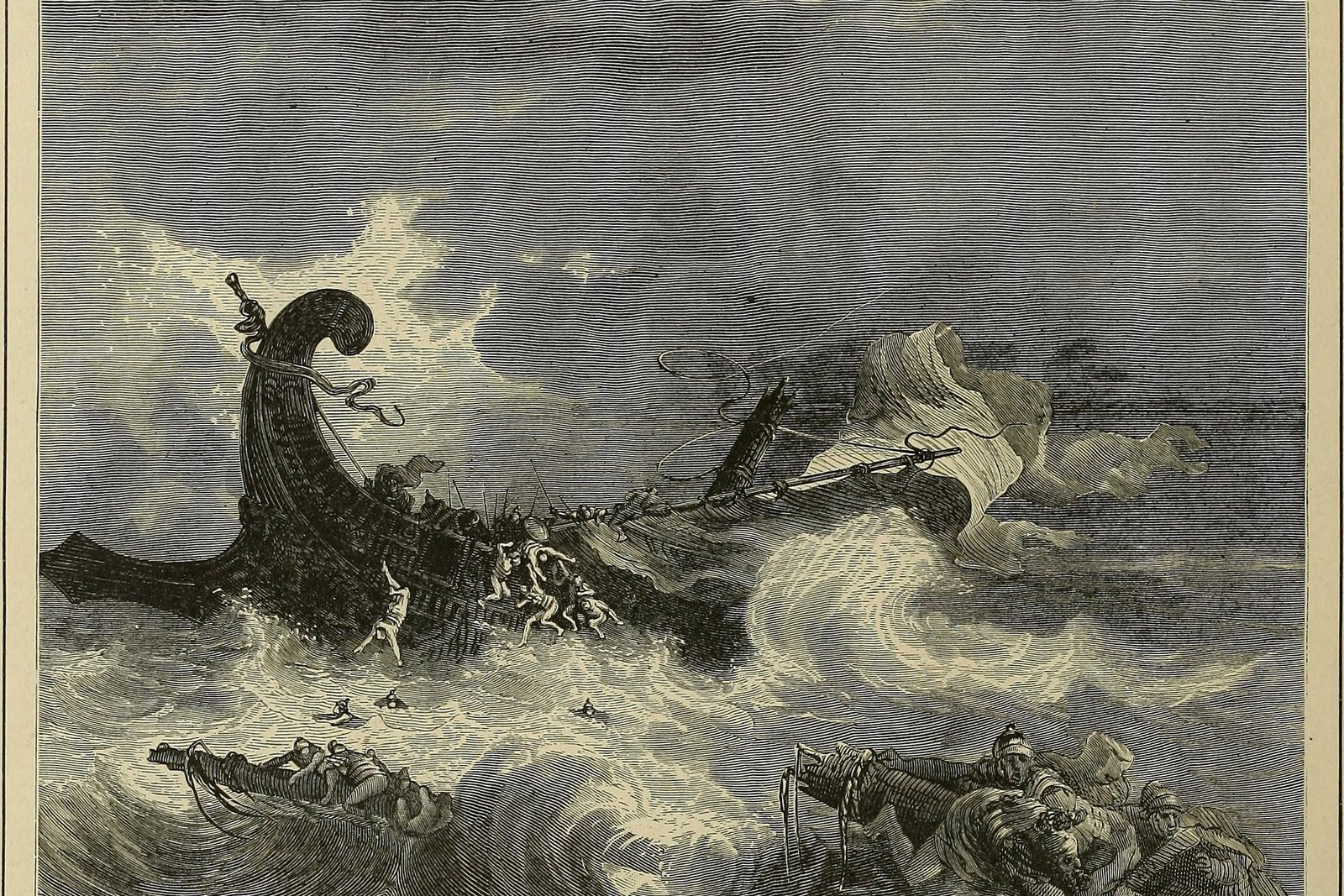
The storm that overtakes the ship is described with an intensity that makes clear this isn't ordinary rough weather. "Neither the sun nor the stars were visible for many days, and no small storm raged. Finally, all hope of our surviving was taken away" (Acts 27:20, NABRE). Navigation in the ancient world depended heavily on being able to read the sky; days without any visible sun or stars meant the crew had effectively lost all sense of their position, compounding the physical danger of the storm itself with genuine disorientation. By this point, despair has spread widely enough among those aboard that many have stopped eating entirely.
A prisoner's unlikely assurance
It's into this atmosphere of total despair that Paul, a prisoner with no formal authority over the ship or its crew, chooses to speak. He doesn't soften his earlier warning — he'd apparently advised against this leg of the journey to begin with — but he pivots immediately to a specific, concrete assurance: "I urge you now to keep up your courage; not one of you will be lost, only the ship" (Acts 27:22, NABRE). It's a striking claim to make in the middle of a storm severe enough to have already convinced experienced sailors that death was likely — a prisoner telling professional seamen, with apparent confidence, exactly what the outcome would be.
An angel's visit behind Paul's confidence
Paul's calm assurance to the crew didn't come from nowhere, and Acts is specific about its source. The night before, he tells the men, "an angel of the God to whom I belong and whom I serve stood by me and said, 'Do not be afraid, Paul. You are destined to stand before Caesar; and behold, for your sake, God has granted safety to all who are sailing with you'" (Acts 27:23-24, NABRE). It's a detail easy to pass over, but it reframes the whole scene: Paul isn't offering the crew his own optimism or seamanship — he's relaying a specific message he says he received, and his confidence rests entirely on it. Acts also records just how many lives were riding on that promise: "In all, there were two hundred seventy-six of us on the ship" (Acts 27:37, NABRE), a detail that underlines the scale of what was at stake in a storm most of those aboard had already concluded would kill them.
Protected specifically because of Paul
When the ship finally runs aground and begins to break apart near the island of Malta, the soldiers guarding the prisoners initially plan to kill them all, a standard precaution against escape during the chaos. Acts records a specific intervention on Paul's behalf: "the centurion wanted to save Paul and so kept them from carrying out their plan," ordering instead an organized evacuation — strong swimmers first, the rest following on planks and debris from the wrecked ship. "In this way, all reached shore safely" (Acts 27:43-44, NABRE) — Paul's assurance from the height of the storm holding true down to the final detail: not one life lost, only the ship itself.
A snake, and a changed verdict from the local crowd
Safety on Malta doesn't mean the danger is entirely over. While helping gather firewood for a fire the survivors had built, "a viper, escaping from the heat, fastened on his hand" (Acts 28:3, NABRE). The local inhabitants, watching this happen to a man who had just survived a shipwreck, draw an immediate conclusion rooted in their own beliefs about fate and justice: "This man must certainly be a murderer; though he escaped the sea, Justice has not let him remain alive" (Acts 28:4, NABRE). Paul simply shakes the snake off into the fire and shows no ill effects at all. The crowd, having expected him to swell up or drop dead, waits and watches — and when nothing happens, reverses its judgment completely, now concluding "that he was a god" (Acts 28:6, NABRE), swinging from one extreme interpretation to another based entirely on what they'd just witnessed.
Hospitality, and healing, before the voyage resumes
The shipwreck survivors didn't simply dry off and move on. Acts describes three months spent on Malta, beginning with the welcome of "a man named Publius, the chief of the island," who "received us cordially as his guests for three days" (Acts 28:7, NABRE). When Publius's own father fell seriously ill with fever and dysentery, "Paul visited him and, after praying, laid his hands on him and healed him" — and once word spread, "the rest of the sick on the island came to Paul and were cured" (Acts 28:8-9, NABRE). The islanders who had first suspected Paul of being a murderer marked by fate, and then swung to calling him a god after the snake bite failed to harm him, ended up instead simply grateful: by the time the group finally set sail again, the Maltese "paid us great honor" and supplied "the provisions we needed" for the rest of the journey to Rome (Acts 28:10, NABRE).
A journey defined by repeated, undeserved survival
What ties this whole episode together — the storm, the shipwreck, the snake bite — is a pattern of danger that by any ordinary expectation should have ended fatally, and didn't. Acts doesn't dwell on grand theological explanation in the moment; it simply narrates event after event where the expected outcome fails to materialize, centered on a man who had already, years earlier, been dramatically redirected from persecuting the early Church to become one of its most tireless missionaries. The shipwreck and its aftermath read, in the text's own telling, like one more chapter in that same larger pattern: a life repeatedly preserved through circumstances that, by every reasonable expectation on board that ship, should have gone very differently.
Trivia
Why was Paul on a ship in the first place?
How bad did the storm get before Paul addressed the crew?
What did Paul tell the crew during the storm?
Did everyone actually survive the shipwreck?
What happened to Paul on Malta after the shipwreck?
Related Reading