The Crossing of the Red Sea

Trapped between an army and the sea
The crossing doesn't happen at a moment of confidence. Pharaoh had already let the Israelites leave Egypt after the plagues, but Exodus describes him changing his mind and setting out after them with his army and chariots. Egypt's economy depended heavily on the labor of its enslaved population, and losing that workforce all at once appears to have outweighed, in Pharaoh's mind, whatever fear the plagues had briefly instilled in him.
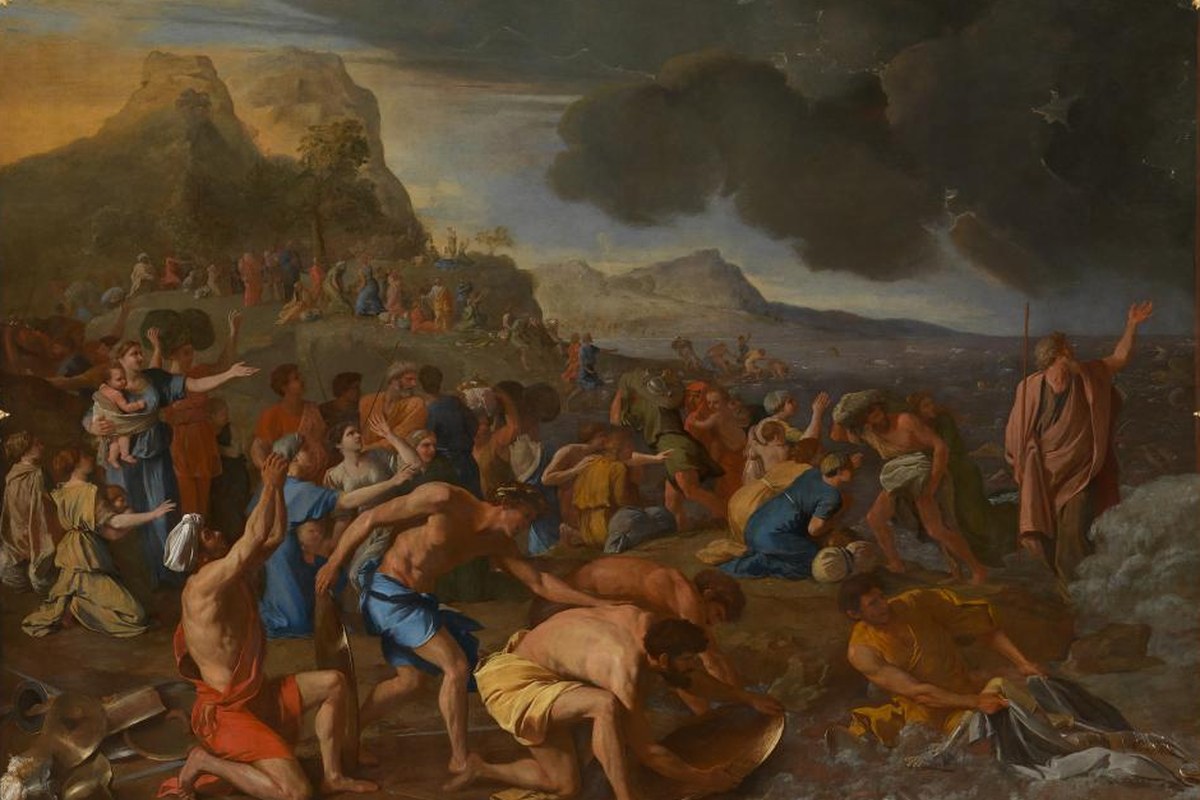
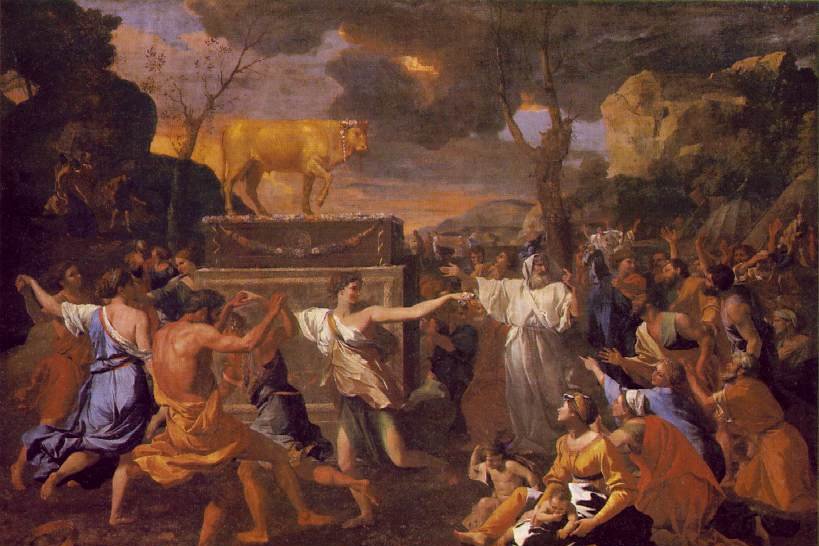
Nicolas Poussin, "The Crossing of the Red Sea," 1632–1634, National Gallery of Victoria — public domain.
By the time the Israelites reach the shore of the Red Sea, they have nowhere left to go — water ahead, an approaching army behind, and a landscape that leaves no room to slip past either. Exodus records the people's fear plainly, some even wishing they had stayed enslaved in Egypt rather than face this. Moses's response to that panic is worth noting on its own terms: rather than offering a plan, he tells the people, "The Lord will fight for you; you have only to keep still." (Exodus 14:14, RSV-CE) — a promise that asks for stillness rather than action, which is its own kind of difficult thing to ask of a terrified crowd. The miracle that follows doesn't happen to a confident nation. It happens to a frightened one, backed into a corner with no options left of its own making.
What the text says happened
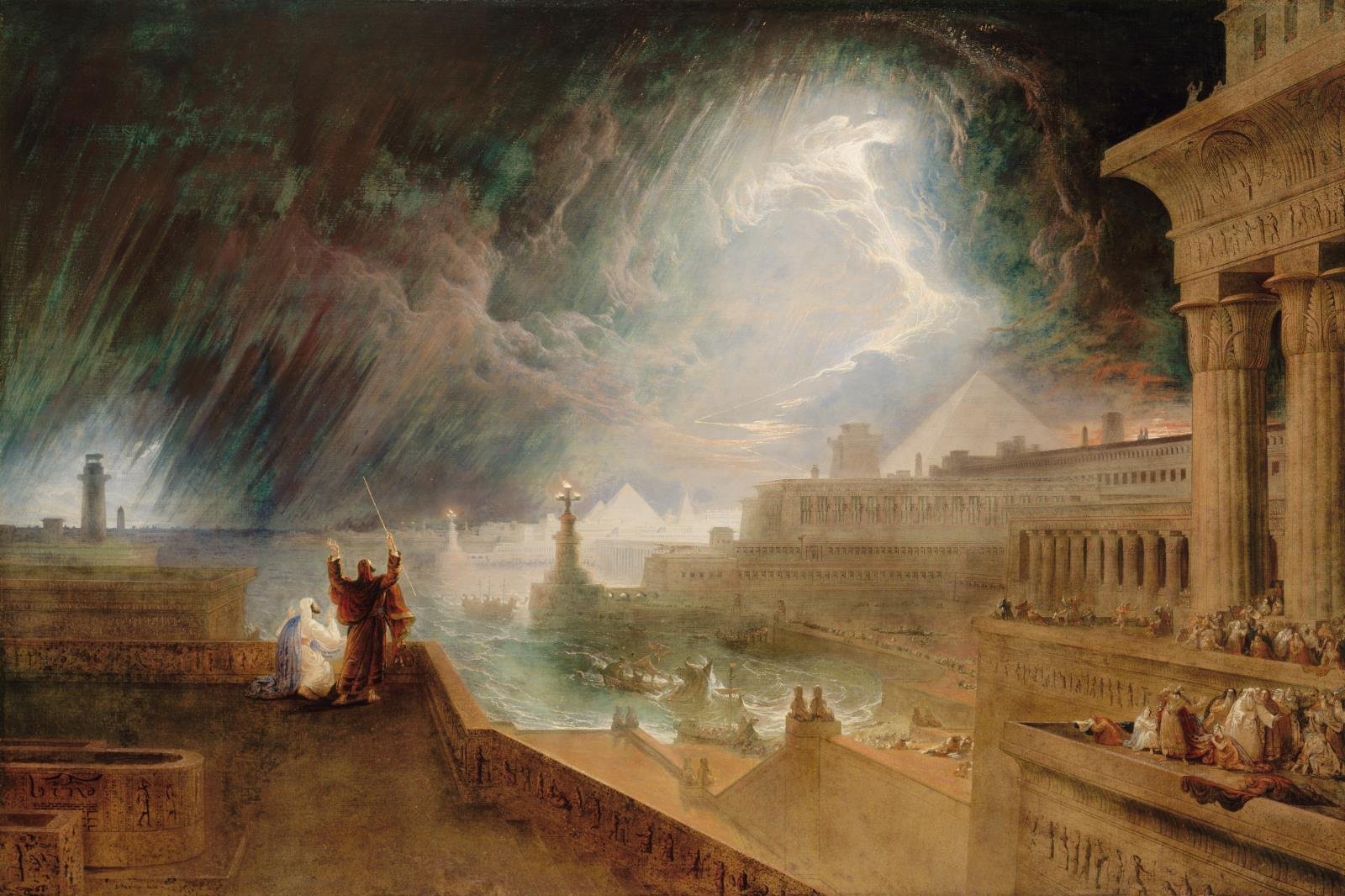
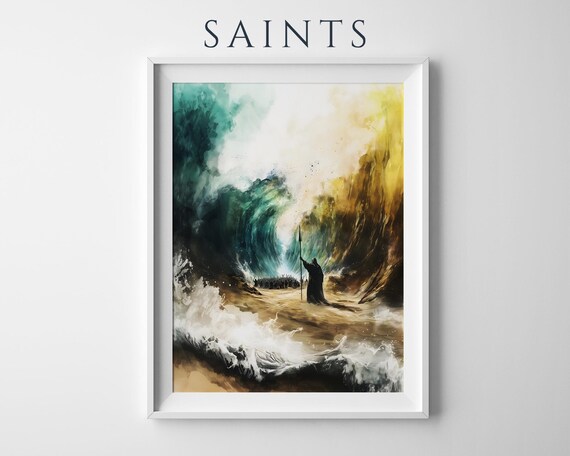
Exodus describes the moment with unusual physical precision: "The waters were split, so that the Israelites entered into the midst of the sea on dry land, with the water as a wall to their right and to their left." (Exodus 14:21-22, RSV-CE). The detail of an entire night's wind, rather than an instantaneous parting, is easy to miss — the text describes a sustained act, not a single gesture, turning the seabed itself into passable ground.
The same water, two different outcomes
The pursuing Egyptian army follows the Israelites onto the same dry seabed, and when the sea returns to its place, it closes over the pursuers rather than the pursued. The single act that delivers one side of the story ends the threat on the other — a detail that has made the crossing, since ancient times, as much a story about judgment as it is about rescue.
A song on the far shore
Exodus doesn't end the episode with the drowning of the Egyptian army — it ends it with a song. Once safely on the far shore, Moses and the Israelites sing what has come to be called the Song of the Sea, celebrating God as a "man of war" who has thrown Pharaoh's chariots into the sea, and Moses's sister Miriam leads the women in a matching celebration with tambourines and dancing. It's one of the oldest pieces of poetry preserved in the Hebrew Bible, and its placement matters: the narrative doesn't just report the deliverance, it stops to let the people respond to it, turning a rescue story into worship in the same breath.
How later tradition read the crossing
Christian tradition, especially the early Church Fathers, came to read the crossing as a foreshadowing of baptism — a people passing through water from slavery into freedom, leaving an old life behind on one shore and stepping into a new one on the other. Saint Paul gestures toward this reading directly, describing the Israelites as having been "baptized into Moses in the cloud and in the sea" (1 Corinthians 10:2). That typology is part of why the crossing of the Red Sea remains one of the standard readings proclaimed at the Easter Vigil in the Catholic Church to this day, read aloud in the middle of the night as a prelude to the Resurrection it's understood to prefigure.
Why the crossing still matters
More than any other single event in the Old Testament, the crossing of the Red Sea became Israel's foundational memory of what it meant to be delivered — referenced by later prophets and psalmists as the proof that God had acted decisively on their behalf, and central to the Jewish celebration of Passover down to the present day, when the Exodus story is retold at the Seder meal as if each generation had personally been brought out of slavery in Egypt. Echoes of the crossing surface throughout the rest of the Old Testament, from Isaiah invoking the same God who once dried up the sea as a source of hope for Israel's future restoration, to the Psalms' repeated retellings of the moment as shorthand for God's power to save. Christian art has often depicted the moment just after the crossing rather than the parting itself, as Nicolas Poussin does above: a crowd gathering their belongings and their fallen enemies' armor on the far shore, Moses still standing at the water's edge — relief only beginning to register after the danger has already passed.
Trivia
Why were the Israelites trapped at the Red Sea in the first place?
What exactly does the Bible say happened at the sea?
What happened to the Egyptian army?
Why does this story matter beyond its own moment?
Related Reading