The Ten Commandments Given to Moses at Sinai

A mountain on fire
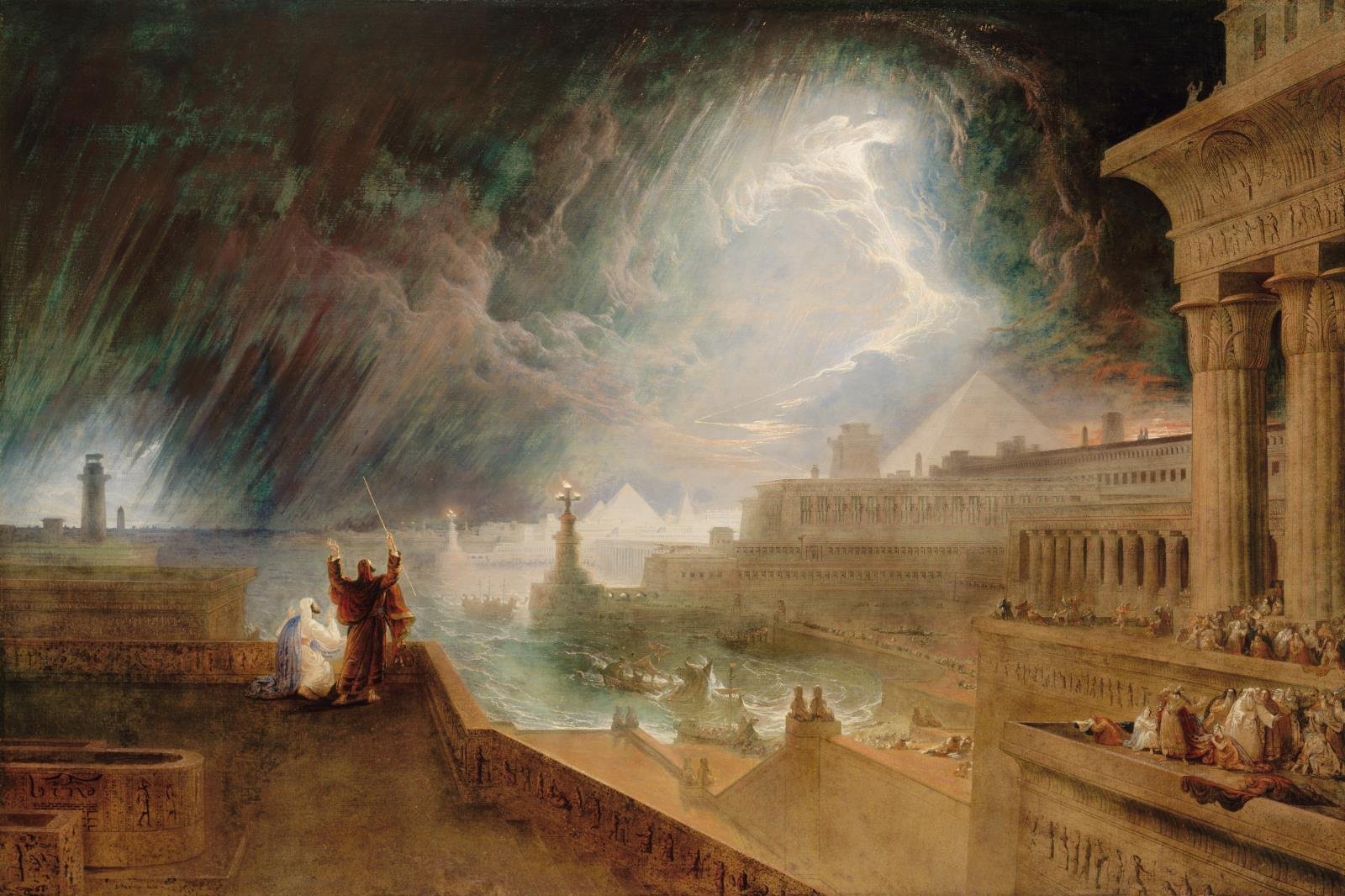
The Israelites have been out of Egypt for barely two months when they make camp at the base of Mount Sinai, and what happens next is described almost cinematically: "On the morning of the third day there were peals of thunder and lightning, and a heavy cloud over the mountain, and a very loud blast of the shofar, so that all the people in the camp trembled." (Exodus 19:16). Moses climbs into that cloud alone, and what he brings back down isn't a vague sense of divine approval — it's ten specific, concrete rules, the terms of a covenant between God and the people he has just freed.
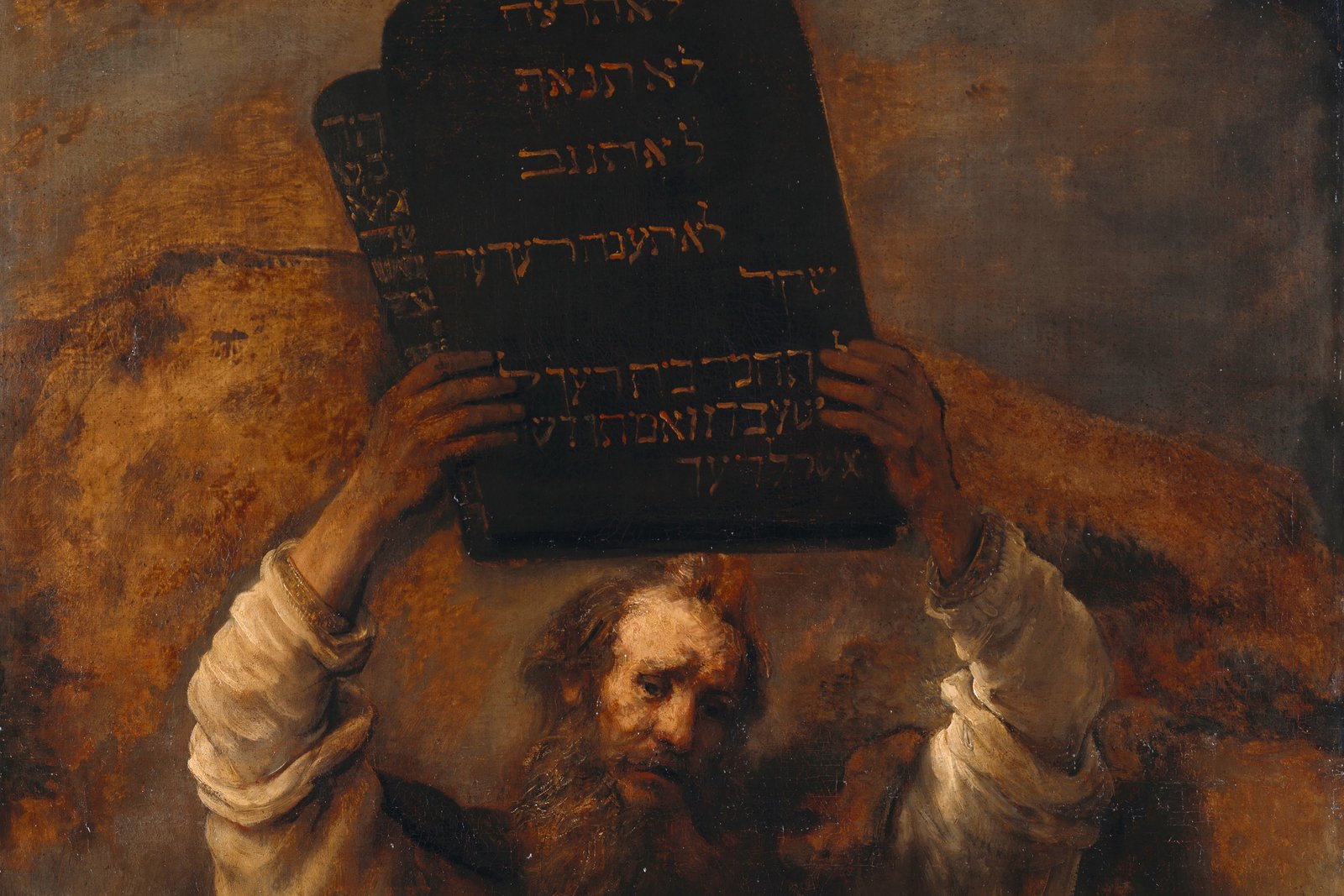
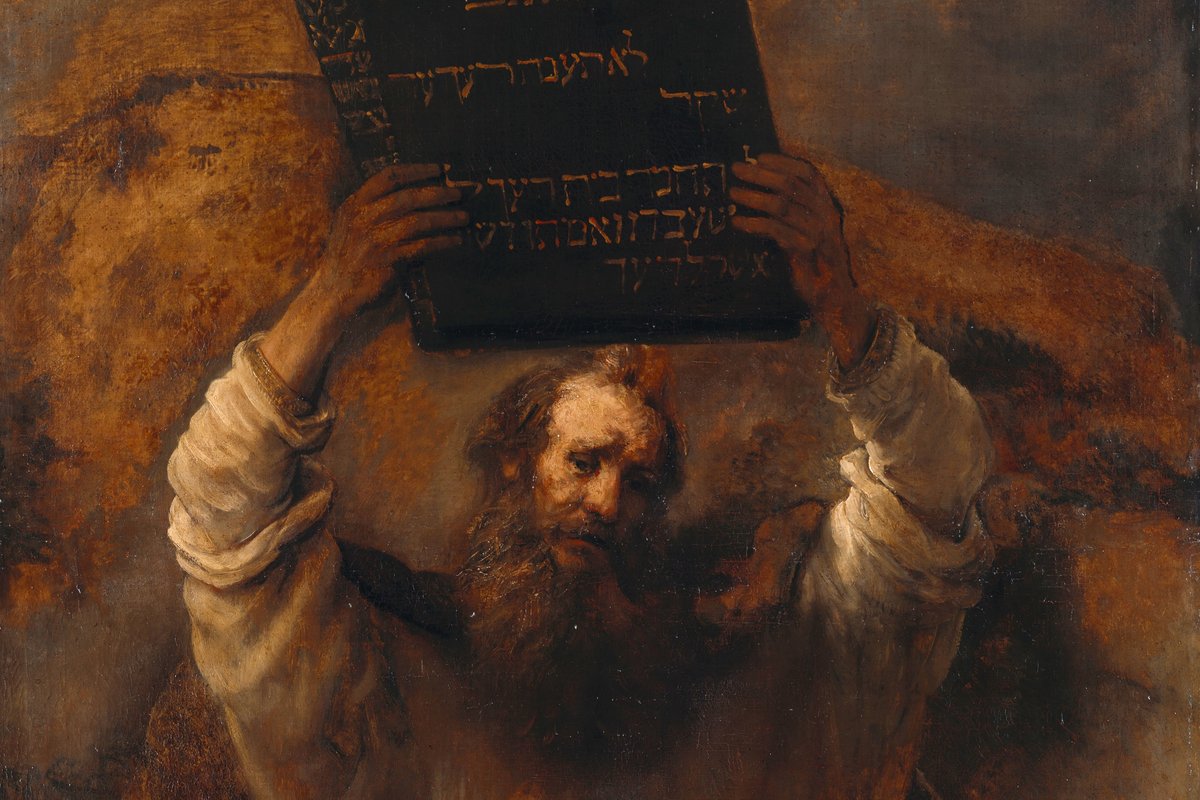
Rembrandt van Rijn, Moses with the Ten Commandments, 1659 (public domain)
The text introduces them without ceremony: "Then God spoke all these words" (NABRE, Exodus 20:1). No preamble, no negotiation — just the commandments themselves, laid out in Exodus 20:1-17 and repeated with minor variation decades later in Deuteronomy 5:6-21, when Moses recaps the law for the generation about to enter the Promised Land.
The ten, in order
You shall not have other gods beside me. The commandments open by naming Israel's God as the one who "brought you out of the land of Egypt, out of the house of slavery" (NABRE, Exodus 20:2) — the covenant is grounded in a historical act of rescue before it demands anything in return. Worship of any other god is ruled out entirely.
You shall not make for yourself an idol. No carved image of God, and no bowing down to images of anything else as if it were divine (NABRE, Exodus 20:4-5). In a world saturated with statues of Egyptian and Canaanite gods, this was a sharp departure from the religious norm.
You shall not invoke the name of the Lord, your God, in vain. More than a ban on swearing, this guards the reverence owed to God's name itself — using it carelessly, or invoking it falsely to back up a lie or an oath, treats the sacred as disposable.
Remember the sabbath day — keep it holy. Six days of labor, one day of rest, "for in six days the Lord made the heavens and the earth... but on the seventh day he rested" (NABRE, Exodus 20:11). The commandment ties weekly rest directly to the pattern of creation itself.
Honor your father and your mother. The first commandment concerning other people, and the only one paired with an explicit promise: "that you may have a long life in the land" (NABRE, Exodus 20:12).
You shall not kill. A prohibition on the unjust taking of human life, understood by Catholic tradition as the root of the Church's broader teaching on the dignity and protection of life at every stage.
You shall not commit adultery. A guard on marriage and on the trust between spouses.
You shall not steal. Respect for another person's property and rightful possessions.
You shall not bear false witness against your neighbor. Originally aimed at courtroom perjury, understood more broadly as a command to truthfulness.
You shall not covet. The commandments close by reaching past action into desire itself, naming a neighbor's house, wife, servants, and animals — "anything that belongs to your neighbor" (NABRE, Exodus 20:17) — as things not even to be wished for.
Why Catholics number them differently
Read that list in Exodus and you'll count more than ten discrete sentences — which is exactly why different Christian traditions divide them differently while still landing on ten. The Catholic Church, following Saint Augustine, treats the prohibition of other gods and of idols as a single first commandment (since idolatry is really an expression of that same sin), and then splits the final command against coveting into two: coveting a neighbor's spouse, and coveting a neighbor's goods. Most Protestant traditions instead give the ban on graven images its own separate slot as the second commandment, and merge the two coveting clauses into one. It's worth knowing this going in — a Catholic catechism list and a Protestant Sunday-school list can look like they disagree, when really they've just drawn the dividing lines in different places over the same ten commands.
Two tablets, not one long list
Tradition has long read the Ten Commandments as falling into two natural groups, corresponding to the two stone tablets Moses carried down the mountain rather than a single continuous list. The first three commandments govern the relationship between the people and God directly — worship, idolatry, and reverence for the divine name — while the remaining seven govern relationships between human beings: family, life, marriage, property, truthfulness, and desire. Christ himself pointed toward this same two-part structure centuries later when a scribe asked him which commandment was greatest, and he answered by naming love of God and love of neighbor as the two commandments on which "the whole law and the prophets depend" (NABRE, Matthew 22:40) — not a replacement for the Decalogue but a summary of the shape already built into it at Sinai. That structure is also why the Commandments have functioned, across centuries of Catholic moral teaching, as a workable framework for examining one's own conscience: the first three commandments prompt reflection on one's relationship with God, the rest on one's conduct toward others.
Golden calf, broken tablets
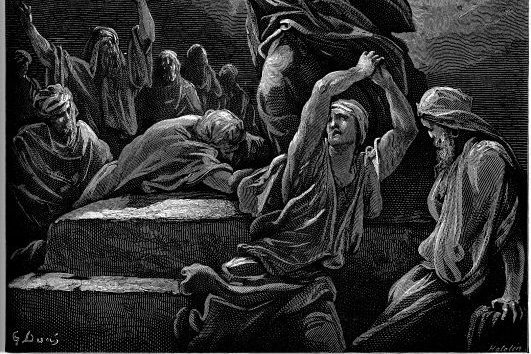
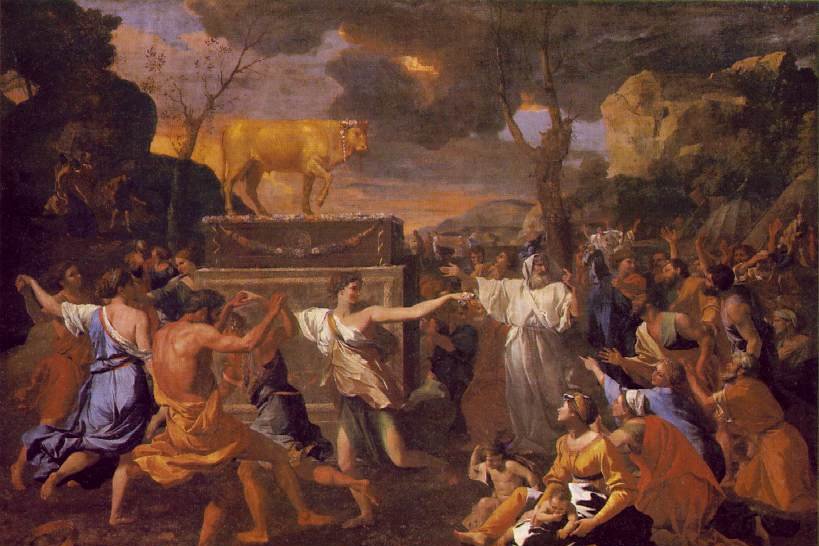
The giving of the Law at Sinai didn't stay a single tidy scene of thunder and stone. While Moses remained on the mountain receiving detailed instructions for worship and the priesthood, the waiting Israelites grew impatient and pressured Aaron into casting a golden calf for them to worship instead — a direct, almost immediate violation of the very commandment against idols that God was still, in a sense, dictating above them. Moses came down, saw the idol and the camp's revelry around it, and in anger threw the tablets to the ground, shattering them (Exodus 32:19). God later had him cut a second set of tablets and inscribe them again at Sinai, restoring the covenant that the golden calf had broken almost before it began. The episode is often read as a sobering companion to the giving of the Law itself — a reminder of how quickly the same people who trembled at Sinai's thunder returned to the idolatry the commandments had just forbidden, and how central themes of repentance and renewed covenant would remain throughout the rest of the Old Testament, echoed later in stories like Elijah and the chariot of fire, where a later prophet confronts Israel's recurring pull toward idol worship on another mountain altogether.
Law written to be lived, not just recited
The commandments given at Sinai were never meant to be an abstract legal code memorized and set aside. They shaped Israel's identity as a people bound to God by covenant, and Christian tradition has read them ever since as an enduring expression of the natural moral law — confirmed rather than abolished by Christ, who in the Sermon on the Mount pushed their demands even deeper, from action into the heart itself. That sermon, delivered on another mountain centuries later, opens with its own list of foundational sayings — the Beatitudes.
Trivia
Where in the Bible are the Ten Commandments found?
Why do Catholic and Protestant numbering of the commandments differ?
Did Moses write the Ten Commandments himself?
What happened to the original stone tablets?
Are the Ten Commandments still binding for Catholics today?
You May Also Like
Related Reading