Moses — Leader of the Exodus, Receiver of the Law

From a river basket to a fugitive in Midian
Moses is born into the one generation of Israelites Pharaoh has decided to erase. Egypt's ruler, worried by how numerous the enslaved Hebrews had become, orders every newborn Israelite boy thrown into the Nile. Moses's mother hides him for three months, then sets him afloat in a reed basket at the riverbank — where, in one of Scripture's more pointed ironies, he is found and adopted by Pharaoh's own daughter (Exodus 2:1-10). He grows up inside the household of the very ruler who tried to have him killed.
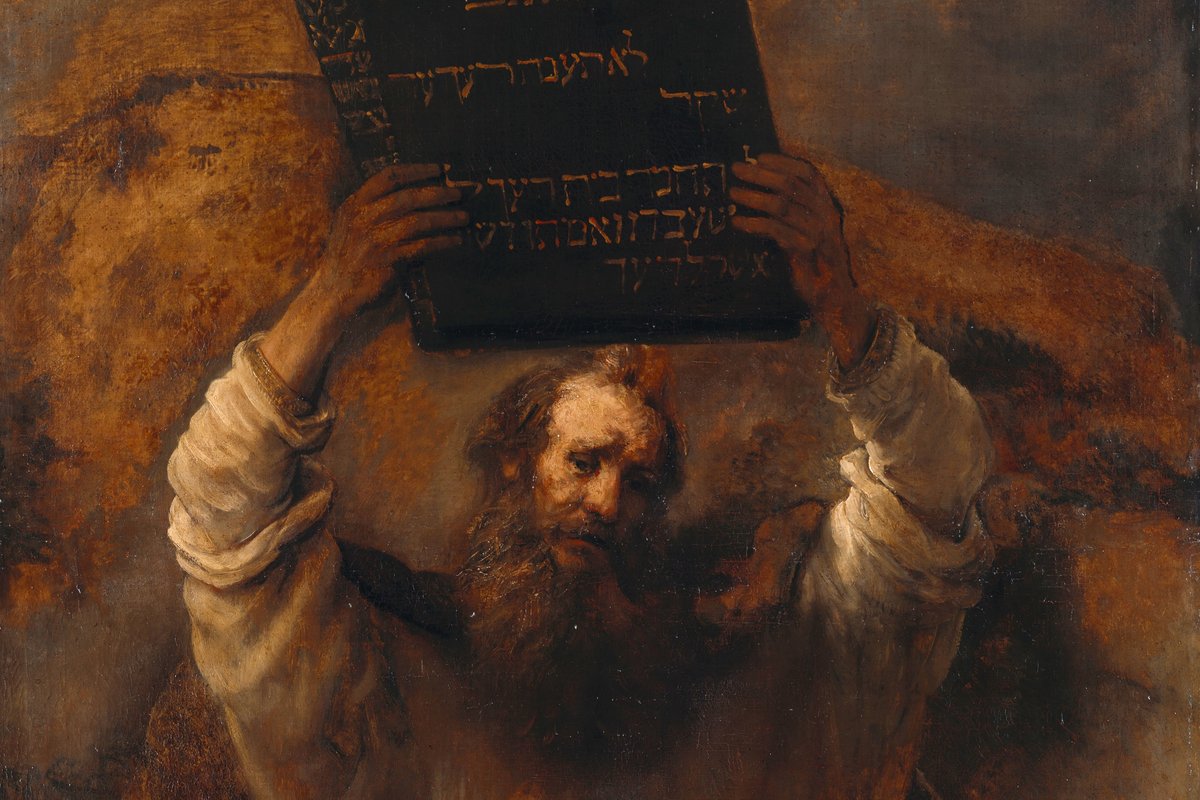
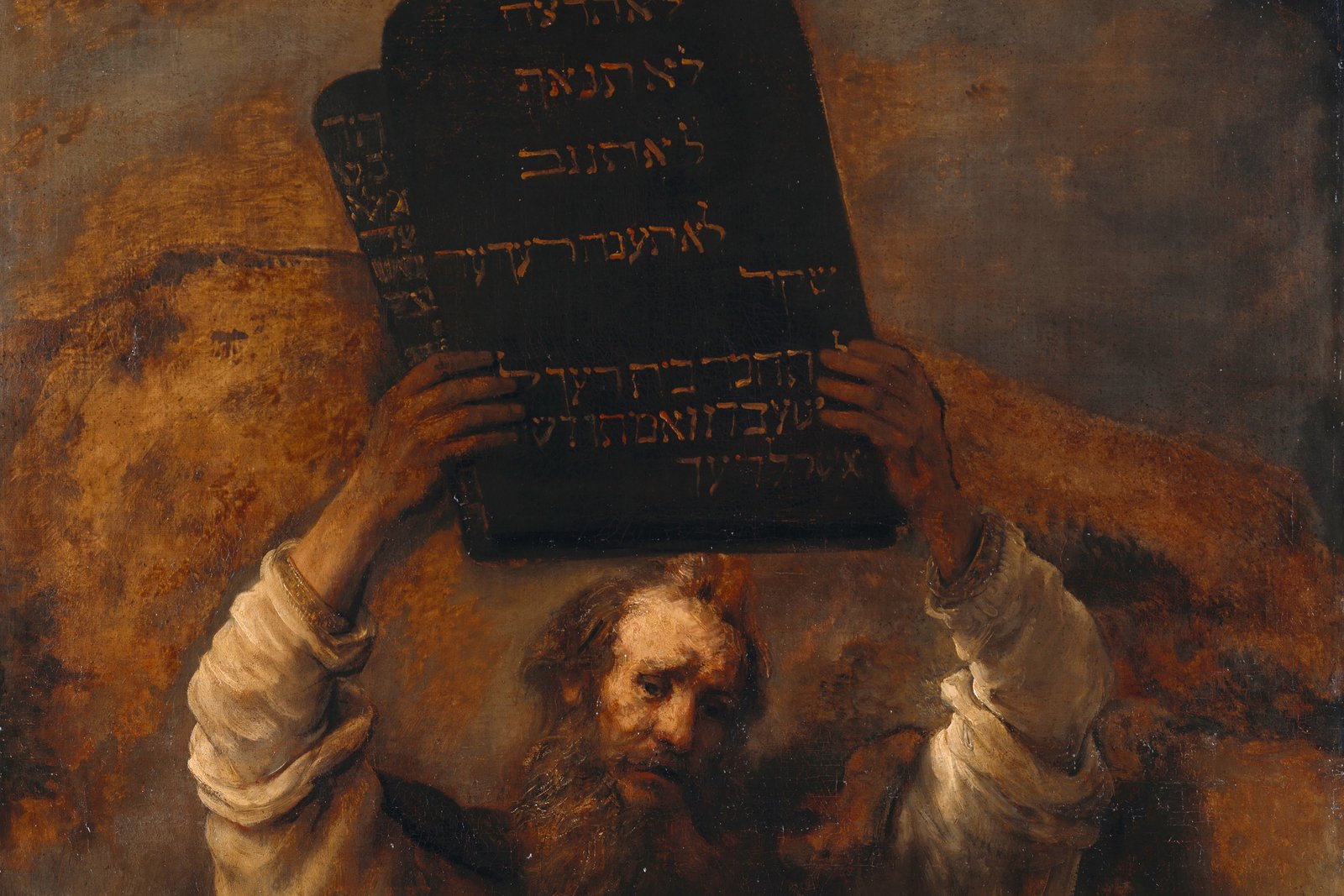
Rembrandt, "Moses with the Ten Commandments," 1659, Gemäldegalerie, Berlin — public domain.
That privileged upbringing ends abruptly. As a grown man, Moses kills an Egyptian overseer he sees beating a Hebrew slave, and when the act becomes known, he flees into the desert region of Midian. He spends the next forty years there as a shepherd, married into a local priest's family — about as far as a prince of Egypt could fall. It's a long, quiet stretch for a man who will eventually reshape a nation, and Scripture doesn't rush past it: Moses is well into old age before anything resembling his real mission begins.
The bush that would not burn out
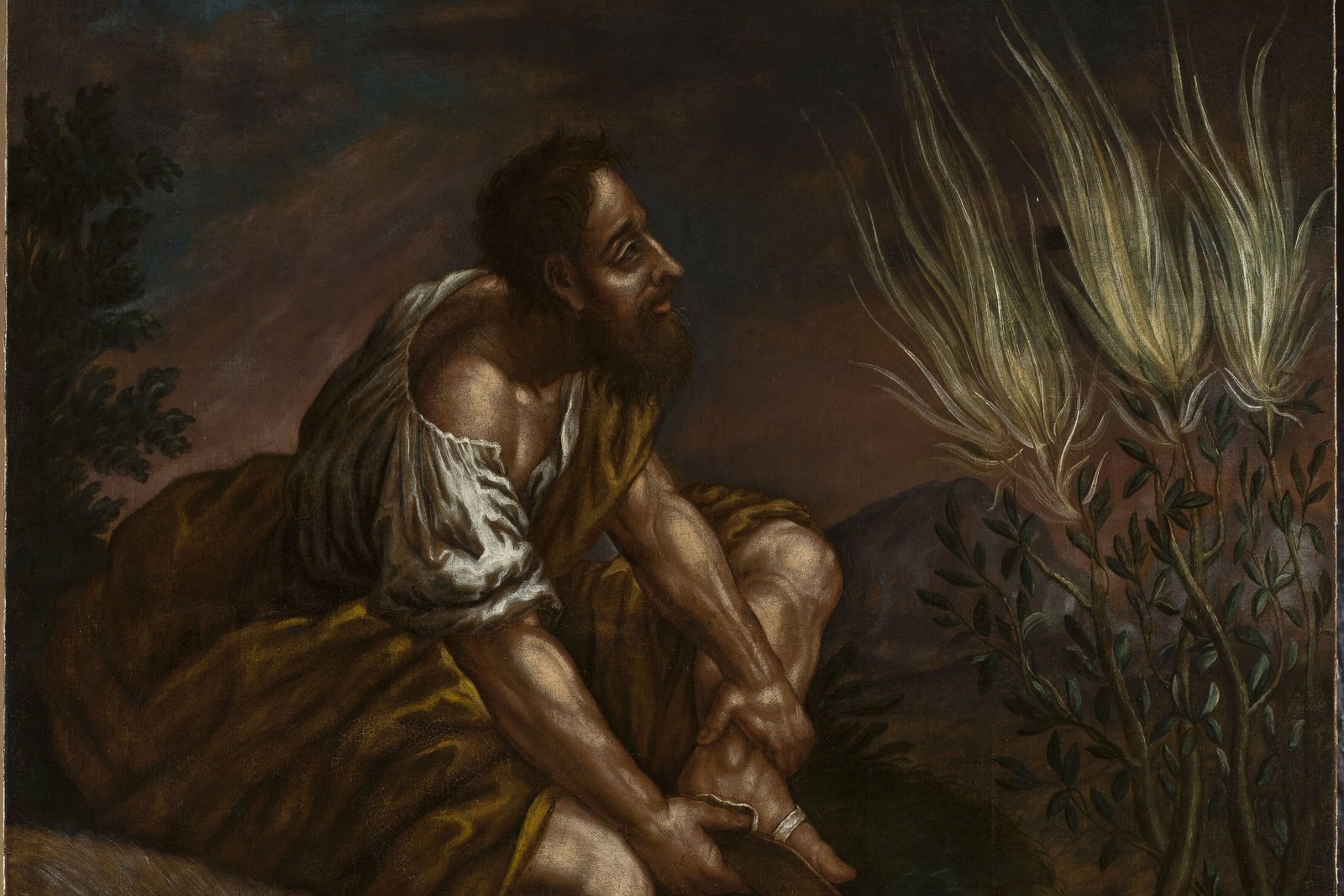
That mission starts on an ordinary work day, tending his father-in-law's flock near Horeb, "the mountain of God." A bush is on fire but never consumed, and when Moses turns aside to look, God speaks to him directly, identifying himself as "the God of Abraham, the God of Isaac, and the God of Jacob" (Exodus 3:6) and instructing him to go back to Egypt and free the Israelites. Moses objects — repeatedly, and not gently. He doesn't feel qualified, doesn't know what name to give this God, and later admits outright that he isn't a confident public speaker.
God's answer to the name question becomes one of the most quoted lines in the whole Old Testament: "I am who I am. Then he added: This is what you will tell the Israelites: I AM has sent me to you" (NABRE, Exodus 3:14). It isn't a title so much as a claim to existence itself — a God who simply is, without qualification — and it becomes the root of the divine name rendered throughout the rest of the Hebrew Bible as "the LORD."
Confronting Pharaoh and the ten plagues
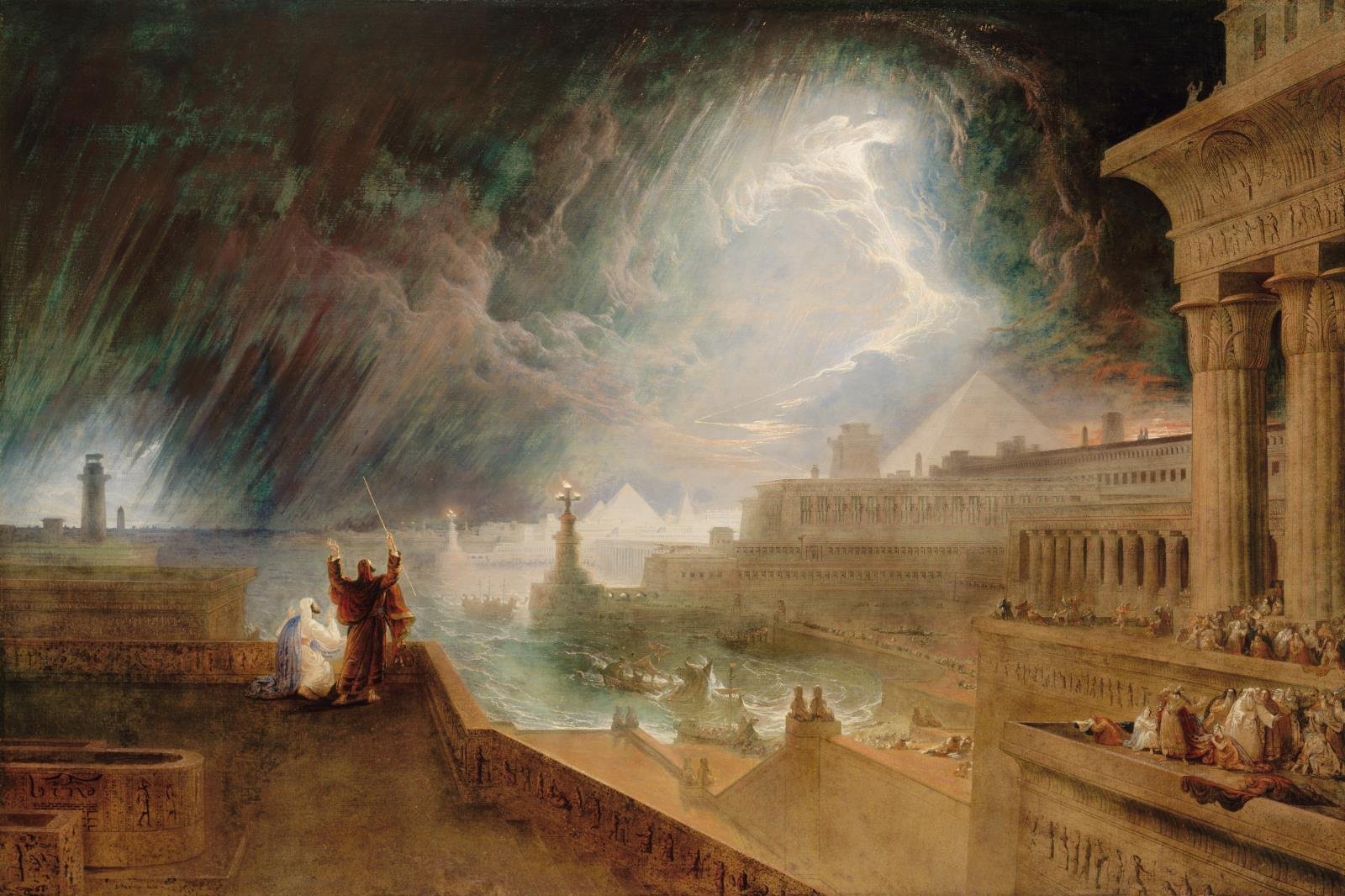
Moses returns to Egypt with his brother Aaron as his spokesman and delivers a demand that Pharaoh refuses again and again: let my people go. Each refusal brings a plague — the Nile turned to blood, frogs, gnats, flies, diseased livestock, boils, hail, locusts, darkness — ten in total, each one aimed, according to later Jewish and Christian reading, at a specific god of the Egyptian pantheon that the plague exposes as powerless. Only after the tenth plague, the death of every Egyptian firstborn son, does Pharaoh relent and let Israel leave. The Israelites' own firstborn are spared through the blood of the Passover lamb marked on their doorposts — the event that becomes the foundation of the Jewish feast of Passover to this day.
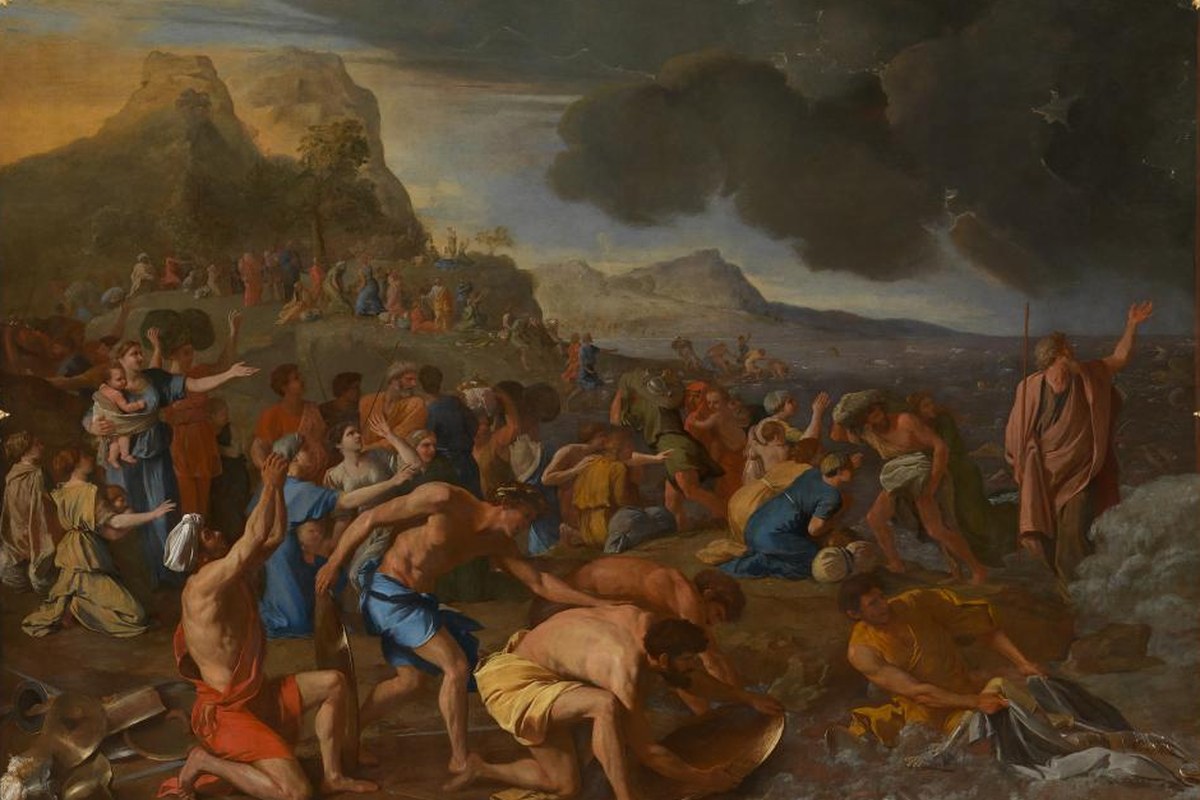
Even after Pharaoh lets them go, he changes his mind and pursues the fleeing Israelites to the edge of the Red Sea, where Moses stretches out his staff and the sea divides, letting Israel cross on dry ground before closing again over the pursuing Egyptian army.
Sinai and the Law
Roughly three months into the journey through the wilderness, Moses leads the people to Mount Sinai, where he ascends alone into thick cloud and receives the Law that will define Israel's relationship with God for the rest of its history. The core of it is the Ten Commandments, opening with the command to worship no god but the Lord and covering conduct toward others in blunt, unadorned terms — three of which read in full: "You shall not kill. You shall not commit adultery. You shall not steal" (NABRE, Exodus 20:13-15). Around this core, Moses receives an extensive body of additional law covering worship, justice, and daily life, recorded across the rest of Exodus, Leviticus, and Deuteronomy.
The forty years that follow are not smooth. Moses spends them managing a people who complain, rebel, and repeatedly long to go back to Egypt, and he himself is barred from entering the Promised Land after striking a rock in anger at Meribah instead of simply speaking to it as God had instructed (Numbers 20:1-13). He is allowed only to view Canaan from the summit of Mount Nebo before he dies, with Joshua taking up the task of leading Israel across the Jordan in his place.
Why Moses still matters
Christian tradition reads Moses as more than a historical lawgiver. The Church has long seen his role as mediator between God and Israel — and, in the Passover lamb whose blood saves Israel's firstborn, a prefiguring of Christ's own sacrifice. Jewish tradition, meanwhile, remembers him simply as Moshe Rabbeinu, "Moses our teacher," the man through whom the Torah itself was given. Few figures in Scripture carry that same double weight: a fugitive shepherd who became, against every early indication, the man who confronted an empire and carried a nation's law down a mountain.
Trivia
Why did Moses's mother set him adrift on the Nile as a baby?
What did God say his name was at the burning bush?
How many plagues did Moses call down on Egypt?
Did Moses himself ever enter the Promised Land?
What are the Ten Commandments Moses received at Sinai?
Related Reading