St. Peter's Basilica

Why this building stands where it does
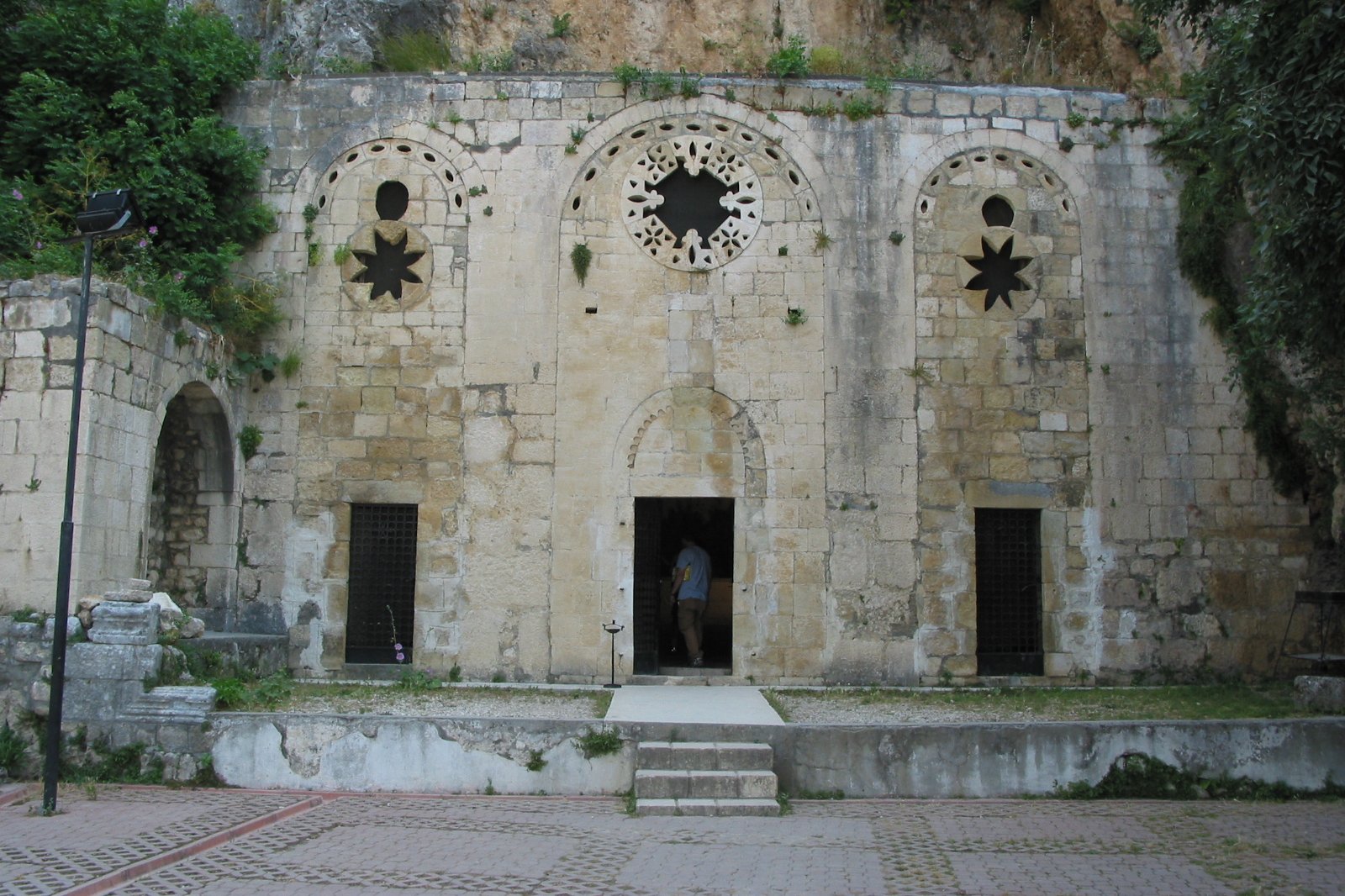
Long before Bramante or Michelangelo ever drew a plan, this was already a site of pilgrimage. Tradition holds that the apostle Peter was martyred in Rome, near a circus built by the emperor Nero, and buried close by on Vatican Hill. Early Christians marked the grave, and in the 4th century the emperor Constantine built the first great basilica directly over it — choosing to build on an awkward, sloping hillside rather than move the church to easier ground, specifically so the altar could sit above the apostle's tomb. Every version of St. Peter's built since has kept that same priority: the location was never negotiable.
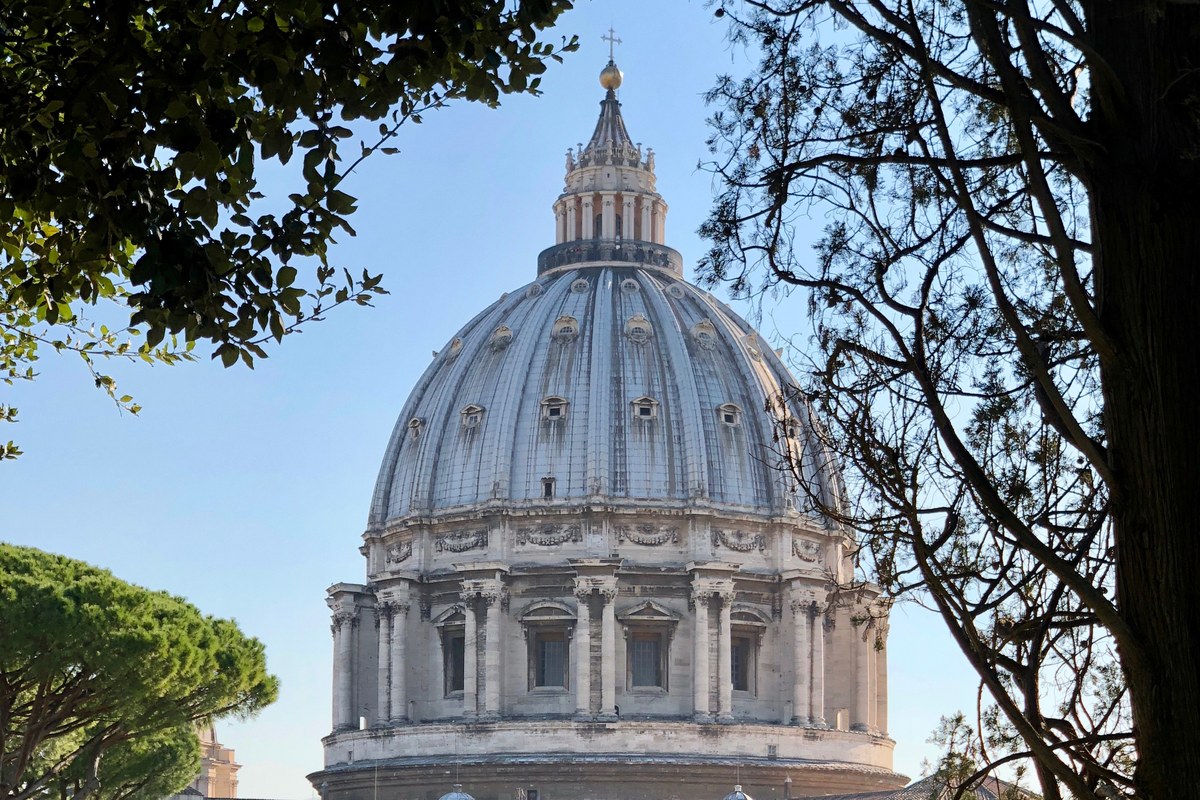
Photo by Sonse, "St. Peter's Basilica and Gardens of Vatican City," cropped, CC BY 2.0, via Wikimedia Commons.
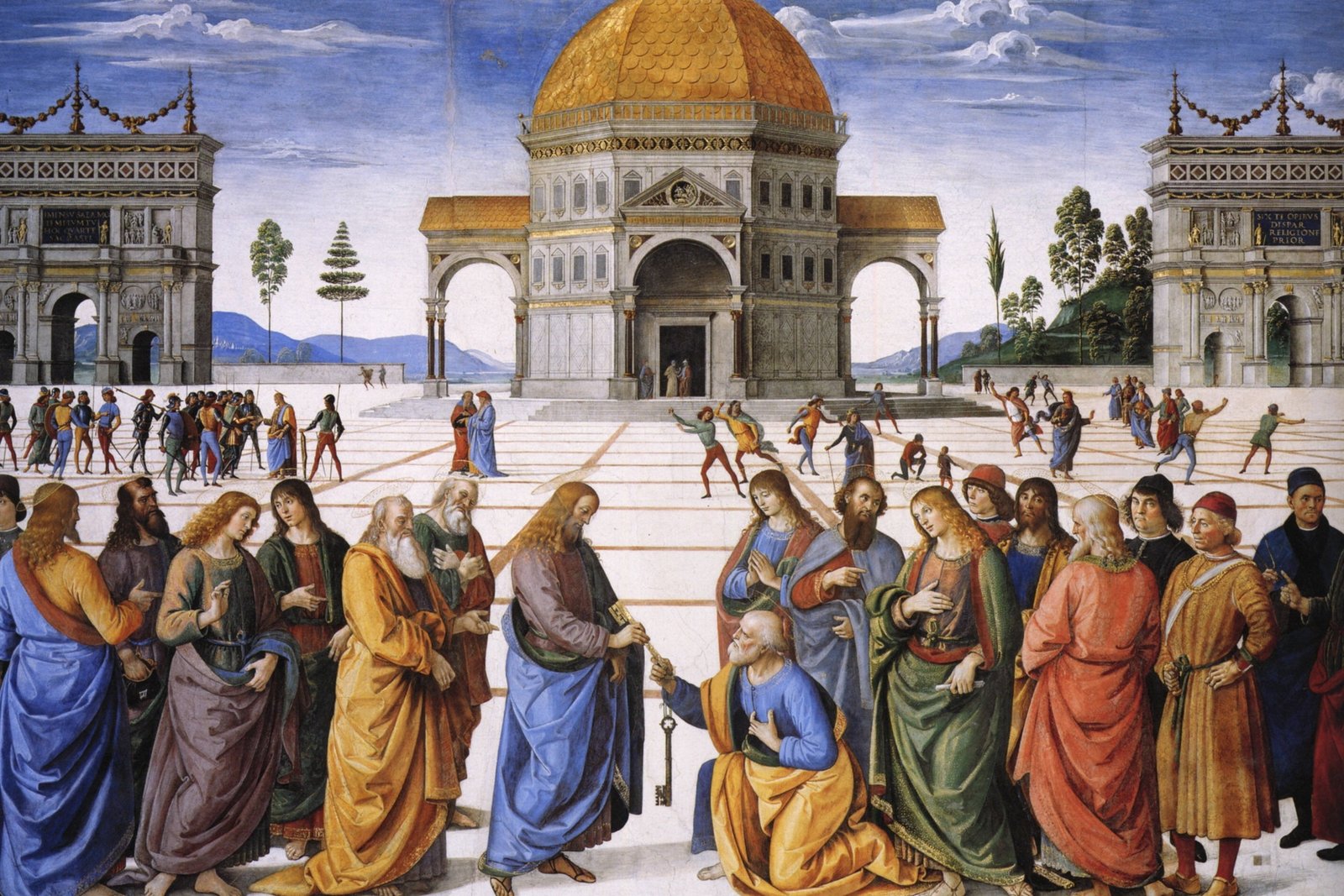
Scripture gives the tradition its theological backbone. Jesus tells Peter, "And so I say to you, you are Peter, and upon this rock I will build my church, and the gates of the netherworld shall not prevail against it." (Matthew 16:18, RSV-CE) — a play on words in the original Greek between Peter's name and the word for rock. Centuries of Christian interpretation have read that verse as pointing toward Peter's unique role in the Church's foundation, and a basilica built quite literally on top of his grave has always been understood as this promise made visible in stone.
Excavations conducted beneath the basilica in the mid-20th century gave that tradition something closer to physical evidence. Archaeologists working under Pope Pius XII uncovered an ancient Roman necropolis directly beneath the high altar, along with a set of bones that had been wrapped in purple and gold cloth and placed inside a wall marked with early Christian graffiti invoking Peter by name. In 1968, Pope Paul VI announced that these remains were believed, based on the combined weight of the archaeological and historical evidence, to be those of the apostle — a carefully hedged statement that treats the identification as well supported rather than absolutely certain, which is about as far as archaeology and ancient tradition together can honestly go.
Two churches, twelve hundred years apart
The building visitors see today is not Constantine's basilica — by the 1400s, that thousand-year-old structure was crumbling, and Pope Julius II made the drastic decision to tear it down and start again. Donato Bramante laid out the first design in 1506, envisioning an enormous dome inspired by Rome's ancient Pantheon. Progress was slow and the plan changed hands several times before Michelangelo, already in his seventies, took over as chief architect in 1547 and became the dome's principal designer. He didn't live to see it finished — at his death in 1564 only the drum supporting the dome was complete — but Giacomo della Porta carried the design through to completion in 1590. The basilica as a whole wasn't formally consecrated until 1626, under Pope Urban VIII: a single building project that had, by then, outlived the lifespans of everyone who started it.
What the dome still represents
Michelangelo's dome remains the tallest in the world, visible across nearly all of Rome, and it has become one of the most recognizable silhouettes in religious architecture anywhere. But its significance was never really about scale for its own sake. A building this large, built this slowly, directly above a fisherman's grave, was always meant to make an argument in stone: that the Church Christ founded on Peter has endured, physically and visibly, for two thousand years — and that whatever was buried on that hillside was worth building the largest church on earth to protect.
What fills the space inside
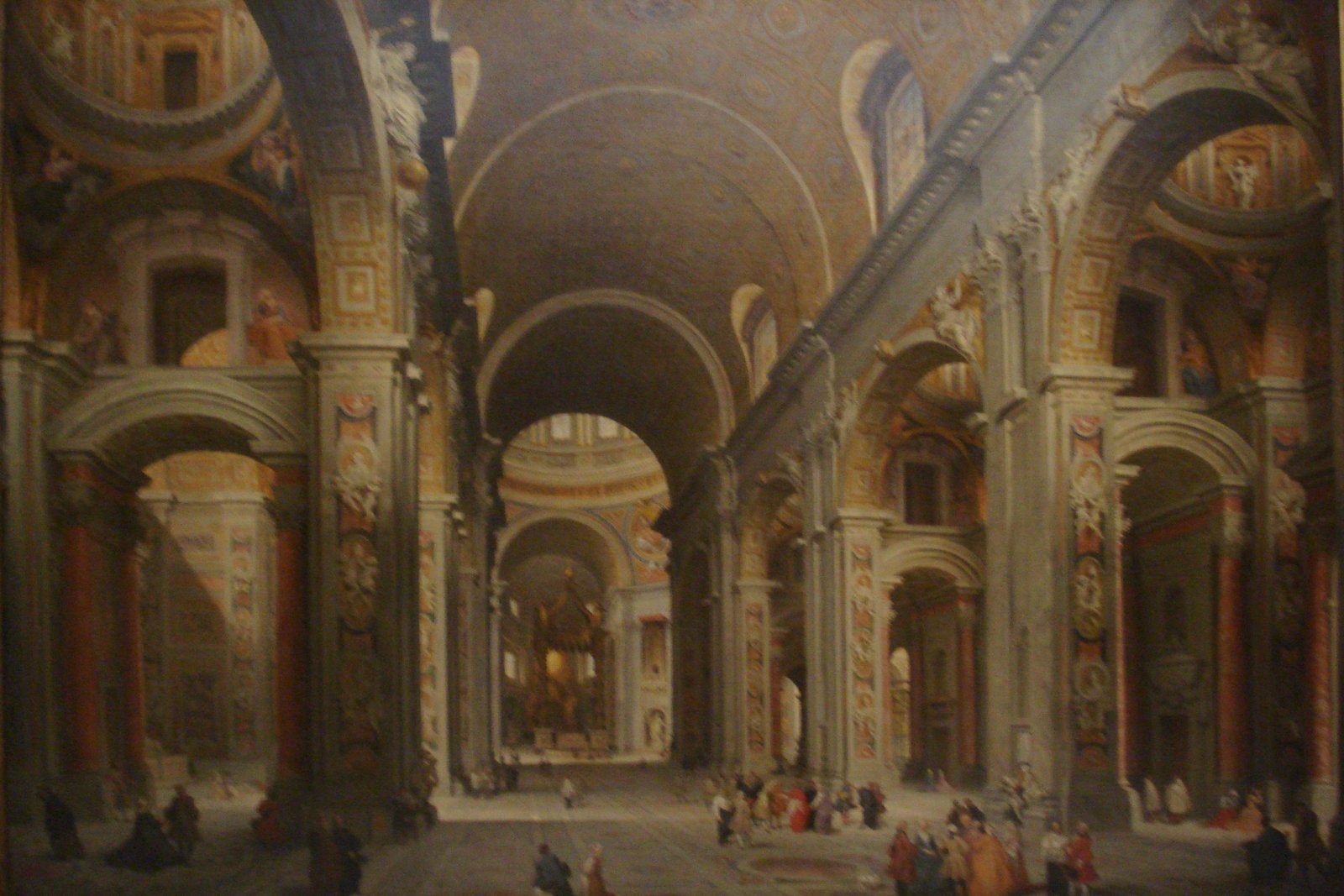
The interior carries as much weight as the dome above it. Just inside the entrance stands Michelangelo's Pietà, carved when the artist was only in his twenties, showing Mary cradling the body of Christ after the crucifixion — the only work Michelangelo ever signed, according to a famous story, after overhearing visitors credit it to someone else. Deep beneath the dome, directly over the traditional site of Peter's tomb, rises Gian Lorenzo Bernini's enormous bronze baldachin, a canopy roughly as tall as a ten-story building, marking the high altar reserved for the pope's own use. Outside, Bernini's sweeping colonnade encloses St. Peter's Square in a broad ellipse that he himself described as reaching out like two welcoming arms, drawing pilgrims in toward the church at its center.
A church, not the pope's cathedral
For all its scale and symbolism, St. Peter's carries one detail that regularly surprises visitors: it isn't technically the pope's cathedral. That title belongs instead to the Archbasilica of St. John Lateran, elsewhere in Rome, which holds the pope's actual bishop's chair as Bishop of Rome. St. Peter's nonetheless remains the site of the Church's most prominent liturgies, papal Masses, and canonizations, and the building most visitors picture first when they picture the Catholic Church at all — a reminder that a building's practical rank in Church law and its place in the popular imagination don't always line up exactly.
Trivia
Why was St. Peter's Basilica built on that specific spot?
How long did it take to build the current basilica?
Have Peter's actual remains been found there?
Is St. Peter's Basilica the pope's cathedral?
Related Reading