Saint Peter the Apostle

A fisherman renamed
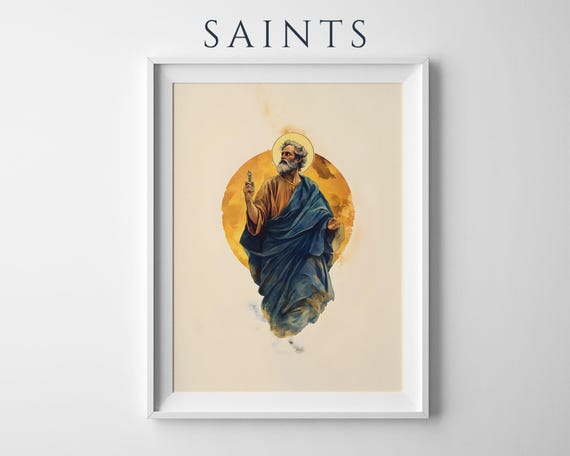
Before any of it, Peter was simply Simon, a working fisherman on the Sea of Galilee, partnered in the trade with his brother Andrew and, in Luke's account, with the sons of Zebedee, James and John. The Gospels give little sense of any particular ambition or standing that might have marked him out in advance — he appears, in every account, as an ordinary man pulled abruptly out of an ordinary trade, with no preparation and no warning that his life was about to change.
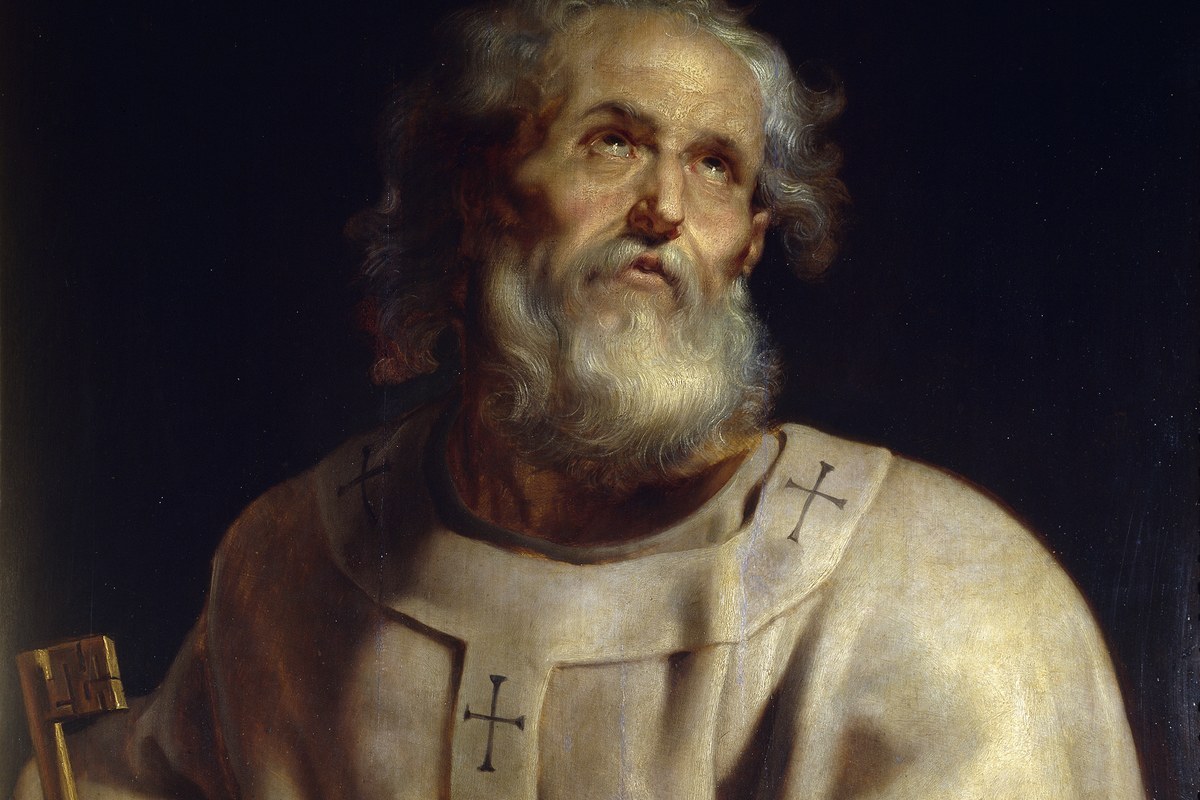
Peter Paul Rubens, "Saint Peter," c. 1610–1612 — public domain.
Peter's story begins as a working fisherman on the Sea of Galilee, called away from his nets to follow Jesus alongside his brother Andrew. What sets him apart almost immediately is the name Jesus gives him: "And so I say to you, you are Peter, and upon this rock I will build my church, and the gates of the netherworld shall not prevail against it." (Matthew 16:18, RSV-CE) — a play on words in the Greek between "Peter" and "rock" that Catholic tradition has read ever since as establishing Peter's unique authority among the apostles, the foundation of what would become the papacy itself.
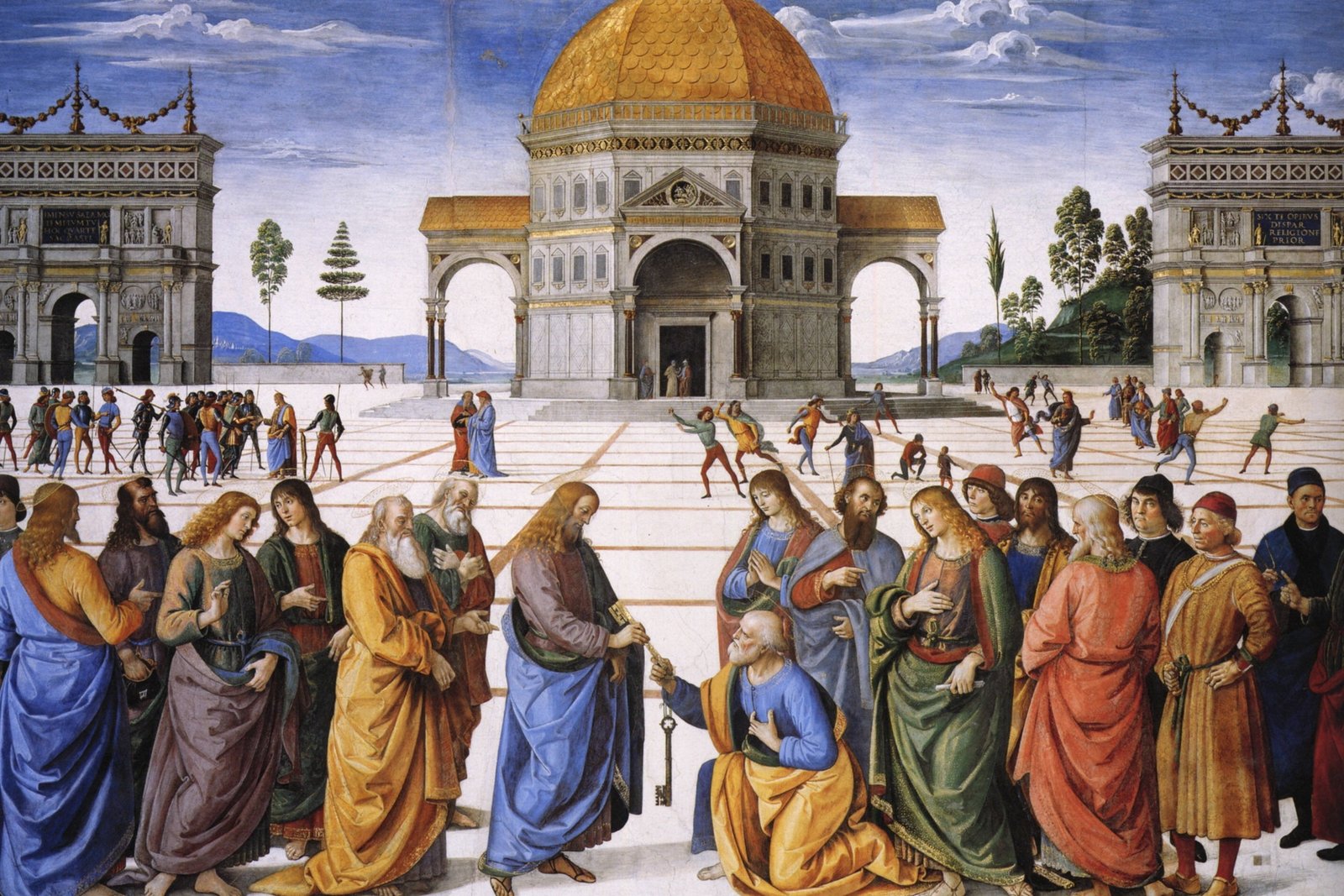
Peter isn't only defined by that single title, either. In the same Gospel, Jesus tells him, "I will give you the keys of the kingdom of heaven, and whatever you bind on earth shall be bound in heaven, and whatever you loose on earth shall be loosed in heaven" (Matthew 16:19, RSV-CE) — an image of entrusted authority that shows up constantly in later Christian art, where Peter is recognizable above almost any other apostle by the keys he carries.
The rock that cracked
The same man given that towering promise is also, within the same set of Gospel accounts, the one who falls hardest. On the night of Jesus's arrest, Peter denies even knowing him three separate times, exactly as Jesus had predicted earlier that evening. The moment the third denial is out of his mouth, a rooster crows, and Luke records the instant with devastating simplicity: "and the Lord turned and looked at Peter; and Peter remembered the word of the Lord, how he had said to him, “Before the cock crows today, you will deny me three times.” He went out and began to weep bitterly." (Luke 22:61-62, RSV-CE). It's one of the most unguarded moments of failure given to any figure in the New Testament — not softened, not explained away, just recorded.
Peter shows up throughout the Gospels as a figure of blunt, sometimes impulsive honesty — the disciple who tries to walk on water toward Jesus and immediately begins to sink, the one who draws a sword to defend Jesus at his arrest only to be told to put it away. That same impulsiveness runs through both his highest moment and his lowest: the same directness that lets him blurt out "You are the Messiah, the Son of the living God." (Matthew 16:16, RSV-CE) is recognizably present, just differently aimed, in the fear that makes him deny Jesus outright only chapters later.
Three questions to answer three denials
Peter's story doesn't end at the weeping. After the resurrection, in a scene by the shore of the same sea where Peter's calling began, Jesus asks him three times whether he loves him — a deliberate echo of the three denials — and three times, after Peter answers yes, gives him the same instruction: "Feed my lambs... Tend my sheep... Feed my sheep" (John 21:15-17, RSV-CE). The repetition isn't incidental. It reads as a precise, structured act of restoration, rebuilding exactly what had been broken, piece by piece, rather than simply moving past it.
A leader in the Church's first years
Restoration wasn't just a private, personal matter for Peter — it played out publicly, in leadership. Acts of the Apostles shows him stepping forward at Pentecost to preach the first recorded sermon of the Christian movement, and later taking the historically significant step of receiving the Roman centurion Cornelius into the Church, a decision that opened the young movement to Gentile converts without requiring them to first become Jewish. That expansion wasn't without friction: Peter and Paul later clashed openly at Antioch over how consistently that principle should be applied in practice, a dispute both men candidly acknowledged rather than concealed. Far from undermining Peter's authority, this record of open disagreement, correction, and growth is arguably what makes his leadership so recognizably human — a rock who kept, quite visibly, learning how to be one.
From denial to martyrdom
The man who once denied Jesus out of fear would, according to tradition, eventually die for him. Peter is believed to have been crucified in Rome under the emperor Nero, requesting to be crucified upside down because he considered himself unworthy of dying in the same manner as his Lord. That same tradition holds that he was buried nearby, on the Vatican Hill — the site over which the Basilica bearing his name would rise more than a thousand years later. Few figures in Christian history offer as complete an arc in so few scenes: a fisherman, renamed; a rock, broken; and a broken man, restored and sent back out to lead.
Trivia
Why does Jesus call Peter 'the rock'?
Did Peter really deny knowing Jesus?
How was Peter restored after his denial?
How did Peter die?
What is Saint Peter the patron saint of, and when is his feast day?
Related Reading